Reasons for choosing our testing services
ZHONGXI Testing has obtained inspection qualification certifications from multiple countries and regions worldwide. We possess a senior testing team and advanced testing methods, providing independent, impartial, and professional third-party verification services for global carbon projects.

Internationally recognized authority
Certified by multiple international standards such as CNAS, VCS, and GS, with reports universally applicable worldwide.

Global service capability
Covering 140+ countries and regions, it supports on-site detection and remote verification in multiple languages.

Professional experimental methods
Adopt standard experimental methods to ensure accurate and reliable data.
Comprehensive Performance Testing of Elemental Mercury Adsorbents: Advanced Characterisation and Application Validation
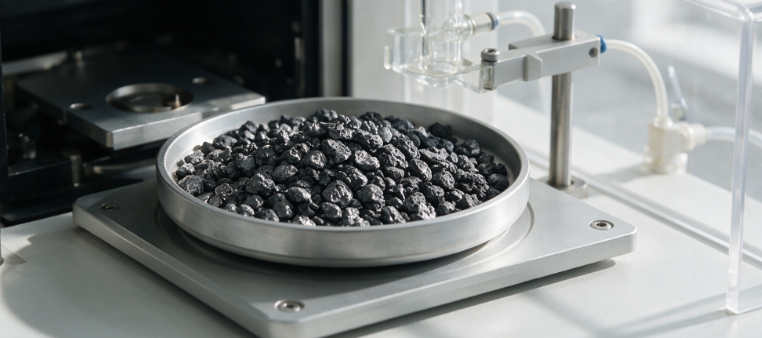
Elemental mercury (Hg⁰) adsorbents—including sulphur‑impregnated activated carbons, metal‑oxide‑modified zeolites, noble‑metal‑promoted materials (e.g., Au, Ag, Pd), and novel carbon‑based composites—are critical for controlling mercury emissions from coal‑fired power plants, cement kilns, incinerators, and natural gas processing. The capture of Hg⁰ is notoriously challenging due to its low reactivity, high volatility, and complex interactions with flue gas components (SO₂, NOₓ, HCl, H₂O vapour). Adsorbent performance depends on a delicate balance of surface chemistry (active sites for oxidation/adsorption), porosity, thermal stability, and resistance to poisoning. Even minor variations in synthesis or activation can lead to reduced breakthrough capacity, incomplete mercury oxidation, or rapid deactivation by competitive gases. Our laboratory provides a fully integrated, multi‑scale testing platform specifically designed for elemental mercury adsorbents, combining advanced physicochemical characterisation, dynamic fixed‑bed breakthrough measurements, competitive gas interference studies, and long‑term stability/regeneration assessments. We deliver quantitative, diagnostic, and predictive data that supports material development, quality control, process optimisation, and regulatory compliance (e.g., EPA MATS, Minamata Convention) for environmental, power generation, and waste‑to‑energy sectors.
Why Rigorous Testing of Elemental Mercury Adsorbents Is Essential for Effective Emission Control
Clients seeking mercury adsorbent testing frequently encounter challenges such as unexpectedly low mercury removal efficiency in field applications, rapid capacity loss due to competitive adsorption, or inadequate performance under high‑humidity conditions. These issues often stem from insufficient active site density, poor dispersion of catalytic components, pore blockage by fly ash, or irreversible chemisorption of sulphur dioxide. Moreover, regulatory limits for mercury emissions are becoming increasingly stringent, demanding validated performance data under realistic flue gas compositions. Our service provides a systematic evaluation that quantifies breakthrough capacity (mg Hg/g adsorbent), oxidation efficiency (Hg⁰ to Hg²⁺), kinetic uptake rates, and selectivity for mercury over common flue gas components. By identifying the root causes of performance deficits—such as surface sulphation, carbon burnout, or active metal sintering—we enable clients to optimise adsorbent formulation, select appropriate injection rates, and design reliable mercury removal systems.
Our Analytical Capabilities: From Material Structure to Dynamic Flue Gas Simulation
Our testing framework is organised into five interconnected modules, each addressing a critical aspect of mercury adsorbent behaviour under realistic conditions:
Physicochemical and surface characterisation—We determine specific surface area (BET), pore volume, and pore size distribution (DFT/BJH) via N₂ physisorption at 77 K. X‑ray diffraction (XRD) identifies crystalline active phases (e.g., S₈, Fe₂O₃, CuO, Ag⁰), while X‑ray photoelectron spectroscopy (XPS) probes the chemical states of mercury capture sites (e.g., S 2p, metal oxidation states). Scanning electron microscopy (SEM‑EDS) and transmission electron microscopy (TEM) visualise morphology and elemental distribution. Temperature‑programmed desorption (TPD) of Hg provides insight into mercury binding strength, and Thermogravimetric Analysis (TGA) evaluates thermal stability and oxidation resistance.
Mercury breakthrough capacity and kinetics—We operate custom‑built fixed‑bed reactors with real‑time mercury vapour generation (Hg⁰ permeation tube) and on‑line detection by cold vapour atomic fluorescence spectroscopy (CVAFS) or atomic absorption spectroscopy (CVAAS). Breakthrough curves are generated under controlled inlet Hg⁰ concentrations (10‑200 µg/m³), temperatures (25‑200 °C), space velocities, and carrier gas compositions (N₂, air, simulated flue gas). From these, we calculate breakthrough capacity (at 10 % penetration), saturation capacity, and mass transfer coefficients. We also perform kinetic uptake studies in a microbalance under isothermal conditions to derive rate constants and diffusion coefficients.
Competitive gas interference and selectivity—We systematically evaluate the effect of SO₂, NO, HCl, H₂O vapour, CO₂, and O₂ on Hg⁰ capture, either individually or in realistic gas mixtures. We quantify the selectivity factor for mercury over each interfering gas and determine the maximum allowable concentration of each interferent before performance is significantly compromised. In‑situ FTIR and XPS post‑exposure identify the nature of adsorbed species (e.g., sulphites, nitrates, chlorides) that may block active sites.
Oxidation efficiency and speciation analysis—We measure the fraction of Hg⁰ oxidised to Hg²⁺ during breakthrough using a wet chemical impinger train (chloride‑based trapping) or online speciation system (thermal conversion). This is critical because oxidised mercury is more easily captured by wet scrubbers, and the oxidation ability of the adsorbent influences overall removal across the entire pollution control train.
Regeneration, durability, and ageing tests—We evaluate thermal regeneration (under N₂ or air) and chemical regeneration (acid washing, sulphidation) methods, measuring capacity recovery and energy cost over repeated cycles (up to 20 cycles). Accelerated ageing is performed under high‑humidity, SO₂‑laden, and temperature‑cycled conditions, followed by re‑characterisation (BET, XPS, TGA) to quantify degradation mechanisms such as sulphur loss, metal oxidation, and pore collapse. Mechanical integrity is assessed by attrition resistance (ASTM D4058) to ensure durability in field injection systems.
High‑Level Predictive Modelling and Diagnostic Interpretation
We integrate breakthrough data with mass transfer and kinetic models (e.g., Wheeler‑Jonas, pseudo‑first‑order) to predict performance under varying operating conditions and to design adsorbent bed dimensions. Response surface methodology (RSM) and multivariate analysis (PCA, PLS) are used to correlate synthesis parameters (sulphur loading, metal content, activation temperature) with mercury capacity and selectivity, enabling quality‑by‑design (QbD) optimisation. For failure diagnosis, we combine post‑use characterisation (XRD, XPS, TGA, BET) with breakthrough profiles to differentiate between site poisoning, thermal sintering, and physical blockage as deactivation pathways.
Regulatory Compliance and Quality Assurance
All test methods are aligned with ASTM D6784 (Ontario Hydro method), EPA Method 30B, ISO 17211 (fixed‑bed adsorption), and relevant IEA guidelines. Our laboratory holds ISO/IEC 17025:2017 accreditation for mercury analysis and adsorptive characterisation. We issue certified test reports with full measurement uncertainty, traceability to NIST SRM 3133 (mercury standard), and quality control data (blanks, duplicates, reference adsorbents). For regulatory submissions (e.g., EPA MATS permit applications), we provide comprehensive data packages with detailed experimental protocols and raw data archives.
Our Distinctive Advantages in Elemental Mercury Adsorbent Testing
Realistic multi‑component flue gas simulation: We uniquely offer fully simulated flue gas mixtures with precise control over SO₂, NO, HCl, H₂O, CO₂, and O₂, replicating conditions from coal, oil, and biomass combustion. This ensures that our breakthrough data is directly transferable to industrial applications, unlike simplified N₂‑only tests.
Advanced mercury speciation and detection: Our CVAFS detection offers sub‑ppt sensitivity, enabling accurate breakthrough measurement even at low inlet concentrations (e.g., 10 µg/m³). Our online speciation system distinguishes between Hg⁰ and Hg²⁺ in real time, providing critical data on oxidation performance that is rarely available from commercial labs.
Correlated structural‑chemical‑performance workflow: We perform all characterisation (XPS, BET, XRD, TGA) and breakthrough tests on identical sample batches, enabling direct correlation between surface chemistry, pore architecture, and mercury capture performance. This holistic approach eliminates cross‑batch variability and provides robust design data.
Expert guidance for material improvement: Our team includes chemists and environmental engineers specialising in mercury chemistry and adsorption. We provide specific, actionable recommendations—for example, optimising sulphur impregnation temperature to maximise active S₈ dispersion without pore blockage, or suggesting a pre‑oxidation step to enhance Hg⁰ conversion in the absence of HCl.
Fast turnaround and flexible sample volumes: Our standard full breakthrough and characterisation package is delivered within 12‑16 working days, with expedited 72‑hour screening for key parameters (breakthrough capacity, oxidation efficiency, and moisture sensitivity). We handle adsorbent masses from 50 mg to several kilograms.
End‑to‑End Service Workflow
We begin with a complimentary technical consultation to define your flue gas composition, temperature range, target mercury concentration, and regulatory requirements. We design a tailored test plan, advising on adsorbent handling and shipping (including inert atmosphere for sulphur‑sensitive materials). Upon sample receipt, we perform preconditioning (drying, activation). All tests are executed with strict QA/QC—reference adsorbents, blanks, and duplicates. Data are integrated and reviewed by our lead scientist, then compiled into a comprehensive report containing breakthrough curves, capacity tables, speciation profiles, and a clear executive summary with optimisation recommendations. A post‑report meeting is offered to discuss implementation strategies.
Partner with Us for Reliable Mercury Emission Control Solutions
Elemental mercury is a persistent and toxic pollutant, and its removal demands adsorbents that are exhaustively characterised under realistic conditions. Our testing service provides the scientific depth, practical realism, and regulatory support necessary to select, qualify, and optimise adsorbents for gas‑phase mercury abatement. We have supported power utilities, waste incinerators, and catalyst manufacturers in achieving reliable and cost‑effective compliance with global mercury emission limits.
We invite you to contact our technical experts to discuss your specific testing needs—whether for material screening, process design, or troubleshooting. With our advanced analytical capabilities, accredited protocols, and deep domain expertise, we provide the clarity and confidence you need to tackle elemental mercury challenges. Request a detailed proposal or schedule a technical consultation today and take the next step towards robust, science‑based mercury adsorbent solutions.