Reasons for choosing our testing services
ZHONGXI Testing has obtained inspection qualification certifications from multiple countries and regions worldwide. We possess a senior testing team and advanced testing methods, providing independent, impartial, and professional third-party verification services for global carbon projects.

Internationally recognized authority
Certified by multiple international standards such as CNAS, VCS, and GS, with reports universally applicable worldwide.

Global service capability
Covering 140+ countries and regions, it supports on-site detection and remote verification in multiple languages.

Professional experimental methods
Adopt standard experimental methods to ensure accurate and reliable data.
Advanced Analytical Testing of Nitrogen‑Modified Titanium Dioxide Sols: Comprehensive Characterisation for Photocatalytic Performance and Stability
Nitrogen‑modified titanium dioxide (N‑TiO₂) sols—colloidal dispersions of anatase or mixed‑phase TiO₂ nanocrystals doped with substitutional or interstitial nitrogen—have become pivotal in visible‑light photocatalysis, self‑cleaning coatings, air/water purification, and antimicrobial surfaces. The incorporation of nitrogen narrows the band gap, extending photoresponse into the visible region, while the sol form enables easy application via spraying, dipping, or spin‑coating. However, the functional performance of these sols is governed by a complex interplay of phase composition, crystallite size, nitrogen doping level and chemical state (substitutional vs. interstitial), particle size distribution, zeta potential, and long‑term colloidal stability. Variations in synthesis (e.g., hydrolysis pH, nitrogen precursor, calcination temperature) can lead to reduced visible‑light activity, premature aggregation, or poor adhesion to substrates. Our laboratory provides a fully integrated, multi‑technique analytical platform specifically designed for N‑TiO₂ sols, combining structural, spectroscopic, surface chemical, and colloidal characterisation with photocatalytic activity testing under visible and UV light. We deliver quantitative, diagnostic, and predictive data that supports formulation development, quality control, application optimisation, and regulatory compliance for the coatings, environmental, and construction material industries.
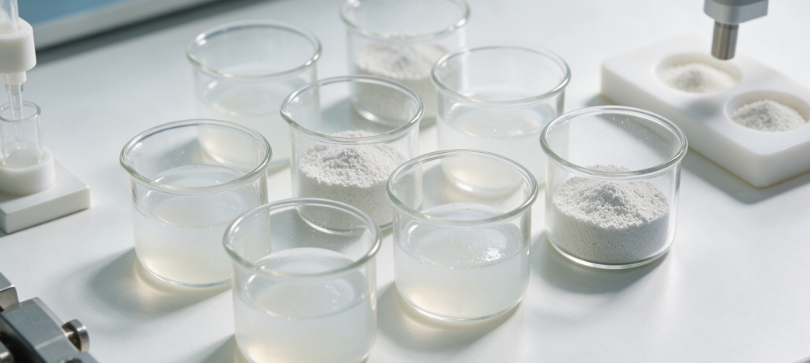
Why Rigorous Testing of N‑TiO₂ Sols Is Essential for Reliable Photocatalytic Performance
Clients seeking N‑TiO₂ sol testing often encounter challenges such as inconsistent photocatalytic activity between batches, poor stability leading to gelation or precipitation, or insufficient visible‑light response. These issues frequently arise from non‑optimised nitrogen doping (e.g., excessive interstitial N that acts as recombination centres), incomplete peptisation, or surface contamination from precursor residues. Moreover, the interplay between particle size, crystallinity, and surface charge significantly affects both photocatalysis and film‑forming properties. Our service provides a systematic characterisation that quantifies crystallite size and anatase/rutile ratio (XRD), nitrogen content and chemical state (XPS, elemental analysis), hydrodynamic size and zeta potential (DLS), band gap energy (UV‑Vis DRS), and photocatalytic activity (degradation of model pollutants such as methylene blue or rhodamine B). By identifying the root causes of performance deficits—such as carbon contamination, nitrogen loss, or agglomeration—we enable clients to optimise synthesis conditions (dopant concentration, calcination time, pH adjustment) and ensure batch‑to‑batch reproducibility for target applications.
Our Analytical Capabilities: From Nanoscale Architecture to Visible‑Light Activity
Our testing framework is organised into five interconnected modules, each addressing a critical aspect of N‑TiO₂ sol quality and functionality:
Structural and phase characterisation—We employ powder X‑ray diffraction (PXRD) with Rietveld refinement to determine the anatase/rutile phase ratio, crystallite size (Scherrer and Williamson‑Hall), and unit cell parameters, detecting any peak shifts due to nitrogen incorporation. Raman spectroscopy (with multiple excitation wavelengths) probes the anatase Eg modes and any defect‑induced broadening. Transmission electron microscopy (TEM) and high‑resolution TEM (HR‑TEM) visualise particle morphology, lattice fringes, and any amorphous surface layers.
Elemental and chemical state analysis—We quantify total nitrogen content by combustion‑chemiluminescence or elemental analyser (CHNS). X‑ray photoelectron spectroscopy (XPS) with depth profiling resolves the chemical states of nitrogen (substitutional N at O sites ~396 eV, interstitial N‑O or N‑H species ~400‑402 eV), and provides surface Ti 2p, O 1s, and adventitious carbon information. Energy‑dispersive X‑ray spectroscopy (EDS) in SEM/TEM provides semi‑quantitative elemental mapping. Inductively coupled plasma mass spectrometry (ICP‑MS) quantifies trace metal impurities (e.g., Fe, V, Cr) that can act as recombination centres.
Colloidal and surface characterisation—We measure hydrodynamic particle size distribution and polydispersity index (PDI) by dynamic light scattering (DLS) in the native sol and after dilution/stress. Zeta potential is determined as a function of pH (2‑10) and ionic strength to assess colloidal stability and isoelectric point. Viscosity and solid content are measured to characterise rheological behaviour. Thermogravimetric Analysis (TGA) quantifies organic stabilisers or residual solvents, and Fourier‑transform infrared spectroscopy (FTIR‑ATR) identifies surface‑bound ligands (e.g., hydroxyl, carboxyl, nitrate).
Optical and band gap analysis—We record diffuse reflectance UV‑Vis spectra (DRS) and apply the Kubelka‑Munk transformation to determine the band gap energy (Eg) and the absorption tail characteristic of nitrogen doping. Photoluminescence (PL) spectroscopy (steady‑state and time‑resolved) probes electron‑hole recombination dynamics, providing insight into the efficiency of charge separation.
Photocatalytic activity testing—We conduct standardised photodegradation assays using methylene blue (MB) or rhodamine B (RhB) as probe molecules under controlled UV‑A (365 nm) and visible (λ > 420 nm) light, with a reference TiO₂ (P25) for benchmarking. We monitor the degradation kinetics (apparent rate constant, kapp) by UV‑Vis spectrophotometry, and calculate the quantum efficiency and photocatalytic activity index (PAI). We also test the sol in coated film form (on glass or other substrates) to evaluate real‑surface activity and adhesion durability.
High‑Level Diagnostic and Predictive Modelling
We integrate structural and optical data to build structure‑activity relationships, linking nitrogen speciation (XPS), band gap narrowing (DRS), and recombination rate (PL) with photocatalytic performance. Using multivariate analysis (PCA, PLS), we correlate synthesis parameters (nitrogen precursor ratio, calcination temperature, peptisation time) with final sol properties and activity, enabling quality‑by‑design (QbD) optimisation. For stability prediction, we perform accelerated ageing under temperature cycling and light exposure, re‑measuring DLS, zeta potential, and activity to identify critical stability thresholds and predict shelf‑life.
Regulatory Compliance and Quality Assurance
All test methods align with ISO 22197‑1 (photocatalytic activity), ISO 13129 (film performance), ASTM D6639 (sol characterisation), and relevant ICH guidelines. Our laboratory holds ISO/IEC 17025:2017 accreditation for a broad scope of nanomaterial and photocatalytic testing. We issue certified test reports with full measurement uncertainty, traceability to NIST/CRM standards, and quality control data (reference sols, blanks, duplicates). For product certification (e.g., EU Ecolabel, Green Seal), we provide comprehensive data packages with detailed protocols.
Our Distinctive Advantages in N‑TiO₂ Sol Testing
Comprehensive nitrogen speciation: Our high‑resolution XPS with charge neutralisation and multi‑peak fitting reliably distinguish substitutional, interstitial, and molecularly adsorbed nitrogen species—a critical differentiation that dictates visible‑light activity and is often poorly resolved by routine labs.
Integrated colloidal‑structural‑activity correlation: We perform DLS, zeta potential, XRD, DRS, and photocatalytic tests on the same sample batch, enabling direct correlation between colloidal stability, crystallinity, band gap, and performance. This holistic approach eliminates cross‑batch variability and provides a complete material fingerprint.
Realistic performance testing in film form: We do not limit testing to powder suspensions; we also prepare thin films on relevant substrates (glass, ceramic, metal) and evaluate photocatalytic activity, adhesion, and optical transparency, providing data directly relevant to coating applications.
Expert interpretation and formulation guidance: Our team includes photocatalysis and colloid chemistry specialists with extensive industrial experience. We provide specific, actionable recommendations—for example, adjusting the pH to maximise zeta potential and prevent aggregation, or optimising the calcination step to enhance substitutional N incorporation while minimising interstitial N‑H species.
Fast turnaround and flexible sample volumes: Our standard full characterisation and activity package is delivered within 10‑14 working days, with expedited 48‑hour screening for key parameters (particle size, band gap, and initial activity). We handle sol volumes from 10 mL to 10 L, and can also accommodate dried powders.
End‑to‑End Service Workflow
We begin with a complimentary technical consultation to define your sol synthesis route, target application (e.g., self‑cleaning glass, water treatment, antimicrobial coating), and critical quality attributes. We design a tailored test plan, advising on sample handling (e.g., refrigeration, inert atmosphere). Upon sample receipt, we perform visual inspection and homogeneity check. All tests are executed with strict QA/QC—reference materials, blanks, and duplicates. Data are integrated and reviewed by our lead scientist, then compiled into a comprehensive report containing XRD patterns, XPS spectra, DLS profiles, UV‑Vis DRS plots, photocatalytic kinetic curves, and a clear executive summary with optimisation recommendations. A post‑report meeting is offered to discuss findings and plan further development or scale‑up.
Partner with Us for Reliable, High‑Performance N‑TiO₂ Sol Solutions
Nitrogen‑modified titania sols represent a breakthrough in visible‑light photocatalysis, but their complexity demands rigorous and targeted characterisation. Our testing service provides the scientific depth, practical relevance, and regulatory support necessary to ensure your sol delivers consistent, high‑efficacy performance. We have supported coating manufacturers, water treatment system developers, and construction material suppliers in optimising their N‑TiO₂ products.
We invite you to contact our technical experts to discuss your specific testing needs—whether for formulation development, quality control, or troubleshooting. With our advanced analytical instruments, accredited protocols, and specialised expertise, we provide the insights you need to perfect your N‑TiO₂ sol technology. Request a detailed proposal or schedule a technical consultation today and take the next step towards superior, data‑driven photocatalytic solutions.