Reasons for choosing our testing services
ZHONGXI Testing has obtained inspection qualification certifications from multiple countries and regions worldwide. We possess a senior testing team and advanced testing methods, providing independent, impartial, and professional third-party verification services for global carbon projects.

Internationally recognized authority
Certified by multiple international standards such as CNAS, VCS, and GS, with reports universally applicable worldwide.

Global service capability
Covering 140+ countries and regions, it supports on-site detection and remote verification in multiple languages.

Professional experimental methods
Adopt standard experimental methods to ensure accurate and reliable data.
Comprehensive Performance Testing of Cadmium Sulfide Photocatalysts: Advanced Characterisation and Activity Validation
Cadmium sulfide (CdS) is one of the most widely studied visible‑light‑responsive photocatalysts, with a band gap of approximately 2.4 eV, making it effective for hydrogen evolution, organic pollutant degradation, CO₂ reduction, and organic synthesis under visible light. However, the practical application of CdS is hampered by inherent limitations such as photocorrosion, rapid charge recombination, and surface defects that reduce quantum efficiency and long‑term stability. To overcome these challenges, CdS is often modified with co‑catalysts (e.g., noble metals, sulfides), coupled with other semiconductors (heterojunctions), or morphologically engineered (nanorods, quantum dots). The performance of these sophisticated photocatalytic systems depends critically on crystallinity, phase purity, particle size and morphology, band edge positions, surface area, defect density, and interfacial charge transfer efficiency. Our laboratory provides a fully integrated, multi‑technique analytical platform specifically designed for the rigorous characterisation of CdS‑based photocatalysts, combining structural, optical, electronic, and surface chemical analyses with standardised photocatalytic activity testing under controlled illumination conditions. We deliver quantitative, diagnostic, and predictive data that supports material development, quality control, performance benchmarking, and mechanism elucidation for academic research, industrial catalysis, and environmental remediation projects.
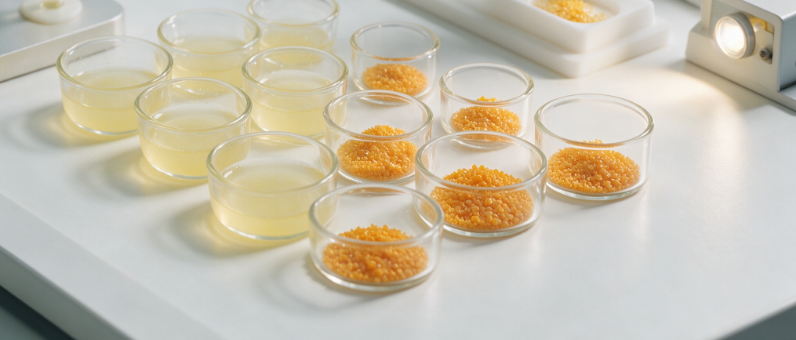
Why Comprehensive Testing of CdS Photocatalysts Is Essential for Reliable Performance and Durability
Researchers and developers seeking CdS photocatalyst testing often encounter challenges such as unexpected low hydrogen evolution rates, rapid activity decline due to photocorrosion, or poor reproducibility between synthesis batches. These issues frequently arise from sub‑optimal crystallinity, presence of cadmium hydroxide or sulfate impurities, excessive surface trap states, or inadequate co‑catalyst dispersion. Moreover, the interplay between light absorption, charge separation, and surface reactions is highly sensitive to synthesis parameters (precursor ratio, temperature, pH, capping agents). Our service provides a systematic evaluation that quantifies crystal structure and phase purity (XRD), band gap and absorption edge (UV‑Vis DRS), surface chemical states (XPS), photoluminescence (steady‑state and time‑resolved), specific surface area (BET), and photocatalytic activity (e.g., H₂ production, dye degradation, or CO₂ reduction) under controlled illumination (visible and UV) and reactor conditions. By identifying the root causes of sub‑standard performance—such as poor crystallinity, inadequate noble metal deposition, or surface contamination—we enable clients to optimise synthesis protocols, select appropriate co‑catalysts, and establish reliable quality control metrics for reproducible, high‑efficiency photocatalysts.
Our Analytical Capabilities: From Crystal Structure to Photocatalytic Performance and Durability
Our testing framework is structured into five interconnected modules, each addressing a critical aspect of CdS photocatalyst quality and functionality:
Structural and phase characterisation—We employ powder X‑ray diffraction (PXRD) with Rietveld refinement to determine the wurtzite (hexagonal) vs. zinc blende (cubic) phase ratio, crystallite size, and lattice strain, detecting any impurity phases such as CdO or Cd(OH)₂. Raman spectroscopy (with multiple excitation lines) probes the characteristic phonon modes (1LO, 2LO) and any disorder‑induced modes. High‑resolution transmission electron microscopy (HR‑TEM) with selected‑area electron diffraction (SAED) visualises particle morphology, lattice fringes, and the presence of co‑catalyst nanoparticles (e.g., Pt, Au, Pd).
Optical and electronic characterisation—We measure diffuse reflectance UV‑Vis spectra (DRS) in the 200‑800 nm range and apply the Kubelka‑Munk transformation to determine the band gap (Eg) for both direct and indirect transitions. Photoluminescence (PL) spectroscopy (steady‑state and time‑resolved) provides insight into band‑edge emission, defect‑related emission (trap states), and charge carrier recombination dynamics. Transient photocurrent and electrochemical impedance spectroscopy (EIS) are used to evaluate charge separation efficiency and flat‑band potential (Mott‑Schottky analysis), providing essential information for band alignment and heterojunction design.
Surface chemistry and composition analysis—We quantify surface elemental composition and chemical states using X‑ray photoelectron spectroscopy (XPS) with depth profiling, focusing on Cd 3d, S 2p, O 1s, and any co‑catalyst metals (e.g., Pt 4f, Au 4f). Elemental analysis (CHNS) and inductively coupled plasma optical emission spectrometry (ICP‑OES) are used for bulk composition and co‑catalyst loading quantification. Fourier‑transform infrared spectroscopy (FTIR‑ATR) identifies surface adsorbed species (e.g., hydroxyl, carbonate, capping agents).
Textural and morphological assessment—We measure specific surface area (BET) and pore size distribution (DFT/BJH) via N₂ physisorption at 77 K. Scanning electron microscopy (SEM) and field‑emission SEM (FE‑SEM) provide morphology and agglomeration information. Zeta potential as a function of pH (2‑10) is measured to assess surface charge and dispersion stability in aqueous suspension.
Photocatalytic activity and stability testing—We conduct standardised photocatalytic assays under controlled illumination sources (UV‑A, visible, or simulated solar light) with precisely calibrated light intensity. Typical probe reactions include: hydrogen evolution from water splitting (using sacrificial agents such as Na₂S/Na₂SO₃ or methanol) measured by gas chromatography (GC‑TCD/FID); dye degradation (e.g., methylene blue, rhodamine B) monitored by UV‑Vis spectrophotometry; and CO₂ photoreduction (with GC‑FID or GC‑MS) where required. We evaluate apparent quantum efficiency (AQE) at specific wavelengths and turnover number (TON) for noble metal co‑catalysts. Cyclic runs are performed to assess photostability and resistance to photocorrosion, with post‑run characterisation (XRD, XPS) to detect structural or chemical changes.
High‑Level Diagnostic and Predictive Modelling
We integrate optical (DRS, PL), electrochemical (Mott‑Schottky, EIS), and photocatalytic data to construct band diagrams and surface charge dynamics models. Using multivariate analysis (PCA, PLS), we correlate synthesis parameters (temperature, reaction time, precursor ratio) with critical performance metrics (H₂ production rate, stability, quantum efficiency), enabling quality‑by‑design (QbD) optimisation. For deactivation diagnosis, we combine post‑reaction characterisation (XRD, XPS, TEM) with activity decline profiles to distinguish between surface sulfidation, cadmium leaching, co‑catalyst sintering, and carbonaceous fouling as degradation pathways.
Regulatory Compliance and Quality Assurance
All test methods align with ISO 22197‑1 (photocatalytic activity), ASTM G173 (solar spectrum), and relevant IUPAC recommendations. Our laboratory holds ISO/IEC 17025:2017 accreditation for a broad scope of photocatalytic and materials characterisation. We issue certified test reports with full measurement uncertainty, traceability to NIST/CRM standards, and quality control data (reference photocatalysts such as P25 TiO₂, blanks, and duplicates). For intellectual property and patent submissions, we provide comprehensive data packages with detailed experimental protocols and raw data archives.
Our Distinctive Advantages in CdS Photocatalyst Testing
Integrated multi‑technique activity correlation: We perform structural (XRD, TEM), optical (DRS, PL), electronic (EIS, Mott‑Schottky), and photocatalytic (H₂ evolution, degradation) measurements on the same sample batch, enabling direct correlation between material properties and performance. This holistic approach eliminates cross‑batch variability and provides robust mechanistic insight.
Realistic and standardised illumination: Our photocatalytic reactors are equipped with calibrated solar simulators (AM 1.5G) and monochromatic LEDs for wavelength‑specific quantum efficiency measurements, ensuring that our activity data is comparable across studies and directly relevant to practical applications.
Advanced stability and photocorrosion assessment: We offer long‑term (up to 100 hours) continuous illumination tests with periodic gas/liquid sampling, coupled with post‑run ICP‑MS to quantify cadmium leaching and XPS to detect surface changes—providing definitive data on true operational stability.
Expert interpretation and mechanistic guidance: Our team includes photoelectrochemists and materials scientists with extensive experience in CdS‑based systems. We provide specific, actionable recommendations—for example, advising on optimal co‑catalyst deposition method to maximise charge transfer, or suggesting a protective overlayer (e.g., TiO₂, ZnS) to mitigate photocorrosion.
Fast turnaround and flexible sample formats: Our standard full characterisation and activity package is delivered within 12‑16 working days, with expedited 72‑hour screening for key parameters (band gap, phase purity, and initial hydrogen production). We handle powder, film, and composite samples with masses as low as 10 mg.
End‑to‑End Service Workflow
We initiate each project with a complimentary technical consultation to define your CdS synthesis route, target application (e.g., water splitting, pollutant degradation), and critical performance criteria. We design a tailored test plan, advising on sample handling and shipping (including inert atmosphere for oxidation‑sensitive samples). Upon sample receipt, we perform receipt inspection and preconditioning (drying, degassing). All tests are executed with strict QA/QC—reference photocatalysts, blanks, and duplicates. Data are integrated and reviewed by our lead photochemist, then compiled into a comprehensive report containing XRD patterns, DRS spectra, PL curves, activity plots, stability profiles, and a clear executive summary with optimisation recommendations. A post‑report meeting is offered to discuss findings and plan further development or scale‑up.
Partner with Us for Reliable, High‑Performance CdS Photocatalyst Solutions
Cadmium sulfide photocatalysts offer tremendous potential for solar‑driven chemistry, but their practical realisation demands rigorous characterisation and performance validation. Our testing service provides the scientific depth, practical relevance, and regulatory support necessary to ensure your CdS‑based materials deliver efficient, stable, and reproducible performance. We have supported academic research groups, industrial R&D teams, and environmental technology developers in advancing CdS photocatalysis.
We invite you to contact our technical experts to discuss your specific testing needs—whether for material screening, quality control, or troubleshooting. With our advanced analytical instruments, accredited protocols, and specialised expertise, we provide the insights you need to perfect your CdS photocatalyst technology. Request a detailed proposal or schedule a technical consultation today and take the next step towards superior, data‑driven photocatalytic solutions.