Reasons for choosing our testing services
ZHONGXI Testing has obtained inspection qualification certifications from multiple countries and regions worldwide. We possess a senior testing team and advanced testing methods, providing independent, impartial, and professional third-party verification services for global carbon projects.

Internationally recognized authority
Certified by multiple international standards such as CNAS, VCS, and GS, with reports universally applicable worldwide.

Global service capability
Covering 140+ countries and regions, it supports on-site detection and remote verification in multiple languages.

Professional experimental methods
Adopt standard experimental methods to ensure accurate and reliable data.
Advanced Performance Testing of Low‑Density Lipoprotein (LDL) Adsorbents: Comprehensive Characterisation for Haemoperfusion and Apheresis Applications
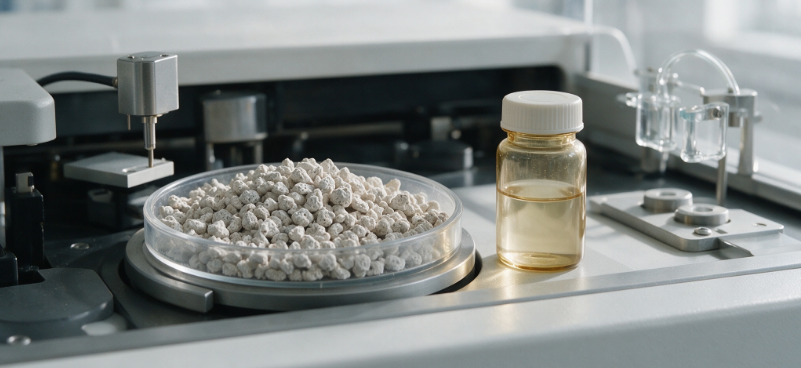
Low‑density lipoprotein (LDL) adsorbents—including dextran sulfate‑cellulose, polyacrylate‑based beads, heparin‑immobilised polymers, and carbon‑ or silica‑based composite materials—are critical components in therapeutic apheresis systems for the treatment of familial hypercholesterolaemia and other dyslipidaemias. The clinical efficacy and safety of these adsorbents depend on a precise balance of LDL binding capacity, selectivity (over high‑density lipoproteins and other plasma proteins), haemocompatibility, sterilisability, and mechanical durability under dynamic flow conditions. Even minor deviations in ligand density, pore architecture, or surface charge can lead to reduced lipid clearance, premature column saturation, complement activation, or thrombogenic complications. Our laboratory offers a fully integrated, multi‑scale testing platform specifically designed for LDL adsorbents, combining physicochemical characterisation, static and dynamic binding assays, competitive protein adsorption studies, haemocompatibility evaluation (ISO 10993), and accelerated flow‑induced degradation testing. We deliver quantitative, diagnostic, and predictive data that supports material development, quality control, regulatory submission (FDA, CE), and clinical performance optimisation for medical device manufacturers and research institutions.
Why Specialised Testing of LDL Adsorbents Is Essential for Therapeutic Efficacy and Patient Safety
Clients seeking LDL adsorbent testing frequently encounter challenges such as unexpectedly low LDL reduction ratios in clinical use, elevated levels of complement split products, or progressive pressure drop across the adsorber column. These issues often arise from sub‑optimal ligand immobilisation, non‑specific protein fouling, inadequate pore connectivity, or degradation of the polymer matrix under flow. Moreover, regulatory bodies demand stringent characterisation of adsorptive performance, leachables, and biocompatibility before clinical deployment. Our service provides a systematic evaluation that quantifies LDL adsorption capacity (mg/g or mg/mL), selectivity (LDL/HDL ratio), desorption/regeneration efficiency, haemolysis rate, complement activation (C3a, C5a), and cytokine release under simulated clinical conditions (human plasma or whole blood at 37 °C). By identifying the root causes of sub‑optimal performance—such as inaccessible binding sites, surface‑induced coagulation, or ligand shedding—we enable clients to optimise coupling chemistries, refine bead/pore design, and establish robust manufacturing QC parameters for high‑performance, safe apheresis systems.
Our Analytical Capabilities: From Material Fingerprinting to Dynamic Haemocompatibility and Clinical Simulation
Our testing framework is structured into five interconnected modules, each addressing a critical dimension of LDL adsorbent quality and clinical fitness:
Physicochemical and structural characterisation—We determine specific surface area (BET), total pore volume, and pore size distribution (DFT/BJH) via N₂ physisorption at 77 K (for porous adsorbents). Mercury intrusion porosimetry evaluates macroporosity and bead integrity. Scanning electron microscopy (SEM) and transmission electron microscopy (TEM) visualise bead morphology, surface roughness, and coating uniformity. X‑ray photoelectron spectroscopy (XPS) and Fourier‑transform infrared spectroscopy (FTIR‑ATR) confirm the presence and density of functional groups (e.g., sulfate, carboxyl, amine, heparin). Elemental analysis (CHNS) and colorimetric/conductometric titration quantify ligand density and charge density. Thermogravimetric Analysis (TGA) evaluates thermal stability and residual solvent content.
Static and dynamic LDL binding assays—We perform batch binding experiments using isolated human LDL (or standardised lipoproteins) in phosphate‑buffered saline and in human plasma or serum to simulate physiological conditions. We measure adsorption isotherms (Langmuir, Freundlich) and kinetics (pseudo‑first‑order, pseudo‑second‑order) to derive maximum binding capacity (Q₀), affinity constant (Ka), and binding rate. For dynamic performance, we use recirculating flow‑through columns (perfusion loops) at controlled flow rates (50‑150 mL/min) and temperature (37 °C), collecting serial samples to construct breakthrough curves and determine dynamic binding capacity (DBC at 10 % breakthrough) and column utilisation efficiency. We also evaluate desorption efficiency using validated elution buffers (e.g., high‑salt or acidic solutions).
Selectivity and competitive protein adsorption—We quantify the relative adsorption of LDL vs. HDL, VLDL, and abundant plasma proteins (albumin, fibrinogen, immunoglobulins) using size‑exclusion or ion‑exchange HPLC, gel electrophoresis (SDS‑PAGE), and immunoassays (ELISA). The selectivity index (LDL/HDL ratio) is calculated under static and dynamic conditions. We also assess non‑specific protein fouling by incubating adsorbents with whole plasma and measuring the total adsorbed protein mass (micro‑BCA) and profiling the adsorbed proteome by LC‑MS/MS (optional).
Haemocompatibility and biological safety evaluation—We conduct a comprehensive panel of tests according to ISO 10993‑4 and ISO 10993‑12: haemolysis rate (direct and indirect), complement activation (C3a, C5a, SC5b‑9 by ELISA), thrombin‑antithrombin complex (TAT) and platelet activation (PF4, β‑TG), and cytokine release (IL‑1β, IL‑6, TNF‑α) from whole blood or platelet‑rich plasma in contact with the adsorbent. Tests are performed under static and dynamic (flow) conditions at 37 °C for up to 4 hours. We also evaluate leachables (e.g., monomers, crosslinkers, coupling agents) by GC‑MS and LC‑MS/MS after incubation in physiological solutions.
Mechanical durability, Sterility, and ageing tests—We assess bead strength under compressive load and abrasion resistance by rotating drum or flow‑induced attrition. Accelerated ageing is performed at elevated temperature (40‑55 °C) and humidity, followed by re‑characterisation of binding capacity and haemocompatibility. Steam or ethylene oxide (EtO) sterilisation effects are evaluated by comparing pre‑ and post‑sterilisation performance. We also perform pressure‑flow curve measurements to determine hydraulic resistance and ensure compatibility with apheresis pumps.
High‑Level Predictive Modelling and Diagnostic Interpretation
We integrate binding, selectivity, and haemocompatibility data with mass transfer and reaction kinetics models to predict column performance under varying clinical conditions (e.g., variable plasma flow, LDL concentration). Computational fluid dynamics (CFD) simulations (available on request) can be used to optimise column geometry. Using multivariate statistical analysis (PCA, PLS), we correlate ligand density, pore size, and surface charge with clinical performance metrics (LDL reduction, complement activation), enabling quality‑by‑design (QbD) for adsorbent synthesis. For root‑cause failure analysis, we combine post‑use characterisation (SEM, XPS, FTIR) with clinical data to differentiate between ligand loss, protein fouling, and structural collapse.
Regulatory Compliance and Quality Assurance
All test methods are aligned with ISO 10993 (biological evaluation), ISO 8638 (haemodialysers and apheresis devices), and relevant FDA/CE guidelines. Our laboratory holds ISO/IEC 17025:2017 accreditation and GMP/GLP compliance for a broad scope of medical device and biomaterial testing. We issue certified test reports with full measurement uncertainty, traceability to NIST/CRMs, and quality control data (reference materials, blanks, duplicates). For regulatory submissions (IDE, PMA, CE‑Mark), we provide comprehensive data packages with full protocols, raw data, and statistical analyses.
Our Distinctive Advantages in LDL Adsorbent Testing
Clinical‑relevant dynamic simulation: We conduct our flow‑through binding assays using human plasma or whole blood rather than buffer solutions, ensuring that our binding capacity, selectivity, and haemocompatibility data directly predict real clinical performance—a critical differentiator from standard chemical screening.
Integrated multi‑parameter workflow: We perform binding, selectivity, haemocompatibility, and mechanical tests on the same adsorbent batch, enabling direct correlation between material properties (ligand density, pore structure) and clinical performance. This holistic approach eliminates cross‑batch variability and provides a complete device fingerprint.
Advanced leachable and degradation profiling: Our HRMS and ICP‑MS capabilities allow identification and quantification of leachables at trace levels, including unexpected degradation products from sterilisation, supporting comprehensive safety assessments for regulatory submissions.
Expert guidance for adsorbent optimisation: Our team includes biomaterials scientists, immunologists, and apheresis specialists. We provide specific, actionable recommendations—for example, adjusting the degree of sulfate substitution to balance LDL affinity and complement activation, or suggesting a coating to reduce platelet adhesion without compromising mass transfer.
Fast turnaround and flexible sample formats: Our standard full characterisation package is delivered within 14‑18 working days, with expedited 72‑hour screening for key parameters (LDL binding capacity and haemolysis). We handle adsorbent volumes from 1 mL to several litres, and can test both loose beads and pre‑packed cartridges.
End‑to‑End Service Workflow
We begin with a complimentary technical consultation to define your adsorbent composition, intended clinical application, regulatory pathway, and critical quality attributes. We design a tailored test plan, including shipping and handling guidelines. Upon sample receipt, we perform receipt inspection and preconditioning (e.g., hydration, rinsing). All tests are executed with strict QA/QC—reference adsorbents, blanks, and duplicates. Data are integrated and reviewed by our lead biomedical scientist, then compiled into a comprehensive report containing binding isotherms, breakthrough curves, haemocompatibility profiles, and a clear executive summary with optimisation recommendations. A post‑report meeting is offered to discuss findings and plan further development or clinical trial support.
Partner with Us for Reliable, High‑Performance LDL Adsorbent Solutions
LDL apheresis is a life‑saving therapy, and the performance of the adsorbent material directly impacts clinical outcomes and patient safety. Our testing service provides the scientific depth, practical realism, and regulatory support necessary to ensure your adsorbent delivers consistent, effective lipid reduction with minimal adverse effects. We have supported leading medical device companies, biotech firms, and research institutes in developing and qualifying apheresis adsorbents for global markets.
We invite you to contact our technical experts to discuss your specific testing needs—whether for material screening, quality control, or regulatory submission. With our advanced analytical capabilities, accredited protocols, and specialised expertise, we provide the insights you need to perfect your LDL adsorbent technology and bring safe, effective therapies to patients. Request a detailed proposal or schedule a technical consultation today and take the next step towards superior, data‑driven apheresis solutions.