Reasons for choosing our testing services
ZHONGXI Testing has obtained inspection qualification certifications from multiple countries and regions worldwide. We possess a senior testing team and advanced testing methods, providing independent, impartial, and professional third-party verification services for global carbon projects.

Internationally recognized authority
Certified by multiple international standards such as CNAS, VCS, and GS, with reports universally applicable worldwide.

Global service capability
Covering 140+ countries and regions, it supports on-site detection and remote verification in multiple languages.

Professional experimental methods
Adopt standard experimental methods to ensure accurate and reliable data.
Comprehensive Performance Testing of Low‑Temperature Denitrification (DeNOx) Catalysts: Advanced Characterisation and Application Validation
Low‑temperature selective catalytic reduction (SCR) catalysts—typically based on vanadium‑titanium (V₂O₅‑WO₃/TiO₂), manganese‑cerium (MnOx‑CeO₂), iron‑zeolite (Fe‑ZSM‑5), or copper‑zeolite (Cu‑CHA) systems—are critical for controlling nitrogen oxide (NOx) emissions from industrial flue gas, diesel engine exhaust, and waste‑to‑energy plants at temperatures below 250 °C, often after desulphurisation or particulate filtration. Operation in this regime offers significant energy savings and enables integration with existing plant infrastructure, but it also introduces severe challenges: low reaction kinetics, strong inhibition by water vapour (H₂O) and sulphur dioxide (SO₂), and rapid deactivation due to ammonium bisulphate deposition or metal sulphation. The commercial viability of these catalysts hinges on a delicate balance of low‑temperature activity, high N₂ selectivity, robust resistance to poisoning, and long-term hydrothermal stability. Our laboratory offers a fully integrated, multi‑scale testing platform specifically designed for the rigorous evaluation of low‑temperature DeNOx catalysts, combining advanced physicochemical characterisation, simulated flue gas activity testing, accelerated poisoning studies, and in‑situ spectroscopic analysis. We deliver quantitative, diagnostic, and predictive data that supports catalyst development, quality assurance, process optimisation, and regulatory compliance for the power, cement, chemical, and automotive sectors.
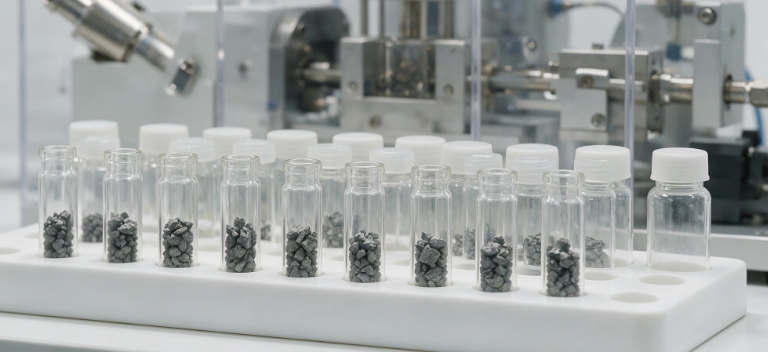
Why Dedicated Testing of Low‑Temperature DeNOx Catalysts Is Essential for Reliable Emission Control
Clients seeking catalyst testing in this area frequently encounter challenges such as unexpectedly low NOx conversion in the presence of SO₂, rapid activity decline under transient conditions, or poor reproducibility between batches. These issues often stem from non‑optimal manganese valence states, insufficient dispersion of active oxides, or framework collapse of zeolite supports under hydrothermal ageing. Furthermore, the interplay between adsorption, reaction, and diffusion in the micro‑ and mesoporous structure of the catalyst is highly sensitive to synthesis parameters (precursor ratio, calcination temperature, doping sequence). Our service provides a systematic evaluation that quantifies NOx conversion and N₂ selectivity, SO₂/H₂O tolerance, long‑term stability (0‑1000 hours), and resistance to hydrocarbon poisoning under realistic flue gas compositions (including O₂, H₂O, SO₂, and NH₃ slip). By identifying the root causes of performance deterioration—such as surface sulphation, vanadia reduction, or pore blockage—we enable clients to optimise active phase loading, select appropriate promoters (e.g., Nb, Ce, W), and design effective regeneration protocols for reliable emission compliance.
Our Analytical Capabilities: From Nanoscale Structure to Real‑Flue‑Gas Performance
Our testing framework is structured into five interconnected modules, each addressing a critical dimension of low‑temperature DeNOx catalyst behaviour:
Physicochemical and surface characterisation—We determine specific surface area (BET), total pore volume, and pore size distribution (DFT/BJH) via N₂ physisorption at 77 K. X‑ray diffraction (XRD) identifies crystalline phases (anatase, rutile, Mn₃O₄, CeO₂) and detects any amorphous impurities. Raman spectroscopy and X‑ray photoelectron spectroscopy (XPS) with depth profiling probe the oxidation states of Mn, Ce, V, and Fe, as well as surface oxygen species and sulphate formation. Scanning electron microscopy (SEM‑EDS) and transmission electron microscopy (TEM) visualise morphology and elemental distribution. Temperature‑programmed desorption of NH₃ (NH₃‑TPD) quantifies total acidity, while pyridine‑adsorbed FTIR distinguishes between Bronsted and Lewis acid sites—critical for NH₃ adsorption and the SCR reaction mechanism.
Activity and selectivity testing under simulated flue gas—We operate continuous flow fixed‑bed reactors with precise control over feed composition: NO (500‑1000 ppm), NH₃ (500‑1000 ppm), O₂ (5‑10 %), H₂O (0‑15 %), SO₂ (0‑500 ppm), and balance N₂. We measure NOx conversion and N₂ selectivity as functions of temperature (100‑350 °C), space velocity (GHSV 10,000‑100,000 h⁻¹), and inlet NH₃/NO ratio (0.8‑1.2). On‑line FTIR and chemiluminescence NOx analysers provide real‑time quantification. Kinetic parameters (activation energy, reaction order) are derived using the Eley‑Rideal or Langmuir‑Hinshelwood frameworks, and effectiveness factors are calculated to identify potential mass‑transfer limitations.
Poisoning, deactivation, and regeneration assessment—We perform accelerated ageing under aggressive conditions: high SO₂ (500‑1500 ppm) at low temperature (150‑200 °C) to simulate ammonium bisulphate (ABS) formation, and hydrothermal steaming (with 10‑20 % H₂O at 200‑300 °C) to accelerate metal sintering and zeolite dealumination. Reactive gas switching (NO/NH₃/O₂) allows real‑time monitoring of activity decline. We evaluate regeneration efficacy via thermal treatment (300‑450 °C in air or N₂) and/or chemical washing, and multiple cycle testing is conducted to determine maximum operational lifespan. Post‑mortem characterisation (XRD, XPS, TGA, BET) identifies sulphate accumulation, vanadium reduction, or structural collapse as primary deactivation mechanisms.
Hydrothermal stability and water‑sulphur resistance—We conduct long‑term tests (up to 1000 hours) at 180‑250 °C with 10‑15 % H₂O and varying SO₂ levels, measuring time‑to‑breakthrough and the rate of activity decay. In‑situ Raman and DRIFT spectroscopy are used to monitor the formation of surface sulphate species, ammonium bisulphate, and nitrate intermediates. We also evaluate the effect of transient conditions (temperature ramps, shut‑down/start‑up) to mimic real plant operations.
Industrial catalyst monolith and pellet testing—For commercial‑scale samples, we perform channel‑by‑channel pressure‑drop measurements and mass transfer coefficient determination using a customised monolith flow rig. Uniformity of washcoat composition is assessed by SEM‑EDS line scans and X‑ray fluorescence (XRF) mapping. We also conduct adhesion and abrasion tests to ensure coating durability under high‑velocity flue gas.
High‑Level Predictive Modelling and Diagnostic Interpretation
We integrate activity, poisoning, and kinetic data with reactor models (PFR, CSTR) to predict full‑scale performance under variable flue gas conditions. Using multivariate statistical analysis (PCA, PLS), we correlate synthesis parameters (Mn/Ce ratio, calcination temperature, precursor choice) with key performance indicators (NOx conversion, SO₂ resistance, stability), enabling quality‑by‑design (QbD) optimisation of catalyst synthesis. For deactivation diagnostics, we combine post‑use characterisation (XPS, XRD, TGA) with performance decline profiles to distinguish between reversible (ABS deposition) and irreversible (sintering, dealumination) degradation pathways.
Regulatory Compliance and Quality Assurance
All test methods align with ASTM, ISO, and VDI 2449 guidelines for deNOx catalyst evaluation. Our laboratory holds ISO/IEC 17025:2017 accreditation for a broad scope of catalytic and environmental testing. We issue certified test reports with full measurement uncertainty, traceability to certified gas standards, and quality control data (reference catalysts, blanks, duplicates). For regulatory submissions (e.g., MACT, BREF, Euro VI), we provide comprehensive data packages with detailed experimental protocols and raw data archives.
Our Distinctive Advantages in Low‑Temperature DeNOx Catalyst Testing
Realistic multi‑component flue gas simulation: We uniquely combine SO₂, H₂O, and low‑temperature conditions in a single testing platform, replicating the actual operating environment of tail‑end SCR installations. This ensures that our activity and deactivation data is directly transferable to industrial practice, avoiding the common pitfall of overestimating performance from dry, clean‑gas tests.
Integrated in‑situ spectroscopic correlation: We combine DRIFT and Raman spectroscopy with activity measurements in real‑time, allowing direct observation of ammonium bisulphate formation, nitrate intermediates, and surface vanadia transformation under reaction conditions—providing mechanistic insights that guide targeted improvements.
Advanced sulphur tolerance and regeneration diagnostics: We quantify sulphur accumulation profiles (XPS depth profiling) and ABS decomposition kinetics (TGA‑MS), enabling precise optimisation of regeneration temperature and duration to maximise catalyst life.
Expert guidance for material and process optimisation: Our team includes catalysis scientists and environmental engineers with extensive experience in SCR technology. We provide specific, actionable recommendations—for example, optimising Mn/Ce ratio to balance low‑temperature activity with SO₂ resistance, or advising on washcoat loading to minimise pressure drop while maintaining activity.
Fast turnaround and flexible sample formats: Our standard full characterisation and activity package is delivered within 10‑14 working days, with expedited 72‑hour screening for key parameters (NOx conversion, SO₂ sensitivity). We handle powder, pellet, and monolith samples with minimal mass requirements.
End‑to‑End Service Workflow
We begin with a complimentary technical consultation to define your catalyst composition, flue gas conditions, target emissions limit, and operational constraints. We design a tailored test plan, including handling and shipping guidelines (e.g., desiccant‑packed containers for hydroscopic catalysts). Upon sample receipt, we perform preconditioning (drying, calcination). All tests are executed with strict QA/QC—reference catalysts, blanks, and duplicates. Data are integrated and reviewed by our lead catalysis scientist, then compiled into a comprehensive report containing activity curves, poisoning profiles, deactivation kinetics, and a clear executive summary with optimisation recommendations. A post‑report meeting is offered to discuss findings and plan further development or deployment.
Partner with Us for Reliable Low‑Temperature DeNOx Catalyst Solutions
Low‑temperature SCR is a cost‑effective and energy‑efficient solution for NOx control, but its success hinges on thoroughly characterised catalysts that can withstand the aggressive nature of tail‑end flue gases. Our testing service provides the scientific depth, practical realism, and regulatory support necessary to ensure your catalyst meets performance and reliability targets. We have supported catalyst manufacturers, power utilities, and cement plants in optimising their DeNOx systems.
We invite you to contact our technical experts to discuss your specific testing needs—whether for new catalyst development, quality control, or troubleshooting. With our advanced analytical capabilities, accredited protocols, and specialised expertise, we provide the insights you need to perfect your low‑temperature DeNOx technology and achieve compliance with confidence. Request a detailed proposal or schedule a technical consultation today and take the next step towards superior, data‑driven emission control solutions.