Reasons for choosing our testing services
ZHONGXI Testing has obtained inspection qualification certifications from multiple countries and regions worldwide. We possess a senior testing team and advanced testing methods, providing independent, impartial, and professional third-party verification services for global carbon projects.

Internationally recognized authority
Certified by multiple international standards such as CNAS, VCS, and GS, with reports universally applicable worldwide.

Global service capability
Covering 140+ countries and regions, it supports on-site detection and remote verification in multiple languages.

Professional experimental methods
Adopt standard experimental methods to ensure accurate and reliable data.
Advanced Analytical Testing of Electrode Catalysts: Comprehensive Characterisation for Performance Optimisation
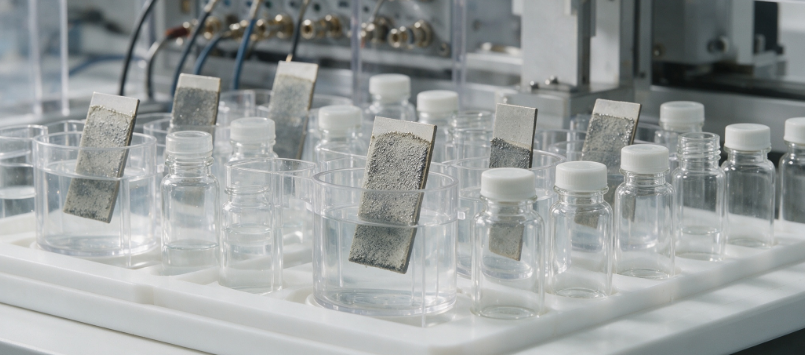
Electrode catalysts—including platinum group metals (PGMs), non‑precious metal catalysts (NPMCs), metal oxides, and carbon‑based nanocomposites—are the cornerstone of fuel cells, electrolysers, metal‑air batteries, and electrochemical sensors. Their efficiency, durability, and selectivity directly dictate the viability of these clean‑energy technologies. However, the development and deployment of high‑performance electrode catalysts are hampered by complex degradation mechanisms, nano‑scale heterogeneity, and the stringent demands of real‑world operation. Our laboratory offers a fully integrated, multi‑scale analytical platform specifically designed for the rigorous characterisation of electrode catalysts. We combine state‑of‑the‑art electrochemical testing, advanced physical and chemical characterisation, and in‑situ/operando analysis to deliver quantitative, diagnostic, and predictive data that empowers researchers and manufacturers to accelerate catalyst development, ensure quality control, and achieve regulatory compliance.
Why Specialised Testing of Electrode Catalysts Is Critical for Energy Conversion and Storage
Clients seeking electrode catalyst testing frequently encounter challenges such as unexpectedly low mass activity, rapid voltage decay, poor reproducibility between batches, or failure under start‑up/shutdown conditions. These issues often stem from sub‑optimal catalyst composition, insufficient active site exposure, particle agglomeration, support corrosion, or poisoning by impurities. Moreover, the correlation between laboratory‑scale performance and commercial device behaviour is notoriously difficult to establish without comprehensive, application‑oriented testing. Our service provides a systematic evaluation that quantifies electrochemically active surface area (ECSA), specific and mass activities (per unit Pt or total metal), Tafel slopes, charge‑transfer resistance, and long‑term stability under accelerated stress tests (AST). By identifying the root causes of sub‑standard performance—such as carbon support oxidation, metal dissolution, or Nafion ionomer degradation—we enable clients to optimise synthesis parameters, select appropriate supports, and design durable membrane‑electrode assemblies (MEAs) for reliable fuel cell and electrolyser operation.
Our Analytical Capabilities: From Fundamental Electrochemical Activity to Structural and Chemical Integrity
Our testing framework is organised into three synergistic pillars, each addressing a critical facet of electrode catalyst behaviour:
1. Comprehensive electrochemical characterisation. We conduct cyclic voltammetry (CV), linear sweep voltammetry (LSV), rotating disc electrode (RDE) and rotating ring‑disc electrode (RRDE) experiments to evaluate oxygen reduction reaction (ORR), oxygen evolution reaction (OER), hydrogen evolution reaction (HER), and alcohol oxidation activity. We measure half‑wave potential, kinetic current density, electron transfer number, and peroxide yield with high precision. Electrochemical impedance spectroscopy (EIS) is employed to deconvolute ohmic, charge‑transfer, and diffusion contributions. For MEA‑level evaluation, we operate single‑cell test stations with controlled temperature, pressure, and humidification, measuring polarisation curves, electrochemical impedance, and gas crossover to assess performance under realistic stack conditions.
2. Advanced physical and chemical characterisation. We determine crystallite size and phase composition by X‑ray diffraction (XRD) with Rietveld refinement, and particle size distribution, morphology, and elemental mapping by high‑resolution scanning and transmission electron microscopy (SEM/TEM) with EDS and EELS. X‑ray photoelectron spectroscopy (XPS) with depth profiling identifies oxidation states of metals, surface contamination, and ionomer coverage. Inductively coupled plasma mass spectrometry (ICP‑MS) quantifies metal loading and dissolved metal ions, while Thermogravimetric Analysis (TGA) assesses carbon support stability and catalyst loading. Brunauer‑Emmett‑Teller (BET) surface area and Barrett‑Joyner‑Halenda (BJH) pore analysis are used to characterise support porosity and its evolution after ageing.
3. In‑situ and operando spectroscopic probing. To elucidate reaction mechanisms and degradation pathways, we offer in‑situ Raman spectroscopy and FTIR reflection spectroscopy during electrochemical polarisation, allowing direct observation of surface adsorbates, intermediate species, and carbon support corrosion. Differential electrochemical mass spectrometry (DEMS) is available for real‑time detection of volatile products (e.g., CO₂, H₂) generated during reactions, providing unique insight into faradaic efficiency and side‑reaction pathways.
High‑Throughput and Customised Test Protocols for Accelerated Development
We understand that time‑to‑market is critical. Our automated multi‑channel electrochemical workstations enable simultaneous testing of up to 16 catalysts under identical conditions, facilitating rapid screening of compositional libraries and statistically robust performance comparisons. We also design customised accelerated stress tests (AST) tailored to your specific application—including potential cycling, load cycling, start‑up/shutdown simulation, and contaminant exposure (CO, SO₂, NOₓ). This allows us to project catalyst lifetime and identify failure thresholds before costly scale‑up.
Advanced Diagnostic and Mechanistic Studies
Beyond routine activity and durability testing, we offer detailed mechanistic analyses that uncover the fundamental reasons behind performance differences. These include Tafel analysis for kinetic parameter extraction, activation energy determination via temperature‑dependent studies, and distribution of relaxation times (DRT) analysis from EIS data. We combine these with post‑test characterisation (XRD, TEM, XPS, and ICP‑MS) to build a complete degradation profile, distinguishing between Pt dissolution, carbon corrosion, ionomer degradation, and agglomeration. This level of diagnostic insight is essential for rational catalyst redesign and for validating multi‑physics models.
Regulatory Compliance and Quality Assurance
All test methods are aligned with ASTM, ISO, and IEC standards for electrocatalyst characterisation, including ASTM G19 (RDE), ISO 12782 (fuel cell stack), and IEC 62282 (fuel cell technologies). Our laboratory is ISO/IEC 17025:2017 accredited for a broad scope of electrochemical and materials testing. We issue certified test reports with full measurement uncertainty, traceability to NIST/CRM standards, and quality control data (reference catalysts, blanks, and duplicates). For regulatory submissions and patent applications, we provide comprehensive data packages with detailed protocols and raw data archives.
Our Distinctive Advantages in Electrode Catalyst Testing
Integrated multi‑technique correlation. We perform electrochemical, physical, and in‑situ characterisation on identical sample batches, enabling direct correlation between structure, composition, and function. This holistic approach eliminates cross‑batch variability and provides a robust structure‑activity‑durability framework—essential for understanding complex degradation mechanisms.
Realistic device‑level testing. In addition to RDE screening, we offer full MEA testing on 5‑50 cm² active area cells, simulating actual operating conditions (temperature, pressure, relative humidity, and gas composition). This bridges the gap between fundamental research and industrial implementation, ensuring that our data is directly applicable to your product development.
Advanced data analysis and modelling. Our team includes electrochemists and data scientists who employ multivariate statistical analysis (PCA, PLS) to identify key performance descriptors and to predict catalyst behaviour under varied conditions. We provide customised recommendations for formulation adjustments, support selection, and ionomer optimisation.
Rapid turnaround with scalable throughput. Our standard characterisation package (RDE activity + stability + basic physicochemical) is delivered within 7‑10 working days. For urgent screening, we offer 48‑hour express service for key parameters (ECSA, mass activity, and degradation rate). We handle sample quantities from milligrams to kilograms.
End‑to‑End Service Workflow
We initiate each project with a complimentary technical consultation to define your catalyst material, target application (e.g., PEMFC, AEMFC, water electrolysis), and performance criteria. We design a customised test plan, including handling and shipping guidelines (e.g., inert atmosphere for air‑sensitive materials). Upon sample receipt, we perform inspection and preconditioning (ink preparation, electrode deposition). All tests are executed with strict QA/QC—reference catalysts, blanks, and duplicates. Data are integrated and reviewed by our lead electrochemist, then compiled into a comprehensive report containing cyclic voltammograms, polarisation curves, impedance spectra, Tafel plots, and a clear executive summary with optimisation recommendations. A post‑report meeting is offered to discuss findings and plan next‑stage development.
Partner with Us for Reliable, High‑Performance Electrode Catalyst Solutions
Electrode catalysts are at the heart of the energy transition, and their success relies on precise, multi‑dimensional characterisation. Our testing service provides the scientific rigor, practical relevance, and regulatory support necessary to accelerate your catalyst development, improve quality, and reduce time‑to‑market. We have supported leading automotive OEMs, energy companies, and research institutes in optimising their electrocatalytic materials.
We invite you to contact our technical experts to discuss your specific testing needs—whether for new material screening, batch quality control, or failure analysis. With our advanced analytical instruments, accredited protocols, and specialised electrochemistry expertise, we provide the insights you need to drive innovation. Request a detailed proposal or schedule a technical consultation today and take the next step towards superior, data‑driven electrode catalyst solutions.