Reasons for choosing our testing services
ZHONGXI Testing has obtained inspection qualification certifications from multiple countries and regions worldwide. We possess a senior testing team and advanced testing methods, providing independent, impartial, and professional third-party verification services for global carbon projects.

Internationally recognized authority
Certified by multiple international standards such as CNAS, VCS, and GS, with reports universally applicable worldwide.

Global service capability
Covering 140+ countries and regions, it supports on-site detection and remote verification in multiple languages.

Professional experimental methods
Adopt standard experimental methods to ensure accurate and reliable data.
Advanced Analytical Testing of Zinc Sulfate Electrolyte Solutions: Comprehensive Quality Control for Electrowinning and Electroplating Operations
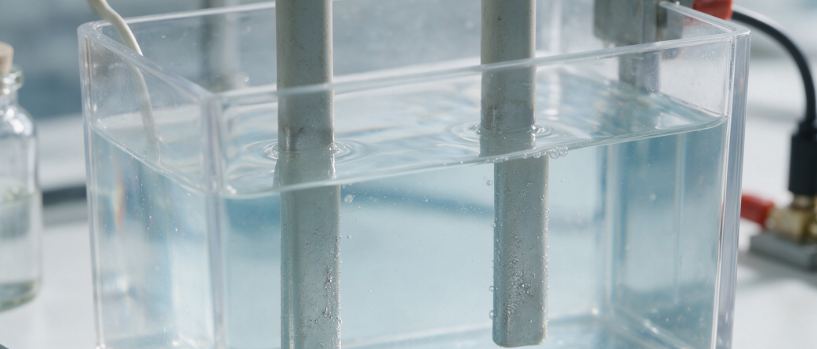
Zinc sulfate electrolyte solutions are the lifeblood of zinc electrowinning, electrogalvanising, and battery-grade zinc production. The performance of these industrial processes hinges critically on the precise composition of the electrolyte—specifically the zinc concentration, free acid (sulfuric acid) content, trace metal impurities (e.g., Cu, Cd, Co, Ni, Fe, Mn), organic additives, and suspended solids. Even minor deviations in these parameters can lead to reduced current efficiency, dendritic growth, poor deposit quality, increased energy consumption, or premature cell shorting. Our laboratory provides a fully integrated, multi‑parameter testing platform specifically designed for the rigorous analysis of zinc sulfate solutions, combining classical wet‑chemical titrations, advanced atomic spectroscopy, ion chromatography, and electrochemical techniques to deliver a complete compositional fingerprint. We provide quantitative, diagnostic, and predictive data that supports process optimisation, bath maintenance, quality assurance, and troubleshooting for zinc refineries, galvanising lines, and battery material producers worldwide.
Why Comprehensive Testing of Zinc Sulfate Electrolytes Is Essential for Operational Efficiency and Product Quality
Plant operators and quality engineers seeking electrolyte testing often face challenges such as unexpected cathode roughness, frequent anode passivation, or inconsistent zinc purity. These issues almost invariably stem from unbalanced acid‑zinc ratios, accumulation of heavy metal impurities that lower hydrogen overpotential, or degradation of organic brighteners/levellers. Moreover, trace elements like cobalt, nickel, and antimony at sub‑ppm levels can dramatically reduce current efficiency, while chloride and nitrate can attack anodes. Our service provides a systematic characterisation that quantifies zinc metal content (g/L), free sulfuric acid (g/L), iron (total and ferrous), manganese, copper, cadmium, cobalt, nickel, chloride, fluoride, and organic additives (e.g., glue, gelatine, thiourea), along with conductivity, density, and pH. By identifying the root causes of bath deterioration—such as impurity buildup from anode corrosion, acid mist carryover, or additive breakdown—we empower clients to optimise purification schedules, adjust current density, and maintain electrolyte stability for consistent, high‑quality zinc deposits.
Our Analytical Capabilities: From Routine Parameters to Ultra‑Trace Contaminants
Our testing framework is structured into four interconnected modules, each addressing a critical aspect of electrolyte quality:
Major component analysis by classical and instrumental methods—We determine zinc concentration by complexometric titration (EDTA) with xylenol orange indicator, and by inductively coupled plasma optical emission spectrometry (ICP‑OES) for cross‑validation and high‑throughput. Free sulfuric acid is quantified by potentiometric titration with standardised NaOH, accounting for the buffering effect of metal sulfates using the Gran method or specific acid‑base titration protocols. Iron (total and Fe²⁺) is measured by dichromate titration and UV‑Vis spectrophotometry (phenanthroline method). Manganese is determined by ICP‑OES or by periodate oxidation spectrophotometry. Chloride and fluoride are analysed by ion chromatography (IC) and ion‑selective electrode (ISE), with detection limits in the low ppm range.
Trace metal impurity profiling—Using ICP‑MS (triple quadrupole) and ICP‑OES, we quantify a comprehensive suite of impurity elements including Cu, Cd, Co, Ni, Pb, Sb, As, Ge, Sn, Se, Te, Tl, Ag, and Bi with sub‑ppb detection limits achieved through collision/reaction cell technology to eliminate polyatomic interferences (e.g., ⁶⁴Zn, ⁶⁶Zn, ⁶⁸Zn on ⁶³Cu, ⁶⁵Cu). We also analyse alkali and alkaline earth metals (Na, K, Ca, Mg) which can affect solution conductivity and deposit adhesion. For ultra‑trace analysis in high‑salt matrices, we employ pre‑concentration (chelation or co‑precipitation) and/or matrix‑matched calibration to ensure accuracy.
Organic additive and decomposition product analysis—We monitor glue, gelatine, and other proteinaceous levellers by UV‑Vis spectrophotometry (biuret or Lowry method) and by total organic carbon (TOC) analysis. Thiourea and its degradation products are quantified by HPLC‑UV or LC‑MS/MS. Surfactants and brighteners can be identified and quantified using cyclohexane extraction followed by FTIR or gas chromatography‑mass spectrometry (GC‑MS) after derivatisation. We also assess organic contamination build‑up by measuring chemical oxygen demand (COD) of the solution.
Physical property and stability assessment—We measure density (hydrometer or digital densitometer), electrical conductivity (conductivity meter), surface tension (tensiometer), and pH at operating temperature. Suspended solids and particulate matter are quantified by filtration and gravimetric analysis, and characterised by SEM‑EDS to identify foreign particles (e.g., anode sludge, carbon dust). Evaporation and crystallisation tendencies are assessed by Thermogravimetric Analysis (TGA) and differential scanning calorimetry (DSC) on dried residues.
High‑Level Diagnostics and Predictive Process Modelling
We integrate analytical data with electrochemical models (e.g., Butler‑Volmer, current efficiency prediction) to forecast the impact of impurities on zinc deposition potential, energy consumption, and deposit morphology. Using multivariate statistical analysis (PCA, PLS), we correlate impurity profiles with historical plant performance data (e.g., current efficiency, scrap rate) to identify critical contamination thresholds. This predictive capability enables our clients to schedule purification actions before quality deteriorates, rather than reacting to failures.
Regulatory Compliance and Quality Assurance
All test methods are aligned with ASTM, ISO, and EN standards for zinc electrolyte analysis, including ASTM D5535 (zinc electroplating baths), ISO 7527 (zinc and zinc alloys), and relevant BS/EN methods. Our laboratory holds ISO/IEC 17025:2017 accreditation for a broad scope of inorganic analysis. We issue certified test reports with full measurement uncertainty, traceability to NIST/CRM standards, and quality control data (spike recoveries, duplicate analysis, and blank corrections). For plant optimisation and environmental reporting, we provide comprehensive data packages with clear action recommendations.
Our Distinctive Advantages in Zinc Sulfate Electrolyte Testing
Unmatched multi‑element capability and sensitivity. Our ICP‑MS/MS configuration effectively resolves spectral interferences from the zinc matrix (e.g., Zn‑based polyatomics) allowing accurate determination of critical impurities (Co, Ni, Cd, Cu) at low ppb levels—information often masked by conventional ICP‑OES. This depth is essential for modern high‑purity electrowinning where 99.995 % zinc is required.
Integrated organic and inorganic profiling. We do not treat organics as an afterthought. Our TOC, HPLC, and GC‑MS suite provides a complete picture of additive degradation, enabling fine‑tuning of replenishment rates and extending bath life. Many labs focus solely on metals and acid, missing the critical role of organics in deposit quality.
Rapid turn‑around with flexible sampling. Our standard full characterisation package (metals, acid, selected impurities, and key organics) is completed within 5‑7 working days, with expedited 24‑48 hour service for key parameters (Zn, H₂SO₄, Fe, Cu, Co). We accept both bulk electrolyte and small‐volume samples (as low as 50 mL).
Expert interpretation and process advisory. Our team includes hydrometallurgy and electrochemistry specialists with decades of industrial zinc plant experience. We do not merely deliver numbers; we provide actionable interpretations—for example, recommending specific purification strategies (e.g., zinc dust cementation, manganese dioxide oxidation) based on identified impurity types and levels.
End‑to‑End Service Workflow
We initiate each project with a complimentary technical consultation to define your electrolyte source, operating conditions, and critical quality indicators. We design a tailored test plan, including sampling and shipping guidelines (e.g., acid‑washed containers, preservation with nitric acid if required). Upon sample receipt, we perform receipt inspection and sample preparation (filtration, dilution, digestion). All tests are executed with strict QA/QC—reference standards, blanks, duplicates. Data are integrated and reviewed by our lead metallurgical chemist, then compiled into a comprehensive report with tabulated results, statistical summaries, impurity trend graphs (for repeat clients), and a clear executive summary with recommended actions. A post‑report meeting is available to discuss findings and plan corrective measures.
Partner with Us for Sustainable and High‑Yield Zinc Operations
Zinc electrolyte quality is the single most influential factor in electrowinning efficiency, deposit purity, and energy cost. Our testing service provides the analytical depth, speed, and expertise necessary to keep your electrolyte in optimal balance. We have supported major zinc refineries, electroplating lines, and battery precursor plants in achieving consistent, high‑grade output with reduced downtime.
We invite you to contact our technical experts to discuss your specific electrolyte testing needs—whether for routine monitoring, problem investigation, or process optimisation. With our advanced analytical capabilities, accredited quality systems, and deep industry knowledge, we provide the clarity and confidence you need to maximise your zinc production efficiency. Request a detailed proposal or schedule a technical consultation today and take the next step towards superior electrolyte management.