Reasons for choosing our testing services
ZHONGXI Testing has obtained inspection qualification certifications from multiple countries and regions worldwide. We possess a senior testing team and advanced testing methods, providing independent, impartial, and professional third-party verification services for global carbon projects.

Internationally recognized authority
Certified by multiple international standards such as CNAS, VCS, and GS, with reports universally applicable worldwide.

Global service capability
Covering 140+ countries and regions, it supports on-site detection and remote verification in multiple languages.

Professional experimental methods
Adopt standard experimental methods to ensure accurate and reliable data.
Advanced Analytical Testing of p‑Aminophenol: Purity, Impurity Profiling, and Stability Assessment
p‑Aminophenol (C₆H₇NO, CAS 123‑30‑8) is a key intermediate in the manufacture of paracetamol (acetaminophen), pharmaceuticals, dyes, antioxidants, and rubber additives. Its quality directly impacts the safety, efficacy, and stability of downstream products. Even trace levels of p‑nitrophenol, p‑chlorophenol, aniline, phenol, or isomeric aminophenols can lead to toxic impurities, discolouration, or reduced therapeutic performance. Furthermore, the presence of residual solvents (e.g., methanol, ethanol, toluene), heavy metals, and moisture must be strictly controlled to meet pharmacopoeial standards (USP, EP, JP) and industrial specifications. Our laboratory provides a comprehensive, multi‑technique analytical platform specifically designed for the rigorous characterisation of p‑aminophenol, combining high‑performance liquid chromatography (HPLC), gas chromatography (GC), mass spectrometry (MS), and classical wet‑chemical methods to deliver a complete quality profile. We offer quantitative, diagnostic, and predictive data that supports raw material release, process optimisation, stability studies, and regulatory compliance for pharmaceutical, fine chemical, and polymer industries.
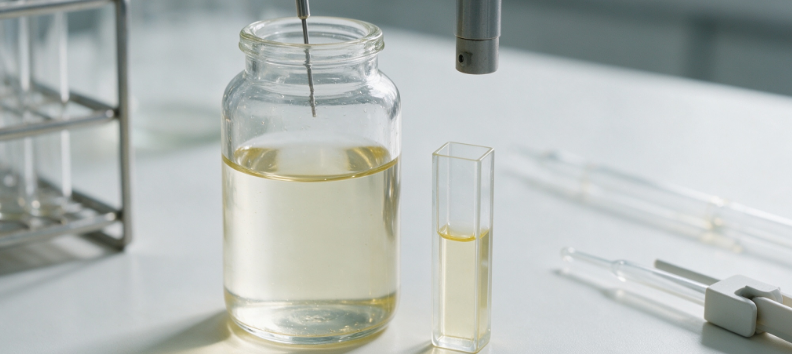
Why Comprehensive Testing of p‑Aminophenol Is Essential for Product Quality and Safety
Manufacturers and formulators seeking p‑aminophenol testing often face challenges such as unexpected impurity spikes, colour instability, or batch‑to‑batch variability in reactivity. These issues frequently arise from incomplete reduction of p‑nitrophenol, residual catalyst (e.g., nickel, palladium), oxidation to quinone‑imine species, or the presence of isomeric contaminants. Moreover, regulatory bodies such as the FDA and EMA enforce strict limits on genotoxic impurities and elemental impurities (ICH Q3D) in pharmaceutical intermediates. Our service provides a systematic characterisation that quantifies assay (p‑aminophenol content), organic impurities (p‑nitrophenol, p‑chlorophenol, aniline, phenol, and other related substances), water (Karl Fischer), residual solvents (GC‑HS), heavy metals (ICP‑MS), and colour (APHA). By identifying the root causes of quality deviations, we empower clients to optimise reduction conditions, improve purification steps, and implement effective stability‑indicating methods for consistent, high‑purity production.
Our Analytical Capabilities: From Purity Assay to Trace Impurity Identification and Stability Monitoring
Our testing framework is organised into five interconnected modules, each addressing a critical aspect of p‑aminophenol quality:
Purity and impurity profiling by chromatography—We employ high‑performance liquid chromatography (HPLC) with UV‑Vis and photodiode array (PDA) detection, using validated methods (e.g., USP monograph or in‑house developed) to achieve baseline separation of p‑aminophenol from its key impurities: p‑nitrophenol, p‑chlorophenol, o‑aminophenol, m‑aminophenol, phenol, aniline, and 4‑nitroso‑phenol. LC‑MS/MS is used for peak identification and confirmation of trace impurities at sub‑ppm levels, with detection limits typically below 1 ppm. For volatile impurities, we perform headspace‑GC‑FID or GC‑MS to quantify residual solvents (methanol, ethanol, toluene, acetic acid) and any volatile degradation products.
Trace metal and elemental impurity analysis—Using inductively coupled plasma mass spectrometry (ICP‑MS) in single‑quadrupole or tandem (MS/MS) mode, we quantify heavy metals (Pd, Ni, Pt, Fe, Cu, Pb, Cd, As, Hg, etc.) at low ppb levels, following ICH Q3D guidelines and USP <232>/<233>. We also offer inductively coupled plasma optical emission spectrometry (ICP‑OES) for higher concentration ranges. Our sample preparation includes microwave‑assisted acid digestion to ensure complete recovery.
Water content and physical properties—We measure water content by coulometric Karl Fischer titration (KF) (ASTM E203) with a quantification limit of 0.01 %. pH of a 1 % aqueous solution, melting point, and colour (APHA/Pt‑Co) are determined to verify conformance to specification. Loss on drying (LOD) is assessed by Thermogravimetric Analysis (TGA) to evaluate hygroscopicity and stability.
Stability‑indicating and forced degradation studies—We conduct ICH‑compliant stability studies under thermal, humidity, oxidative, and photolytic stress to identify potential degradation products and establish shelf‑life. Using LC‑MS/MS and high‑resolution MS (Q‑TOF), we identify and quantify degradation products such as quinone‑imine species, dimers, and oxidation by‑products. This enables us to develop stability‑indicating methods that are specific, precise, and robust for routine quality control.
Specialised impurity screening (genotoxic and custom)—For pharmaceutical applications, we offer targeted screening for potential genotoxic impurities (e.g., aniline, p‑nitroso‑phenol) using GC‑MS/MS or LC‑MS/MS with enhanced sensitivity (sub‑ppm limits) and rigorous validation per ICH M7 guidelines. We can also develop custom impurity panels based on your process chemistry.
Regulatory Compliance and Method Validation
All test methods are fully aligned with USP, EP, JP, and ICH requirements, with cross‑reference to ASTM and ISO standards where applicable. Our laboratory is ISO/IEC 17025:2017 accredited for a broad scope of organic and inorganic testing. We provide certified test reports with complete measurement uncertainty, traceability to NIST/CRM standards, and detailed method validation summaries (linearity, LOD/LOQ, accuracy, precision, specificity, and robustness). For regulatory submissions (e.g., DMF, ANDA, NDA), we supply comprehensive data packages including raw data, chromatograms, and summary reports.
Our Distinctive Advantages in p‑Aminophenol Testing
Unrivalled chromatographic resolution and sensitivity: Our UHPLC‑MS/MS systems equipped with advanced column chemistries (e.g., HILIC, C18, mixed‑mode) allow rapid separation and quantification of even co‑eluting structural isomers (o‑, m‑, and p‑aminophenol) at trace levels—a common challenge for standard methods.
Comprehensive impurity coverage: We routinely screen for more than fifteen potential impurities, including process‑related and degradation‐related species, using a combination of HPLC‑PDA, LC‑MS/MS, and headspace‑GC‑MS. This breadth ensures that no critical impurity goes undetected.
Integrated stability and forced degradation capability: Our photostability chambers, thermal ovens, and humidity chambers allow simultaneous stress testing and monitoring, while our HRMS capability ensures that all degradation products are identified and quantified, providing a complete picture of the material’s intrinsic stability.
Fast turnaround and expert interpretation: Our standard testing package (assay + organic impurities + water + residual solvents + heavy metals) is delivered within 5‑7 working days, with expedited 24‑48 hour service for urgent release. Our senior analytical chemists provide clear, actionable interpretations—for example, correlating elevated p‑nitrophenol with incomplete reduction, or advising on optimal packaging to prevent oxidation.
Flexible sample handling and customisation: We accommodate both solid and solution samples, and can adapt methods to non‑standard specifications or internal corporate standards. Our team works collaboratively with your R&D and QC groups to ensure seamless method transfer and alignment.
End‑to‑End Service Workflow
We begin with a complimentary technical consultation to define your specification requirements, impurity profile concerns, and stability‑testing needs. We design a tailored test plan, including sampling and shipping guidelines (e.g., amber vials, inert atmosphere if required). Upon sample receipt, we perform receipt inspection and homogenisation. All tests are executed with strict QA/QC—reference standards, blanks, and duplicate runs. Data are reviewed by a second senior analyst, then compiled into a comprehensive report with chromatograms, spectra, tabulated results, and a clear conformity statement against your specifications. A post‑report meeting is available to discuss findings and recommend corrective actions if needed.
Partner with Us for Reliable Quality Control of p‑Aminophenol
p‑Aminophenol is a high‑value intermediate that demands rigorous and precise analytical control. Our testing service provides the technical depth, regulatory readiness, and operational speed to ensure your material consistently meets the most stringent quality and safety standards. We have supported leading pharmaceutical API manufacturers, fine chemical producers, and polymer additive companies in optimising their p‑aminophenol quality programmes.
We invite you to contact our technical experts to discuss your specific p‑aminophenol testing needs—whether for routine lot release, incoming raw material inspection, impurity investigation, or stability monitoring. With our advanced chromatographic capabilities, accredited quality systems, and deep chemical expertise, we provide the clarity and confidence you need to drive your processes forward. Request a detailed proposal or schedule a technical consultation today and take the next step towards superior quality assurance for p‑aminophenol.