Reasons for choosing our testing services
ZHONGXI Testing has obtained inspection qualification certifications from multiple countries and regions worldwide. We possess a senior testing team and advanced testing methods, providing independent, impartial, and professional third-party verification services for global carbon projects.

Internationally recognized authority
Certified by multiple international standards such as CNAS, VCS, and GS, with reports universally applicable worldwide.

Global service capability
Covering 140+ countries and regions, it supports on-site detection and remote verification in multiple languages.

Professional experimental methods
Adopt standard experimental methods to ensure accurate and reliable data.
Comprehensive Performance Testing of Hydrogenation Catalysts for p‑Nitrophenol Reduction: Advanced Characterisation and Process Optimisation
Hydrogenation catalysts for p‑nitrophenol (PNP) to p‑aminophenol (PAP) conversion—including supported noble metals (e.g., Pt, Pd, Ru, Au), non‑precious metal systems (e.g., Ni, Cu, Co), and bimetallic or core‑shell nanostructures—are pivotal in the pharmaceutical and fine chemical industries. This hydrogenation reaction is a model system for evaluating catalyst activity, selectivity, and durability, while also being a key industrial step for producing paracetamol. The performance of these catalysts is governed by metal dispersion, particle size, support interactions, surface defect density, and resistance to leaching or sintering. Even minor variations in synthesis or pre‑treatment can lead to reduced conversion rates, poor selectivity toward PAP, formation of side products (e.g., 4‑aminophenol dimer), or rapid deactivation. Our laboratory offers a fully integrated, multi‑scale testing platform specifically designed for the rigorous characterisation of PNP hydrogenation catalysts, combining physicochemical characterisation, kinetic evaluation under controlled conditions, deactivation/regeneration studies, and by‑product analysis. We deliver quantitative, diagnostic, and predictive data that supports catalyst development, quality assurance, process optimisation, and troubleshooting for pharmaceutical, fine chemical, and academic research groups.
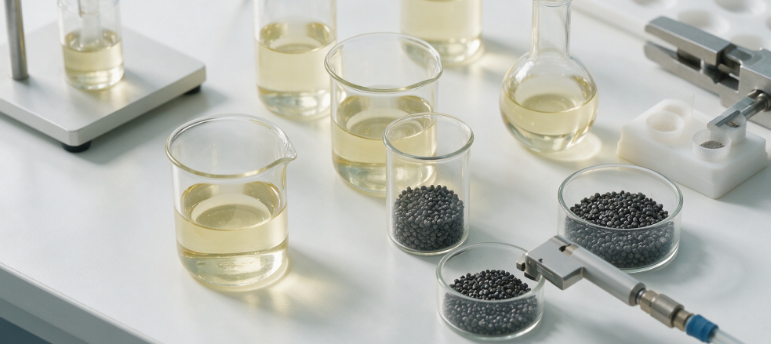
Why Dedicated Testing of p‑Nitrophenol Hydrogenation Catalysts Is Essential for Reliable Production and Yield Optimisation
Clients seeking catalyst testing for this reaction frequently encounter challenges such as unexpectedly low conversion, poor selectivity to p‑aminophenol, rapid activity loss after a few runs, or high levels of hydrogenation by‑products. These issues often stem from metal nanoparticle agglomeration, support pore blockage by reactant or product, poisoning by chloride or sulfur impurities, or inappropriate choice of reaction solvent and temperature. Furthermore, the presence of intermediate species (e.g., p‑hydroxylaminophenol) and over‑hydrogenation to cyclohexanone derivatives can seriously degrade product quality and purification costs. Our service provides a systematic evaluation that quantifies conversion (%), selectivity (%), turnover frequency (TOF), apparent activation energy, and stability under repeated batch or continuous flow conditions, alongside thorough characterisation of the catalyst before and after use. By identifying the root causes of sub‑standard performance—such as metal leaching, carbon deposition, or support hydration—we enable clients to optimise metal loading, choose appropriate supports (e.g., carbon, TiO₂, Al₂O₃), select optimal reduction conditions, and establish robust reaction protocols for consistent, high‑yield production.
Our Analytical Capabilities: From Nanoparticle Structure to Reaction Kinetics and Long‑Term Durability
Our testing framework is structured into five interconnected modules, each addressing a critical dimension of catalyst behaviour in the context of p‑nitrophenol hydrogenation:
Structural and chemical characterisation—We determine metal particle size and distribution by transmission electron microscopy (TEM) and scanning transmission electron microscopy (STEM) with EDS mapping. X‑ray diffraction (XRD) with Rietveld refinement identifies the crystalline phase of the metal and support, and estimates crystallite size. X‑ray photoelectron spectroscopy (XPS) probes the oxidation states of the metal (e.g., Pd⁰, Pt⁰, Ni⁰) and any surface contaminants. Inductively coupled plasma optical emission spectrometry (ICP‑OES) quantifies metal loading after acid digestion. Nitrogen physisorption (BET) measures specific surface area and pore volume, while hydrogen or carbon monoxide chemisorption determines metal dispersion and active surface area.
Catalytic activity and kinetic testing—We perform batch hydrogenation reactions in a pressure reactor or under atmospheric H₂, with controlled temperature (25‑80 °C), H₂ pressure (1‑10 bar), and stirring rate to eliminate external mass‑transfer limitations. We monitor PNP conversion over time using UV‑Vis spectrophotometry (monitoring the absorbance at 400 nm for PNP and 300 nm for PAP) and/or HPLC‑UV for accurate quantification of substrate, product, and by‑products. We determine apparent rate constants (kapp) under pseudo‑first‑order conditions, and calculate turnover frequency (TOF) based on surface metal atoms. We also evaluate the effect of catalyst loading, substrate concentration, and temperature to derive activation energy (Ea) and reaction orders.
Selectivity and by‑product analysis—We use LC‑MS/MS to identify and quantify side products, including p‑hydroxylaminophenol, 4‑aminophenol dimer, and over‑hydrogenated cyclohexanone derivatives. This is critical for understanding reaction pathways and optimising reaction conditions to maximise PAP purity. We also assess catalyst selectivity under different hydrogen pressures and temperatures to map the optimal operating window.
Deactivation, leaching, and recyclability studies—We perform multiple successive batch runs or continuous flow tests to evaluate catalyst stability. After each run, we analyse the liquid phase for metal leaching by ICP‑MS, and characterise the used catalyst by TEM, XPS, and TGA to detect particle sintering, carbon deposition, or support degradation. We quantify activity loss per cycle and determine the maximum number of reuses before the catalyst falls below acceptable performance. Regeneration protocols (e.g., washing with solvent, thermal treatment in H₂) are evaluated and optimised.
Substrate and impurity tolerance testing—We evaluate the catalyst's performance in the presence of typical impurities such as chloride ions, heavy metals, or organic by‑products that may be present in industrial feedstocks. This helps our clients set realistic purity specifications and pre‑treatment requirements.
High‑Level Mechanistic and Predictive Modelling
We integrate kinetic and characterisation data to build structure‑activity relationships, linking metal particle size, dispersion, and support properties with TOF and selectivity. Using multivariate analysis (PCA, PLS), we correlate synthesis parameters (e.g., reduction temperature, metal precursor, support type) with catalytic performance, enabling quality‑by‑design (QbD) optimisation. For deactivation diagnosis, we combine post‑use characterisation with activity decline profiles to distinguish between metal sintering, support fouling, and poisoning as primary degradation mechanisms.
Regulatory Compliance and Quality Assurance
All test methods are aligned with ASTM, ISO, and relevant pharmaceutical guidelines for catalyst characterisation. Our laboratory is ISO/IEC 17025:2017 accredited for a broad scope of materials and catalytic testing. We issue certified test reports with full measurement uncertainty, traceability to NIST/CRM standards, and quality control data (reference catalysts, blanks, duplicates). For process development and patent filing, we provide comprehensive data packages with detailed protocols and raw data archives.
Our Distinctive Advantages in p‑Nitrophenol Hydrogenation Catalyst Testing
Comprehensive kinetic and mechanistic insight: We combine real‑time UV‑Vis monitoring with HPLC‑MS/MS to track substrate, product, and all by‑products simultaneously, enabling accurate kinetic modelling and selectivity profiling—a level of detail often missing in standard screening tests.
Integrated characterisation‑activity correlation: We perform TEM, XRD, XPS, and chemisorption on the same catalyst batch before and after reaction, allowing direct correlation between structural evolution and performance decline. This holistic approach enables precise diagnosis and targeted improvement.
Realistic impurity and recyclability testing: Our tests simulate industrial feed conditions by including typical contaminants, and we evaluate long‑term recyclability under continuous operation, providing data directly relevant to commercial scale‑up.
Expert guidance for catalyst optimisation: Our team includes catalysis scientists with extensive experience in hydrogenation chemistry. We provide specific recommendations—for example, selecting the optimal support to enhance metal dispersion, adjusting reduction temperature to control particle size, or proposing a pre‑treatment to remove chloride poisoning.
Fast turnaround and flexible sample formats: Our standard full characterisation and kinetic package is delivered within 8‑12 working days, with expedited 48‑hour screening for key parameters (conversion, TOF, and basic selectivity). We handle powder, pellet, and supported catalyst samples with masses as low as 10 mg.
End‑to‑End Service Workflow
We begin with a complimentary technical consultation to define your catalyst composition, target reaction conditions, and performance criteria. We design a customised test plan, including handling and shipping guidelines (e.g., inert atmosphere for oxygen‑sensitive catalysts). Upon sample receipt, we perform preconditioning (reduction, activation). All tests are executed with strict QA/QC—reference catalysts, blanks, and duplicates. Data are integrated and reviewed by our lead catalysis scientist, then compiled into a comprehensive report containing characterisation results, kinetic curves, selectivity profiles, deactivation trends, and a clear executive summary with optimisation recommendations. A post‑report meeting is offered to discuss findings and plan further development or scale‑up.
Partner with Us for Reliable, High‑Performance Hydrogenation Catalysts
p‑Nitrophenol hydrogenation is not only an important industrial reaction but also a versatile test reaction for evaluating catalyst quality. Our testing service provides the scientific depth, practical realism, and regulatory support necessary to ensure your catalyst delivers optimal performance, selectivity, and longevity. We have supported pharmaceutical companies, chemical manufacturers, and research institutions in optimising their hydrogenation catalysts and processes.
We invite you to contact our technical experts to discuss your specific testing needs—whether for catalyst development, quality control, or troubleshooting. With our advanced analytical instruments, accredited protocols, and specialised catalysis expertise, we provide the insights you need to perfect your hydrogenation technology. Request a detailed proposal or schedule a technical consultation today and take the next step towards superior, data‑driven catalytic solutions.