Reasons for choosing our testing services
ZHONGXI Testing has obtained inspection qualification certifications from multiple countries and regions worldwide. We possess a senior testing team and advanced testing methods, providing independent, impartial, and professional third-party verification services for global carbon projects.

Internationally recognized authority
Certified by multiple international standards such as CNAS, VCS, and GS, with reports universally applicable worldwide.

Global service capability
Covering 140+ countries and regions, it supports on-site detection and remote verification in multiple languages.

Professional experimental methods
Adopt standard experimental methods to ensure accurate and reliable data.
Advanced Performance Testing of Dioxin Adsorbents: Comprehensive Characterisation for Environmental and Industrial Applications
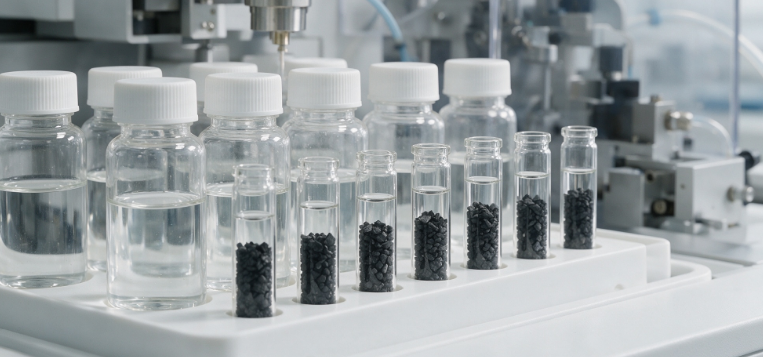
Dioxin adsorbents—including activated carbons, modified zeolites, carbon‑based composites, and polymeric resins—are essential for the removal of polychlorinated dibenzo‑p‑dioxins (PCDDs) and polychlorinated dibenzofurans (PCDFs) from flue gases, industrial emissions, and contaminated water. These highly toxic and persistent organic pollutants (POPs) demand adsorbents with exceptional affinity, high breakthrough capacity, and robust thermal and chemical stability under harsh operating conditions (e.g., 150‑300 °C, acidic gases, particulate loading). The effectiveness of a dioxin adsorbent hinges on a precise synergy of surface area, pore architecture, surface functionality (particularly for π‑π interactions and halogen bonding), and resistance to fouling by co‑pollutants (SO₂, NOₓ, HCl, Hg). Even minor deviations in adsorbent synthesis or activation can lead to unexpectedly low dioxin removal efficiency, premature breakthrough, or rapid deactivation, compromising regulatory compliance and public health protection. Our laboratory offers a fully integrated, multi‑scale testing platform specifically designed for the rigorous evaluation of dioxin adsorbents, combining advanced physicochemical characterisation, dynamic breakthrough testing with real‑world flue gas matrices, competitive adsorption studies, and long‑term thermal/chemical stability assessments. We deliver quantitative, diagnostic, and predictive data that supports material selection, process optimisation, quality assurance, and regulatory compliance for waste‑to‑energy plants, cement kilns, metallurgical facilities, and environmental engineering firms.
Why Dedicated Testing of Dioxin Adsorbents Is Critical for Reliable Emission Control and Regulatory Compliance
Clients seeking dioxin adsorbent testing frequently encounter challenges such as unexpectedly low breakthrough times in field installations, poor performance in the presence of high humidity or acid gases, or irreversible deactivation after thermal regeneration. These issues often stem from sub‑optimal pore size distribution (too narrow for bulky dioxin molecules, or too wide reducing adsorption energy), insufficient surface functionalisation for selective binding, or fouling by co‑adsorbed SO₂ and Hg. Moreover, the extremely low allowable emission limits (e.g., EU 0.1 ng I‑TEQ/Nm³) demand adsorbents with ultra‑high affinity and capacity. Our service provides a systematic characterisation that quantifies equilibrium dioxin adsorption capacity (ng/g or µg/g) and breakthrough dynamics using a real‑world flue gas matrix (including moisture, O₂, SO₂, NOₓ, HCl), selectivity over common interferents, thermal stability up to 400 °C, and regenerability over multiple cycles. By identifying the root causes of performance deficits—such as pore blocking by fly ash, surface oxidation, or loss of active functional groups—we enable clients to select the optimal adsorbent grade, optimise injection rates and temperatures, and design effective regeneration or replacement strategies for consistent, cost‑effective dioxin abatement.
Our Analytical Capabilities: From Pore Architecture to Dynamic Flue Gas Simulation and Long‑Term Durability
Our testing framework is structured into five interconnected modules, each addressing a critical dimension of dioxin adsorbent behaviour under realistic conditions:
Physicochemical and textural characterisation—We determine specific surface area (BET), total pore volume, and pore size distribution (DFT/BJH) via N₂ physisorption at 77 K, with special attention to the mesopore (2‑50 nm) range that houses dioxin molecules. X‑ray photoelectron spectroscopy (XPS) and Fourier‑transform infrared spectroscopy (FTIR‑ATR) characterise surface functional groups (e.g., ‑OH, ‑COOH, lactone, carbonyl) that contribute to π‑π and halogen bonding. X‑ray diffraction (XRD) identifies graphitic and amorphous carbon phases, while Thermogravimetric Analysis (TGA) quantifies volatile content, ash, and thermal stability. Boehm titration provides acidic/basic functional group densities. For novel composites, we also perform Raman spectroscopy and transmission electron microscopy (TEM) to assess structural order and the presence of dopants.
Dynamic breakthrough testing under simulated flue gas—We operate custom‑built fixed‑bed reactors with precise control over gas composition: dioxin surrogate (e.g., 1,2‑dichlorobenzene or 1,3,5‑trichlorobenzene) at ppb‑level concentrations, along with O₂ (6‑12 %), H₂O (5‑15 %), SO₂ (50‑500 ppm), NOₓ (100‑400 ppm), HCl (10‑100 ppm), and balance N₂. Using online GC‑MS or FTIR for real‑time quantification, we generate breakthrough curves under controlled temperature (100‑300 °C), space velocity, and adsorbent bed depth. We extract breakthrough capacity (at 5 % and 10 % penetration), mass transfer zone (MTZ) length, and saturation capacity. We also evaluate the effect of temperature cycling and transient conditions (e.g., start‑up, shutdown) to simulate real plant operation.
Competitive and interference studies—We systematically assess the impact of co‑existing flue gas components (SO₂, Hg⁰, NO, HCl, and fly ash‑like particulates) on dioxin adsorption, quantifying the reduction in capacity and selectivity. In‑situ FTIR and TGA‑MS are used to identify the nature of deposited species (e.g., sulphates, chlorides, carbonates) that may block active sites. We provide selectivity coefficients and competitive isotherm models to guide process design.
Regeneration and thermal/chemical stability testing—We evaluate thermal regeneration (under N₂ or air at 300‑400 °C), steam regeneration, and solvent extraction methods, measuring capacity recovery and energy consumption over 10‑50 cycles. Accelerated ageing under high temperature (400 °C) and high humidity (20 % H₂O) is performed, followed by re‑characterisation (BET, XPS, TGA) to quantify structural degradation, surface oxidation, and loss of active sites. We also assess mechanical attrition resistance (ASTM D4058) to ensure durability in injection or packed‑bed systems.
Validation with real‑world dioxin samples—For clients requiring direct correlation, we can perform bench‑scale testing with actual flue gas condensates or spiked fly ash extracts containing native PCDD/PCDF isomers. Using high‑resolution gas chromatography coupled with high‑resolution mass spectrometry (HRGC‑HRMS), we quantify individual congener breakthrough and removal efficiency, providing the ultimate verification of adsorbent performance under the most authentic conditions.
High‑Level Predictive Modelling and Diagnostic Interpretation
We integrate breakthrough and competitive adsorption data with adsorption kinetic models (e.g., linear driving force, pore diffusion) and mass transfer simulations to predict full‑scale adsorber performance and to optimise bed dimensions, injection rates, and temperature windows. Using multivariate statistical analysis (PCA, PLS), we correlate synthesis parameters (activation temperature, chemical treatment, dopant level) with key performance indicators (breakthrough capacity, selectivity, regenerability), enabling quality‑by‑design (QbD) optimisation of adsorbent manufacturing. For root‑cause failure analysis, we combine post‑use characterisation (XPS, XRD, TGA, BET) with performance decline profiles to differentiate between pore clogging by fly ash, surface sulphation, oxidation of carbon matrix, and thermal sintering as primary deactivation mechanisms.
Regulatory Compliance and Quality Assurance
All test methods are aligned with EN 1948, EPA Method 23, and ISO 11338 for dioxin sampling and analysis, and with ASTM standards for adsorbent characterisation. Our laboratory holds ISO/IEC 17025:2017 accreditation for a wide scope of environmental and materials testing. We issue certified test reports with full measurement uncertainty, traceability to NIST/CRM reference materials, and quality control data (reference adsorbents, blanks, duplicate runs). For regulatory submissions (e.g., BREF, MACT, EU Industrial Emissions Directive), we provide comprehensive data packages with detailed protocols and raw data archives.
Our Distinctive Advantages in Dioxin Adsorbent Testing
Realistic multi‑component flue gas simulation: Our breakthrough rigs replicate full flue gas chemistry—including moisture, acid gases, mercury, and particulates—ensuring that capacity and selectivity data accurately reflect field performance, unlike simplified clean‑gas tests that overestimate capacity. This is the only way to reliably predict performance in waste‑to‑energy and cement plant applications.
Integrated structural‑chemical‑performance correlation: We perform XPS, FTIR, BET, and breakthrough tests on identical sample batches, enabling direct correlation between surface functional groups, pore architecture, and dioxin binding. This holistic approach eliminates cross‑sample variability and provides actionable design parameters.
Advanced congener‑specific analysis capability: Our HRGC‑HRMS facility allows us to quantify individual PCDD/PCDF congeners (including the 17 toxic 2,3,7,8‑substituted isomers) in both influent and effluent streams, delivering the highest level of specificity and sensitivity—a capability rarely available in adsorbent testing labs.
Expert guidance for plant‑specific optimisation: Our team includes environmental engineers with deep experience in industrial emission control. We provide specific, actionable recommendations—for example, selecting an adsorbent with tailored mesoporosity to enhance dioxin uptake, adjusting injection temperature to minimise SO₂ interference, or recommending a pre‑scrubber to remove acid gases before the adsorber.
Fast turnaround and flexible sample formats: Our standard full characterisation and breakthrough package is delivered within 12‑16 working days, with expedited 72‑hour screening for key parameters (breakthrough capacity and moisture tolerance). We handle powder, granular, and pelletised adsorbents, as well as field‑samples from operating systems.
End‑to‑End Service Workflow
We initiate each project with a complimentary technical consultation to define your flue gas composition, operating conditions, and target emission limits. We design a customised test plan, including handling and shipping guidelines (e.g., sealed, inert‑atmosphere containers to prevent adsorption of ambient contaminants). Upon sample receipt, we perform preconditioning (drying, activation) under controlled conditions. All tests are executed with strict QA/QC—reference adsorbents, blanks, and duplicates. Data are integrated and reviewed by our lead environmental scientist, then compiled into a comprehensive report containing breakthrough curves, capacity tables, selectivity matrices, and a clear executive summary with optimisation recommendations. A post‑report meeting is offered to discuss findings and plan further development or plant implementation.
Partner with Us for Reliable Dioxin Emission Control Solutions
Dioxin removal is one of the most demanding air‑pollution control challenges, and adsorbent performance directly determines regulatory compliance and public health outcomes. Our testing service provides the scientific depth, practical realism, and regulatory support necessary to select, qualify, and optimise dioxin adsorbents with confidence. We have supported waste‑to‑energy operators, cement producers, and environmental consultancies in achieving reliable and cost‑effective dioxin abatement.
We invite you to contact our technical experts to discuss your specific testing needs—whether for media screening, process design, or troubleshooting. With our advanced analytical capabilities, accredited protocols, and deep domain expertise, we provide the clarity and confidence you need to meet the world’s most stringent dioxin emission standards. Request a detailed proposal or schedule a technical consultation today and take the next step towards superior, data‑driven dioxin adsorbent solutions.