Reasons for choosing our testing services
ZHONGXI Testing has obtained inspection qualification certifications from multiple countries and regions worldwide. We possess a senior testing team and advanced testing methods, providing independent, impartial, and professional third-party verification services for global carbon projects.

Internationally recognized authority
Certified by multiple international standards such as CNAS, VCS, and GS, with reports universally applicable worldwide.

Global service capability
Covering 140+ countries and regions, it supports on-site detection and remote verification in multiple languages.

Professional experimental methods
Adopt standard experimental methods to ensure accurate and reliable data.
Advanced Performance Testing of Silica‑Based Defluoridation Agents: Comprehensive Characterisation and Application Validation
Silica‑based defluoridation agents—including activated silica, silica‑alumina composites, functionalised silica gels, and mesoporous silica materials—are widely used for the removal of excess fluoride from drinking water, groundwater, and industrial effluents. The effectiveness of these materials is governed by a complex interplay of surface area, pore architecture, surface silanol density, pH‑dependent surface charge, and the presence of active sites (e.g., Al, Zr, Fe) that provide specific affinity for fluoride ions. Even minor variations in synthesis, functionalisation, or ageing can lead to reduced fluoride uptake, poor selectivity in the presence of competing anions, or premature breakthrough. Our laboratory offers a fully integrated, multi‑scale testing platform specifically designed for the rigorous characterisation of silica‑based fluoride adsorbents, combining physicochemical characterisation, static and dynamic adsorption studies, competitive ion evaluation, and long‑term stability/leaching assessments. We deliver quantitative, diagnostic, and predictive data that supports material development, quality control, process optimisation, and regulatory compliance for water treatment, environmental engineering, and industrial manufacturing sectors.
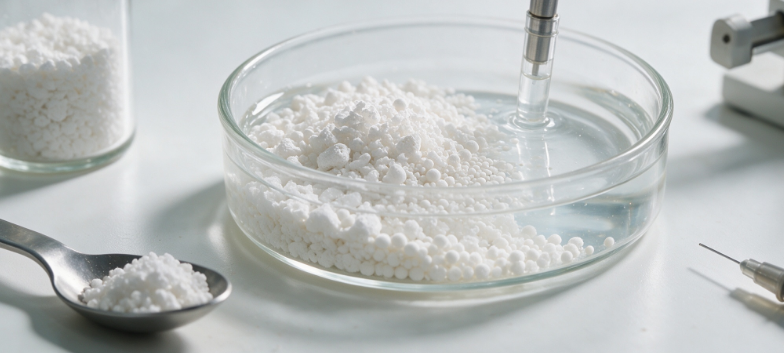
Why Dedicated Testing of Silica‑Based Defluoridation Agents Is Critical for Reliable Water Treatment
Water utilities, filter manufacturers, and environmental consultants seeking defluoridation agent testing often encounter challenges such as unexpectedly low fluoride removal in field conditions, rapid capacity decline due to silica dissolution, or poor regeneration efficiency. These issues frequently arise from sub‑optimal surface functionalisation, pore blockage by natural organic matter or competing anions (sulphate, phosphate, bicarbonate), or insufficient structural stability under varying pH. Moreover, the presence of trace metals (e.g., Fe, Al) that can leach from the adsorbent requires careful monitoring to meet drinking water standards. Our service provides a systematic characterisation that quantifies fluoride adsorption capacity (mg/g) under batch and dynamic conditions, selectivity coefficients over common competing ions, breakthrough behaviour in packed‑bed columns, and the physical/chemical stability of the adsorbent over repeated use cycles. By identifying the root causes of performance deficits—such as surface silanol deprotonation at high pH, pore clogging by precipitates, or framework degradation—we enable clients to optimise the synthesis conditions, select appropriate regeneration protocols, and establish robust quality control parameters for consistent and safe defluoridation.
Our Analytical Capabilities: From Surface Chemistry and Pore Architecture to Dynamic Adsorption and Leaching Assessment
Our testing framework is structured into five interconnected modules, each addressing a critical dimension of silica‑based defluoridation agent behaviour:
Physicochemical and textural characterisation—We determine specific surface area (BET), total pore volume, and pore size distribution (DFT/BJH) via N₂ physisorption at 77 K, with special attention to mesopore (2‑50 nm) regions that influence fluoride accessibility. X‑ray photoelectron spectroscopy (XPS) and Fourier‑transform infrared spectroscopy (FTIR‑ATR) characterise surface functional groups (Si‑OH, Al‑OH, Zr‑OH) and quantify silanol density. X‑ray diffraction (XRD) identifies amorphous vs. crystalline phases and detects any secondary precipitates. Zeta potential as a function of pH (2‑10) and ionic strength determines the point of zero charge (PZC), which is critical for understanding pH‑dependent fluoride binding.
Batch adsorption equilibrium and kinetics—We conduct isotherm experiments at controlled pH (5‑9), temperature (10‑40 °C), and background electrolyte using synthetic and real groundwater matrices. We use fluoride ion‑selective electrode (ISE) and ion chromatography (IC) for accurate quantification. Isotherms (Langmuir, Freundlich, Sips) are fitted to determine maximum fluoride capacity (Q₀) and affinity constants. Kinetic profiles are fitted to pseudo‑first‑order, pseudo‑second‑order, and intraparticle diffusion models to identify rate‑limiting steps. We also evaluate the effect of competing anions (sulphate, chloride, nitrate, phosphate, bicarbonate) on fluoride uptake.
Dynamic column breakthrough and hydraulic performance—We operate computer‑controlled fixed‑bed columns with variable flow rates, bed depths, and influent fluoride concentrations (1‑10 mg/L). Using real‑time ISE or online IC, we generate breakthrough curves and extract exhaustion capacity, mass transfer zone (MTZ) length, and bed utilisation efficiency. We also evaluate pressure drop and particle integrity under continuous flow. For process design, we perform multiple loading‑regeneration cycles to determine working capacity and optimal regeneration conditions (alkaline or acid elution).
Stability, leaching, and durability testing—We perform static and dynamic leaching tests in deionised water, simulated groundwater, and acidic/alkaline media (pH 3‑10) to quantify the release of Si, Al, Zr, and other trace metals by ICP‑MS over 7‑14 days. Accelerated ageing under thermal cycling, wet‑dry cycling, and high‑fluoride loading is followed by re‑characterisation (BET, XPS, FTIR) to evaluate structural degradation, surface deactivation, and phase transformation.
Regeneration and reusability assessment—We evaluate the effectiveness of commonly used regenerants (e.g., NaOH, Al₂(SO₄)₃, HCl) in restoring fluoride capacity, measuring recovery efficiency and structural integrity after each cycle. We determine the maximum number of cycles before significant capacity loss occurs, providing critical data for plant‑scale economic evaluation.
High‑Level Predictive Modelling and Diagnostic Interpretation
We integrate batch and column data with surface complexation models (e.g., diffuse‑layer model) to predict fluoride uptake under variable water chemistry. Transport‑reaction models are applied to simulate full‑scale column behaviour and to optimise bed dimensions and flow rates. Using multivariate statistical analysis (PCA, PLS), we correlate synthesis parameters (surface area, silanol density, dopant concentration) with key performance indicators (Q₀, breakthrough time, leaching), enabling quality‑by‑design (QbD) optimisation. For failure diagnosis, we combine post‑use characterisation (XPS, FTIR, BET) with performance decline profiles to differentiate between surface site poisoning, pore blockage, and framework dissolution.
Regulatory Compliance and Quality Assurance
All test methods are aligned with ASTM, ISO, and US EPA standards for adsorbent characterisation and fluoride analysis, including ASTM D5757 (adsorbent performance), ISO 10573 (fluoride measurement), and EPA Methods 300.0/300.1. Our laboratory holds ISO/IEC 17025:2017 accreditation for a wide scope of environmental and materials testing. We issue certified test reports with full measurement uncertainty, traceability to NIST/CRM reference materials, and quality control data (reference adsorbents, blanks, duplicates). For product certification (e.g., NSF/ANSI 61), we supply comprehensive data packages meeting all regulatory requirements.
Our Distinctive Advantages in Silica‑Based Defluoridation Agent Testing
Comprehensive surface chemistry and pore‑activity correlation: We combine XPS, FTIR, zeta potential, and BET on the same sample batch to directly link silanol density, surface charge, and pore accessibility with fluoride uptake—a holistic approach that identifies the true performance drivers.
Realistic multi‑component simulation: Our adsorption tests use natural groundwater matrices with controlled competing ions and natural organic matter, ensuring that our capacity and selectivity data are directly translatable to field conditions, not just idealised laboratory water.
Advanced leaching and stability profiling: We combine ICP‑MS, TCLP, and accelerated ageing to provide a complete picture of material durability and safety, supporting long‑term operational reliability and regulatory compliance.
Expert guidance for process and formulation optimisation: Our team includes materials chemists and environmental engineers with deep experience in fluoride adsorption. We provide specific, actionable recommendations—for example, adjusting the aluminium loading to maximise fluoride affinity without compromising silica stability, or recommending a pre‑treatment step to remove competing ions.
Fast turnaround and flexible sample formats: Our standard full characterisation package (BET, XPS, batch isotherms, and column breakthrough) is delivered within 10‑14 working days, with expedited 48‑hour screening for key parameters (capacity and initial breakthrough). We handle powders, granules, and pre‑packed cartridges with sample masses from 5 g to 5 kg.
End‑to‑End Service Workflow
We begin with a complimentary technical consultation to define your water quality, target fluoride concentration, operating conditions, and regulatory standards. We design a customised test plan, advising on sample handling and shipping. Upon sample receipt, we perform preconditioning (drying, degassing). All tests are executed with strict QA/QC—reference materials, blanks, and replicates. Data are integrated and reviewed by our lead environmental scientist, then compiled into a comprehensive report containing surface characterisation results, adsorption isotherms, breakthrough curves, leaching profiles, and a clear executive summary with optimisation recommendations. A post‑report meeting is offered to discuss findings and plan further development or deployment.
Partner with Us for Reliable, Safe, and High‑Performance Defluoridation Solutions
Fluoride contamination is a global health challenge, and the performance of silica‑based adsorbents is central to providing safe drinking water. Our testing service provides the scientific depth, practical realism, and regulatory support needed to select, qualify, and optimise defluoridation agents with confidence. We have supported municipal water plants, filter manufacturers, and environmental consultancies in achieving consistent compliance and operational excellence.
We invite you to contact our technical experts to discuss your specific testing needs—whether for media screening, process design, or troubleshooting. With our advanced analytical arsenal, accredited protocols, and deep domain expertise, we provide the clarity and confidence you need to tackle fluoride contamination. Request a detailed proposal or schedule a technical consultation today and take the next step towards robust, science‑based defluoridation solutions.