Reasons for choosing our testing services
ZHONGXI Testing has obtained inspection qualification certifications from multiple countries and regions worldwide. We possess a senior testing team and advanced testing methods, providing independent, impartial, and professional third-party verification services for global carbon projects.

Internationally recognized authority
Certified by multiple international standards such as CNAS, VCS, and GS, with reports universally applicable worldwide.

Global service capability
Covering 140+ countries and regions, it supports on-site detection and remote verification in multiple languages.

Professional experimental methods
Adopt standard experimental methods to ensure accurate and reliable data.
Advanced Analytical Testing of Silica Particles: Comprehensive Characterisation for Quality and Performance Assurance
Silica (SiO₂) particles—including fumed silica, colloidal silica, precipitated silica, silica gels, and spherical silica microbeads—are versatile materials essential in pharmaceutical excipients, catalysts and catalyst supports, coatings and paints, rubber reinforcement, polishing slurries, and chromatography media. Their performance in these diverse applications is dictated by a precise interplay of particle size distribution, morphology, specific surface area, pore architecture, surface chemistry (silanol density), purity, and crystallinity. Even subtle variations in synthesis or processing can lead to inconsistent dispersion, poor mechanical strength, altered adsorption behaviour, or batch‑to‑batch variability, compromising product quality and process efficiency. Our laboratory provides a fully integrated, multi‑technique testing platform specifically designed for the rigorous characterisation of silica particles across a wide range of forms and applications, combining elemental and phase analysis, morphological imaging, surface chemical probing, textural characterisation, and thermal stability assessment. We deliver quantitative, diagnostic, and predictive data that supports material selection, quality control, process optimisation, and regulatory compliance for the chemical, pharmaceutical, electronics, and advanced materials industries.
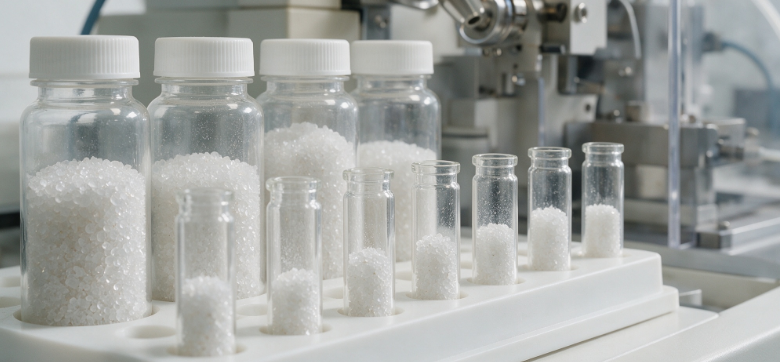
Why Comprehensive Testing of Silica Particles Is Essential for Consistent Product Performance
Manufacturers, formulators, and end‑users seeking silica particle testing often face challenges such as unexpected viscosity changes in dispersions, poor catalyst activity due to low surface area, or unacceptable levels of trace metal contaminants affecting dielectric properties. These issues frequently originate from non‑uniform particle size distribution, inadequate surface silanol concentration, residual organic or inorganic impurities from synthesis, or uncontrolled moisture uptake. Moreover, the presence of crystalline silica (quartz, cristobalite) in amorphous materials can have significant regulatory and health implications. Our service provides a systematic characterisation that quantifies particle size distribution, specific surface area (BET), pore volume and pore size distribution (BJH/DFT), surface chemistry (FTIR, XPS), elemental purity (ICP‑MS, XRF), loss on drying (LOD), and crystalline silica content (XRD). By identifying the root causes of sub‑standard performance—such as aggregation, surface deactivation, or contamination—we empower clients to optimise synthesis conditions, refine downstream processing, and establish robust quality control specifications for consistent, high‑performance silica particles.
Our Analytical Capabilities: From Elemental Fingerprint to Morphology, Surface Chemistry, and Thermal Behaviour
Our testing framework is structured into five interconnected modules, each addressing a critical aspect of silica particle quality and functionality:
Elemental and phase composition analysis—We determine purity and trace impurity levels using inductively coupled plasma mass spectrometry (ICP‑MS) and ICP‑optical emission spectrometry (ICP‑OES) after microwave‑assisted acid digestion, achieving detection limits in the sub‑ppb range for metals (Al, Fe, Na, K, Ca, Mg, Ti, etc.). X‑ray fluorescence (XRF) provides rapid, non‑destructive semi‑quantitative screening. Loss on ignition (LOI) at 1000 °C quantifies bound water and volatile organics. X‑ray diffraction (XRD) with Rietveld refinement identifies amorphous vs. crystalline silica (quartz, cristobalite, tridymite) and quantifies crystalline fraction down to 0.5 % w/w—critical for regulatory compliance (e.g., REACH, OSHA).
Morphological and granulometric characterisation—We measure particle size distribution by laser diffraction (wet and dry dispersion) covering 0.1‑2000 µm, dynamic light scattering (DLS) for sub‑micron particles (1 nm‑10 µm), and scanning electron microscopy (SEM) with image analysis for shape, sphericity, and surface texture. Transmission electron microscopy (TEM) provides nanoscale morphology and primary particle size for fumed and colloidal silicas. Atomic force microscopy (AFM) is available for surface roughness and topographical mapping.
Surface chemistry and functional group analysis—We use Fourier‑transform infrared spectroscopy (FTIR‑ATR) and diffuse reflectance FTIR (DRIFT) to characterise silanol (Si‑OH) concentration and the presence of organic coatings or residual modifiers. X‑ray photoelectron spectroscopy (XPS) provides surface elemental composition, carbon contamination levels, and the chemical state of silicon (Si 2p). Boehm titration and Thermogravimetric Analysis (TGA) are used to quantify surface silanol density (OH groups per nm²), which is crucial for surface reactivity and compatibility.
Textural characterisation (porosity and surface area)—We determine specific surface area (BET) and pore size distribution (BJH and DFT models) via N₂ physisorption at 77 K, covering micropores (<2 nm), mesopores (2‑50 nm), and macropores (>50 nm). Mercury intrusion porosimetry provides complementary data on larger pores and particle packing. Helium pycnometry measures true density and skeletal volume.
Thermal stability and moisture analysis—We perform Thermogravimetric Analysis (TGA) in air and inert atmospheres (up to 1400 °C) to evaluate loss on drying (LOD), organic content, thermal stability, and phase transformation (e.g., amorphous‑to‑cristobalite). Differential scanning calorimetry (DSC) identifies glass transition or other thermal events. Karl Fischer titration provides accurate moisture content for hygroscopic samples.
High‑Level Diagnostic and Predictive Modelling
We integrate particle size, surface chemistry, and textural data to build structure‑property‑performance relationships—for example, linking pore size distribution with catalyst activity, or correlating silanol density with rheological behaviour. Using multivariate analysis (PCA, PLS), we identify the critical synthesis or processing parameters that govern product quality, enabling quality‑by‑design (QbD) strategies. For failure analysis, we combine post‑use characterisation with performance histories to differentiate between surface contamination, pore blockage, particle fracture, and phase changes.
Regulatory Compliance and Quality Assurance
All test methods are aligned with ASTM, ISO, and US Pharmacopeia (USP) standards, including ASTM D5757 (powder characterisation), ISO 13320 (laser diffraction), ISO 9277 (BET), and USP <1058> (analytical instrumentation qualification). Our laboratory is ISO/IEC 17025:2017 accredited for a broad scope of materials characterisation. We issue certified test reports with full measurement uncertainty, traceability to NIST/CRM reference materials, and quality control data (reference materials, blanks, duplicates). For regulatory submissions and customer quality agreements, we provide comprehensive data packages with detailed protocols and raw data archives.
Our Distinctive Advantages in Silica Particle Testing
Integrated particle‑property‑performance characterisation: We combine elemental (ICP‑MS), structural (XRD), morphological (SEM/DLS), surface (XPS/FTIR), and textural (BET) analyses on the same sample batch, enabling a complete material fingerprint that eliminates cross‑batch variability and provides a holistic view of material quality.
Unrivalled trace impurity detection: Our ICP‑MS/MS with collision/reaction cell technology allows sub‑ppb detection of critical impurities (e.g., Al, Fe, Cu, Na, K) that can affect optical, electronic, or catalytic performance—a capability rarely offered by standard testing labs.
Specialised crystalline silica quantification: Our XRD with Rietveld refinement and calibrated internal standard method provides accurate quantification of crystalline silica content, ensuring compliance with workplace safety and regulatory limits (e.g., OSHA 1910.1053).
Expert interpretation and process guidance: Our team includes ceramic engineers, colloid chemists, and materials scientists with deep experience in silica technologies. We provide specific, actionable recommendations—for example, adjusting the pH of synthesis to control particle size, optimising drying conditions to preserve surface area, or suggesting a post‑treatment to enhance silanol density.
Fast turnaround and flexible sample formats: Our standard full characterisation package (size, BET, purity, XRD, FTIR) is delivered within 7‑10 working days, with expedited 48‑hour screening for key parameters (size, BET, and moisture). We handle powders, slurries, colloids, and pressed pellets, with sample masses from 0.1 g to 5 kg.
End‑to‑End Service Workflow
We initiate each project with a complimentary technical consultation to define your particle type, target application, and critical quality attributes. We design a tailored test plan, including sampling, packaging, and shipping guidelines (e.g., sealed containers, desiccant). Upon sample receipt, we perform receipt inspection and preconditioning (drying, homogenisation). All tests are executed with strict QA/QC—reference materials, blanks, and duplicates. Data are integrated and reviewed by our lead materials scientist, then compiled into a comprehensive report containing particle size distributions, BET isotherms, XRD patterns, XPS spectra, and a clear executive summary with optimisation recommendations. A post‑report meeting is offered to discuss findings and plan further development or scale‑up.
Partner with Us for Reliable, High‑Performance Silica Particle Solutions
Silica particles are among the most versatile industrial materials, but their full potential is realised only through rigorous, multi‑faceted characterisation. Our testing service provides the scientific depth, practical relevance, and regulatory support necessary to ensure your product meets the highest standards of purity, morphology, and functionality. We have supported leading chemical manufacturers, pharmaceutical companies, and electronics producers in optimising their silica particle quality programmes.
We invite you to contact our technical experts to discuss your specific silica particle testing needs—whether for material screening, quality assurance, or troubleshooting. With our advanced analytical instruments, accredited protocols, and specialised expertise, we provide the insights you need to perfect your silica‑based technologies. Request a detailed proposal or schedule a technical consultation today and take the next step towards superior, data‑driven material solutions.