Reasons for choosing our testing services
ZHONGXI Testing has obtained inspection qualification certifications from multiple countries and regions worldwide. We possess a senior testing team and advanced testing methods, providing independent, impartial, and professional third-party verification services for global carbon projects.

Internationally recognized authority
Certified by multiple international standards such as CNAS, VCS, and GS, with reports universally applicable worldwide.

Global service capability
Covering 140+ countries and regions, it supports on-site detection and remote verification in multiple languages.

Professional experimental methods
Adopt standard experimental methods to ensure accurate and reliable data.
Comprehensive Testing and Performance Validation for Aromatic Hydrocarbon Catalysts – From Acid Site Fingerprinting to Industrial Reactor Simulation
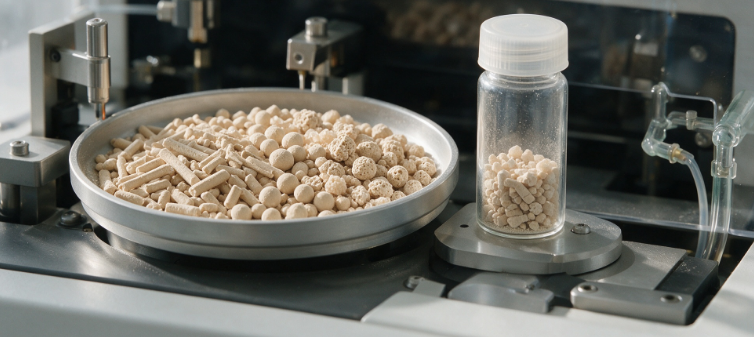
The production and upgrading of aromatic hydrocarbons—benzene, toluene, xylene (BTX) and their derivatives—rely on a diverse family of solid catalysts, including zeolites (ZSM‑5, Y, Beta), modified clays, heteropoly acids, and supported metal oxides. These materials function under demanding conditions: high temperatures, steam partial pressures, and exposure to feedstock impurities such as sulfur, nitrogen, and heavy metals. The catalytic performance—in terms of activity, selectivity, and lifetime—is governed by a subtle interplay of acid site density and strength, pore architecture, crystallite size, and the distribution of promoter or poison elements. Even minor variations in synthesis or regeneration can shift product distribution, accelerate coke deposition, or induce irreversible dealumination. Consequently, a rigorous, multi‑level analytical protocol is not merely a quality‑assurance tool but an essential prerequisite for process optimisation, catalyst selection, troubleshooting, and life‑cycle management. Our ISO/IEC 17025‑accredited laboratory provides a fully integrated catalyst testing and characterisation service specifically tailored for aromatic hydrocarbon conversion processes, covering the entire spectrum from fresh catalyst qualification to spent catalyst autopsy, and delivering quantitative, traceable data that directly support refinery and petrochemical operations.
1. Why Dedicated Aromatic Catalyst Testing Is Indispensable
Aromatic catalysts operate in complex reaction networks where kinetic competition between alkylation, transalkylation, dealkylation, and cracking determines final product yields. Acid‑catalysed reactions are particularly sensitive to the type and strength of acid sites (Brønsted vs. Lewis), which are often modified by metal promoters (Pt, Re, Ga) or steam stabilisation. Furthermore, the micro‑ and mesoporous structure of the catalyst governs molecular transport: restricted diffusion leads to secondary reactions and coke formation, while excessive macroporosity reduces active site density. Routine bulk analyses (XRD, BET, or elemental analysis) provide only partial information; a comprehensive evaluation must include temperature‑programmed desorption (TPD) of probe molecules, pyridine‑adsorbed FTIR, high‑resolution electron microscopy, and catalytic activity tests under realistic feed conditions. Our service is specifically designed to meet this complexity, providing a holistic catalyst profile that enables predictive modelling, optimal regeneration strategies, and seamless scale‑up from laboratory to commercial reactors.
2. Our Analytical and Catalytic Testing Platform for Aromatic Catalysts
We offer a modular yet interconnected suite of tests that cover physical, chemical, and functional attributes of the catalyst. All measurements are performed using certified reference materials and in accordance with ASTM, ISO, or UOP standards where applicable.
2.1 Phase Composition, Crystallinity, and Unit‑Cell Parameters
Powder X‑ray diffraction (XRD) with a high‑resolution Bragg‑Brentano geometry is used to identify zeolite frameworks and to quantify any amorphous or impurity phases. Rietveld refinement provides unit‑cell dimensions (accuracy ±0.001 Å) and relative crystallinity—a critical indicator of hydrothermal ageing. For zeolite Y, we determine the framework Si/Al ratio from the unit‑cell parameter a₀, which correlates with acid site density.
2.2 Textural Properties – Surface Area and Pore Architecture
Nitrogen physisorption at 77 K (BET, t‑plot, BJH) and argon physisorption for micro‑ and mesopore analysis provide specific surface area, micropore volume, and mesopore size distribution. For hierarchical catalysts, we perform mercury intrusion porosimetry (up to 60,000 psi) to characterise macroporosity. All measurements are conducted with rigorous outgassing conditions to ensure accurate total pore volume.
2.3 Acidity – Type, Strength, and Density
We employ a combination of temperature‑programmed desorption of ammonia (NH₃‑TPD) to quantify total acid site density and to distinguish weak, medium, and strong acid sites based on desorption temperature maxima. To differentiate Brønsted from Lewis acid sites, we use pyridine‑adsorbed diffuse reflectance infrared Fourier transform spectroscopy (DRIFTS) with careful spectral deconvolution at 1545 cm⁻¹ (Brønsted) and 1450 cm⁻¹ (Lewis). For quantitative mapping, we perform titration with 2,6‑di‑tert‑butylpyridine (selective for Brønsted sites).
2.4 Elemental Composition and Trace Impurities
Bulk composition (Si, Al, Na, and promoters like Pt, Re, Ga, or Zn) is determined by X‑ray fluorescence (XRF) and inductively coupled plasma optical emission spectrometry (ICP‑OES) after digestion. Trace poison elements (Fe, Ni, V, As) are quantified by ICP‑mass spectrometry (ICP‑MS) with detection limits in the ppm to ppb range. For spent catalysts, we also measure carbon and sulfur by combustion analysis.
2.5 Morphology and Crystal Size
Scanning electron microscopy (SEM) with energy‑dispersive X‑ray spectroscopy (EDS) provides surface morphology and elemental distribution. Transmission electron microscopy (TEM) at 200‑300 kV gives high‑resolution imaging of zeolite crystals, defect structures, and metal particle size (for promoted catalysts). Automated image analysis yields crystal size distributions and aspect ratios.
2.6 Thermal and Hydrothermal Stability
Thermogravimetric Analysis (TGA) under air and nitrogen reveals dehydration, template removal, and coke combustion profiles. The hydrothermal stability is assessed by steaming the catalyst at 600‑800 °C and subsequently re‑measuring crystallinity, surface area, and acidity—a key test for FCC and reforming catalysts.
2.7 Catalytic Activity and Selectivity – Micro‑Reactor Tests
We operate automated fixed‑bed micro‑reactors (stainless steel, up to 650 °C and 5 MPa) with on‑line gas chromatography (GC‑FID/TCD) and mass spectrometry (MS) for product analysis. We conduct tests with model feeds (toluene disproportionation, n‑hexane cracking, cumene cracking) as well as real industrial streams (e.g., reformate, pyrolysis gasoline). Typical outputs include conversion, product selectivity (BTX distribution), and catalyst deactivation kinetics over time‑on‑stream. We also perform coke analysis on spent catalysts via TGA and TEM.
2.8 Regenerability Assessment
We simulate oxidative regeneration (in air or diluted oxygen) and monitor the restoration of activity, surface area, and acidity. The number of successful regeneration cycles is recorded, providing a catalyst lifetime forecast for economic evaluation.
3. Advanced Capabilities – Unravelling Structure‑Activity Relationships
For clients who require more than standard parameters, we offer a suite of sophisticated and often customised techniques that provide mechanistic insight and predictive power.
3.1 ²⁷Al and ²⁹Si Magic‑Angle Spinning Nuclear Magnetic Resonance (MAS‑NMR)
This technique distinguishes tetrahedral (framework) Al from octahedral (extra‑framework) Al, and determines the Si/Al ratio with high precision. It also reveals the presence of Al‑O‑Si connectivity defects, which affect acid strength. For zeolites, the framework aluminium concentration directly correlates with Brønsted acid site density.
3.2 In‑Situ X‑ray Diffraction and Small‑Angle X‑ray Scattering (SAXS)
Performed under controlled temperature and reactive atmospheres, these measurements track phase transitions, lattice expansion, and crystallite growth in real time. For example, we monitor the dealumination process during steaming and the structural response to hydrocarbon adsorption.
3.3 High‑Resolution Transmission Electron Microscopy (HRTEM) with EELS
For metal‑promoted catalysts, we use aberration‑corrected HRTEM combined with electron energy‑loss spectroscopy (EELS) to image individual metal clusters (sub‑nanometer) and to analyse their oxidation state and interaction with the support.
3.4 Temperature‑Programmed Oxidation (TPO) and Reduction (TPR)
TPO quantifies the nature and location of carbonaceous deposits (soft vs. hard coke) by monitoring CO/CO₂ evolution. TPR, under hydrogen, reveals the reduction behaviour of metal promoters and their interaction with the zeolite framework, which is critical for catalyst activation.
3.5 Diffusion Measurement – Pulsed‑Field Gradient NMR (PFG‑NMR)
For catalysts with diffusion‑limited kinetics, we measure self‑diffusion coefficients of probe hydrocarbons (e.g., benzene, o‑xylene) inside the pores using PFG‑NMR. This provides a direct measure of molecular accessibility and tortuosity, complementing steady‑state activity data.
3.6 Computational Modeling – DFT and Kinetic Monte Carlo
Our in‑house modelling team uses density functional theory (DFT) to calculate adsorption energies, reaction barriers, and acid‑site stability. We also perform kinetic Monte Carlo (KMC) simulations to predict product distribution and coke formation under varying conditions, correlating with experimental data for robust validation.
4. Data Quality, Standardisation, and Consulting‑Oriented Reporting
All measurements are executed under a strict quality management system with regular inter‑laboratory comparisons. For each reported parameter, we provide: - Experimental conditions (e.g., temperature, pressure, feed composition, gas flow). - Statistical uncertainty (standard deviation from at least duplicate runs). - Cross‑validation (e.g., acid site density from NH₃‑TPD vs. pyridine‑FTIR; Si/Al from XRF vs. MAS‑NMR). - Graphical interpretations (XRD patterns, TPD profiles, catalytic activity decay curves) with clear peak assignments.
Our reports go beyond data tables. They include a comprehensive discussion written by senior catalyst scientists who interpret the results in the context of your process—e.g., explaining why a loss in selectivity is due to pore‑blocking coke rather than dealumination, or why a certain promoter distribution yields superior stability. This consultative approach transforms analytical outputs into actionable strategies for catalyst selection, operating condition optimisation, or regeneration scheduling.
We deliver the full standard package within 7–10 working days, with expedited services available for urgent plant‑troubleshooting cases.
5. Why Our Laboratory Is the Preferred Partner for Aromatic Catalyst Testing
Our competitive advantages are rooted in technical breadth, industrial insight, and operational reliability.
One‑stop integrated service: We house a comprehensive range of characterisation tools—XRD, XRF, ICP‑MS, BET, NH₃‑TPD, pyridine‑FTIR, SEM‑EDS, TEM, TGA‑DSC, and multiple fixed‑bed micro‑reactors—under one roof. This ensures consistent sample handling, rapid cross‑referencing, and seamless data correlation, eliminating the fragmentation and delays of using multiple laboratories.
Deep expertise in refinery and petrochemical catalysts: Our team includes chemists and chemical engineers with direct experience in FCC, reforming, and hydroprocessing units. We understand the operational constraints (e.g., plant turnaround schedules, feed variability, and economic drivers) and tailor our testing to provide decision‑relevant information—not just academic curiosity.
Flexibility with industrial samples: We accept fresh, regenerated, and spent catalysts, as well as catalyst fines or wash‑coated monoliths. Our sample preparation protocols are designed to handle hazardous, pyrophoric, or moisture‑sensitive materials safely, with full compliance to HSE regulations.
Proprietary data interpretation models: Over decades of work, we have built a large internal database linking catalyst properties to performance in aromatic processes. This enables us to benchmark your catalyst against peers, estimate remaining life, and predict the impact of feedstock changes—a capability that goes far beyond standard testing.
Confidentiality and IP protection: We handle all proprietary catalysts and process details under strict NDA. Reports are designed to provide technical depth while protecting your formulation and operating know‑how.
Transparent, modular pricing: You pay only for the tests you require. Bulk discounts are available for routine quality‑control screening or multi‑batch catalyst comparisons. There are no hidden fees for interpretation, statistical analysis, or consultation.
Our track record includes successful collaborations with major refining companies, engineering firms, and catalyst manufacturers, helping them improve yields, extend run lengths, and reduce regeneration costs. We invite you to leverage this expertise for your aromatic catalyst needs.
Optimise your aromatic conversion process with reliable, insight‑driven catalyst testing. Contact our technical experts today to design a customised test plan that addresses your specific performance challenges. We will respond with a detailed proposal and timeline within one business day.