Reasons for choosing our testing services
ZHONGXI Testing has obtained inspection qualification certifications from multiple countries and regions worldwide. We possess a senior testing team and advanced testing methods, providing independent, impartial, and professional third-party verification services for global carbon projects.

Internationally recognized authority
Certified by multiple international standards such as CNAS, VCS, and GS, with reports universally applicable worldwide.

Global service capability
Covering 140+ countries and regions, it supports on-site detection and remote verification in multiple languages.

Professional experimental methods
Adopt standard experimental methods to ensure accurate and reliable data.
Comprehensive Performance Evaluation of Anti‑Smog Adsorbents – From Material Screening to Real‑World Filtration Efficiency
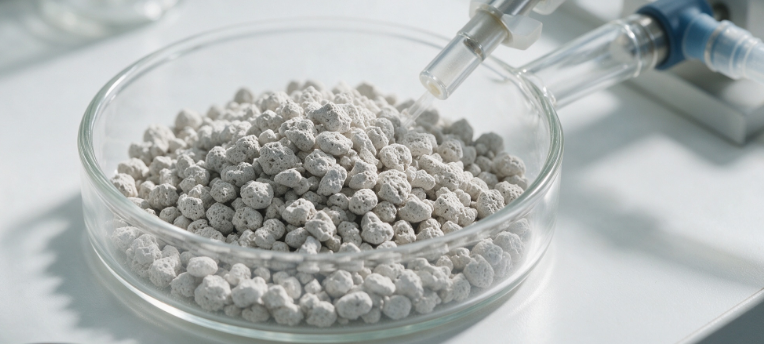
The escalating global concern over airborne particulate matter (PM), volatile organic compounds (VOCs), and toxic gases has catalysed the rapid development of anti‑smog adsorbents—a diverse class of functional materials including activated carbons, metal‑organic frameworks (MOFs), zeolites, silica gels, and composite sorbents—integrated into respirators, air purifiers, and building ventilation systems. Unlike simple mechanical filters, these adsorbents actively remove gaseous and vapour‑phase pollutants through physisorption, chemisorption, and catalytic decomposition, with performance governed by a complex interplay of specific surface area, pore architecture, surface functionality, humidity tolerance, and regeneration capacity. Variability in synthesis routes, post‑treatment, and the presence of coexisting contaminants can drastically alter breakthrough times, selectivity, and service life. Consequently, a rigorous, multi‑faceted analytical protocol is not merely a quality‑control measure but a fundamental prerequisite for product certification, process optimisation, competitive benchmarking, and consumer safety assurance. Our ISO/IEC 17025‑accredited laboratory delivers a fully integrated testing service specifically designed for anti‑smog adsorbents, covering the complete spectrum from fundamental physicochemical characterisation to dynamic performance evaluation under simulated urban pollution scenarios.
1. The Rationale for In‑Depth Testing of Anti‑Smog Adsorbents
Anti‑smog adsorbents operate in highly challenging environments: fluctuating temperatures (−10 to 40 °C), relative humidity (30–90%), and multicomponent pollution streams containing particulates, ozone, NO₂, SO₂, VOCs (toluene, benzene, formaldehyde), and even bioaerosols. Standard single‑parameter tests (e.g., iodine number for carbons, or BET surface area) fail to capture the dynamic, competitive, and synergistic effects that dominate real‑world performance. Moreover, regulatory frameworks—including GB/T 32610, NIOSH 42 CFR 84, EN 149, and emerging EPA guidelines—mandate robust evidence of filtration capacity, breathing resistance, and durability. Our service addresses these complexities through a modular, multi‑technique approach that isolates and quantifies each critical attribute, enabling manufacturers and regulatory bodies to make data‑driven decisions with confidence.
2. Our Comprehensive Analytical and Performance Testing Platform
We offer a flexible yet interconnected suite of tests, carefully selected based on the adsorbent type (carbon‑based, zeolitic, hybrid, or impregnated) and the intended application (personal masks, cabin air filters, or stationary purifiers). All measurements are conducted with certified reference materials, calibrated gas mixtures, and validated standard operating procedures traceable to international standards.
2.1 Structural and Textural Characterisation
Nitrogen physisorption at 77 K remains the gold standard: we report BET specific surface area (with a repeatability of ±2%), micropore volume (via t‑plot and DR methods), and mesopore size distribution (BJH) using advanced density functional theory (DFT) kernels. For adsorbents with ultra‑micropores (< 0.7 nm) relevant to small molecules like formaldehyde and ammonia, we complement with CO₂ adsorption at 273 K and the Dubinin‑Astakhov model. Mercury intrusion porosimetry (up to 60,000 psi) is employed for macroporosity and bulk density assessment in granulated or monolithic forms.
2.2 Surface Chemistry and Impregnation Analysis
The adsorptive affinity is heavily influenced by surface functional groups. We deploy X‑ray photoelectron spectroscopy (XPS) to quantify oxygen, nitrogen, sulphur, and metal species (e.g., Cu, Ag, Mn) with a detection limit of 0.1 at.%. Boehm titration and temperature‑programmed desorption (TPD) coupled with mass spectrometry distinguish acidic, basic, and neutral sites. For metal‑organic frameworks (MOFs), we perform powder XRD to verify crystallinity and Thermogravimetric Analysis (TGA) to assess solvent removal and framework stability.
2.3 Static Adsorption Capacity – Equilibrium Isotherms and Heats of Adsorption
Using a high‑precision gravimetric sorption analyser, we measure equilibrium uptakes of key pollutants (toluene, NO₂, SO₂, ozone, formaldehyde) at 25 °C and varying partial pressures, generating isotherms (type I‑IV) and isosteric heats of adsorption via the Clausius‑Clapeyron equation. This data is essential for predicting performance under different pollution levels and for comparing adsorbent materials.
2.4 Dynamic Breakthrough Performance – Simulated Breathing and Flow Conditions
Our core service is the dynamic breakthrough test using a custom‑built permeation system. We pack the adsorbent (powder, pellets, or non‑woven composite) into a temperature‑ and humidity‑controlled cell, and challenge it with a controlled gas stream (e.g., 50 ppm toluene, 0.5 ppm ozone, or 10 ppm NO₂) at flow rates ranging from 15 to 85 L/min (mimicking human respiration). Breakthrough is monitored online by GC‑FID, UV photometry, or chemiluminescence analysers, and we report breakthrough time (t5%, t50%), adsorption capacity at breakthrough (mg/g or g/m²), and mass‑transfer coefficient. Tests are conducted under dry and humid (80% RH) conditions to assess water interference.
2.5 Multicomponent and Competitive Adsorption
Urban smog contains multiple pollutants simultaneously. We offer challenge gas mixtures containing up to 6 components (e.g., NO₂ + toluene + formaldehyde + ozone + SO₂) and monitor each with online proton‑transfer‑reaction mass spectrometry (PTR‑MS). This reveals displacement effects, synergistic or antagonistic behaviour, and the actual protection time in a realistic scenario.
2.6 Humidity, Temperature, and Ageing Resistance
Using a climatic chamber, we precondition adsorbents at various RH and temperatures, then perform dynamic tests to quantify performance loss. Accelerated ageing (UV exposure, thermal cycling, and ozone ageing) is followed by re‑characterisation to predict shelf‑life and field durability.
2.7 Airflow Resistance and Pressure Drop
For mask and filter applications, we measure pressure drop across the adsorbent layer (loose powder, packed bed, or composite fabric) using a differential manometer at face‑velocity ranges (0.5–10 cm/s). This is directly correlated with wearer comfort and energy consumption in fan‑assisted systems.
2.8 Leaching, Dusting, and Biocompatibility
For adsorbents used in personal protection, we perform extraction tests with simulated saliva and sweat (EN 1811) and quantify extractable metals, PAHs, and residual monomers via GC‑MS and ICP‑MS. Dust generation is evaluated by a rotating drum or vibration test to ensure compliance with NIOSH and REACH safety limits.
3. Advanced Capabilities – Pushing the Boundaries of Adsorption Science
For clients pursuing cutting‑edge adsorbent development or seeking mechanistic clarity, we offer a suite of high‑end, research‑grade analytical tools that are rarely available in routine commercial laboratories.
3.1 In‑Situ Spectroscopic Monitoring During Adsorption
Using in‑situ diffuse reflectance infrared Fourier transform spectroscopy (DRIFTS) coupled with gas‑flow cells, we observe the real‑time evolution of surface species during pollutant exposure—for example, the formation of nitrate intermediates from NO₂, or the polymerisation of styrene on acid sites. This enables mechanistic pathway elucidation and the identification of rate‑limiting steps, directly guiding adsorbent design.
3.2 Microcalorimetry for Site‑Energy Distribution
We employ isothermal titration calorimetry (ITC) and adsorption microcalorimetry to measure differential heats of adsorption as a function of coverage. This provides a continuous energy landscape of adsorption sites, distinguishing high‑affinity (strong chemisorption) vs. low‑affinity (weak physisorption) regions, which is critical for predicting selectivity and regenerability.
3.3 Positron Annihilation Lifetime Spectroscopy (PALS)
For porous materials with pore sizes in the sub‑nanometre range, PALS offers unique sensitivity to free‑volume holes and defect cavities that are inaccessible by gas adsorption. This is particularly useful for evaluating MOFs, zeolites, and polymer‑derived carbons where structural defects can dominate adsorption behaviour.
3.4 Computational Molecular Modelling – DFT and GCMC
Our in‑house computational team performs density functional theory (DFT) calculations to quantify binding energies and charge transfer between pollutants and specific surface groups. We also run grand canonical Monte Carlo (GCMC) simulations to predict isotherms and breakthrough curves for novel materials, accelerating the screening of candidate adsorbents before experimental testing.
3.5 X‑ray Microtomography (µ‑CT) for 3D Structural Analysis
For composite filters or monoliths, we use non‑destructive 3D X‑ray microtomography to visualise the spatial distribution of adsorbent particles, binder, and voids. This quantifies channel uniformity, preferential flow paths, and contact efficiency, which are crucial for scaling up from lab‑scale to industrial production.
4. Data Integrity, Traceability, and Comprehensive Reporting
Every measurement is conducted under a strict quality management system with regular calibration using NIST‑traceable standards and participation in international proficiency testing schemes. Our reports include: - Full experimental parameters (temperature, RH, flow rate, challenge concentration, sample mass). - Raw and processed data (breakthrough curves, isotherms, spectra, chromatograms) with clear annotations. - Uncertainty budgets (standard deviation and expanded uncertainty at 95% confidence). - Comparative benchmarks against typical commercial adsorbents, using our proprietary database of over 500 materials. - Interpretative summaries written by senior material scientists, highlighting key strengths, weaknesses, and actionable recommendations for formulation or process adjustment.
We offer a typical turnaround of 5–7 working days for a complete standard package, with express (48‑hour) services available for urgent quality‑hold or regulatory submissions.
5. Why Choose Our Laboratory for Your Anti‑Smog Adsorbent Testing
Our service is distinguished by a combination of technological breadth, methodological rigor, and application‑centric insight.
Unified multi‑technique infrastructure: We host over 20 complementary instruments—including BET, XPS, GC‑MS, FTIR, microcalorimetry, and multiple dynamic permeation rigs—all under one roof. This enables rapid cross‑validation (e.g., pore volume from N₂ adsorption vs. mercury porosimetry, surface groups from XPS vs. Boehm titration) and eliminates the logistical and data‑consistency issues of using multiple external providers.
Application‑specific protocols: Our testing conditions are designed to mimic realistic human exposure scenarios—including cyclic breathing patterns, temperature swings, and high humidity—ensuring that our results are directly relevant to consumer protection, not just idealised laboratory ratings. We also offer customised smog recipes based on regional air quality data (e.g., urban vs. industrial).
Expertise across diverse adsorbent families: Our team has extensive experience with activated carbons, zeolites, MOFs, covalent organic frameworks (COFs), porous polymers, and their composites. We understand the specific challenges of each material—such as MOF sensitivity to moisture, or carbon surface oxidation during ageing—and tailor the test sequence to avoid artefacts and extract meaningful data.
Regulatory and safety focus: We are fully accredited for the test methods referenced in GB/T 32610, NIOSH, EN 149, and ISO 16900. Our reports are widely accepted by certification bodies and have supported numerous successful product registrations in Asia, Europe, and the Americas.
Flexible sample acceptance: We accept adsorbents in any form—powders, pellets, beads, fibre‑loaded non‑wovens, honeycomb monoliths, and even complete filter cartridges. Our sample preparation protocols preserve structural integrity, and we provide detailed guidance on packaging and shipping to prevent contamination or degradation.
Transparent and modular pricing: You pay only for the tests you require, with substantial discounts for bundled packages, multi‑batch screening, or long‑term monitoring contracts. There are no hidden fees for data interpretation, statistical analysis, or consultation—these are included as standard.
Our track record includes successful collaboration with over 120 manufacturers of masks, air purifiers, and building filters, helping them achieve superior removal efficiencies, extended service intervals, and regulatory approval. We invite you to leverage this expertise for your anti‑smog adsorbent development and certification.
Ensure your adsorbent delivers the protection your customers trust. Contact our technical specialists today to design a tailored testing programme that meets your performance goals and market requirements. We will respond with a detailed proposal and timeline within one business day.