Reasons for choosing our testing services
ZHONGXI Testing has obtained inspection qualification certifications from multiple countries and regions worldwide. We possess a senior testing team and advanced testing methods, providing independent, impartial, and professional third-party verification services for global carbon projects.

Internationally recognized authority
Certified by multiple international standards such as CNAS, VCS, and GS, with reports universally applicable worldwide.

Global service capability
Covering 140+ countries and regions, it supports on-site detection and remote verification in multiple languages.

Professional experimental methods
Adopt standard experimental methods to ensure accurate and reliable data.
Comprehensive Characterisation and Performance Testing of Fly Ash‑Derived Modified Adsorbents – From Material Engineering to Application‑Specific Validation
The valorisation of coal fly ash into modified adsorbents has emerged as a paradigm‑shifting approach in sustainable waste management and water treatment. By subjecting fly ash to chemical (acid/alkali activation), thermal, or hydrothermal modification—and often incorporating functional additives such as metal oxides (Fe₂O₃, MnO₂), surfactants, or polymers—the resultant material can exhibit significantly enhanced surface area, pore volume, surface acidity, and specific affinity towards heavy metals, dyes, phenolics, and phosphate. However, the practical performance of a modified fly ash adsorbent is not a simple function of its bulk composition; it is governed by a complex interplay of particle morphology, mineralogical phase transformation, surface functional group population, and the distribution of active sites. Furthermore, the effectiveness under real wastewater conditions is modulated by pH, competing ions, organic matter, and hydraulic loading. Routine bulk analyses (e.g., LOI, oxide composition) provide only a rudimentary indication; a comprehensive evaluation must incorporate advanced spectroscopic, mineralogical, and surface chemical techniques alongside dynamic adsorption and regeneration tests. Our ISO/IEC 17025‑accredited laboratory offers a fully integrated, multi‑scale testing service specifically tailored for fly ash‑modified adsorbents, covering the entire chain from raw material fingerprinting to pilot‑scale validation, and delivering quantitative, traceable data that directly support process design, quality control, regulatory compliance, and cost‑benefit analysis.
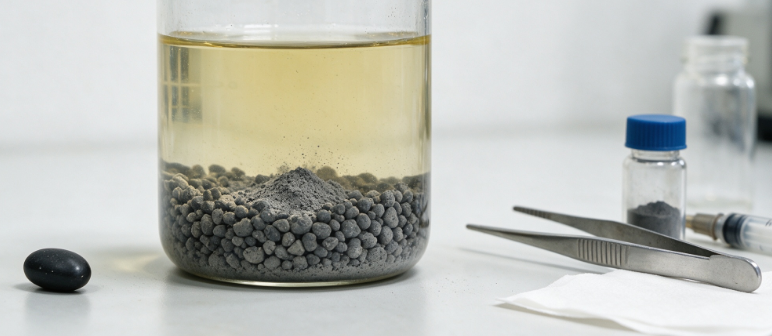
1. The Rationale for Rigorous Testing of Fly Ash‑Modified Adsorbents
Fly ash is inherently heterogeneous, with variations in glass content, crystalline phases (quartz, mullite, hematite, magnetite), unburned carbon, and trace elements depending on coal source and combustion conditions. Modification protocols—such as alkali fusion, acid leaching, or hydrothermal treatment—can drastically alter these attributes, but they may also introduce unwanted side effects, including loss of mechanical strength, excessive carbon consumption, or leaching of toxic elements (e.g., As, Cr, Pb) into the treated water. Moreover, the adsorption mechanism for a target pollutant (e.g., electrostatic attraction, surface complexation, ion exchange) is highly specific to the modification route and the pollutant’s chemical speciation. A single‑parameter test (e.g., BET surface area) fails to predict the equilibrium capacity for a given pollutant, the kinetics of uptake, or the susceptibility to fouling. Our approach integrates mineralogical characterisation, surface chemistry probing, equilibrium and kinetic studies, fixed‑bed column simulation, and rigorous toxicity leaching assays to provide a holistic performance map that is directly translatable to real‑world treatment scenarios.
2. Our Comprehensive Analytical and Performance Testing Platform for Fly Ash‑Based Adsorbents
We offer a modular, fully customisable test suite that covers all critical attributes of the modified adsorbent, from raw material to spent product, and from powder to granular or pelletised forms. All measurements are conducted with certified reference materials, standardised methods (ASTM, ISO, EPA, and national standards), and stringent internal quality controls.
2.1 Raw Material and Modified Product Characterisation
We begin with a thorough mineralogical and chemical fingerprint of the parent fly ash and the modified product. X‑ray fluorescence (XRF) provides bulk oxide composition (SiO₂, Al₂O₃, Fe₂O₃, CaO, etc.) and trace element screening. Powder X‑ray diffraction (XRD) with Rietveld refinement quantifies crystalline phases and amorphous content. Scanning electron microscopy (SEM) coupled with energy‑dispersive X‑ray spectroscopy (EDS) reveals particle morphology, surface texture, and elemental distribution. Transmission electron microscopy (TEM) is employed for nano‑scale imaging of active coatings (e.g., Fe‑oxides). N₂ physisorption (BET surface area, t‑plot micropore volume, BJH mesopore distribution) and mercury intrusion porosimetry (macroporosity) define the full pore architecture. Thermogravimetric Analysis (TGA) under air and inert atmosphere quantifies unburned carbon, dehydration, and decomposition of surface functional groups.
2.2 Surface Chemistry and Active Site Profiling
The surface chemical properties are critical for adsorption performance. We perform X‑ray photoelectron spectroscopy (XPS) to quantify surface elemental composition and chemical states (e.g., Fe²⁺/Fe³⁺, oxygen vacancies, Si‑OH, Al‑OH). Fourier‑transform infrared spectroscopy (FTIR) in diffuse reflectance (DRIFTS) or ATR mode identifies surface hydroxyl, silanol, and carbonate groups. Boehm titration differentiates acidic (carboxyl, lactone, phenolic) and basic (carbonyl, chromene) sites, while point of zero charge (pHPZC) determination by the drift method establishes the pH window for optimal electrostatic attraction of ionic pollutants.
2.3 Static (Batch) Adsorption – Isotherms, Kinetics, and Thermodynamics
We conduct equilibrium isotherm experiments using target pollutants representative of your application—e.g., Pb²⁺, Cd²⁺, Cu²⁺ (heavy metals), methylene blue or Congo red (dyes), phenol or chlorophenols, and phosphate—at controlled pH, temperature, and adsorbent dosage. The data are fitted to Langmuir, Freundlich, Sips, and Temkin models to extract maximum capacity (qmax), affinity constants, and heterogeneity factors. Kinetic experiments are analysed using pseudo‑first‑order, pseudo‑second‑order, Elovich, and intraparticle diffusion models to identify the rate‑limiting step. Thermodynamic parameters (ΔG°, ΔH°, ΔS°) are derived from temperature‑dependent isotherms to evaluate spontaneity and the nature of adsorption. Pollutant concentrations are measured by atomic absorption spectroscopy (AAS), inductively coupled plasma optical emission spectrometry (ICP‑OES), or UV‑Vis spectrophotometry, with method‑specific detection limits.
2.4 Dynamic Column Breakthrough and Pilot‑Scale Simulation
To mimic continuous treatment, we pack the modified adsorbent (in granular or extruded form) into glass or stainless‑steel columns (inner diameter 1–5 cm, bed height 10–100 cm). A synthetic or real wastewater feed is passed at controlled flow rates (1–20 L/h). Effluent concentration is monitored online (e.g., by online UV‑Vis or ICP‑MS) or via periodic sampling. We record breakthrough curves and calculate bed capacity at 10%, 50%, and 90% breakthrough, the length of mass transfer zone (MTZ), and the empty bed contact time (EBCT) required for target removal. The effect of flow rate, influent concentration, and pH is systematically studied. Data are further analysed with Thomas, Yoon‑Nelson, and Adams‑Bohart models to provide scale‑up kinetic parameters.
2.5 Effect of Competing Ions and Real‑Matrix Interference
We evaluate the interference of common coexisting ions—chloride, sulfate, nitrate, bicarbonate, and phosphate—at realistic concentration ranges, using both batch and column modes. The selectivity factor for the target pollutant over each competitor is calculated. For real‑world relevance, we also conduct tests with actual industrial or municipal wastewater provided by you, to capture the combined effect of multiple contaminants and organic matter.
2.6 Regeneration and Reuse Performance
The economic sustainability of the adsorbent is assessed by applying chemical (acid/alkali/salt), thermal, or combined regeneration methods. We perform 5–10 adsorption‑regeneration cycles, monitoring the loss in capacity, structural integrity (XRD, BET, SEM), and any changes in surface chemistry. We recommend the optimal regeneration protocol—including reagent concentration, contact time, and temperature—to maximise cycle life.
2.7 Toxicity Leaching and Environmental Safety
A critical requirement for any waste‑derived adsorbent is the assurance that it does not leach toxic components into the treated water. We conduct leaching tests following EPA Method 1311 (TCLP) or dynamic leaching protocols, and analyse the eluate for heavy metals (ICP‑MS), major anions (IC), and trace organic compounds (GC‑MS). The results are compared against WHO, EPA, and national drinking water and discharge standards to confirm safety.
2.8 Mechanical and Physical Durability
For shaped adsorbents, we measure attrition resistance (ASTM D4058), crush strength, bulk density, and pressure drop across the bed, which are critical for engineering design and long‑term operation.
3. Advanced Analytical Capabilities – Mechanistic Elucidation and Predictive Modelling
For clients seeking a deeper fundamental understanding or requiring predictive tools for process optimisation, we offer a suite of research‑grade, often custom‑designed, analytical and computational services.
3.1 In‑Situ and Operando Spectroscopies
Using in‑situ DRIFTS and UV‑Vis‑NIR spectroscopy with flow‑through cells, we monitor the real‑time evolution of surface species during pollutant uptake. For example, we can track the formation of inner‑sphere complexes between heavy metals and surface hydroxyls, or the π‑π stacking of aromatic pollutants on carbonaceous domains. This mechanistic insight directly informs the optimisation of modification chemistry.
3.2 Synchrotron‑Based X‑ray Absorption Spectroscopy (XAS)
In collaboration with synchrotron facilities, we perform XANES and EXAFS to determine the local coordination environment and oxidation state of active elements (e.g., Fe, Mn, Al) within the modified adsorbent, both before and after adsorption. This reveals whether the modification successfully introduced reactive sites and whether these sites undergo redox changes during adsorption.
3.3 High‑Resolution Microscopy – TEM‑EELS and Electron Tomography
We employ aberration‑corrected TEM with electron energy‑loss spectroscopy (EELS) to map chemical bonding and oxidation states at the nanoscale. Electron tomography reconstructs the 3D pore network and the distribution of nano‑active phases, providing quantitative metrics for structural optimisation.
3.4 Computational Modelling – DFT and Molecular Dynamics (MD)
Our computational chemistry team uses density functional theory (DFT) to calculate binding energies and charge transfer for pollutant‑surface interactions, and MD simulations to model diffusion through the porous matrix. These models complement experimental data and enable the prediction of performance for new modifications without extensive trial‑and‑error.
3.5 Pilot‑Scale Field Trials and Life‑Cycle Assessment (LCA)
We offer pilot‑scale column systems (up to 50 L bed volume) deployed at your site, with fully automated feed and sampling. We also conduct life‑cycle cost analysis and environmental impact assessment based on the experimental data, helping you make informed decisions on technology adoption and scale‑up.
4. Data Quality, Standardisation, and Comprehensive Reporting
All measurements are performed under a strict quality management system with daily calibration, certified internal standards, and regular participation in proficiency testing. Our reports provide: - Full experimental conditions (adsorbent dose, pollutant concentration, pH, temperature, mixing/flow parameters). - Isotherm and kinetic parameters with statistical fits (R², residual analysis, 95% confidence intervals). - Breakthrough curves with derived design parameters (capacity at breakthrough, MTZ, EBCT). - Competitive ion effects and selectivity factors. - Regeneration efficiency and capacity loss per cycle. - Leaching results and compliance with regulatory standards. - Uncertainty budgets (expanded uncertainty at k=2) for all reported values. - Graphical summaries (XRD patterns, isotherm plots, breakthrough profiles, spectra) with clear annotations.
Our final documents are authored by senior material scientists and environmental engineers who provide a comprehensive interpretation of the data, linking modification parameters to performance outcomes, and offering tailored recommendations on formulation, activation conditions, operating strategies, and cost optimisation. We also benchmark your material against commercial and literature alternatives when requested.
Typical turnaround for a full evaluation (characterisation + batch + column + regeneration) is 8–12 working days, with urgent services available for time‑critical projects.
5. Why Our Laboratory Is the Optimal Partner for Fly Ash Modified Adsorbent Testing
Our service is distinguished by a unique combination of technical breadth, environmental sustainability focus, and industrial‑scale relevance.
Integrated one‑stop infrastructure: We house all essential instruments—XRF, XRD, SEM‑EDS, TEM, XPS, BET, TGA, FTIR, AAS/ICP‑OES, and multiple column rigs—under one roof, ensuring seamless sample handling and rapid cross‑validation of data, eliminating the delays and inconsistencies of multi‑vendor subcontracting.
Deep expertise in waste‑derived materials: Our team has extensive experience with fly ash valorisation, including understanding the effects of coal source, combustion conditions, and modification chemistry. We are proficient in interpreting the complex mineralogical changes that occur during activation and can distinguish beneficial phase transformations from deleterious ones.
Real‑world applicability: We design our test protocols to mimic actual operating conditions—including variable pH, competing ions, and real wastewater matrices. We also evaluate long‑term stability under flow conditions, providing data that are directly usable for engineering design and plant operation.
Environmental safety focus: We place strong emphasis on toxicity leaching and ecotoxicological assessments, ensuring that your adsorbent does not introduce secondary pollution—a critical requirement for regulatory acceptance and public trust.
Flexible sample acceptance: We accept raw fly ash, modified powders, pellets, extrudates, and even composite materials. We also support the testing of different modification routes (alkali fusion, acid activation, surfactant intercalation, metal impregnation) and provide comparative performance data for each.
Process engineering and LCA support: Our engineers can translate the test results into full‑scale adsorber design, including vessel sizing, media inventory, backwash scheduling, and regeneration planning. We also offer life‑cycle cost estimation and environmental impact analysis, helping you make informed decisions on commercial deployment.
Cost‑effective and transparent pricing: Our modular pricing model allows you to select only the analyses you need, with discounts for multi‑batch screening or long‑term monitoring programmes. There are no hidden charges for interpretation, statistical analysis, or engineering consultancy.
Our track record includes collaborations with over 60 power utilities, environmental consultancies, and wastewater treatment plants, helping them successfully implement fly ash‑based adsorbents for heavy metal removal, dye decolourisation, and phosphate recovery. We invite you to leverage this expertise for your modified fly ash evaluation.
Transform your fly ash into a high‑performance adsorbent with confidence. Contact our technical specialists today to design a customised test programme that meets your specific pollutant targets, operational conditions, and sustainability goals. We will provide a detailed proposal and timeline within one business day.