Reasons for choosing our testing services
ZHONGXI Testing has obtained inspection qualification certifications from multiple countries and regions worldwide. We possess a senior testing team and advanced testing methods, providing independent, impartial, and professional third-party verification services for global carbon projects.

Internationally recognized authority
Certified by multiple international standards such as CNAS, VCS, and GS, with reports universally applicable worldwide.

Global service capability
Covering 140+ countries and regions, it supports on-site detection and remote verification in multiple languages.

Professional experimental methods
Adopt standard experimental methods to ensure accurate and reliable data.
Comprehensive Testing and Performance Validation Services for Powder Desiccants – From Fundamental Sorption Properties to Real‑World Process Integration
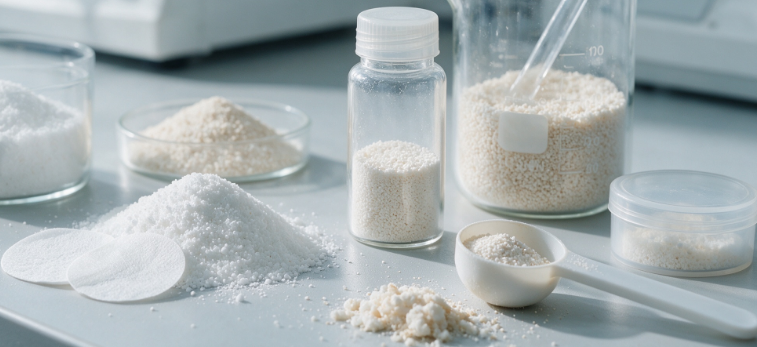
The effective control of moisture in enclosed environments—ranging from pharmaceutical packaging, electronic component storage, and food preservation to industrial drying processes and gas dehydration—relies heavily on the use of powder desiccants, including silica gel, molecular sieves, activated alumina, zeolites, and hybrid composite materials. The performance of these desiccants is not a static parameter; it is governed by a complex interplay of equilibrium water uptake capacity, sorption kinetics, pore architecture, surface chemistry, particle size distribution, and mechanical integrity. Moreover, the operational efficiency in real applications is significantly influenced by temperature, relative humidity, air/contact flow rate, and the presence of competing adsorbates. Routine characterisation—such as simple bulk density or loss‑on‑drying—provides only a superficial indication and fails to predict dynamic behaviour under fluctuating process conditions. Consequently, a rigorous, multi‑faceted testing protocol is essential for material selection, quality assurance, process optimisation, and regulatory compliance. Our ISO/IEC 17025‑accredited laboratory provides a fully integrated, multi‑scale testing service specifically designed for powder desiccants, covering the entire spectrum from fundamental equilibrium isotherms to dynamic breakthrough performance, regeneration cycling, and dust‑free handling assessment—delivering quantitative, traceable data that directly support product development, supply chain control, and cost‑effective process design.
1. The Critical Need for In‑Depth Testing of Powder Desiccants
Powder desiccants are used in both static (packaged sachets, breathers) and dynamic (fixed‑bed dryers, desiccant wheels) systems. Each mode places distinct demands on the material. For static applications, the equilibrium capacity at low relative humidity (RH) and the rate of moisture uptake (kinetics) determine the shelf‑life protection. For dynamic systems, the mass transfer zone, pressure drop, and regeneration energy requirement are equally critical. Furthermore, the tendency of fine powders to generate dust or to cake under humidity cycles can compromise product safety and equipment performance. Standard tests (e.g., BET surface area or simple desiccant efficiency) do not capture the hysteresis behaviour, temperature dependence, or the effect of contaminants (oil vapour, volatile organic compounds). Our approach combines static gravimetric and volumetric sorption analysis, dynamic column breakthrough experiments, thermogravimetric kinetics, and advanced surface characterisation to provide a complete performance fingerprint. This enables us to advise on optimal regeneration conditions, predict service life, and troubleshoot failures—whether your application is a pharmaceutical vial, an electronic enclosure, or a large‑scale gas drying unit.
2. Our Comprehensive Analytical and Performance Testing Platform for Powder Desiccants
We offer a modular, fully customisable test suite that covers all critical attributes of the desiccant powder, from pure material properties to application‑oriented performance. All measurements are conducted with certified reference materials, standardised methods (ASTM, ISO, DIN, and national standards), and stringent internal quality controls.
2.1 Fundamental Physicochemical Characterisation
The intrinsic properties of the powder are quantified using: N₂ physisorption at 77 K (BET surface area, micropore volume via t‑plot and DR, mesopore size distribution via BJH/DFT) to define the pore architecture. Helium pycnometry provides true density, while mercury intrusion porosimetry measures macroporosity and bulk density. Particle size distribution is determined by laser diffraction (wet or dry dispersion) and sieve analysis, including the fines fraction that is critical for dusting and handling. Powder X‑ray diffraction (XRD) identifies crystalline phases and quantifies amorphous content. Scanning electron microscopy (SEM) reveals particle morphology and surface texture. Thermogravimetric Analysis (TGA) under inert and oxidising atmospheres provides decomposition profiles and moisture desorption patterns.
2.2 Equilibrium Water Sorption Isotherms – Static Gravimetric and Dynamic Vapour Sorption (DVS)
The core performance indicator is the water vapour sorption isotherm at multiple temperatures (typically 20–50 °C) over the full RH range (0–95%). We use both static gravimetric (desiccator and microbalance) methods and automated DVS systems with real‑time recording of mass changes. The data are fitted to Brunauer‑Emmett‑Teller (BET), Guggenheim‑Anderson‑de Boer (GAB), and Langmuir models to extract monolayer capacity, surface coverage, and interaction energies. Hysteresis loops (type H1–H4) are characterised to assess pore geometry and the reversibility of adsorption. We also report the critical RH at which the desiccant begins to take up significant moisture.
2.3 Sorption Kinetics – Rate of Moisture Uptake and Effective Diffusion Coefficients
The practical utility of a powder desiccant depends on how quickly it can adsorb moisture. We perform kinetic adsorption experiments at controlled RH and temperature using a microbalance with automated RH generator. The time‑dependent uptake is modelled using Fickian diffusion, linear driving force (LDF), and pseudo‑first‑order / pseudo‑second‑order kinetic equations to extract effective diffusion coefficients (Deff) and rate constants. This is particularly valuable for comparing materials with similar capacities but different pore structures.
2.4 Dynamic Column Breakthrough – Performance Under Flow Conditions
For applications in fixed‑bed dryers or purifiers, we conduct column breakthrough tests. The powder is packed into a glass or stainless‑steel column (diameter 1–5 cm) and a humidified air or nitrogen stream (with precisely controlled RH and flow rate) is passed through. The effluent moisture concentration is monitored online by dew‑point sensors, hygrometers, or gas chromatography. We record breakthrough curves and calculate water capacity at breakthrough (e.g., 10% or 50% breakthrough), the length of mass transfer zone (MTZ), and the pressure drop across the bed. This test directly simulates industrial operation and is essential for process design.
2.5 Regeneration and Cyclic Stability – Thermal and Pressure‑Swing Protocols
The economic viability of a desiccant depends on its regenerability. We perform multiple adsorption‑regeneration cycles (typically 5–20) using thermal regeneration (heating in dry air or inert gas at 150–350 °C) or pressure‑swing regeneration. After each cycle, we re‑measure the equilibrium isotherm, BET surface area, and particle size distribution to quantify degradation due to sintering, pore collapse, or loss of active sites. We recommend the optimal regeneration temperature, time, and purge gas composition to maximise cycle life.
2.6 Dust Generation, Flowability, and Handling Properties
For fine powders, dustiness (measured by a rotating drum or drop‑test) is a critical safety and operational parameter. We assess flowability using the angle of repose, Carr's index, and Hausner ratio. The bulk and tapped densities are measured to evaluate storage and packaging requirements. These properties directly influence the suitability of the desiccant for automated filling or blending processes.
2.7 Chemical Compatibility and Contaminant Adsorption
In many applications, the desiccant may also adsorb volatile organic compounds (VOCs) or acid gases, which can reduce its water capacity or contaminate the product. We perform competitive adsorption tests with model contaminants (toluene, hexane, ethanol, NH₃, H₂S) to quantify selectivity and interference. Surface chemistry changes are monitored by XPS and FTIR before and after exposure.
2.8 Hygienic and Safety Testing
For food‑contact or pharmaceutical applications, we perform extractable and leachable testing (by GC‑MS and ICP‑MS) according to USP < 661 > and relevant regulations. We also test for biological safety (e.g., Endotoxin, microbial contamination) if required.
3. Advanced Analytical Capabilities – Mechanistic Insight and Predictive Modelling
For clients seeking a deeper understanding of the desiccant’s behaviour or requiring predictive models for dynamic systems, we offer a suite of specialised, research‑grade analytical tools.
3.1 In‑Situ Raman and FTIR Spectroscopic Monitoring of Water Sorption
Using in‑situ ATR‑FTIR and Raman micro‑spectroscopy with controlled humidity cells, we observe the evolution of hydrogen‑bonding states, surface hydroxyl groups, and water clusters within the pores during adsorption. This provides molecular‑level insight into the binding mechanisms and helps to explain hysteresis and temperature dependencies.
3.2 Positron Annihilation Lifetime Spectroscopy (PALS)
PALS is a powerful tool for probing nanoscale free‑volume holes and defect cavities in the desiccant matrix, which are often inaccessible by gas adsorption. This is particularly useful for evaluating the effect of doping or thermal treatments on the microporous structure.
3.3 Micro‑Calorimetry – Differential Heats of Adsorption
Using isothermal titration calorimetry (ITC) coupled with a vapour generator, we measure the differential heat of water adsorption as a function of loading. This directly quantifies the strength of the interaction and the energetic heterogeneity of the surface, which is crucial for designing energy‑efficient regeneration processes.
3.4 Computational Modelling – DFT and Grand Canonical Monte Carlo (GCMC) Simulations
Our computational chemistry team uses density functional theory (DFT) to calculate water binding energies on different surface sites, and GCMC simulations to predict water isotherms in realistic pore structures. These models are validated against experimental data and can be used to screen novel materials virtually, accelerating the development cycle.
3.5 Pilot‑Scale Dynamic Testing and Process Simulation
We offer pilot‑scale column testing with bed volumes up to 20 L, using actual process air or gas streams. The data are used to calibrate process simulation models (e.g., in Aspen Adsorption or similar) to predict full‑scale performance, pressure drop, and energy consumption.
4. Data Quality, Standardisation, and Comprehensive Reporting
All tests are performed under a strict quality management system with daily calibration, certified internal standards, and regular participation in proficiency testing schemes. Our reports deliver: - Full experimental conditions (temperature, RH, flow rate, sample mass, pre‑treatment). - Isotherm parameters (monolayer capacity, heterogeneity parameters) with statistical fits and residuals. - Kinetic rate constants and diffusion coefficients with confidence intervals. - Breakthrough curves and design parameters (capacity at breakthrough, MTZ, pressure drop). - Cycle‑to‑cycle performance decay with quantification of capacity loss per regeneration. - Dust and flowability indices with comparison to industry standards. - Leaching and extractable profiles with compliance assessment. - Uncertainty budgets (expanded uncertainty at k=2) for all key parameters.
Our final documents are authored by senior material scientists and process engineers who provide a comprehensive interpretation of the data, linking material properties to process performance, and offering tailored recommendations on material selection, operating conditions, regeneration schedules, and handling improvements. We also benchmark your material against competitor products or literature references when required.
Typical turnaround for a full evaluation (characterisation + isotherms + kinetics + breakthrough + cycling) is 7–10 working days, with express services available for urgent quality‑release or troubleshooting projects.
5. Why Our Laboratory Is the Preferred Partner for Powder Desiccant Testing
Our service is distinguished by a unique combination of technical breadth, application‑centric protocols, and operational flexibility.
Integrated multi‑technique infrastructure: We host all essential instruments—DVS, BET, XRD, XPS, TGA, laser diffraction, micro‑calorimeter, and multiple column rigs—under one roof, ensuring seamless sample handling and rapid cross‑validation of data, eliminating the fragmentation and delays of multi‑vendor testing.
Real‑world simulation capability: Our dynamic tests are conducted under controlled temperature and humidity profiles that mimic real storage or process environments. We can also incorporate cyclic humidity, temperature swings, and contaminant pulses to assess resilience under harsh conditions.
Broad material compatibility: We have extensive experience with all major types of powder desiccants—silica gels, molecular sieves, activated alumina, zeolites, clay‑based, and hybrid composites. We also handle modified or doped materials (e.g., indicating silica, metal‑impregnated) and provide tailored method adaptations.
Regulatory and safety focus: Our methods are aligned with ASTM, ISO, USP, and EU regulations for packaging, pharmaceutical, and food‑contact applications. We provide data suitable for material certifications, supplier audits, and regulatory submissions.
Process engineering consultancy: Our team includes experienced chemical engineers who can translate the test results into full‑scale dryer or dehumidifier design, including bed sizing, cycle scheduling, energy consumption estimates, and cost‑benefit analysis. This bridges the gap between analytical data and operational implementation.
Flexible sample acceptance and rapid turnaround: We accept samples in any form—as received, pre‑conditioned, or even after prolonged storage. We provide detailed guidance on sample packaging and shipping to preserve integrity. Our agile project management ensures timely delivery, often ahead of schedule.
Cost‑effective and transparent pricing: Our modular pricing allows you to select only the tests you need, with discounts for multi‑batch screening, long‑term monitoring, or development partnerships. There are no hidden fees for interpretation, statistical analysis, or consultancy.
Our track record includes successful collaborations with over 80 clients in the pharmaceutical packaging, electronics, food preservation, air‑drying, and chemical processing industries, helping them achieve superior moisture control, extended product shelf‑life, and reduced energy costs. We invite you to leverage this expertise for your powder desiccant evaluation.
Ensure optimal moisture protection and process efficiency with our comprehensive desiccant testing services. Contact our technical specialists today to design a customised test programme that addresses your specific performance targets and operational challenges. We will provide a detailed proposal and timeline within one business day.