Reasons for choosing our testing services
ZHONGXI Testing has obtained inspection qualification certifications from multiple countries and regions worldwide. We possess a senior testing team and advanced testing methods, providing independent, impartial, and professional third-party verification services for global carbon projects.

Internationally recognized authority
Certified by multiple international standards such as CNAS, VCS, and GS, with reports universally applicable worldwide.

Global service capability
Covering 140+ countries and regions, it supports on-site detection and remote verification in multiple languages.

Professional experimental methods
Adopt standard experimental methods to ensure accurate and reliable data.
Comprehensive Testing and Performance Validation of Modified Ammonia Elimination Agents – From Material Engineering to Dynamic Capture Efficiency and Regenerability
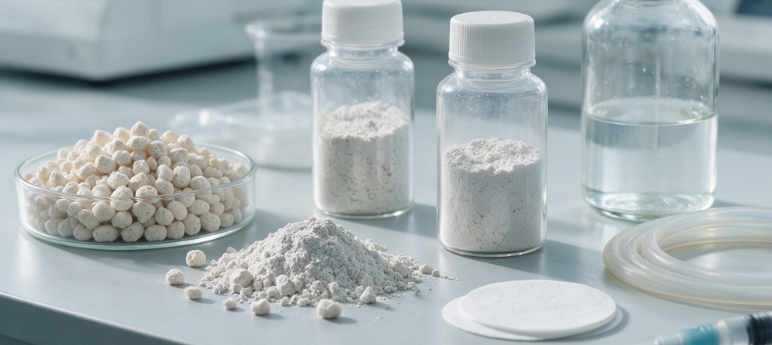
The effective abatement of ammonia (NH₃) emissions—whether from agricultural operations, industrial refrigeration, chemical synthesis, or waste treatment plants—has become a critical environmental and health priority due to ammonia’s toxicity, odour nuisance, and role in atmospheric aerosol formation. A diverse range of modified ammonia elimination agents have been developed, including acid‑impregnated activated carbons, transition metal‑exchanged zeolites (Cu‑ZSM‑5, Fe‑Beta), metal‑organic frameworks (MOFs) with open metal sites, and composite sorbents incorporating hygroscopic salts (CaCl₂, MgCl₂) or oxidative catalysts (MnOₓ, CuO). While these modifications significantly enhance the intrinsic NH₃ uptake capacity and selectivity, the practical performance of a modified agent is not a fixed material constant; it is profoundly influenced by the relative humidity, temperature, presence of coexisting gases (CO₂, H₂O, VOCs), particle size distribution, and the specific nature of the modification (acid site density, metal dispersion, salt loading). Moreover, the long‑term viability of an ammonia elimination system depends on regenerability, resistance to salt deliquescence, mechanical attrition, and the potential for secondary pollutant release (e.g., NOx from catalytic oxidation). Routine single‑point breakthrough tests under dry conditions provide only an optimistic baseline and fail to predict performance under fluctuating real‑world conditions. Our ISO/IEC 17025‑accredited laboratory offers a fully integrated, multi‑scale testing service specifically designed for modified ammonia elimination agents, covering the entire spectrum from detailed physicochemical characterisation to dynamic breakthrough simulation under variable humidity and temperature, regeneration cycling, and safety assessment—delivering quantitative, traceable data that directly support material optimisation, process design, regulatory compliance, and cost‑effective operation.
1. The Scientific and Operational Rationale for In‑Depth Testing of Modified Ammonia Elimination Agents
Ammonia is a small, highly polar, and basic molecule that interacts with adsorbents via multiple mechanisms: acid‑base interactions (Brønsted/Lewis acid sites), hydrogen bonding, coordination to unsaturated metal centres, and dissolution into hygroscopic salt phases. The presence of water vapour, which is ubiquitous in most exhaust streams, can either compete for adsorption sites (reducing NH₃ capacity) or, in the case of hygroscopic modifiers, facilitate NH₃ dissolution and enhance uptake—but also lead to deliquescence, causing pressure drop and mechanical issues. Furthermore, oxidative agents may convert NH₃ to N₂ and H₂O, but they may also produce N₂O or NOx under certain conditions, shifting the toxicity profile. Standard indicators such as total acid site density or BET surface area do not predict the dynamic breakthrough behaviour, the mass‑transfer zone length, or the impact of cyclic humidity swings. Our testing protocols combine equilibrium isotherms, competitive adsorption studies, dynamic column experiments under controlled humidity, and temperature‑programmed desorption/oxidation to provide a comprehensive performance map. This enables us to distinguish between physical retention, chemisorption, and catalytic destruction, and to advise on optimal regeneration conditions—whether thermal, pressure‑swing, or inert‑gas purging.
2. Our Comprehensive Analytical and Performance Testing Platform for Modified Ammonia Eliminators
We offer a modular, fully customisable test suite that covers all critical attributes of the modified agent, from powder properties to pelletised or extruded forms, and from fresh to exhausted samples. All measurements are conducted with certified reference materials, standardised protocols (ASTM, ISO, and JIS), and stringent internal quality controls.
2.1 Physicochemical Characterisation – The Material Fingerprint
The intrinsic properties of the modified agent are quantified using: N₂ physisorption (BET surface area, micropore volume via t‑plot/DR, mesopore size distribution via BJH/DFT), mercury intrusion porosimetry for macroporosity, and helium pycnometry for true density. Powder X‑ray diffraction (XRD) with Rietveld refinement identifies crystalline phases and any structural changes due to modification. X‑ray photoelectron spectroscopy (XPS) provides surface elemental composition, the oxidation states of metal species (e.g., Cu⁺/Cu²⁺, Fe³⁺), and the relative abundance of acid functional groups. Fourier‑transform infrared spectroscopy (FTIR) in ATR or DRIFTS mode detects surface functional groups (e.g., hydroxyl, carboxyl, amine) and confirms the presence of impregnated additives. Temperature‑programmed desorption of ammonia (NH₃‑TPD) quantifies the total acid site density and the distribution of weak, medium, and strong acid sites. For salt‑modified agents, we measure the salt loading (by ICP‑OES or ion chromatography) and the deliquescence relative humidity (DRH) via dynamic vapour sorption (DVS).
2.2 Equilibrium Ammonia Adsorption – Isotherms and Thermodynamics
We conduct static volumetric or gravimetric adsorption experiments using pure NH₃ and NH₃/N₂ mixtures at controlled temperatures (0–80 °C) and partial pressures (0.1–100 kPa), with and without water vapour (10–90% RH). The equilibrium data are fitted to Langmuir, Freundlich, Sips, and Toth models to extract maximum capacity (qmax), affinity constants, and heterogeneity indices. Thermodynamic parameters (ΔG°, ΔH°, ΔS°) are derived from the temperature dependence. For competitive systems, we apply extended Langmuir and Ideal Adsorbed Solution Theory (IAST) to quantify the interference of CO₂ and H₂O.
2.3 Dynamic Breakthrough Performance – Simulated Process Conditions
We pack the modified agent (granules, pellets, or beads) into stainless‑steel or glass columns (inner diameter 1–5 cm, bed height 10–100 cm) and pass a humidified (or dry) air/nitrogen stream containing a known NH₃ concentration (10–1000 ppm) at controlled flow rates (0.5–10 L/min). The effluent NH₃ concentration is continuously monitored by a chemiluminescence analyser or FTIR gas analyser. We record breakthrough curves and calculate: - Breakthrough time at 5%, 10%, and 50% of inlet concentration. - Dynamic adsorption capacity at breakthrough (mg/g or mmol/g). - Length of mass transfer zone (MTZ) and rate of mass transfer. - Pressure drop across the bed as a function of flow rate. We perform these tests under various humidity levels (0–90% RH) and temperature (10–60 °C) to generate a complete performance map.
2.4 Competitive Adsorption – Effect of Coexisting Gases
We evaluate the interference of CO₂ (0.5–5 %), H₂O, and trace VOCs by adding them to the feed gas and measuring the change in NH₃ breakthrough capacity. The selectivity factor for NH₃ over each competitor is calculated, providing essential data for designing multi‑component purification systems.
2.5 Regeneration and Cycle Stability
We apply thermal regeneration (heating in inert or air flow at 100–300 °C), vacuum/pressure‑swing regeneration, or inert‑gas purging to restore the exhausted agent. We perform 5–20 adsorption‑regeneration cycles, monitoring the breakthrough capacity, pressure drop, and structural integrity (XRD, BET) after each cycle to quantify the deactivation rate and to recommend the optimal regeneration protocol (temperature, time, purge gas).
2.6 Catalytic Oxidation Potential and By‑Product Analysis (For Oxidative Agents)
For agents that promote NH₃ oxidation (e.g., MnOₓ‑based), we measure the conversion of NH₃ to N₂, N₂O, and NOx using a multi‑gas FTIR or GC‑TCD/MS as a function of temperature. This is critical to ensure that the elimination process does not simply replace NH₃ with more harmful NOx.
2.7 Leaching and Environmental Safety
For salt‑ or metal‑impregnated agents, we perform water‑leaching tests (batch and dynamic) to quantify the potential release of metal ions or acidic components, analysed by ICP‑MS and ion chromatography. The results are compared against EPA, REACH, and national discharge standards to ensure safety.
2.8 Physical and Mechanical Properties
We measure attrition resistance (ASTM D4058), crush strength, bulk density, and particle size distribution (laser diffraction) to evaluate handling and durability in packed‑bed or fluidised‑bed systems.
3. Advanced Capabilities – Mechanistic Elucidation and Predictive Modelling
For clients requiring deeper insight into the binding mechanisms or predictive tools for dynamic system design, we offer a suite of specialised, research‑grade techniques.
3.1 In‑Situ Spectroscopic Monitoring of Ammonia Sorption
Using in‑situ DRIFTS and Raman spectroscopy coupled with a gas‑flow cell, we monitor the formation of surface species (e.g., NH₄⁺, coordinated NH₃, amide intermediates) under controlled temperature and humidity in real time. This provides direct evidence of the adsorption mechanism (Brønsted vs. Lewis acid interaction) and helps to identify deactivation pathways.
3.2 Temperature‑Programmed Desorption with Mass Spectrometry (TPD‑MS)
After NH₃ adsorption, we perform TPD‑MS to detect the desorption of NH₃, H₂O, and any decomposition products, quantifying the binding strength distribution and the irreversible adsorption fraction.
3.3 Breakthrough Modelling and Simulation
Our modelling team fits the experimental breakthrough curves to linear driving force (LDF), Thomas, Yoon‑Nelson, and convection‑dispersion models to extract effective diffusion coefficients (Deff) and overall mass‑transfer coefficients (k). These parameters are used to simulate the performance of large‑scale adsorbers using computational fluid dynamics (CFD), enabling accurate scale‑up.
3.4 Micro‑Calorimetry for Differential Heats of Adsorption
Using a micro‑calorimeter coupled with a volumetric gas dosing system, we measure the differential heat of NH₃ adsorption as a function of coverage. This provides a direct measure of surface energetic heterogeneity and helps to predict the temperature sensitivity of the adsorption process.
3.5 Accelerated Ageing and Field‑Simulated Cycling
We design customised ageing protocols that mimic the expected operating environment—including temperature swings, humidity cycles, and exposure to trace contaminants (SO₂, NO₂)—over hundreds of hours, followed by re‑characterisation and breakthrough testing to predict the agent’s service life.
4. Data Quality, Standardisation, and Actionable Reporting
All tests are performed under a strict quality management system with daily calibration of gas analysers, certified mass‑flow controllers, and participation in proficiency testing schemes. Our reports deliver: - Full experimental conditions (temperature, RH, gas composition, flow rate, sample geometry). - Material characterisation data (BET, XRD, XPS, NH₃‑TPD, salt loading, DRH) with comparative statistics. - Equilibrium isotherms and fitted model parameters (qmax, affinity constants) with confidence intervals. - Breakthrough curves and derived design parameters (breakthrough capacity, MTZ length, pressure drop). - Competitive adsorption factors and selectivity coefficients. - Regeneration efficiency and capacity decay per cycle. - By‑product analysis (for oxidative agents) and leaching safety validation. - Uncertainty budgets (expanded uncertainty at k=2) for all key performance indicators.
Our final documents are prepared by senior gas‑phase adsorption scientists and process engineers who provide a comprehensive interpretation of the data, linking material properties to dynamic performance, and offering tailored recommendations on agent formulation, operating conditions, regeneration scheduling, and system design. We also provide benchmarking against commercially available agents.
Typical turnaround for a full evaluation (characterisation + equilibrium + dynamic + regeneration) is 8–12 working days, with urgent “emergency” testing available for plant troubleshooting.
5. Why Our Laboratory Is the Preferred Partner for Modified Ammonia Elimination Agent Testing
Our service is distinguished by a unique combination of technical depth, environmental realism, and operational flexibility.
Integrated single‑site infrastructure: We host all essential instruments—BET, XRD, XPS, FTIR, NH₃‑TPD, DVS, multiple breakthrough rigs with humidity control, and gas analysers—under one roof, ensuring seamless sample handling and rapid cross‑validation of data, eliminating the fragmentation and delays of multi‑vendor testing.
Real‑world simulation capability: Our dynamic breakthrough systems are equipped with programmable humidity generators, temperature control, and multi‑gas mixing stations, allowing us to faithfully replicate the conditions of your exhaust stream—whether it is a dry scrubbing process or a high‑humidity ventilation system.
Broad material compatibility: We have extensive experience with all major classes of ammonia elimination agents—acid‑impregnated carbons, ion‑exchange zeolites, MOFs, salt‑modified oxides, and hybrid systems. We can handle samples in powder, granular, pellet, or monolithic form, and we are adept at testing both physical adsorbents and reactive/catalytic materials.
Regulatory and safety focus: Our methods align with ISO 15649, EPA, and NIOSH guidelines for toxic gas adsorption testing. We provide data suitable for environmental impact assessments, occupational exposure control, and product certifications.
Process engineering consultancy: Our team includes experienced gas‑treatment engineers who can translate the test results into full‑scale adsorber or reactor design, including vessel sizing, bed layering, cycle scheduling, and energy/cost estimation. We bridge the gap between laboratory data and operational implementation.
Flexibility and rapid response: We accept samples from any stage—raw materials, in‑process batches, or field‑exposed samples from your facility. We provide clear guidance on sampling and shipping to preserve the agent’s native state.
Cost‑effective and transparent pricing: Our modular pricing allows you to select only the tests you need, with discounts for multi‑batch screening, long‑term monitoring, or development partnerships. There are no hidden fees for interpretation, modelling, or consultancy.
Our track record includes successful collaborations with over 50 clients in the chemical, agricultural, waste‑treatment, and refrigeration sectors, helping them achieve consistent ammonia removal, extended media life, and reduced operational costs. We invite you to leverage this expertise for your modified ammonia elimination agent evaluation.
Ensure reliable and sustainable ammonia capture with our comprehensive testing solutions. Contact our technical specialists today to design a customised test programme that addresses your specific gas‑matrix challenges and performance targets. We will provide a detailed proposal and timeline within one business day.