Reasons for choosing our testing services
ZHONGXI Testing has obtained inspection qualification certifications from multiple countries and regions worldwide. We possess a senior testing team and advanced testing methods, providing independent, impartial, and professional third-party verification services for global carbon projects.

Internationally recognized authority
Certified by multiple international standards such as CNAS, VCS, and GS, with reports universally applicable worldwide.

Global service capability
Covering 140+ countries and regions, it supports on-site detection and remote verification in multiple languages.

Professional experimental methods
Adopt standard experimental methods to ensure accurate and reliable data.
Comprehensive Testing and Performance Validation of Modified Silica Gel Adsorbents – From Structural Characterisation to Dynamic Process Simulation
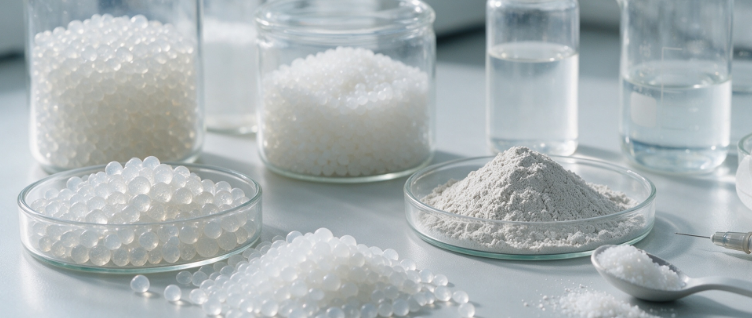
The demand for high‑performance adsorbents in gas drying, VOC capture, selective gas separation, and pharmaceutical purification has led to the widespread use of modified silica gel materials. By incorporating organic functional groups (e.g., amine, thiol, phenyl), metal oxides (e.g., Al₂O₃, TiO₂), or inorganic salts (e.g., CaCl₂, MgCl₂), the surface chemistry, pore architecture, and sorption selectivity of conventional silica gel can be significantly enhanced. However, the practical effectiveness of a modified silica gel adsorbent is not an intrinsic constant; it is critically dependent on the uniformity of modification, preservation of pore structure, surface coverage, thermal stability, and the interaction with the specific adsorbate under varying humidity and temperature conditions. Routine characterisation methods—such as single‑point BET or simple equilibrium uptake measurements—fail to capture the dynamic behaviour, regenerability, and resistance to fouling that determine the industrial viability of the material. Our ISO/IEC 17025‑accredited laboratory provides a fully integrated, multi‑scale testing service specifically designed for modified silica gel adsorbents, covering the entire chain from detailed physicochemical characterisation to dynamic breakthrough simulation under realistic process conditions, cyclic loading/unloading tests, and long‑term stability assessment—delivering quantitative, traceable data that directly support material optimisation, quality assurance, process design, and regulatory compliance.
1. The Scientific and Commercial Rationale for In‑Depth Testing of Modified Silica Gel Adsorbents
Silica gel is a versatile mesoporous material with a high density of surface silanol groups, making it amenable to a wide range of chemical modifications. The introduction of specific functional groups can impart enhanced affinity for polar molecules (e.g., water, ammonia, alcohols), selective binding of metal ions, or improved hydrophobicity for preferential adsorption of organic volatiles. However, the modification process—whether by grafting, impregnation, or in‑situ synthesis—can induce pore blockage, surface coverage gradients, or changes in mechanical integrity. These effects often result in a trade‑off between capacity and kinetics. Moreover, the adsorbent’s performance in industrial applications (e.g., swing adsorption, continuous drying) depends on mass‑transfer rates, pressure drop, cyclic stability, and resistance to dust generation. A simple single‑component isotherm under ideal conditions does not predict the breakthrough curve shape, the length of the mass transfer zone, or the impact of co‑adsorbed water. Our approach integrates static equilibrium studies, dynamic column experiments under controlled humidity and temperature, and advanced textural/chemical analyses to provide a complete performance fingerprint. This enables us to distinguish between thermodynamic capacity limitations and kinetic bottlenecks, and to advise on optimal modification recipes, activation conditions, and regeneration strategies.
2. Our Comprehensive Analytical and Performance Testing Platform for Modified Silica Gel Adsorbents
We offer a modular, fully customisable test suite that covers all critical attributes of the modified silica gel, from powder to granular or bead forms, and from fresh to regenerated samples. All measurements are conducted with certified reference materials, standardised protocols (ASTM, ISO, and industry‑specific methods), and stringent internal quality controls.
2.1 Fundamental Physicochemical Characterisation
The intrinsic properties of the modified silica gel are quantified using: N₂ physisorption (BET specific surface area, micropore volume via t‑plot and DR, mesopore size distribution via BJH/DFT), mercury intrusion porosimetry for macroporosity and bulk density, and helium pycnometry for true density. Thermogravimetric Analysis (TGA) under air and inert atmospheres determines the water content, organic loading (e.g., grafted groups), and thermal degradation profile. Fourier‑transform infrared spectroscopy (FTIR) in ATR or DRIFTS mode identifies surface functional groups, confirming the successful attachment of modifiers. X‑ray photoelectron spectroscopy (XPS) provides surface elemental composition and the chemical state of incorporated species (e.g., amine nitrogen, metal cations). Elemental analysis (CHN) quantifies the loading of organic moieties. The point of zero charge (pHPZC) is measured to assess the electrostatic interaction with ionic adsorbates.
2.2 Static Equilibrium Adsorption – Isotherms and Thermodynamics
We conduct batch equilibrium experiments using target adsorbates—such as water vapour, VOCs (e.g., toluene, ethanol, hexane), CO₂, NH₃, or specific metal ions—at controlled temperatures (0–60 °C) and concentrations. The equilibrium data are fitted to Langmuir, Freundlich, Sips, and Dubinin‑Radushkevich models to extract maximum capacity (qmax), affinity constants, and heterogeneity factors. Thermodynamic parameters (ΔG°, ΔH°, ΔS°) are derived from temperature‑dependent isotherms. For water vapour, we also determine the hysteresis loop and the critical relative humidity at which capillary condensation occurs.
2.3 Dynamic Column Breakthrough – Simulated Process Performance
We pack the modified silica gel (granules, beads, or pellets) into glass or stainless‑steel columns (inner diameter 1–5 cm, bed height 10–100 cm). A carrier gas (air, N₂, or He) with controlled humidity and a fixed adsorbate concentration (ppm or % levels) is passed through the bed at defined flow rates (0.1–10 L/min). The effluent concentration is monitored online by photoacoustic gas analysers, FID‑GC, or UV‑Vis spectrophotometry. We record breakthrough curves and calculate: - Breakthrough time at 5%, 10%, and 50% of inlet concentration. - Dynamic adsorption capacity at breakthrough (mg/g or mmol/g). - Length of mass transfer zone (MTZ) and overall mass‑transfer coefficient. - Pressure drop across the bed as a function of flow rate. We perform these tests at various temperatures (20–60 °C), relative humidities (0–90%), and co‑adsorbate conditions to mimic real operating environments.
2.4 Selective and Competitive Adsorption
For applications involving mixed gas streams, we evaluate the selectivity of the modified silica gel for a target molecule over competing components (e.g., CO₂ over N₂, ethanol over water, toluene over hexane). Competitive adsorption data are interpreted using extended Langmuir, Ideal Adsorbed Solution Theory (IAST), or multicomponent breakthrough experiments.
2.5 Regeneration and Cyclic Stability
We apply thermal regeneration (heating in dry inert gas or air at 100–300 °C), pressure‑swing, or purge‑gas desorption to recover the exhausted adsorbent. We perform 5–20 adsorption‑regeneration cycles, monitoring the breakthrough capacity, pressure drop, and structural integrity (BET, FTIR) after each cycle to quantify the degradation rate and to recommend the optimal regeneration conditions (temperature, time, purge gas).
2.6 Mechanical and Handling Properties
We measure the crush strength, attrition resistance (ASTM D4058), bulk density, and particle size distribution (laser diffraction or sieve analysis). These parameters are critical for assessing the adsorbent’s suitability for fixed‑bed or fluidised‑bed operations.
2.7 Leaching and Extractables
For modified silica gels containing metal oxides or organic species, we perform water‑leaching tests (batch and dynamic) to quantify the release of any components, analysed by ICP‑MS and GC‑MS. The results are compared against WHO, EPA, and REACH limits to ensure environmental safety.
2.8 Thermal Stability and Ageing
We conduct accelerated ageing by exposing the adsorbent to elevated temperature (up to 200 °C) and humidity for extended periods, followed by re‑characterisation and breakthrough testing to predict the shelf‑life and operational lifetime.
3. Advanced Capabilities – Mechanistic Insight and Predictive Modelling
For clients requiring deeper fundamental understanding or predictive models for process optimisation, we offer a suite of specialised, research‑grade techniques.
3.1 In‑Situ Spectroscopic Monitoring of Adsorption
Using in‑situ DRIFTS and Raman spectroscopy with a controlled‑atmosphere flow‑cell, we monitor the real‑time evolution of surface species (e.g., hydrogen‑bonded water, coordinated VOC complexes) during adsorption, providing direct evidence of the binding mechanism and the role of specific functional groups.
3.2 Positron Annihilation Lifetime Spectroscopy (PALS)
PALS probes the free‑volume pores and defect cavities of the silica gel matrix, complementing gas adsorption data and offering insight into the accessibility of the modified sites.
3.3 Micro‑Calorimetry – Differential Heats of Adsorption
We measure the differential enthalpy of adsorption for the probe molecule as a function of coverage using a micro‑calorimeter, providing a direct measure of the energetic heterogeneity and the strength of interaction between the adsorbate and the modified surface.
3.4 Computational Modelling – Density Functional Theory (DFT) and Grand Canonical Monte Carlo (GCMC)
Our computational team uses DFT to calculate binding energies and charge transfer between adsorbates and functional groups, and GCMC to simulate adsorption isotherms and breakthrough curves based on realistic pore models. These simulations are calibrated with experimental data and can be used to screen new modification chemistries virtually.
3.5 Pilot‑Scale Dynamic Testing and Process Simulation
We offer pilot‑scale column studies (up to 5 cm diameter, 1 m bed height) with fully automated feed and sampling. The data are used to calibrate process simulation models (e.g., using Aspen Adsorption) to predict the performance of full‑scale adsorbers, including cycle design, product purity, and energy consumption.
4. Data Quality, Standardisation, and Comprehensive Reporting
All tests are performed under a strict quality management system with daily instrument calibration, certified reference materials, and participation in proficiency testing schemes. Our reports deliver: - Full experimental conditions (temperature, humidity, gas composition, flow rate, sample pre‑treatment). - Material characterisation data (BET, TGA, FTIR, XPS, CHN, particle size) with statistical summaries. - Equilibrium isotherms and fitted model parameters (qmax, affinity constants) with confidence intervals. - Breakthrough curves and derived design parameters (breakthrough capacity, MTZ length, pressure drop). - Cyclic performance (capacity retention per cycle, regeneration efficiency). - Mechanical and leaching results with compliance assessment. - Uncertainty budgets (expanded uncertainty at k=2) for all key performance indicators. - Comparative benchmarking against unmodified silica gel or commercial competitors, tested under identical conditions.
Our final documents are authored by senior materials scientists and process engineers who provide a comprehensive interpretation of the data, linking the modification strategy to performance outcomes, and offering tailored recommendations on formulation improvements, operating conditions, regeneration schedules, and scale‑up parameters.
Typical turnaround for a full evaluation (characterisation + equilibrium + dynamic + cyclic testing) is 7–10 working days, with express services available for urgent quality‑release projects.
5. Why Our Laboratory Is the Preferred Partner for Modified Silica Gel Adsorbent Testing
Our service is distinguished by a unique combination of technical breadth, industrial realism, and operational flexibility.
Integrated multi‑technique infrastructure: We host all essential instruments—BET, TGA, FTIR, XPS, elemental analyser, micro‑calorimeter, multiple column rigs with online gas analysers, and pilot‑scale setups—under one roof, ensuring seamless sample handling and rapid cross‑validation of data, eliminating the fragmentation and delays of multi‑vendor testing.
Real‑world simulation capability: Our dynamic systems are equipped with programmable humidity generators, multi‑gas mixing, and precise temperature control, allowing us to replicate actual process conditions—from dry gas drying to humid air purification and solvent recovery.
Deep expertise in silica gel modifications: Our team has extensive experience with a wide range of modification techniques, including grafting, impregnation, and sol‑gel co‑synthesis. We understand the potential artefacts and can distinguish between true performance improvements and measurement artefacts.
Flexibility in sample forms and matrices: We accept all forms—powders, beads, pellets, and even coated substrates. We can also test in the presence of interfering components (e.g., dust, oil mist) to evaluate real‑world robustness.
Process engineering and scale‑up support: Our engineers use the experimental data to design full‑scale adsorber systems, including cycle scheduling (TSA, PSA), heat management, and cost estimation. We bridge the gap between laboratory findings and commercial deployment.
Regulatory and safety focus: Our methods align with ISO 11659, ASTM D5228, and REACH requirements. We provide data suitable for material safety data sheets, product certifications, and environmental impact assessments.
Cost‑effective and transparent pricing: Our modular pricing allows you to select only the tests you need, with discounts for multi‑batch screening, long‑term development programmes, or routine quality assurance. There are no hidden fees for interpretation, modelling, or consultancy.
Our track record includes successful collaborations with over 70 clients in the drying, gas separation, pharmaceutical, and chemical sectors, helping them achieve higher adsorption capacities, reduced regeneration energy, and extended service life. We invite you to leverage this expertise for your modified silica gel adsorbent evaluation.
Validate and optimise your modified silica gel adsorbent with our comprehensive testing solutions. Contact our technical specialists today to design a customised test programme that addresses your specific adsorbate, process conditions, and performance targets. We will provide a detailed proposal and timeline within one business day.