Reasons for choosing our testing services
ZHONGXI Testing has obtained inspection qualification certifications from multiple countries and regions worldwide. We possess a senior testing team and advanced testing methods, providing independent, impartial, and professional third-party verification services for global carbon projects.

Internationally recognized authority
Certified by multiple international standards such as CNAS, VCS, and GS, with reports universally applicable worldwide.

Global service capability
Covering 140+ countries and regions, it supports on-site detection and remote verification in multiple languages.

Professional experimental methods
Adopt standard experimental methods to ensure accurate and reliable data.
Comprehensive Testing and Performance Evaluation of Modified Coke Adsorbents – From Structural Tailoring to Industrial‑Scale Process Validation
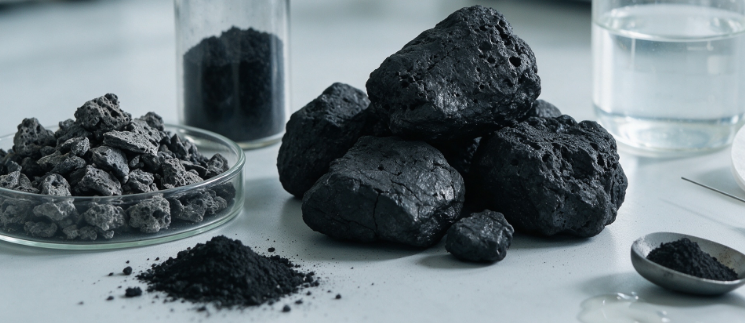
The strategic modification of coke—a carbonaceous material derived from coal pyrolysis—has opened new opportunities for its application as a high‑performance adsorbent or catalyst support in gas purification, wastewater treatment, and metallurgical processes. Through acid/base treatment, steam activation, metal oxide impregnation (Fe, Mn, Cu, Zn), nitrogen doping, or sulfur functionalisation, the intrinsic properties of raw coke—such as specific surface area, pore architecture, surface acidity/basicity, and thermal stability—can be substantially enhanced to achieve targeted removal of heavy metals, organic dyes, SO₂, NOx, and mercury vapour. However, the practical efficacy of a modified coke is not a fixed material constant; it is critically governed by the homogeneity of modification, the evolution of pore structure, the chemical state of introduced species, and the interaction with the specific pollutant under varying temperature, humidity, and gas composition. Furthermore, the industrial viability depends on mechanical strength, resistance to attrition, regenerability, and the potential for secondary contamination. Routine single‑parameter tests—such as iodine number or basic BET surface area—do not predict dynamic breakthrough behaviour, cyclic stability, or poisoning resistance under realistic flue‑gas or effluent conditions. Our ISO/IEC 17025‑accredited laboratory provides a fully integrated, multi‑scale testing service specifically designed for modified coke adsorbents, covering the entire chain from detailed physicochemical characterisation to dynamic fixed‑bed simulation under simulated industrial atmospheres, multi‑cycle regeneration, and environmental safety assessment—delivering quantitative, traceable data that directly support material optimisation, process scale‑up, regulatory compliance, and cost‑effective operation.
1. The Scientific and Industrial Rationale for In‑Depth Testing of Modified Coke Adsorbents
Modified coke differs from activated carbon in its relatively lower surface area but higher mechanical strength and lower ash content after proper treatment. The modification process can introduce specific functional groups or metal species that enable chemisorption or catalytic oxidation, but it may also alter the micro‑ and mesopore balance, affecting diffusion rates. For example, impregnation with iron or manganese oxides can enhance the retention of elemental mercury or H₂S, but excessive loading may block pores and reduce the overall capacity. The presence of water vapour, CO₂, and SO₂ in flue gases can compete for active sites or cause irreversible poisoning. Standard indicators—such as the methylene blue adsorption number or the ASTM ash content—provide only a coarse estimate; they do not reveal the breakthrough curve shape, the mass‑transfer zone length, or the kinetics of adsorption/desorption. Our protocols combine comprehensive material characterisation (XRD, XPS, Raman, BET, mercury porosimetry), equilibrium and kinetic batch studies, fixed‑bed breakthrough experiments under controlled gas/liquid matrices, and cyclic regeneration tests to yield a complete performance fingerprint. This enables us to pinpoint the dominant mechanism—whether physical adsorption, chemisorption, or catalytic conversion—and to advise on optimal modification parameters, activation conditions, and regeneration strategies.
2. Our Comprehensive Analytical and Performance Testing Platform for Modified Coke
We offer a modular, fully customisable test suite that covers all critical attributes of the modified coke, from raw powder/granules to shaped pieces, and from fresh to aged/spent samples. All measurements are conducted with certified reference materials, standardised protocols (ASTM, ISO, EPA, and national standards), and stringent internal quality controls.
2.1 Detailed Physicochemical Characterisation
We quantify the specific surface area (BET) and pore size distribution (micropores via t‑plot and DR, mesopores via BJH/DFT, and macropores via mercury intrusion porosimetry). True and bulk densities are measured by helium pycnometry and mercury intrusion, respectively. Powder X‑ray diffraction (XRD) identifies the crystalline phases of any metal additives and the carbonaceous matrix. Raman spectroscopy provides the ID/IG ratio to assess the degree of graphitisation and disorder. X‑ray photoelectron spectroscopy (XPS) gives surface elemental composition and chemical states (e.g., Fe⁰/Fe²⁺/Fe³⁺, N‑functionalities). Fourier‑transform infrared spectroscopy (FTIR) in ATR mode detects surface oxygen‑containing groups (e.g., carboxyl, carbonyl, phenol). Elemental analysis (CHNS) quantifies carbon, hydrogen, nitrogen, and sulfur content. Thermogravimetric Analysis (TGA) under air and inert atmospheres determines the moisture, volatile matter, ash, and fixed carbon content, as well as the thermal stability of the modifiers.
2.2 Static (Batch) Adsorption – Isotherms, Kinetics, and Thermodynamics
We perform batch equilibrium experiments using target pollutants—such as heavy metals (Pb²⁺, Cd²⁺, Cu²⁺, Cr⁶⁺), dyes (methylene blue, methyl orange), phenols, or gas‑phase species (Hg⁰, SO₂, NO₂)—under controlled temperature, pH, and adsorbent dosage. The data are fitted to Langmuir, Freundlich, Sips, and Dubinin‑Radushkevich models to extract maximum capacity (qmax), affinity constants, and heterogeneity factors. Kinetics are modelled using pseudo‑first‑order, pseudo‑second‑order, Elovich, and intraparticle diffusion equations to identify the rate‑limiting step. Thermodynamic parameters (ΔG°, ΔH°, ΔS°) are derived from temperature‑dependent experiments, indicating the spontaneity and nature of adsorption.
2.3 Dynamic Column Breakthrough – Liquid and Gas‑Phase Performance
We pack the modified coke into fixed‑bed columns (stainless steel or glass, inner diameter 1–5 cm, bed height 10–100 cm). For liquid‑phase treatment, a synthetic or real wastewater stream with controlled flow and pollutant concentration is passed, and effluent samples are analysed offline by AAS, ICP‑OES, UV‑Vis spectrophotometry, or HPLC. For gas‑phase applications, a simulated flue gas (with controlled levels of SO₂, NO, Hg⁰, O₂, H₂O, CO₂) is flowed, and the effluent is continuously monitored by UV photometric (for Hg), chemiluminescence (for NOx), non‑dispersive infrared (for SO₂, CO₂), and gas chromatography systems. We record breakthrough curves and calculate: - Breakthrough time at 5%, 10%, and 50% of the inlet concentration. - Dynamic adsorption capacity at breakthrough (mg/g or mmol/g). - Mass transfer zone (MTZ) length and overall mass‑transfer coefficient. - Pressure drop and its evolution over time. We perform these tests under different temperatures, space velocities, and humidity levels to map the operational envelope.
2.4 Effect of Co‑existing Gases and Ions
We systematically evaluate the competitive and synergistic effects of common components—such as H₂O, CO₂, SO₂, NO, and HCl in gas streams, or chloride, sulphate, and bicarbonate in aqueous solutions—on the target adsorption. The selectivity factor and the inhibition index are derived, providing critical data for real‑world applications.
2.5 Regeneration and Cyclic Stability
We apply thermal regeneration (inert or oxidative atmosphere at 200–500 °C), chemical regeneration (acid/base or solvent washing), or pressure‑swing methods to restore exhausted coke. We perform 5–15 adsorption‑regeneration cycles, monitoring the capacity, surface chemistry (XPS, FTIR), and structural integrity (XRD, Raman, BET) after each cycle to quantify the deactivation rate and to recommend the optimal regeneration protocol.
2.6 Mechanical Strength and Attrition Resistance
We measure the crush strength (radial and axial), attrition index (ASTM D4058), and bulk density of the shaped coke. These are essential for assessing the material’s suitability for fixed‑bed, moving‑bed, or fluidised‑bed reactors.
2.7 Leaching and Secondary Pollution Assessment
For metal‑impregnated cokes, we conduct leaching tests (e.g., EPA TCLP) to quantify the release of heavy metals or other toxic species into the treated water or condensate. The leachates are analysed by ICP‑MS, and the results are compared against WHO, EPA, and national discharge standards.
2.8 Thermal Stability and Oxidation Resistance
Using TGA‑DTG under air, we determine the onset temperature of oxidation and the combustion profile. We also perform isothermal oxidation tests at typical operating temperatures to evaluate the long‑term stability of the coke in oxidative environments.
3. Advanced Capabilities – Mechanistic Insight and Predictive Modelling
For clients requiring a deeper understanding of the adsorption or catalytic mechanism, or for predictive scale‑up, we offer a suite of cutting‑edge, research‑grade services.
3.1 In‑Situ / Operando Spectroscopies
Using in‑situ DRIFTS and Raman spectroscopy with controlled‑atmosphere cells, we monitor the real‑time formation of surface species (e.g., sulphate, nitrate, or metal‑mercury amalgam) during exposure to pollutants. This provides direct evidence of the binding mechanism and the role of specific functional groups or metal sites.
3.2 X‑ray Absorption Spectroscopy (XAS) – Synchrotron‑Based Speciation
In collaboration with synchrotron facilities, we perform XANES and EXAFS to determine the oxidation state and local coordination of incorporated metals (e.g., Fe, Mn, Cu) in the coke matrix before and after adsorption. This clarifies the redox chemistry involved in pollutant removal and guides the optimisation of metal loading.
3.3 High‑Resolution Transmission Electron Microscopy (HRTEM) with EELS
We use HRTEM coupled with electron energy‑loss spectroscopy (EELS) to visualise the distribution and morphology of metal nanoparticles on the carbon surface, and to detect any carbon‑encapsulated structures that may affect accessibility.
3.4 Breakthrough Curve Modelling and Simulation
Our modelling team fits the experimental breakthrough data to linear driving force (LDF), Thomas, Yoon‑Nelson, and convection‑dispersion models to extract effective diffusion coefficients and mass‑transfer parameters. These are used to simulate full‑scale adsorber performance using computational fluid dynamics (CFD), enabling accurate scale‑up and cycle design.
3.5 Life‑Cycle and Techno‑Economic Analysis
Based on the experimental performance, we provide a preliminary cost analysis comparing different modification routes, including material cost, regeneration energy, and replacement frequency, to support your investment decisions.
4. Data Quality, Standardisation, and Comprehensive Reporting
All tests are performed under a strict quality management system with daily calibration, certified reference materials, and participation in proficiency testing schemes. Our reports deliver: - Full experimental conditions (temperature, flow rate, inlet concentration, pH, pre‑treatment). - Comprehensive characterisation data (BET, XRD, XPS, Raman, TGA, elemental analysis) with quantitative phase and surface analysis. - Isotherm and kinetic parameters with statistical goodness‑of‑fit (R², residuals, 95% confidence intervals). - Breakthrough curves and derived design parameters (breakthrough capacity, MTZ, pressure drop). - Competitive adsorption effects and selectivity factors. - Regeneration efficiency and capacity decay per cycle. - Leaching results and compliance with environmental limits. - Uncertainty budgets (expanded uncertainty at k=2) for all key performance indicators.
Our final documents are authored by senior carbon materials engineers and process chemists who provide a comprehensive interpretation linking modification chemistry to performance, and offering tailored recommendations on formulation, activation, and operating conditions. We also benchmark your modified coke against commercial sorbents (e.g., activated carbons) under identical conditions.
Typical turnaround for a full evaluation (characterisation + batch + breakthrough + cyclic testing) is 8–12 working days, with expedited options for urgent projects.
5. Why Our Laboratory Is the Preferred Partner for Modified Coke Testing
Our service is distinguished by a unique combination of technical depth, industrial realism, and operational flexibility.
Integrated single‑site infrastructure: We host all essential instruments—BET, XRD, XPS, Raman, TGA, FTIR, ICP‑MS, multiple column rigs with gas/liquid handling, and pilot‑scale simulation systems—under one roof, ensuring seamless sample handling and rapid cross‑validation of data, eliminating the fragmentation and delays of multi‑vendor testing.
Real‑world gas and liquid simulation: Our dynamic systems are equipped with multi‑component gas mixers, humidifiers, and trace contaminant generators to faithfully replicate the complex composition of industrial flue gases and wastewaters, including SO₂, NOx, HCl, heavy metal vapours, and organic pollutants.
Deep expertise in carbonaceous materials: Our team has extensive experience in the activation, doping, and metal‑impregnation of cokes and chars. We understand the effects of precursor properties, heat treatment, and chemical functionalisation on the final performance, and we can diagnose the underlying causes of capacity loss or selectivity issues.
Flexibility in sample forms: We accept raw, modified, and spent cokes in all forms—powders, granules, briquettes, and even monolithic shapes—and we can customise the testing geometry to match your intended reactor design.
Regulatory and safety focus: Our methods are aligned with EPA, ISO, and GB/T standards for adsorbent testing and environmental safety. We provide data suitable for environmental impact assessments, permitting, and product certifications.
Process engineering and scale‑up support: Our engineers use the experimental results to design full‑scale adsorbers or reactors, including bed sizing, cycle scheduling, regeneration heating, and pressure‑drop calculations. We also provide cost‑benefit analyses comparing different modification strategies.
Cost‑effective and transparent pricing: Our modular pricing allows you to select only the tests you need, with discounts for multi‑batch screening, long‑term development, or routine quality control. There are no hidden fees for interpretation, modelling, or consultancy.
Our track record includes successful collaborations with over 60 industrial partners in the energy, metallurgy, and environmental sectors, helping them to achieve higher pollutant removal, extended service life, and reduced operational costs. We invite you to leverage this expertise for your modified coke evaluation.
Maximise the performance of your modified coke adsorbent with our comprehensive testing services. Contact our technical specialists today to design a customised test programme that addresses your specific application challenges and performance targets. We will provide a detailed proposal and timeline within one business day.