Reasons for choosing our testing services
ZHONGXI Testing has obtained inspection qualification certifications from multiple countries and regions worldwide. We possess a senior testing team and advanced testing methods, providing independent, impartial, and professional third-party verification services for global carbon projects.

Internationally recognized authority
Certified by multiple international standards such as CNAS, VCS, and GS, with reports universally applicable worldwide.

Global service capability
Covering 140+ countries and regions, it supports on-site detection and remote verification in multiple languages.

Professional experimental methods
Adopt standard experimental methods to ensure accurate and reliable data.
Comprehensive Testing and Performance Validation of Modified Expanded Perlite Adsorbents – From Microstructural Engineering to Industrial‑Scale Application
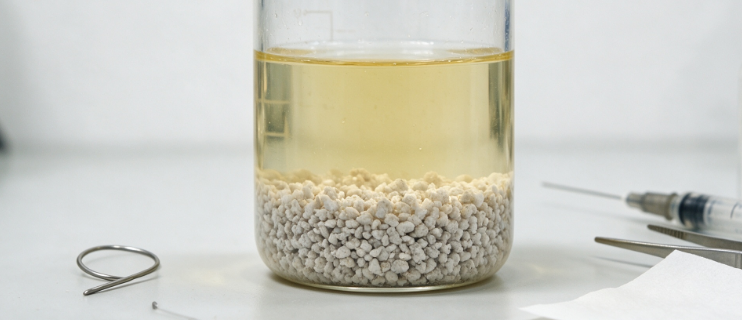
The lightweight, highly porous, and thermally insulating nature of expanded perlite has made it a valuable material in construction, horticulture, and filtration. However, its inherent surface inertness and limited mechanical strength often restrict its performance in demanding adsorption, catalytic, and water‑treatment applications. Through surface chemical modification (acid/alkali activation, silanisation, grafting of functional groups), metal oxide impregnation (Fe, Mn, Ti, Al), polymer coating, or thermal–hydrothermal post‑treatment, the surface area, surface charge, pore connectivity, and specific sorption affinity can be dramatically enhanced, tailoring the material for the targeted removal of heavy metals, organic pollutants, phosphate, fluoride, and oily wastewater. Nevertheless, the practical efficacy of a modified expanded perlite is not an intrinsic material constant; it is critically governed by the homogeneity of the modification layer, the preservation of the porous structure, the thermal and hydrothermal stability, and the interaction with the specific contaminants in the presence of coexisting ions and natural organic matter. Routine characterisation—such as simple bulk density or water absorption tests—provides only a limited indication and fails to predict dynamic column behaviour, regenerability, mechanical durability, or long‑term leaching risks. Our ISO/IEC 17025‑accredited laboratory offers a fully integrated, multi‑scale testing service specifically designed for modified expanded perlite adsorbents, covering the entire chain from detailed mineralogical and surface characterisation to dynamic breakthrough simulation under realistic water and gas matrices, cyclic regeneration studies, and environmental safety assessment—delivering quantitative, traceable data that directly support material optimisation, process scale‑up, regulatory compliance, and cost‑effective operation.
1. The Scientific and Practical Rationale for In‑Depth Testing of Modified Expanded Perlite
Expanded perlite is a vitreous aluminosilicate with a typical specific surface area of only 1–5 m²/g in its raw state. Modification strategies, such as acid leaching to remove alkali ions and create micro‑roughness, or coating with hydrated metal oxides, can increase the surface area to over 150 m²/g and introduce specific sorption sites. However, these treatments may also cause pore collapse, particle friability, or non‑uniform deposition, which compromise the material’s performance under hydraulic or thermal stress. Moreover, the adsorption mechanisms for different pollutants—electrostatic attraction, ion exchange, surface complexation, or hydrophobic partitioning—are highly sensitive to the modification chemistry and the solution pH, ionic strength, and temperature. A simple batch isotherm under deionised‑water conditions does not predict breakthrough behaviour in fixed‑bed columns, the impact of fluctuating flow rates, or the fouling propensity in real wastewater. Our protocols integrate mineralogical analysis (XRD, SEM‑EDS), surface chemical characterisation (XPS, FTIR, pHPZC, Boehm titration), static equilibrium and kinetic studies, dynamic column experiments under real‑world matrices, and multi‑cycle regeneration tests to provide a comprehensive performance profile. This enables us to identify the dominant retention mechanisms, the key deactivation pathways, and the optimal operating windows for your specific application.
2. Our Comprehensive Analytical and Performance Testing Platform for Modified Perlite
We offer a modular, fully customisable test suite that covers all critical attributes of the modified expanded perlite, from raw powder to granules or shaped bodies, and from fresh to spent/exhausted samples. All measurements are conducted with certified reference materials, standardised protocols (ASTM, ISO, EPA, and national standards), and stringent internal quality controls.
2.1 Physicochemical and Mineralogical Characterisation
We begin with a thorough fingerprint of the material. X‑ray fluorescence (XRF) provides bulk oxide composition (SiO₂, Al₂O₃, Fe₂O₃, CaO, Na₂O, etc.) and traces of any impregnated metals. Powder X‑ray diffraction (XRD) with Rietveld refinement identifies crystalline phases (e.g., quartz, feldspar) and the amorphous glass content. Scanning electron microscopy (SEM) coupled with energy‑dispersive X‑ray spectroscopy (EDS) reveals particle morphology, surface texture, pore structure, and the spatial distribution of any coating or impregnated species. Transmission electron microscopy (TEM) is employed for nano‑scale imaging of surface coatings or nano‑particle deposits. N₂ physisorption (BET surface area, micropore volume via t‑plot/DR, mesopore distribution via BJH/DFT) and mercury intrusion porosimetry (total pore volume, macroporosity, bulk density) define the full pore architecture. Helium pycnometry determines the true density, from which porosity is calculated. Thermogravimetric Analysis (TGA) under air and inert atmospheres quantifies moisture, organic modifier content, and the thermal stability of the functional groups.
2.2 Surface Chemistry and Active Site Quantification
The surface chemical properties are critical for adsorption performance. We determine the point of zero charge (pHPZC) by the drift method, defining the pH range for electrostatic attraction of ionic pollutants. X‑ray photoelectron spectroscopy (XPS) provides surface elemental composition and the chemical states of modifier elements (e.g., Fe²⁺/Fe³⁺, MnOₓ, Ti⁴⁺, or organosilane groups). Fourier‑transform infrared spectroscopy (FTIR) in ATR or DRIFTS mode identifies surface functional groups (e.g., Si‑OH, Al‑OH, metal‑O, C‑H, N‑H, S‑H) and confirms successful grafting or coating. Boehm titration quantifies the acidic (carboxyl, lactone, phenolic) and basic (carbonyl, chromene) surface groups, providing a direct measure of surface acid‑base properties.
2.3 Static (Batch) Adsorption – Isotherms, Kinetics, and Thermodynamics
We conduct equilibrium isotherm experiments using target pollutants—such as heavy metals (Pb²⁺, Cu²⁺, Cd²⁺, Cr⁶⁺), dyes (methylene blue, Congo red, malachite green), phosphate, fluoride, phenol, or oily emulsions—under controlled pH (2–11), temperature (10–50 °C), and adsorbent dosage. The data are fitted to Langmuir, Freundlich, Sips, and Dubinin‑Radushkevich models to extract maximum capacity (qmax), affinity constants, and heterogeneity factors. Kinetic experiments are analysed using pseudo‑first‑order, pseudo‑second‑order, Elovich, and intraparticle diffusion models to identify the rate‑controlling step. Thermodynamic parameters (ΔG°, ΔH°, ΔS°) are derived from temperature‑dependent isotherms to evaluate spontaneity and the nature of adsorption. Pollutant concentrations are measured by atomic absorption spectroscopy (AAS), inductively coupled plasma optical emission spectrometry (ICP‑OES), UV‑Vis spectrophotometry, or ion chromatography as appropriate.
2.4 Dynamic Column Breakthrough – Simulated Water and Gas Treatment
We pack the modified expanded perlite (granules, beads, or pellets) into glass or stainless‑steel columns (inner diameter 1–5 cm, bed height 10–100 cm). For water treatment, a synthetic or real wastewater stream (with controlled pH, ionic strength, and pollutant concentration) is passed at defined flow rates (0.5–20 mL/min). Effluent samples are collected periodically and analysed offline. For gas‑phase applications (e.g., VOC or humidity control), a humidified air/N₂ stream containing the target vapour is passed, with online monitoring by photoacoustic analysers, GC‑FID, or FTIR gas analysers. We record breakthrough curves and calculate: - Breakthrough time at 5%, 10%, and 50% of inlet concentration. - Dynamic adsorption capacity at breakthrough (mg/g or mmol/g). - Length of mass transfer zone (MTZ) and overall mass‑transfer coefficient. - Pressure drop across the bed and its evolution. We perform these tests at various pH, temperatures, and flow rates to map the operational envelope.
2.5 Competitive Adsorption and Matrix Effects
For water applications, we systematically evaluate the interference of common coexisting ions—chloride, sulphate, bicarbonate, phosphate, nitrate—and natural organic matter (humic acid) on the target pollutant removal. The selectivity factor and the inhibition index are derived, providing realistic performance data for complex wastewaters.
2.6 Regeneration and Reuse Performance
We apply chemical regeneration (acid, alkali, salt, or solvent washing), thermal regeneration (heating in air or inert gas), or combined protocols to recover the exhausted adsorbent. We perform 5–10 adsorption‑regeneration cycles, monitoring the capacity, structural integrity (XRD, BET, SEM), and surface chemistry (FTIR, XPS) after each cycle to quantify the degradation rate and to recommend the optimal regeneration conditions (reagent concentration, contact time, temperature).
2.7 Leaching and Environmental Safety
We conduct leaching tests (e.g., EPA TCLP Method 1311) to quantify the release of potentially toxic elements—such as Al, Fe, Mn, Ti, or any impregnated species—from the modified perlite. The leachates are analysed by ICP‑MS, and the results are compared against WHO, EPA, and national drinking water/discharge standards to ensure safety.
2.8 Mechanical and Physical Durability
For shaped adsorbents, we measure crush strength (radial and axial), attrition resistance (ASTM D4058), bulk density, and particle size distribution (laser diffraction or sieving). These properties are crucial for assessing the material’s suitability for fixed‑bed, moving‑bed, or fluidised‑bed operations.
2.9 Thermal and Hydrothermal Stability
We subject the adsorbent to accelerated thermal ageing (up to 500 °C in air or inert gas) and hydrothermal exposure (steam or hot water) to assess structural changes, capacity retention, and any leaching behaviour. Re‑characterisation by XRD, BET, and TGA is performed to quantify the extent of degradation.
3. Advanced Capabilities – Mechanistic Elucidation and Predictive Modelling
For clients seeking deeper fundamental understanding or predictive tools for scale‑up, we offer a suite of specialised, research‑grade analytical and computational services.
3.1 In‑Situ Spectroscopic Monitoring of Adsorption
Using in‑situ ATR‑FTIR and Raman spectroscopy with a flow‑through cell, we monitor the real‑time formation of surface complexes (e.g., metal‑ligand bonds, hydrogen‑bonded species, π‑π interactions) during pollutant uptake. This provides direct evidence of the binding mechanism and helps to optimise the surface chemistry for higher affinity and selectivity.
3.2 X‑ray Absorption Spectroscopy (XAS) – Synchrotron‑Based Speciation
In collaboration with synchrotron facilities, we perform XANES and EXAFS to determine the oxidation state and local coordination environment of the impregnated metal species (e.g., Fe, Mn, Ti) within the perlite matrix, both before and after interaction with pollutants. This clarifies the redox chemistry and the nature of the active sites.
3.3 Electron Tomography and 3D Pore Reconstruction
Using electron tomography (tilt‑series TEM/STEM), we reconstruct the three‑dimensional pore network of the modified perlite, visualising the spatial distribution of the coating and the connectivity of macro‑ and mesopores. This is critical for understanding diffusion limitations and for guiding pore‑engineering strategies.
3.4 Computational Modelling – Density Functional Theory (DFT) and Grand Canonical Monte Carlo (GCMC)
Our computational team uses DFT to calculate binding energies and charge transfer between pollutants and surface functional groups, and GCMC to simulate adsorption isotherms and breakthrough curves based on realistic pore models. These simulations are calibrated with experimental data and can be used to screen modification chemistries virtually.
3.5 Pilot‑Scale Column Studies and Process Simulation
We offer pilot‑scale water or gas treatment tests using larger columns (up to 5 cm diameter, 1 m bed height) with real or synthetic feed streams, equipped with automated sampling and process control. The data are used to calibrate adsorption process models for full‑scale design, including cycle scheduling and cost estimation.
3.6 Ecotoxicological Assessment of Treated Effluent
Beyond chemical analysis, we perform bioassays using Vibrio fischeri (Microtox) and algal growth inhibition to evaluate the toxicity of the treated water, ensuring that the adsorption process does not create secondary environmental hazards.
4. Data Quality, Standardisation, and Actionable Reporting
All tests are performed under a strict quality management system with daily calibration, certified internal standards, and regular participation in proficiency testing schemes. Our reports deliver: - Full experimental conditions (pH, temperature, agitation/flow rate, adsorbent dosage, pre‑treatment). - Comprehensive characterisation data (XRF, XRD, SEM‑EDS, BET, XPS, FTIR, pHPZC, TGA) with quantitative summaries. - Isotherm and kinetic parameters with statistical goodness‑of‑fit (R², residual analysis, 95% confidence intervals). - Breakthrough curves and derived design parameters (breakthrough capacity, MTZ length, pressure drop). - Competitive ion effects and selectivity factors. - Regeneration efficiency and capacity decay per cycle. - Leaching results and compliance with environmental standards. - Uncertainty budgets (expanded uncertainty at k=2) for all key performance indicators.
Our final documents are prepared by senior geochemists and environmental engineers who provide a comprehensive interpretation of the data, linking the modification strategy to the adsorption performance, and offering tailored recommendations on material formulation, process conditions, regeneration scheduling, and system design. We also benchmark your modified perlite against unmodified perlite and commercial adsorbents under identical conditions.
Typical turnaround for a full evaluation (characterisation + batch + column + regeneration) is 8–12 working days, with express services for urgent projects.
5. Why Our Laboratory Is the Optimal Partner for Modified Expanded Perlite Testing
Our service is distinguished by a unique combination of technical breadth, environmental realism, and operational flexibility.
Integrated single‑site infrastructure: We host all essential instruments—XRF, XRD, SEM‑EDS, TEM, BET, XPS, FTIR, TGA, ICP‑MS, AAS, multiple column rigs with programmable flow and pH control, and bioassay capabilities—under one roof, ensuring seamless sample handling and rapid cross‑validation of data, eliminating the fragmentation and delays of multi‑vendor testing.
Real‑world simulation capability: Our water and gas testing systems can be configured with real‑world matrices, including groundwater, industrial effluents, and simulated flue gases, with controlled temperature, pH, and dissolved oxygen. This guarantees that our results are directly translatable to your specific application.
Deep expertise in geomaterials and surface modification: Our team has extensive experience with perlite and other aluminosilicate minerals, including acid/alkali activation, silanisation, and metal oxide coating. We can diagnose whether performance limitations are due to poor dispersion, pore blockage, or insufficient binding, and advise on corrective actions.
Flexibility in sample forms: We accept raw and modified perlite in any form—powders, granules, pellets, or even monolithic shapes—and we can customise the test geometry to match your intended use (e.g., packed beds, filter cartridges).
Regulatory and sustainability focus: Our methods are aligned with EPA, EU Water Framework Directive, and Chinese GB standards for water quality and adsorbent testing. We also provide data for life‑cycle assessments and environmental product declarations, supporting your sustainability claims.
Process engineering and scale‑up support: Our engineers use the experimental data to design full‑scale adsorber systems, including vessel sizing, media volume, backwash cycles, and regeneration scheduling. We also provide cost estimations for media replacement and operation.
Cost‑effective and transparent pricing: Our modular pricing allows you to select only the tests you need, with discounts for multi‑batch screening, long‑term development partnerships, or routine quality monitoring. There are no hidden fees for interpretation, statistical analysis, or consultancy.
Our track record includes successful collaborations with over 50 water treatment plants, mining companies, and environmental consultancies, helping them to achieve consistent pollutant removal, extend media life, and reduce operational costs using modified perlite adsorbents. We invite you to leverage this expertise for your material evaluation.
Unlock the full potential of your modified expanded perlite adsorbent with our comprehensive testing solutions. Contact our technical specialists today to design a customised test programme that addresses your specific water or air quality challenges and performance goals. We will provide a detailed proposal and timeline within one business day.