Reasons for choosing our testing services
ZHONGXI Testing has obtained inspection qualification certifications from multiple countries and regions worldwide. We possess a senior testing team and advanced testing methods, providing independent, impartial, and professional third-party verification services for global carbon projects.

Internationally recognized authority
Certified by multiple international standards such as CNAS, VCS, and GS, with reports universally applicable worldwide.

Global service capability
Covering 140+ countries and regions, it supports on-site detection and remote verification in multiple languages.

Professional experimental methods
Adopt standard experimental methods to ensure accurate and reliable data.
Comprehensive Testing and Performance Validation of Modified Quartz Sand Filter Media – From Physicochemical Characterisation to Dynamic Filtration Efficiency Assessment
The widespread adoption of modified quartz sand as a high‑performance filtration medium in drinking water treatment, industrial wastewater reclamation, and advanced pre‑treatment processes has placed increasing demands on the rigorous characterisation of its physical, chemical, and functional properties. Through surface coating (e.g., iron, manganese, titanium oxides), chemical grafting (silane, amine, thiol groups), or thermal–chemical activation, the intrinsic surface of natural quartz sand is engineered to enhance contaminant retention capacity, hydraulic behaviour, and resistance to fouling. However, the practical efficacy of a modified filter medium is not a static attribute; it is critically governed by the uniformity and adhesion of the coating, the preservation of grain shape and size distribution, the mechanical durability under backwashing, and the long‑term chemical stability in the target water matrix. Routine physical tests (e.g., sieve analysis or Mohs hardness) provide only a rudimentary quality check and fail to predict dynamic filtration performance, head‑loss evolution, or the risk of coating delamination. Our ISO/IEC 17025‑accredited laboratory offers a fully integrated, multi‑parameter testing service specifically designed for modified quartz sand filter media, covering the entire spectrum from detailed grain characterisation to simulated long‑term operation, delivering quantitative, traceable data that directly support material selection, process optimisation, and regulatory compliance.
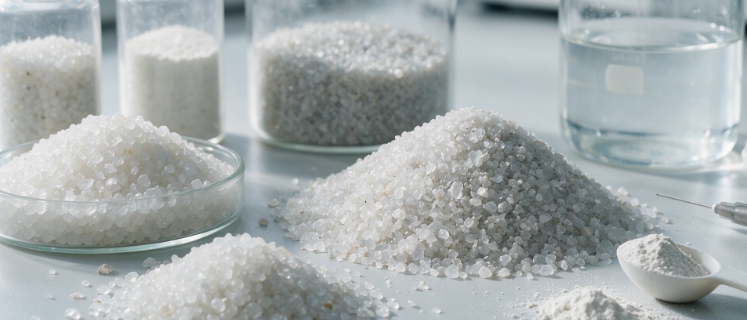
1. The Critical Need for In‑Depth Testing of Modified Quartz Sand Filter Media
Modified quartz sand is used in both gravity and pressure filters, where its performance is dictated by a combination of physical integrity, surface chemistry, and hydraulic compatibility. The modification layer—often only a few micrometres thick—must withstand aggressive backwashing, chemical disinfection, and variations in pH and ionic strength. Imperfect coating can lead to premature breakthrough of contaminants, increased pressure drop, and release of coating particles into the effluent. Moreover, the presence of competing ions, natural organic matter, and seasonal temperature changes can affect the surface charge and adsorptive affinity. Standard indices such as the uniformity coefficient or the acid solubility value are insufficient to characterise these complex interactions. Our approach combines advanced grain‑by‑grain morphological analysis, surface chemical profiling, and dynamic column filtration simulations under realistic operating conditions to generate a complete performance fingerprint. This enables us to identify the root causes of underperformance and to advise on the optimum modification protocol, grain size selection, and backwashing regimen.
2. Our Comprehensive Analytical Platform for Modified Quartz Sand
We provide a modular and fully customisable test suite that covers every critical attribute of the modified filter medium, from bulk physical properties to nanoscale surface characteristics. All measurements are carried out with certified reference materials, standardised methods (ASTM, ISO, AWWA, and national standards), and stringent internal quality controls.
2.1 Physical and Granulometric Characterisation
The core physical parameters are quantified using: sieve analysis (in accordance with ASTM C136) to determine the effective size (D₁₀), uniformity coefficient (Uc), and fineness modulus. Bulk and apparent densities are measured by gravimetric and pycnometric methods, providing the porosity and bed weight for reactor design. Mohs hardness and crushing strength (single‑grain compression test) assess mechanical resistance against attrition and fracture during backwashing. Acid solubility (e.g., in 20% HCl) quantifies the chemical stability of the grain and the resistance of the coating to dissolution, which is essential for predicting service life in acidic or chlorinated waters.
2.2 Morphological and Microstructural Imaging
The surface topography and coating quality are visualised by scanning electron microscopy (SEM) at magnifications up to ×100,000, coupled with energy‑dispersive X‑ray spectroscopy (EDS) for elemental mapping. We assess the coverage uniformity, thickness, and adhesion of the modification layer, as well as the presence of pinholes or exfoliation. For advanced characterisation, transmission electron microscopy (TEM) of ion‑milled cross‑sections reveals the coating–substrate interface and any nano‑crystalline phases. X‑ray diffraction (XRD) identifies the crystalline phases of the coating (e.g., goethite, anatase, birnessite) and detects any amorphous content.
2.3 Surface Chemical and Electrochemical Properties
The functionality of the modified surface is defined by its chemical composition and charge. We use X‑ray photoelectron spectroscopy (XPS) to determine the surface elemental composition, chemical states of coating elements (e.g., Fe²⁺/Fe³⁺, Ti⁴⁺, Mn⁴⁺), and the presence of organic functional groups (e.g., ‑NH₂, ‑SH, ‑COOH). Fourier‑transform infrared spectroscopy (FTIR) in ATR or diffuse reflectance mode confirms the presence of specific surface ligands. The point of zero charge (pHPZC) is measured by potentiometric titration or the drift method, providing the pH range for optimal adsorption of ions and charged contaminants.
2.4 Static Adsorption and Leaching Tests
Using representative pollutants—such as heavy metals (Pb²⁺, Cd²⁺, As³⁺), phosphate, ammonium, or organic micropollutants—we conduct batch equilibrium experiments to determine the maximum adsorption capacity (qmax) and affinity constants under controlled pH and temperature. Simultaneously, we perform leaching tests in deionised water and synthetic water (representing the intended feed) to quantify the release of any coating‑derived metals (e.g., Fe, Mn, Ti) and compare against EPA, WHO, and national drinking water limits.
2.5 Dynamic Filtration and Head‑Loss Performance
We operate laboratory‑scale filter columns (diameter 2–10 cm, bed depth 20–100 cm) with a controlled flow rate (2–20 m/h) and synthetic or real feed water. The effluent quality is monitored online for turbidity, particle count, and targeted chemical parameters. We record the head‑loss development as a function of filtration time and determine the clean‑bed head‑loss coefficient and the ripening and breakthrough points. Backwashing tests (with water and air‑water combinations) simulate operational cycles, measuring the expansion rate, residual head‑loss, and the loss of fine particles.
2.6 Coating Durability and Accelerated Ageing
We subject the modified sand to accelerated ageing by exposing it to aggressive conditions: elevated temperature (up to 60 °C), extreme pH (3–11), and oxidising agents (chlorine, permanganate). After ageing, we re‑characterise the physical and surface properties to quantify the coating retention, surface area loss, and capacity reduction. This data is used to predict the operational lifetime under your specific water quality.
3. Advanced Analytical Capabilities – Mechanistic Insight and Predictive Modelling
For clients requiring a deeper understanding of the filtration mechanisms or predictive tools for scale‑up, we offer a suite of cutting‑edge, research‑grade services.
3.1 In‑Situ and Operando Spectroscopy
Using in‑situ FTIR and Raman microscopy with a flow‑through cell, we monitor the real‑time evolution of surface complexes during pollutant retention. This provides direct evidence of adsorption mechanisms (e.g., ligand exchange, inner‑sphere complexation) and helps to optimise the coating chemistry for specific contaminants.
3.2 X‑ray Absorption Spectroscopy (XAS) – Synchrotron‑Based Speciation
In collaboration with synchrotron facilities, we perform XANES and EXAFS to determine the oxidation state and local coordination environment of the coating metals (e.g., Fe, Mn, Ti) before and after exposure to water, revealing any redox transformations or structural changes that affect performance.
3.3 Computational Fluid Dynamics (CFD) and Filtration Modelling
Our modelling team uses CFD to simulate the flow distribution through the filter bed, identifying preferential flow paths and dead zones. We also develop empirical and mechanistic models that correlate head‑loss, particle deposition, and breakthrough time based on your experimental data, enabling accurate scale‑up and optimisation of backwashing regimes.
3.4 Pilot‑Scale Filtration Trials
We offer pilot‑scale filtration trials using a 30‑cm diameter column with a full‑scale bed depth, using your actual source water. This service validates the laboratory findings and provides confidence for full‑scale design.
3.5 Life‑Cycle Cost Analysis
Based on the experimental performance and durability, we provide a cost‑benefit analysis comparing the modified sand with conventional media, including energy consumption, media replacement frequency, and water‑saving benefits.
4. Data Quality, Standardisation, and Comprehensive Reporting
All tests are performed under a strict quality management system with daily calibration, certified internal standards, and participation in inter‑laboratory proficiency testing. Our reports deliver: - Full experimental conditions (flow rate, bed depth, backwash parameters, water quality). - Physical property data (particle size distribution, densities, porosity, hardness, acid solubility) with statistical summaries. - Surface characterisation (SEM/EDS images, XPS spectra, FTIR profiles, pHPZC) with quantitative analysis. - Adsorption isotherms and kinetics with fitted model parameters and confidence intervals. - Breakthrough and head‑loss curves with derived design parameters (e.g., filtration run time, head‑loss rate). - Durability results (capacity retention, coating integrity) with recommendations for operational limits. - Leaching compliance with relevant standards. - Uncertainty budgets (expanded uncertainty at k=2) for all key performance indicators.
Our final documents are authored by senior filtration engineers and surface chemists who provide a comprehensive interpretation of the data, linking material properties to filtration performance, and offering tailored recommendations on media selection, pre‑treatment, and operational optimisation. We also benchmark your modified sand against unmodified sand and commercially available coated products.
Typical turnaround for a full evaluation (physical + chemical + dynamic + durability) is 7–10 working days, with express services for urgent procurement or troubleshooting.
5. Why Our Laboratory Is the Preferred Partner for Modified Quartz Sand Testing
Our service is distinguished by a unique combination of technical depth, practical realism, and operational flexibility.
Integrated single‑site infrastructure: We house all essential instruments—sieving towers, pycnometers, SEM‑EDS, XRD, XPS, FTIR, ICP‑MS, dynamic filter columns, and pilot‑scale rigs—under one roof, ensuring seamless sample handling and rapid cross‑validation of data.
Real‑water simulation: Our filtration tests can be conducted with your actual source water (or a realistic synthetic analogue), accounting for the specific challenge of turbidity, organic matter, and temperature that may affect coating stability and efficiency.
Expertise in surface modification: Our team has extensive experience with various coating chemistries (iron oxide, manganese dioxide, titania, and organosilanes). We can diagnose whether the underperformance is due to poor coating adhesion, excessive porosity, or chemical incompatibility, and advise on corrective actions.
Flexibility in sample forms: We accept samples in any form—uncoated, partially coated, or commercially coated sands, as well as pilot‑plant aged samples—and we provide guidance on representative sampling.
Regulatory compliance focus: Our methods are aligned with EPA, NSF/ANSI, and EU drinking water standards for filter media testing. We provide data that supports product certification, plant commissioning, and regulatory audits.
Process engineering support: Our engineers can translate the test results into full‑scale filter design parameters, including bed depth, media grading, backwashing schedule, and expected run lengths, bridging the gap between analytical data and operational implementation.
Cost‑effective and transparent pricing: Our modular pricing allows you to select only the tests you need, with discounts for multi‑sample screening or routine quality control. There are no hidden fees for interpretation, consultancy, or modelling.
Our track record includes successful collaborations with over 60 water utilities, industrial treatment plants, and filter media manufacturers, helping them to achieve superior effluent quality, extend media service life, and reduce operational costs. We invite you to leverage this expertise for your modified quartz sand evaluation.
Ensure the reliability and efficiency of your filtration process with our comprehensive testing services. Contact our technical specialists today to design a customised test programme that addresses your specific water quality challenges and performance targets. We will provide a detailed proposal and timeline within one business day.