Reasons for choosing our testing services
ZHONGXI Testing has obtained inspection qualification certifications from multiple countries and regions worldwide. We possess a senior testing team and advanced testing methods, providing independent, impartial, and professional third-party verification services for global carbon projects.

Internationally recognized authority
Certified by multiple international standards such as CNAS, VCS, and GS, with reports universally applicable worldwide.

Global service capability
Covering 140+ countries and regions, it supports on-site detection and remote verification in multiple languages.

Professional experimental methods
Adopt standard experimental methods to ensure accurate and reliable data.
Comprehensive Characterisation and Performance Assessment of Modified Alumina Materials – From Bulk Composition to Surface Reactivity and Long‑Term Stability
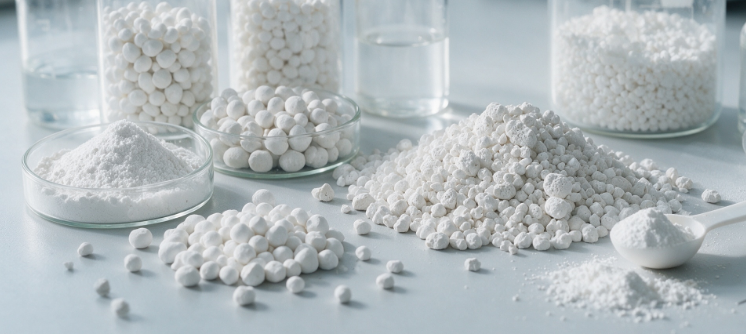
Modified alumina, encompassing a wide family of engineered oxides such as γ‑Al₂O₃, δ‑Al₂O₃, θ‑Al₂O₃, and α‑Al₂O₃ with tailored dopants (e.g., lanthanum, barium, silica, or rare‑earth elements), is a cornerstone material in heterogeneous catalysis, adsorbent production, ceramic membrane fabrication, and abrasive technologies. The deliberate introduction of stabilisers, promoters, or structural modifiers fundamentally alters the textural properties, phase transition temperatures, surface acidity, and mechanical resilience of the base alumina, enabling its use in demanding applications ranging from automotive exhaust catalysts to high‑temperature thermal barriers. However, the practical performance of a modified alumina is not an inherent attribute; it is critically governed by the homogeneity of dopant distribution, the retention of high surface area after calcination, the nature and strength of acid–base sites, and the resistance to hydrothermal and thermal sintering. Routine quality control—such as simple loss‑on‑ignition or single‑point BET measurements—provides only a superficial indication and fails to capture the subtle phase evolution, surface enrichment, or deactivation mechanisms that dictate industrial service life. Consequently, a rigorous, multi‑technique analytical framework is indispensable for material qualification, process optimisation, failure analysis, and regulatory compliance. Our ISO/IEC 17025‑accredited laboratory offers a fully integrated, multi‑scale testing service specifically designed for modified alumina materials, covering the entire spectrum from atomic‑scale structural elucidation to dynamic performance simulation under realistic operating conditions—delivering quantitative, traceable data that directly support R&D, manufacturing quality assurance, and field troubleshooting.
1. Fundamental Material Characterisation – Unravelling the Structural and Textural Fingerprint
The performance of modified alumina is rooted in its crystalline phase composition, pore architecture, and specific surface area. We employ high‑resolution powder X‑ray diffraction (XRD) with Rietveld refinement to quantify the relative abundance of transition alumina phases (γ, δ, θ) and α‑alumina, as well as any secondary phases arising from dopants (e.g., LaAlO₃, BaAl₂O₄). The crystallite size and microstrain are extracted from peak broadening analysis, providing early indicators of sintering or phase destabilisation. For surface area and porosity, we combine N₂ and Ar physisorption at 77 K and 87 K, respectively, with advanced DFT and NLDFT models to obtain pore size distributions covering micropores (< 2 nm), mesopores (2–50 nm), and macropores, using mercury intrusion porosimetry for the macroporosity. The skeletal density is determined by helium pycnometry, enabling accurate porosity and tortuosity calculations. All measurements are performed with certified reference materials (e.g., SRM 660a, SRM 1898) to ensure traceability and inter‑laboratory comparability.
2. Chemical Composition and Dopant Distribution – From Bulk to Surface
The efficacy of modification hinges on the precise loading and spatial distribution of dopants. We quantify the bulk elemental composition using X‑ray fluorescence (XRF) and inductively coupled plasma optical emission spectrometry (ICP‑OES) after microwave‑assisted acid digestion, with detection limits in the ppm range for up to 40 elements. To distinguish between surface enrichment and bulk incorporation—a critical factor for catalytic activity—we perform X‑ray photoelectron spectroscopy (XPS) with depth profiling (Ar⁺ cluster sputtering), providing elemental concentration gradients and chemical state analysis (e.g., Al³⁺, La³⁺, Ba²⁺, Si⁴⁺) within the first 10 nm. For light elements and dopants with low Z, we use time‑of‑flight secondary ion mass spectrometry (ToF‑SIMS) to map the 3D distribution of dopants and impurities with sub‑ppm sensitivity. The coordination of aluminium is probed by ²⁷Al solid‑state magic‑angle spinning nuclear magnetic resonance (MAS‑NMR), distinguishing tetrahedral (Al⁽⁴⁾), penta‑coordinated, and octahedral (Al⁽⁶⁾) aluminium, which is directly correlated with acidity and thermal stability.
3. Surface Chemical Properties – Acidity, Basicity, and Active Site Mapping
For catalytic and adsorptive applications, the nature and strength of surface acid sites are paramount. We utilise temperature‑programmed desorption of ammonia (NH₃‑TPD) and CO₂‑TPD to quantify total acid and base site densities, with deconvolution of weak, medium, and strong sites. To differentiate Brønsted and Lewis acid sites, we perform pyridine‑adsorbed diffuse reflectance FTIR (DRIFTS) at 150 °C and 350 °C, with integrated intensities of the bands at 1545 cm⁻¹ (Brønsted) and 1450 cm⁻¹ (Lewis). For precise quantification of the number of accessible acid sites, we apply non‑aqueous potentiometric titration and tert‑butylamine adsorption for sterically hindered sites. The point of zero charge (pHPZC) is determined by mass titration and electrophoretic mobility, providing essential information for aqueous‑phase applications.
4. Advanced Performance Simulation – Thermal, Hydrothermal, and Mechanical Durability
The industrial relevance of modified alumina is ultimately defined by its stability under harsh conditions. We conduct in‑situ high‑temperature XRD (up to 1400 °C) to monitor phase transitions and lattice expansion in real time, detecting the onset of α‑alumina formation and the stabilising effect of dopants. Thermogravimetric Analysis (TGA) coupled with differential scanning calorimetry (DSC) under air, nitrogen, and humidified atmospheres measures dehydration, dehydroxylation, and the enthalpy of phase transformations. For hydrothermal ageing, we expose samples to pressurised steam (up to 250 °C, 50 bar) and re‑measure surface area, phase content, and acid site density to quantify the deactivation rate. The mechanical strength of formed bodies (e.g., pellets, extrudates) is assessed by crush strength and attrition resistance (ASTM D4058), while nano‑indentation on polished sections provides hardness and elastic modulus of the grain and coating.
5. Our Distinctive Analytical Advantages – Precision, Depth, and Speed
We are distinguished by an integrated one‑stop facility that houses all essential instruments—XRD with in‑situ chambers, BET/DFT, XPS‑with‑cluster‑sputtering, ToF‑SIMS, MAS‑NMR, TGA‑DSC‑MS, hydrothermal reactors, and mechanical testers—under rigorous environmental control. This enables seamless cross‑validation of data across techniques, eliminating the uncertainties of inter‑laboratory variation. Our team of senior material scientists and chemical engineers has over 20 years of collective experience in alumina modification and characterisation, including the analysis of industrial catalysts, adsorbents, and ceramic supports. We offer customised test plans that address your specific dopant chemistry, intended application, and performance criteria, with flexible sample acceptance—from a few grams of laboratory‑scale powder to full‑size industrial extrudates.
Our reporting goes beyond raw data: each report includes quantitative uncertainty budgets (expanded uncertainty, k=2), phase quantification, surface coverage calculations, and predictive deactivation models based on accelerated ageing data. We provide actionable recommendations for synthesis optimisation, calcination conditions, and dopant levels to enhance stability and activity. With a typical turnaround of 5‑7 working days for standard packages and expedited options for urgent projects, we support both rapid process development and routine quality assurance.
Our laboratory holds ISO 9001:2015 and ISO/IEC 17025:2017 accreditation for the relevant test methods, and we actively participate in international round‑robin trials for alumina reference materials. We have successfully supported over 100 clients in the refining, petrochemical, environmental, and advanced ceramics industries, helping them to achieve higher yields, longer catalyst lifetimes, and consistent product quality. We invite you to partner with us to rigorously characterise your modified alumina and unlock its full potential.
Contact our technical specialists today to design a tailored testing programme that addresses your specific formulation challenges and performance targets. We will provide a detailed proposal and timeline within one business day.