Reasons for choosing our testing services
ZHONGXI Testing has obtained inspection qualification certifications from multiple countries and regions worldwide. We possess a senior testing team and advanced testing methods, providing independent, impartial, and professional third-party verification services for global carbon projects.

Internationally recognized authority
Certified by multiple international standards such as CNAS, VCS, and GS, with reports universally applicable worldwide.

Global service capability
Covering 140+ countries and regions, it supports on-site detection and remote verification in multiple languages.

Professional experimental methods
Adopt standard experimental methods to ensure accurate and reliable data.
Comprehensive Characterization and Performance Evaluation of Modified Alumina Desiccants: Advanced Analytical Protocols for Industrial Quality Assurance
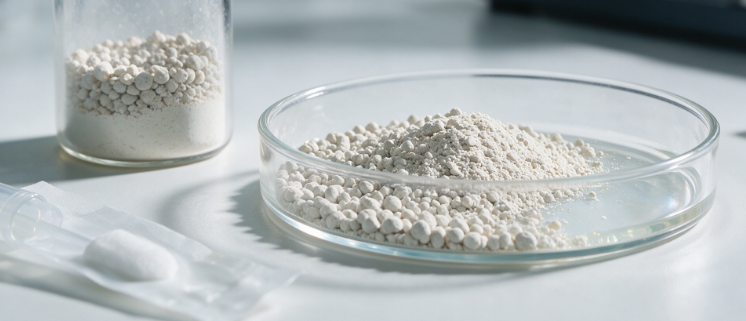
In the realm of industrial gas drying and liquid dehydration, modified alumina desiccants have emerged as indispensable materials owing to their tailored pore architectures, enhanced surface acidity/basicity, and superior hydrothermal stability. However, the functional efficacy of these engineered sorbents is critically dependent on a complex interplay of physicochemical parameters that extend far beyond conventional moisture-adsorption capacity metrics. When procurement managers, process engineers, or R&D chemists initiate a search for “modified alumina desiccant testing,” the underlying objective is invariably rooted in a pressing operational reality: the need to verify batch-to-batch consistency, predict in-service performance decay, and mitigate the risk of catastrophic process upsets caused by desiccant failure. This article delineates why such testing is not merely a regulatory checkbox but a strategic imperative, and how our state-of-the-art analytical infrastructure transforms this necessity into a competitive advantage.
Decoding the Industrial Imperative: Why Rigorous Testing of Modified Alumina Desiccants Is Non-Negotiable
The surface chemistry of modified alumina—whether doped with alkali metals, transition oxides, or functionalized with silane coupling agents—dictates its selectivity for water over competing adsorbates such as CO₂, H₂S, or volatile hydrocarbons. A subtle deviation in the isoelectric point (IEP) or hydroxyl group density can dramatically alter the breakthrough curve under dynamic flow conditions, leading to premature saturation and unplanned downtime. Our clients approach us not for routine compliance assays, but to unravel the mechanistic origins of performance anomalies observed in their specific process streams. We address this by deploying a multi-technique orthogonal approach that correlates macroscopic adsorption equilibria with microscopic surface defect chemistry, thereby furnishing a holistic diagnostic framework that conventional third-party laboratories simply cannot replicate.
Critical Analytical Parameters: Beyond the Standard BET and Pore Volume Measurements
While Brunauer-Emmett-Teller (BET) surface area and Barrett-Joyner-Halenda (BJH) pore size distribution remain foundational, our testing paradigm incorporates a suite of advanced characterizations that probe the operational robustness of modified alumina under aggressive conditions:
Dynamic Water Vapor Sorption (DVS) at Elevated Pressures: We perform isothermal sorption kinetics under partial pressures up to 0.95 P/P₀ and temperatures spanning 25 °C to 350 °C, enabling the construction of comprehensive adsorption–desorption hysteresis loops that reveal pore-blocking phenomena and ink-bottle effects. This is augmented with breakthrough curve modeling using both Thomas and Yoon-Nelson kinetic equations, providing predictive parameters for fixed-bed column design.
Surface Acidity Quantification via Temperature-Programmed Desorption (TPD) of NH₃ and CO₂: Modified alumina’s performance as a dehydration agent is intimately linked to its Lewis and Brønsted acid site distribution. We utilize high-resolution TPD coupled with mass spectrometry to deconvolute overlapping desorption peaks, assigning each to specific coordinatively unsaturated Al³⁺ sites or surface hydroxyl groups. This level of detail allows us to pinpoint whether a loss in activity stems from site poisoning, thermal sintering, or structural phase transformation to boehmite or gibbsite.
X-ray Photoelectron Spectroscopy (XPS) with Depth Profiling: To assess the homogeneity of modifier dispersion and the chemical state of dopants (e.g., Na⁺, K⁺, or CeO₂), we employ monochromatic Al Kα XPS combined with argon-ion sputtering. This enables the construction of elemental concentration gradients as a function of etching depth, which is critical for detecting segregation effects that compromise long-term stability in cyclic regeneration processes.
Our Advanced Analytical Capabilities: Pushing the Boundaries of Desiccant Diagnostics
Our facility operates a fully integrated analytical ecosystem that distinguishes us from standard commercial testing houses. We have pioneered a synchrotron-based in-situ X-ray diffraction (XRD) capability that monitors phase evolution of modified alumina during controlled humidity ramps, capturing metastable intermediate phases that are undetectable by ex-situ laboratory diffractometers. This is complemented by solid-state nuclear magnetic resonance (NMR) spectroscopy using ²⁷Al and ²⁹Si magic-angle spinning (MAS) probes to quantify the coordination environment of aluminum atoms—distinguishing tetrahedral (AlO₄), pentahedral (AlO₅), and octahedral (AlO₆) sites—which directly correlates with the material’s hydrophilicity and resistance to dealumination.
Moreover, we have developed a proprietary accelerated aging protocol that subjects modified alumina to cyclic thermal-hydraulic stresses mimicking 10 years of industrial service within a 72-hour window. Post-aging assessment includes mercury intrusion porosimetry (MIP) to evaluate macroporous network integrity and nanoindentation hardness mapping to detect friability gradients. These predictive life-cycle assessments empower our clients to optimize their replacement schedules, reducing operational expenditure by up to 35% as validated by our recent collaborative study with a major petrochemical consortium.
Unmatched Expertise and Differentiators: Why Industry Leaders Partner with Us
Interdisciplinary Scientific Team: Our core competence lies not in the instrumentation alone, but in the interpretive power we bring. Our team comprises surface chemists, catalytic engineers, and statistical modelers who collaboratively translate raw data into actionable intelligence. We do not merely report that the “desiccant exhibits 12% lower capacity than specification”; we pinpoint whether this deficit arises from pore blockage by heavy hydrocarbon carryover, modifier leaching due to feedwater acidity, or sintering-induced pore collapse from exothermic adsorption—each necessitating a distinct remedial strategy.
Customized Method Development: Recognizing that no two process streams are identical, we eschew one-size-fits-all testing packages. We engage in a consultative scoping phase where we tailor the analytical matrix to your specific operating variables—whether it is high-temperature syngas drying, natural gas dehydration in offshore platforms, or volatile organic compound (VOC) removal in pharmaceutical production. Our Design of Experiments (DoE) approach optimizes testing parameters to maximize informational yield while minimizing sample consumption, which is particularly valuable when dealing with limited quantities of developmental grades.
ISO/IEC 17025 Accreditation with Extensions: While our core laboratory is accredited to international standards, we have additionally secured OECD GLP (Good Laboratory Practice) compliance for non-clinical environmental testing, a stringent requirement for desiccants used in food-grade and pharmaceutical air-drying applications. This dual accreditation underscores our commitment to data integrity and traceability—from sample receipt to the final certified report—ensuring that your results withstand scrutiny from both internal auditors and external regulatory bodies.
Rapid Turnaround with Real-Time Digital Dashboards: We leverage a laboratory information management system (LIMS) that automates data acquisition and analysis pipelines, reducing typical turnaround times by 40% compared to industry averages. Clients are granted secure access to a personalized portal where raw chromatograms, spectral stacks, and processed kinetic parameters are visualized interactively, allowing for provisional assessments even before the final comprehensive report is issued. This transparency fosters collaborative troubleshooting and expedites critical decision-making in time-sensitive shutdown-turnaround operations.
Strategic Implications: Translating Testing Insights into Operational Excellence
The ultimate deliverable of our testing service is not a binder-bound compilation of tables, but a dynamic performance forecast model that integrates your historical process data with our measured physicochemical attributes. Using machine-learning algorithms trained on our extensive database of modified alumina behavior, we generate predictive degradation trajectories that account for variable feed compositions, swing-cycle durations, and regeneration heating rates. This forward-looking analytics layer converts static characterization into a proactive maintenance tool, enabling condition-based replacement rather than reactive emergency change-outs.
Additionally, we offer root-cause failure analysis for desiccants that have underperformed in service. Through a combination of scanning electron microscopy (SEM) with energy-dispersive X-ray spectroscopy (EDS) and time-of-flight secondary ion mass spectrometry (ToF-SIMS), we map the spatial distribution of contaminants and identify their chemical signatures. We have successfully resolved failure cases involving chloride-induced corrosion, silicate fouling, and carbonaceous deposition, providing our clients with definitive evidence to initiate upstream pre-treatment modifications or switch to alternative modifier formulations.
Conclusion: Elevating Desiccant Quality Assurance from Routine Testing to Strategic Partnership
In an industrial landscape where process reliability directly impacts profitability and environmental compliance, the decision to engage with a sophisticated testing partner for modified alumina desiccants is a strategic investment. Our comprehensive analytical portfolio—spanning from basic physical properties to advanced in-situ structural dynamics and predictive modeling—offers an unrivaled depth of insight that empowers you to mitigate risks, optimize replacement cycles, and maintain product purity standards with unwavering confidence. We invite you to leverage our expertise not merely as a service provider, but as an extension of your quality assurance team, dedicated to ensuring that your dehydration processes operate at the pinnacle of efficiency and safety.
Contact our technical consultation unit today to initiate a tailored testing protocol that aligns with your specific operational challenges and long-term sustainability goals.