Reasons for choosing our testing services
ZHONGXI Testing has obtained inspection qualification certifications from multiple countries and regions worldwide. We possess a senior testing team and advanced testing methods, providing independent, impartial, and professional third-party verification services for global carbon projects.

Internationally recognized authority
Certified by multiple international standards such as CNAS, VCS, and GS, with reports universally applicable worldwide.

Global service capability
Covering 140+ countries and regions, it supports on-site detection and remote verification in multiple languages.

Professional experimental methods
Adopt standard experimental methods to ensure accurate and reliable data.
Advanced Characterization and Performance Evaluation of Sludge-Derived Activated Carbon Adsorbents: A Comprehensive Analytical Framework for Environmental Compliance and Process Optimization
The valorization of municipal and industrial sewage sludge into activated carbon (AC) has emerged as a paradigmatic circular-economy strategy, concurrently addressing waste disposal challenges and producing a cost-effective adsorbent for water and air purification. However, the intrinsic heterogeneity of sludge precursors—varying in organic content, inorganic ash composition, and microbial biomass—imparts significant variability in the resulting activated carbon’s porous architecture, surface chemistry, and adsorptive performance. When environmental engineers, plant operators, or procurement specialists search for “sludge-derived activated carbon adsorbent testing,” their primary motivation is rarely a mere regulatory requirement. Instead, they seek to validate batch-to-batch reproducibility, predict field-scale breakthrough behavior, diagnose premature exhaustion, and ultimately ensure that this sustainable material meets or exceeds the performance benchmarks of commercial coal- or coconut-based carbons. This article delineates the scientific rationale behind such comprehensive testing and demonstrates how our cutting-edge analytical ecosystem transforms this necessity into a decisive operational and environmental advantage.
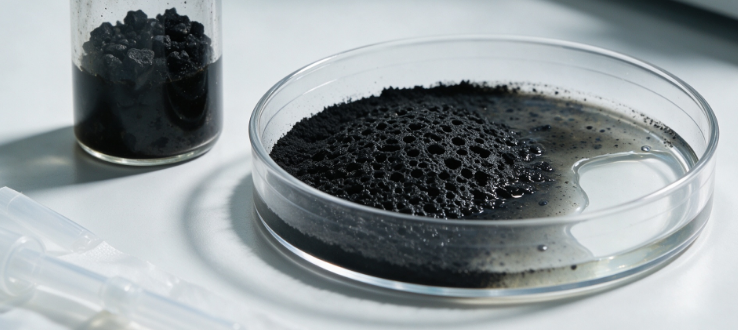
Understanding the Critical Need for Holistic Testing of Sludge-Based Activated Carbons
Sludge-derived activated carbons exhibit a unique bimodal pore structure—combining micropores from the organic carbonization and meso/macropores originating from the inorganic template (e.g., silica, alumina, and calcium phosphates). Moreover, the surface is often populated with residual heteroatoms (N, S, O, P) that confer polar functional groups, profoundly influencing the affinity toward both hydrophilic and hydrophobic contaminants. A subtle change in the activation agent (e.g., KOH, H₃PO₄, or ZnCl₂) or pyrolysis ramping rate can drastically shift the specific surface area (SSA) by over 300 m²/g, while the point of zero charge (PZC) may vary by more than 1.5 pH units, altering electrostatic interactions with ionic pollutants. Our clients approach us not for a generic certificate of analysis, but to unravel the causal links between precursor treatment, activation parameters, and the resultant adsorption behavior under dynamic flow conditions. We address this by deploying a multi-tiered analytical strategy that integrates bulk textural properties, surface chemical speciation, and mechanistic kinetic modeling, providing a level of insight far beyond conventional quality checks.
Core Analytical Parameters: Going Beyond BET, Iodine Number, and Methylene Blue Value
While the iodine number and methylene blue (MB) index are routinely used as quick proxies for micro- and mesoporosity, they are insufficient to predict performance against emerging contaminants such as pharmaceuticals, per- and polyfluoroalkyl substances (PFAS), or heavy metal complexes. Our rigorous testing framework encompasses a broad spectrum of advanced metrics:
High-Precision Textural Analysis: We perform N₂/Ar physisorption at 77/87 K with a comprehensive isotherm assessment over a relative pressure range from 10⁻⁷ to 0.995, enabling the simultaneous determination of Brunauer-Emmett-Teller (BET) surface area, total pore volume, and pore size distribution via Density Functional Theory (DFT) and non-local DFT (NLDFT) models, including the recently developed 2D-NLDFT for heterogeneous slit/cylindrical pores. Additionally, we apply CO₂ adsorption at 273 K to quantify ultramicropores (<0.7 nm) that are inaccessible to N₂ at cryogenic temperatures, which are critical for trace contaminant capture at ppb levels. This dual-adsorptive approach ensures that no porosity fraction is overlooked, providing a complete picture from ultramicropores to macropores.
Surface Chemistry Speciation: Using X-ray photoelectron spectroscopy (XPS) with monochromatic Al Kα radiation and argon-ion depth profiling, we quantify the relative abundances of C–C, C–O, C=O, O–C=O, and π–π* shake-up satellites, alongside nitrogen moieties (pyridinic, pyrrolic, graphitic N, and N-oxides) and sulfur species (thiophene, sulfoxide, sulfone). This is complemented by Boehm titration and temperature-programmed desorption (TPD) coupled with mass spectrometry to differentiate acidic, basic, and neutral surface oxides, and to calculate the total acidity/basicity in meq/g. For real-time assessment, we also employ in-situ diffuse reflectance infrared Fourier transform spectroscopy (DRIFTS) under controlled humidity, revealing the evolution of surface hydroxyl and carbonyl groups during hydration, which directly correlates with water competition effects in humid gas streams or high-moisture aqueous systems.
Trace Element and Leaching Risk Assessment: Given that sludge precursors may contain heavy metals (e.g., Zn, Cu, Pb, Cd) and metalloids, we conduct microwave-assisted acid digestion followed by ICP-MS/MS to quantify total elemental content. More critically, we perform sequential extraction protocols (Tessier or BCR schemes) and toxicity characteristic leaching procedure (TCLP) tests to assess the environmental mobility of these species under relevant pH and redox conditions. This ensures that the adsorbent itself does not become a secondary pollutant source—a crucial aspect often neglected in standard activated carbon testing.
Advanced Dynamic Performance Modeling and In-Situ Capabilities
Our expertise extends to fixed-bed column breakthrough simulations conducted under realistic flow regimes, with online UV-Vis, conductivity, and pH monitoring. We utilize both Thomas, Yoon-Nelson, and Clark models to estimate adsorption capacity and rate constants under dynamic conditions, but we go further by implementing advection-dispersion-reaction (ADR) models that incorporate heterogeneous surface diffusion and axial dispersion, calibrated with our measured intraparticle diffusion coefficients from batch kinetics. These models allow us to predict breakthrough times for your specific bed geometry and feed concentration, reducing the need for lengthy pilot-scale trials.
In addition, we are one of the few laboratories equipped with a synchrotron-based X-ray micro-computed tomography (µ-CT) facility that visualizes internal pore networks and ash inclusions in 3D at sub-micrometer resolution, non-destructively. This enables the identification of preferential flow channels and density gradients that cause early breakthrough, providing a mechanistic explanation for performance losses that cannot be inferred from bulk powder analyses alone. We also offer positive and negative ion mode time-of-flight secondary ion mass spectrometry (ToF-SIMS) for high-spatial-resolution mapping of organic and inorganic species on individual carbon particles, revealing the distribution of active sites and potential fouling agents.
Our Unrivaled Analytical Infrastructure and Interpretive Expertise
Multi-Technique Correlative Workflow: We do not perform isolated tests; we integrate results from physisorption, XPS, TPD, and leaching assays into a unified “Performance Fingerprint” using principal component analysis (PCA) and hierarchical cluster analysis. This approach has enabled us to link specific surface chemistry signatures to high-performance metrics—for example, correlating a pyridinic-N/graphitic-N ratio above 0.3 with a >40% increase in diclofenac uptake. Such insights are invaluable for manufacturers seeking to tailor activation conditions for targeted contaminants.
Customized Test Matrices for Varied Applications: We recognize that a sludge-activated carbon intended for biogas desulfurization has different performance criteria than one designed for perchlorate removal from groundwater. Our technical team engages in a comprehensive pre-testing consultation to select the appropriate target adsorbates, background electrolytes, and competing solutes (e.g., natural organic matter, chloride, sulfate). We can design competitive isotherm experiments with up to five components and utilize the ideal adsorbed solution theory (IAST) to predict multicomponent equilibria, an advanced service rarely available in commercial testing labs.
Accelerated Aging and Regeneration Studies: We offer a standardized wet-dry cycling protocol that simulates 5 years of intermittent operation within 2 weeks, followed by post-aging characterization to assess surface oxidation, pore collapse, and mass loss. For regeneration efficiency, we test thermal (N₂ or CO₂), chemical (acid or base), and microwave-assisted regeneration methods, providing a comprehensive assessment of reusability and economic viability. Our long-term stability data has been instrumental in helping clients obtain environmental product declarations (EPDs) and life-cycle assessment (LCA) credits.
Accreditation and Data Integrity: Our laboratory operates under ISO/IEC 17025:2017 and is also certified for GLP (Good Laboratory Practice) compliance, ensuring that all generated data meet the highest standards for regulatory submissions (e.g., EPA, REACH). We use a fully integrated electronic laboratory notebook (ELN) and blockchain-secured data archiving, guaranteeing complete traceability and tamper-proof evidence for audit purposes.
Root-Cause Failure Diagnostics and Predictive Maintenance
When a sludge-derived activated carbon fails to achieve expected performance in the field, our forensic investigation service employs SEM-EDS, ToF-SIMS, and pyrolysis-GC/MS to identify foulants (e.g., biofilms, silicates, humic substances, or precipitated salts) that may block micropores or neutralize surface charges. We have successfully diagnosed issues stemming from calcium carbonate precipitation, iron oxide fouling, and preferential adsorption of interfering co-contaminants, and our reports provide precise corrective recommendations—such as adjusting pre-chlorination, implementing backwash protocols, or modifying the activation recipe to increase hydrophobicity.
Furthermore, our machine learning-based predictive analytics module leverages a proprietary database of over 2,000 sludge-based activated carbon samples to forecast the remaining adsorption capacity based on inlet water quality parameters. This enables our clients to shift from reactive replacement to condition-based maintenance, thereby reducing operational costs and minimizing downtime.
Conclusion: Transforming Sludge-Derived Carbon Testing into a Strategic Asset
The transition from waste to resource demands more than a cursory quality check—it necessitates a rigorous, scientifically grounded assessment that accounts for the unique physico-chemical fingerprint of each batch. Our comprehensive suite of advanced analytical tools, coupled with deep interpretive expertise and customized modelling, ensures that your sludge-derived activated carbon not only meets regulatory norms but also delivers consistent, reliable performance under real-world conditions. Whether you are a producer seeking to optimize your activation process, a utility evaluating sustainable alternatives, or an industry facing emergent contaminant challenges, our testing service provides the clarity and confidence required to make informed decisions. We invite you to partner with us to unlock the full potential of your sludge-derived adsorbents while mitigating environmental and operational risks.
Contact our specialized environmental materials team today to design a tailored testing package that addresses your specific adsorbent concerns and operational targets.