Reasons for choosing our testing services
ZHONGXI Testing has obtained inspection qualification certifications from multiple countries and regions worldwide. We possess a senior testing team and advanced testing methods, providing independent, impartial, and professional third-party verification services for global carbon projects.

Internationally recognized authority
Certified by multiple international standards such as CNAS, VCS, and GS, with reports universally applicable worldwide.

Global service capability
Covering 140+ countries and regions, it supports on-site detection and remote verification in multiple languages.

Professional experimental methods
Adopt standard experimental methods to ensure accurate and reliable data.
Advanced Physicochemical and Cyclic Performance Assessment of Calcium-Based CO₂ Adsorbents: Precision Analytical Solutions for Carbon Capture and Process Intensification
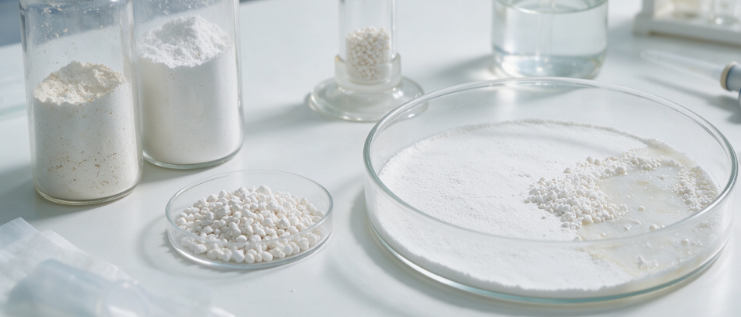
Calcium-based sorbents—primarily derived from natural limestone, dolomite, or synthetic calcium oxide precursors—remain at the forefront of post-combustion carbon capture, sorption-enhanced reforming, and calcium-looping (CaL) processes. Their appeal lies in high theoretical CO₂ uptake (up to 78.6 wt% for pure CaO), low raw-material cost, and compatibility with existing industrial infrastructure. However, the practical deployment of these materials is severely constrained by performance decay due to sintering, pore-mouth blockage, and phase transformations (e.g., CaO → CaCO₃ → CaO) under cyclic calcination/carbonation conditions. When process engineers, R&D scientists, or plant operators search for “calcium-based CO₂ adsorbent testing,” their underlying objective is rarely a simple certificate of composition. They are seeking to predict long-term cyclic stability, optimise particle size distribution for fluidised-bed reactors, diagnose unexpected capacity loss, and benchmark novel doping or stabilisation strategies (e.g., Zr, Al, Mg, or Ce incorporation) against established benchmarks. This article articulates the scientific justification for such comprehensive testing and demonstrates how our state-of-the-art analytical ecosystem provides not only precise characterisation but also predictive process modelling, enabling our clients to de-risk their carbon-capture investments and accelerate scale-up from pilot to commercial deployment.
Unravelling the Complexities: Why Routine Proximate Analysis Is Insufficient for Calcium-Based Sorbents
The performance of calcium-based adsorbents is governed by a delicate interplay of chemical, textural, and mechanical properties that evolve dramatically with thermal cycling. Conventional measurements—such as loss on ignition (LOI), X-ray fluorescence (XRF) for bulk elemental composition, and simple BET surface area—capture only a static snapshot of the material in its pristine state. They fail to predict the rate of pore collapse induced by the molar volume increase from CaO (16.9 cm³/mol) to CaCO₃ (36.9 cm³/mol) during carbonation, nor do they quantify the detrimental effect of high-temperature sintering on the accessible active surface. Our clients approach us when they observe a 50% drop in capacity after only 20 cycles in a pilot plant, or when they need to evaluate whether a novel MgO-stabilised CaO formulation can maintain >90% of its initial uptake over 500 cycles. To address these critical needs, we deploy an integrated test battery that combines high-resolution textural analysis, in-situ phase evolution monitoring, reaction kinetics under relevant flue-gas conditions, and accelerated aging protocols—delivering a holistic performance forecast that extends far beyond conventional quality control.
Core Analytical Parameters: From Atomic-Scale Structure to Pilot-Scale Cyclic Behaviour
High-Temperature In-Situ X-ray Diffraction (HT-XRD) with Controlled Atmosphere: We employ a high-resolution diffractometer equipped with an Anton-Paar HTK 1200N oven chamber, enabling continuous monitoring of phase transitions under CO₂/N₂/O₂ atmospheres at temperatures up to 1,100 °C. This allows us to precisely determine the onset temperature of carbonation, the rate of CaCO₃ decomposition, and the crystallite growth kinetics that correlate with sintering. By using Rietveld refinement, we quantify the relative fractions of CaO, CaCO₃, and stabiliser phases (e.g., Ca₂SiO₄, CaZrO₃) in real time, providing a mechanistic understanding of capacity decay that ex-situ post-mortem XRD can only infer.
Multi-Component Textural Analysis under Reactive Conditions: Traditional N₂ physisorption at 77 K is not applicable for materials that partially carbonate at cryogenic temperatures. Therefore, we use high-pressure mercury porosimetry (MIP) up to 60,000 psi to characterise macro- and mesoporosity, complemented by Ar adsorption at 87 K and CO₂ adsorption at 273 K for micropore analysis (<2 nm). More importantly, we conduct in-situ mercury intrusion during thermal ramping to detect changes in pore structure as a function of temperature, revealing the critical temperature thresholds at which pores begin to collapse—an insight vital for designing calcination conditions that preserve porosity.
Dynamic Thermogravimetric Analysis (TGA) Coupled with Mass Spectrometry (MS): Our custom-built TGA-MS system allows for multi-cycle carbonation/calcination tests under realistic gas mixtures (e.g., 15 vol% CO₂, balance N₂, with optional SO₂ and H₂O). We vary the carbonation temperature (550–750 °C), calcination temperature (800–950 °C), heating/cooling ramps, and hold times to mimic industrial swing conditions. From these data, we derive the cyclic conversion (X_N) and compute the decay rate constant (k) using empirical models such as the Krishnan–Shah or Garcı́a–Labiano equations. Our system can automatically perform up to 500 cycles without user intervention, generating statistically robust degradation curves that form the basis for lifetime prediction.
Surface Chemistry and Poisoning Susceptibility: Using X-ray photoelectron spectroscopy (XPS) with depth profiling, we analyse the surface enrichment of alkali metals, sulphur, or chlorine that may originate from flue-gas impurities. We also conduct acidic gas breakthrough experiments (with SO₂ and HCl) to quantify the competitive adsorption and irreversible sulphation/sulphidation of CaO, which is a major deactivation pathway. Our diffuse reflectance infrared Fourier transform spectroscopy (DRIFTS) under CO₂ flow identifies the types of surface carbonate species (monodentate, bidentate, or polydentate) and correlates them with the ease of regeneration—a parameter essential for energy penalty calculations.
Advanced Mechanical and Fluidisation Characterisation for Industrial Reactor Design
For systems employing fluidised-bed or moving-bed reactors, mechanical integrity is as critical as chemical capacity. We offer attrition resistance testing following ASTM D5757 or the Jet Cup method, with particle size distribution (PSD) measured by laser diffraction before and after testing to quantify fines generation. Additionally, we perform bulk density, angle of repose, and Hausner ratio measurements to predict flowability and hopper discharge behaviour. Coupled with high-speed particle image velocimetry (PIV) in a cold-flow model, we can translate our results into recommendations for optimal particle morphology and size cut, minimising elutriation losses and improving solid circulation.
Our Distinctive Capabilities: Pushing the Frontiers of Calcium-Looping Diagnostics
Synchrotron-Based X-ray Nano-CT for 3D Pore Topology: We are one of the few commercial labs offering access to synchrotron radiation facilities, where we perform nano-computed tomography (nano-CT) with a voxel size of 50 nm. This non-destructive technique provides a three-dimensional visualisation of the pore network and its evolution after cycling, allowing us to quantify the connectivity of mesopores and the spatial distribution of closed pores that are inaccessible to gas. These data are fed into a pore-network model (PNM) that predicts effective diffusivity and reactive surface area, enabling a truly mechanistic forecasting of performance under high-flux CO₂ streams.
Isotopic Labelling and Pulse Chemisorption: To differentiate between lattice oxygen participation and CO₂ adsorption, we employ 18O2 and 13CO2 pulse chemisorption experiments coupled with mass spectrometry. This provides the oxygen mobility and surface exchange rate constants (k_ex), which are critical for understanding the carbonation mechanism—whether it is kinetically controlled by surface reaction or by product-layer diffusion. These fundamental insights are invaluable for developing first-principles kinetic models for computational fluid dynamics (CFD) simulations.
Comprehensive Hydration and Steam Effects: Steam is known to enhance carbonation rates by promoting solid-state diffusion, yet it can also accelerate sintering. Our unique humidified TGA-DSC allows controlled addition of water vapour (up to 30 vol%) during both carbonation and calcination, and we employ in-situ Raman spectroscopy to identify Ca(OH)₂ intermediate phases. This capability is vital for clients evaluating sorbents for direct capture from humid flue gases, where conventional testing often overlooks the synergistic effects of H₂O.
Key Differentiators: Why Leading Carbon-Capture Developers Trust Our Laboratory
Integrated Kinetic-Fragmentation Model: We do not merely report capacity and surface area; we fit all TGA data to a hybrid shrinking-core/grain-submodel that distinguishes between chemical reaction control and product-layer diffusion control. From this, we extract the apparent activation energies (E_a) and diffusion coefficients (D_s) for each cycle, providing a diagnostic tool that identifies whether sintering or pore plugging is the dominant decay mechanism. This level of mechanistic distinction is typically absent in standard test reports but is essential for rational sorbent development.
Customised Protocol Design for Diverse Applications: Whether your interest lies in pre-combustion capture (high pressure, H₂-rich), post-combustion capture (low CO₂ partial pressure, O₂/CO₂ recycle), or sorption-enhanced water‑gas shift (SEWGS), we tailor the testing conditions—including pressure, steam content, and contaminants—to match your specific process. Our technical team includes experts in chemical looping and capture systems who collaborate with you to define the most relevant performance indicators, avoiding the pitfalls of generic testing that produces irrelevant data.
Accredited Quality and Data Traceability: Our laboratory holds ISO/IEC 17025:2017 accreditation for thermal analysis and gas adsorption, and we are OECD GLP certified for environmental fate studies. All measurements are performed using calibrated, validated instruments, and our electronic data management system ensures full auditability. We provide a comprehensive report that includes raw data, processed results, statistical confidence intervals, and a concise executive summary—enabling quick decision-making without compromising technical depth.
Predictive Lifetime Modelling and Economics: By integrating cyclic conversion data with our proprietary database of >100 calcium-based sorbent formulations, we apply machine learning regression (Gaussian Process and Random Forest) to predict the number of cycles to reach a threshold capacity (e.g., 70% of initial). We further combine this with a simple techno-economic model to estimate the levelised cost of CO₂ captured (€/tonne) for your specific plant configuration. This transforms our testing service into a strategic advisory tool, guiding material selection and process optimisation far beyond mere compliance.
Root-Cause Failure Diagnostics: Resolving Mysterious Capacity Loss
When an adsorbent shows unexpectedly poor performance, our forensic approach combines scanning electron microscopy (SEM) with energy-dispersive X-ray spectroscopy (EDS), electron probe microanalysis (EPMA) for elemental maps, and selective dissolution experiments to separate surface carbonates from total calcium. We have successfully identified failures due to minor phosphorus contamination from biomass co-firing, localised hot spots causing CaO grain growth beyond 100 nm, and insufficient hydration pre-treatment that reduced initial reactivity. Our reports provide clear, actionable recommendations—such as adjusting the calcination temperature, adding a pre-carbonation step, or introducing a sacrificial alumina coating—to recover performance immediately.
Conclusion: Elevating Calcium-Based Adsorbent Testing from a Routine Service to an Engineering Enabler
The global push towards net-zero emissions demands that calcium-looping technologies transition from academic curiosity to industrial reality. This transition hinges on the availability of reliable, predictive performance data that go far beyond elementary characterisation. Our comprehensive analytical platform—encompassing in-situ diffraction, reactive TGA-MS, nano-tomography, isotopic pulse techniques, and data-driven modelling—empowers you to thoroughly evaluate, compare, and optimise calcium-based sorbents with unprecedented depth. Whether you are developing novel stabilised formulations, scaling up a pilot plant, or troubleshooting an existing capture unit, our testing services provide the scientific rigour and actionable insights necessary to achieve robust, economical CO₂ capture. We invite you to collaborate with us to accelerate the commercial deployment of this critical carbon-removal technology.
Contact our carbon-capture analytical team today to design a customised testing programme that addresses your specific sorbent performance challenges and regulatory requirements.