Reasons for choosing our testing services
ZHONGXI Testing has obtained inspection qualification certifications from multiple countries and regions worldwide. We possess a senior testing team and advanced testing methods, providing independent, impartial, and professional third-party verification services for global carbon projects.

Internationally recognized authority
Certified by multiple international standards such as CNAS, VCS, and GS, with reports universally applicable worldwide.

Global service capability
Covering 140+ countries and regions, it supports on-site detection and remote verification in multiple languages.

Professional experimental methods
Adopt standard experimental methods to ensure accurate and reliable data.
Comprehensive Physicochemical and Performance Assessment of Calcium-Lime-Based Absorbents: Advanced Analytical Protocols for Critical Gas Purification and Carbon Capture Applications
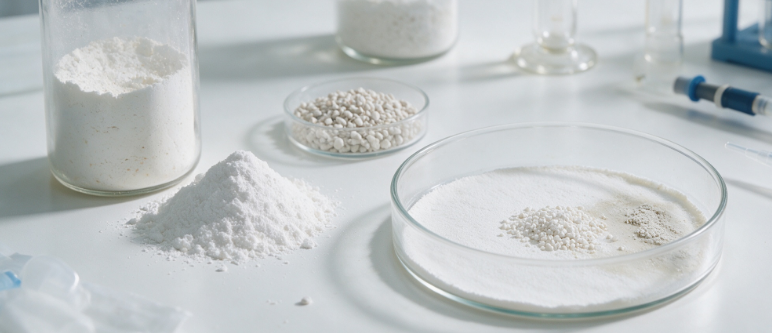
Calcium‑lime absorbents—encompassing quicklime (CaO), hydrated lime (Ca(OH)₂), and their doped or pelletised formulations—remain indispensable in a multitude of industrial gas‑treatment processes, including flue‑gas desulphurisation (FGD), post‑combustion CO₂ capture (calcium looping), acid gas neutralisation (HCl, HF, SO₃), and even anaesthetic gas scrubbing in medical settings. Despite their apparent chemical simplicity, the practical performance of these materials is governed by a highly intricate interplay of crystalline structure, surface basicity, pore architecture, water‑vapour reactivity, and mechanical integrity, all of which evolve dramatically with thermal aging and exposure to reactive gas mixtures. When plant engineers, procurement specialists, or process safety managers initiate a search for “calcium‑lime absorbent testing,” their underlying imperative is seldom a routine quality check. They require a robust, scientifically defensible evaluation that predicts the absorbent’s service lifetime, quantifies its susceptibility to hydration‑induced decrepitation, detects trace impurities that may catalyse unwanted side reactions, and ensures compliance with stringent purity specifications (e.g., ASTM C25, EN 459, or ISO 10426). This article delineates the scientific foundations of such comprehensive testing and demonstrates how our state‑of‑the‑art analytical infrastructure transforms this assessment into a strategic decision‑support tool, enabling our clients to optimise absorbent selection, schedule preventive maintenance, and avoid costly process upsets.
The Critical Need for Multi‑Dimensional Testing: Beyond Purity and Available CaO
Standard industrial specifications for calcium‑lime absorbents typically report the available CaO content (via ASTM C25 or equivalent) and the fineness (sieve analysis). However, these parameters fail to capture the dynamic behaviour of the absorbent under realistic operating conditions. For instance, the rate of CO₂ uptake in a calcium‑looping cycle is not solely a function of CaO purity but is strongly influenced by the BET surface area, the pore size distribution (especially the volume of pores between 2–50 nm that facilitate gas diffusion), and the crystallite size of the CaO domains, which determines sintering kinetics. Similarly, in FGD applications, the reactivity towards SO₂ is modulated by the presence of minor phases (e.g., MgO, SiO₂, Al₂O₃) that can either enhance sulphation by providing structural support or inhibit it by forming low‑reactivity calcium silicates. Moreover, the presence of residual carbonates or hydroxides from incomplete calcination alters the thermal behaviour during regeneration. Our clients come to us when they observe unexplained capacity decline, unexpected pressure drop in fixed‑bed reactors, or variations in downstream gas quality that cannot be attributed to feed composition changes. We address these challenges by deploying an integrated test battery that combines high‑temperature reaction kinetics, advanced textural analysis, and in‑situ phase evolution monitoring, providing a holistic performance fingerprint that extends far beyond conventional quality assurance.
Core Analytical Parameters: From Atomic‑Scale Structure to Pilot‑Scale Absorption Kinetics
High‑Precision Thermogravimetric Analysis (TGA) Under Controlled Reactive Atmospheres: Our custom‑built TGA system is equipped with a rapid‑switching gas delivery manifold, enabling us to perform multi‑cycle carbonation/calcination (for CO₂ capture) and sulphation/regeneration (for FGD) under realistic partial pressures of CO₂, SO₂, O₂, H₂O, and N₂. We measure not only the maximum uptake capacity but also the average carbonation/sulphation rate during the initial, kinetically controlled phase, as well as the diffusion‑limited rate in the later stage. By applying the grain‑model and random‑pore model to these data, we extract intrinsic kinetic parameters (activation energy, pre‑exponential factor, and product‑layer diffusivity) that serve as direct inputs for process simulators. We routinely perform up to 100 consecutive cycles without manual intervention, generating statistically robust degradation curves that allow us to predict the half‑life of the absorbent under your specific process conditions.
In‑Situ X‑ray Diffraction (XRD) with Controlled Atmosphere and Temperature Ramping: Using a high‑temperature diffractometer equipped with an environmental chamber (up to 1,100 °C), we track the phase transformation sequence during calcination (Ca(OH)₂ → CaO → CaCO₃) and during reaction with acid gases. We quantify the crystalline size of CaO using the Scherrer equation and the lattice microstrain via Williamson‑Hall analysis, both of which are reliable indicators of sintering susceptibility. Moreover, we identify the formation of intermediate phases such as calcium sulphite hemihydrate (CaSO₃·½H₂O) or anhydrite (CaSO₄) during FGD, and we determine the temperature at which these phases decompose—critical information for optimising regeneration temperatures to avoid irreversible sulphate formation.
Multi‑Technique Textural Characterisation: We perform N₂ physisorption (77 K) and CO₂ physisorption (273 K) to obtain the full BET surface area, micropore volume (t‑plot), and DFT pore size distribution over the full range from ultramicropores (<0.7 nm) to mesopores. In addition, we use mercury intrusion porosimetry (MIP) up to 60,000 psi to characterise the macroporosity and to determine the bulk density, apparent density, and total porosity. For pelletised or granular absorbents, we combine these data with single‑pellet crush strength and attrition resistance (ASTM D5757) to provide a comprehensive picture of mechanical durability—essential for fluidised‑bed or moving‑bed applications where particle fragmentation leads to elutriation losses.
Surface Chemical Speciation and Trace Impurity Profiling: We employ X‑ray photoelectron spectroscopy (XPS) with argon‑ion sputtering to analyse the surface composition of the absorbent, distinguishing between surface‑carbonate, surface‑hydroxide, and oxide species. This is complemented by inductively coupled plasma mass spectrometry (ICP‑MS) after microwave digestion, to quantify trace impurities (Na, K, Fe, Al, Si, S, Cl) down to the ppb level. Some of these impurities, such as alkali metals, can significantly accelerate sintering by promoting solid‑state diffusion, while others (e.g., iron) may catalyse the oxidation of SO₂ to SO₃, altering the sulphation pathway. Our ultra‑trace analysis provides the sensitivity needed to correlate impurity concentrations with observed performance deviations.
Advanced Dynamic and Predictive Capabilities
Breakthrough Column Tests Under Simulated Process Conditions: Our laboratory‑scale fixed‑bed reactor (up to 50 mm internal diameter) operates at temperatures up to 900 °C and pressures up to 20 bar. We conduct breakthrough experiments with on‑line FTIR and paramagnetic O₂ analysers, monitoring the effluent concentration of CO₂, SO₂, NO, and CO in real time. The resulting breakthrough curves are fitted to the Thomas and Yoon‑Nelson models to estimate the dynamic capacity and the mass transfer coefficient under flow conditions. This data is critical for scaling up to industrial adsorber dimensions, as static TGA capacities often overestimate the performance due to the absence of gas‑side resistance and channelling effects.
Accelerated Aging and Chemical Deactivation Studies: We subject fresh absorbent to accelerated aging protocols that combine thermal cycling, humidity swings, and exposure to trace contaminants (e.g., HCl, HF, heavy‑metal vapours). Post‑aging, we repeat the full characterisation suite (XRD, BET, TGA) to quantify the degradation in capacity and textural properties. This allows us to calculate a deactivation rate constant for each degradation mechanism, enabling a reliable lifetime prediction that accounts for the synergistic effects of multiple stressors—a service that is rarely offered by standard testing laboratories.
Isotopic Exchange and Mechanistic Probing: For research‑grade investigations, we offer 18O‑ and 13C‑labelled gas pulse experiments coupled with mass spectrometry to elucidate the rate‑determining step of the carbonation or sulphation reaction—whether it is surface chemisorption, lattice‑oxygen diffusion, or product‑layer permeation. These fundamental insights are instrumental for developing advanced kinetic models and for screening novel doping strategies (e.g., with Al₂O₃, ZrO₂, or CeO₂) that stabilise the pore structure.
Our Competitive Advantages: Unmatched Scientific Rigour and Engineering Relevance
Integrated Data Interpretation and Customised Reporting: Our reports do not merely list numerical results; they provide a conceptual model that links the measured physicochemical properties to the predicted performance in your specific unit operation. We include a performance matrix that benchmarks your absorbent against our proprietary database of >1,000 calcium‑based materials, highlighting its strengths and weaknesses relative to industry averages. Furthermore, we provide a comprehensive uncertainty analysis (expanded uncertainty, k=2) for all critical parameters, ensuring that your engineering decisions are based on statistically robust data.
Flexibility to Match Your Process Conditions: We recognise that a cement‑kiln flue‑gas treatment requires a different test matrix than a natural‑gas‑fired boiler or a medical‑grade CO₂ scrubber. Our technical team engages in a detailed pre‑test consultation to define the exact gas composition (including trace sulphur‑, chlorine‑, and nitrogen‑containing species), pressure, space velocity, and regeneration strategy that reflect your operational reality. We then adapt our TGA, column, and aging protocols accordingly—an approach that ensures the test outcomes are directly translatable to your plant environment.
Accreditation and Global Compliance: Our core laboratory holds ISO/IEC 17025:2017 accreditation for all test methods, and we are OECD GLP certified for studies related to environmental and toxicological assessment. We strictly adhere to relevant international standards—including ASTM C25, C110, D3682, EN 459‑2, and ISO 10426‑5—and we provide a certificate of conformity for each test, which is accepted by major regulatory bodies worldwide (EPA, EU ETS, etc.). All raw data are stored in a secure, auditable electronic system that guarantees full traceability from sample receipt to final report.
Rapid Turnaround and Interactive Dashboards: By leveraging automated sample handling, robotic TGA systems, and a laboratory information management system (LIMS), we reduce the typical testing cycle by 30–40% compared to conventional laboratories. Our clients receive access to an online interactive dashboard where they can visualise the evolution of uptake curves, XRD patterns, and pore‑size distributions in real time, even before the final report is issued. This transparency facilitates early decision‑making and allows for mid‑course adjustments to the test protocol if unexpected results emerge.
Root‑Cause Failure Analysis for Underperforming Absorbents
When a calcium‑lime absorbent fails to meet expectations—whether due to reduced CO₂ capacity, excessive pressure drop, or inadequate SO₂ removal—our forensic investigation employs a combination of scanning electron microscopy (SEM) with EDS, XRD and TG‑MS to identify the degradation mechanism. We have successfully resolved cases of sinter‑induced pore collapse caused by overheating during regeneration, surface passivation by calcium sulphate that blocked further reaction, contamination by chlorides that promoted the formation of low‑melting eutectics, and mechanical attrition due to inadequate pellet strength. Our report provides clear, actionable recommendations, such as adjusting the calcination temperature, altering the gas flow distribution, or incorporating a stabilising additive (e.g., MgO or kaolin) to improve thermal stability.
Conclusion: Transforming Calcium‑Lime Absorbent Testing into a Strategic Asset for Operational Excellence
The reliable performance of calcium‑lime absorbents is not an inherent property but a consequence of a delicate balance between chemical reactivity, textural stability, and mechanical robustness, all of which must be evaluated under conditions that mirror real‑world service. Our comprehensive testing platform—encompassing in‑situ diffraction, reactive TGA, advanced porosimetry, trace‑element profiling, and dynamic column breakthrough—provides the depth and precision necessary to characterise this balance fully. By partnering with us, you gain not just a set of analytical results, but a predictive, engineering‑ready understanding that enables you to select the optimal absorbent, to fine‑tune your process parameters, and to pre‑emptively mitigate degradation risks. In an era of tightening emission limits and volatile raw‑material costs, such knowledge is a decisive competitive advantage. We invite you to collaborate with our expert team to design a customised test programme that addresses your specific performance and compliance requirements.
Contact our advanced materials characterisation division today to discuss your calcium‑lime absorbent testing needs and to secure the data‑driven confidence required for efficient, reliable, and sustainable gas‑treatment operations.