Reasons for choosing our testing services
ZHONGXI Testing has obtained inspection qualification certifications from multiple countries and regions worldwide. We possess a senior testing team and advanced testing methods, providing independent, impartial, and professional third-party verification services for global carbon projects.

Internationally recognized authority
Certified by multiple international standards such as CNAS, VCS, and GS, with reports universally applicable worldwide.

Global service capability
Covering 140+ countries and regions, it supports on-site detection and remote verification in multiple languages.

Professional experimental methods
Adopt standard experimental methods to ensure accurate and reliable data.
Comprehensive Performance Evaluation of Desulphurisation Adsorbents for Drying Furnaces: Advanced Analytical Protocols for High‑Temperature Gas Purification and Process Reliability
Drying furnaces—widely employed in the ceramics, glass, ore beneficiation, and chemical processing industries—generate flue gases that contain not only moisture but also significant concentrations of sulphur oxides (primarily SO₂ and SO₃), often in the presence of alkaline dust and volatile organic compounds. To meet stringent emission regulations and protect downstream equipment from acid dew‑point corrosion, desulphurisation adsorbents are installed either within the furnace flue or in a dedicated reactor downstream. These adsorbents are typically formulated from calcium‑based materials (e.g., calcined limestone, hydrated lime), magnesium‑silicate clays, or promoted activated carbons, and are often modified with alkali‑metal dopants to enhance reactivity at the moderate temperatures (200–500 °C) typical of drying‑furnace exhausts. However, the operational environment is uniquely challenging: the adsorbent must simultaneously manage high water‑vapour partial pressures, cyclical thermal shocks, and potential fouling by entrained particulates. When plant engineers, environmental managers, or technology suppliers search for “drying‑furnace desulphurisation adsorbent testing,” the underlying need is not a simple composition check. They require a rigorous, process‑realistic evaluation that quantifies the adsorbent’s dynamic SO₂ capture capacity, resistance to steam‑induced sintering, regenerability under humid conditions, and mechanical stability over prolonged exposure to thermal cycling and abrasive dust. This article details the scientific rationale for such comprehensive testing and presents our advanced analytical framework, which integrates reactive gas‑phase kinetics, in‑situ textural monitoring, and pilot‑scale breakthrough simulation to deliver predictive, actionable insights that enable our clients to optimise adsorbent selection, extend service intervals, and reduce operational expenditures.
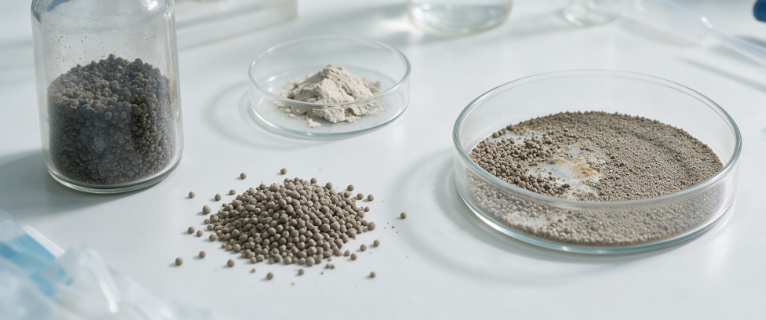
Understanding the Unique Demands of Drying‑Furnace Desulphurisation: Why Standard Flue‑Gas Test Protocols Fall Short
Conventional desulphurisation adsorbent testing—often conducted in dry, dust‑free gas streams at constant temperature—does not reflect the highly transient and humid environment of a drying furnace. In practice, the flue gas typically contains 5–20 vol% H₂O, which can significantly affect the sulphation reaction: steam may enhance the diffusivity of SO₂ through the product layer, but it can also induce hydrolysis of the adsorbent’s active phases, forming poorly reactive hydroxides or promoting particle agglomeration. Furthermore, the temperature profile across the adsorbent bed may fluctuate by >50 °C during start‑up/shut‑down cycles, leading to thermal fatigue and cracking of pelletised adsorbents. Finally, the presence of fine particulate matter—such as fly ash or ore dust—can physically block pore mouths and reduce the accessible active surface. Our clients approach us when they observe a rapid decline in desulphurisation efficiency (e.g., from 95% to <70% within weeks), excessive pressure drop due to adsorbent friability, or inconsistent performance between different supplier batches. We address these challenges by designing a test matrix that replicates the specific thermal‑hydraulic‑chemical profile of the customer’s drying furnace, combining dynamic TGA under humid reactive gases, cyclic thermal ageing, and dust‑laden breakthrough tests. This holistic approach uncovers failure mechanisms that are invisible in standard single‑pass, isothermal, dry‑gas assays.
Core Analytical Parameters: From Intrinsic Kinetics to Full‑Scale Predictors
Humidified Thermogravimetric Analysis (TGA) with Real‑Time Gas Analysis: Our TGA system is equipped with a precision steam generator (up to 30 vol% H₂O) and a rapid‑response gas blending panel that allows precise control of SO₂ (0–5,000 ppm), O₂ (0–10 vol%), CO₂ (0–15 vol%), and balance N₂. The outlet gas is continuously monitored by a dual‑channel non‑dispersive infrared (NDIR) analyser for SO₂ and CO₂, and a paramagnetic O₂ sensor for oxidation monitoring. We conduct isothermal and temperature‑programmed sulphation experiments, recording the mass gain as a function of time. From these data, we derive the intrinsic sulphation conversion, the initial reaction rate (mol SO₂ per g adsorbent per second), and the diffusion‑controlled rate constant. By varying the H₂O partial pressure, we construct water‑enhancement factor curves that quantify the steam’s effect on both the reaction rate and the final capacity—a critical metric for optimising the adsorbent injection point.
In‑Situ High‑Temperature X‑ray Diffraction (HT‑XRD) Under Humid Atmospheres: We employ a diffractometer with a controlled‑humidity chamber (using a dew‑point generator) to track the phase evolution of the adsorbent during sulphation and subsequent regeneration. This reveals the formation of intermediate sulphite species (e.g., CaSO₃·0.5H₂O) and their oxidation to sulphate (CaSO₄), as well as any hydration‑induced phase changes (e.g., CaO → Ca(OH)₂, or MgO → Mg(OH)₂) that alter the material’s reactivity. Through quantitative phase analysis via the Rietveld method, we quantify the fraction of active calcium/magnesium that is converted to sulphate versus hydroxide, enabling us to predict the loss of capacity due to hydration‑induced passivation.
Multi‑Cycle Cyclic Sulphation/Regeneration Under Thermal Swing Conditions: To simulate the intermittent operation of a drying furnace, we perform accelerated cycling tests in our TGA, alternating between sulphation at 300–450 °C (with SO₂/H₂O/O₂) and regeneration at 500–650 °C (in N₂ or air). We monitor the capacity decay per cycle and fit the data to a generalised decay model (e.g., fractional conversion vs. cycle number) to estimate the adsorbent’s usable lifetime. This protocol is particularly valuable for comparing the cyclic stability of different adsorbent formulations—for instance, a magnesia‑stabilised lime vs. a silica‑alumina‑promoted adsorbent—under the thermal‑cycling regime typical of intermittent drying operations.
Textural Characterization Before, During, and After Reaction: We perform N₂ physisorption (77 K) and CO₂ physisorption (273 K) on fresh, partially sulphated, and fully regenerated samples to track changes in BET surface area, micropore volume, and DFT pore size distribution. Additionally, we use mercury intrusion porosimetry (MIP) to quantify the evolution of the macroporous network, which is critical for maintaining gas permeability through the adsorbent bed. The combination of these data allows us to construct a pore‑network evolution model that predicts the rate of pore‑blockage due to sulphate deposition and subsequent loss of active surface.
Mechanical and Abrasion Resistance Under Dust‑Laden Conditions: Recognising that drying‑furnace flue gases often carry particulate matter, we have developed a customised attrition tester that exposes the adsorbent pellets to a controlled flow of dust (e.g., silica powder, 0.1–10 µm) at typical gas velocities. We measure the attrition index (ASTM D5757) and the crush strength (single‑pellet compression) before and after dust exposure. This provides a realistic assessment of the adsorbent’s mechanical durability in the presence of abrasive particles, enabling us to predict the rate of fines generation and the associated pressure‑drop increase.
Advanced Predictive Capabilities: From Laboratory Data to Field‑Scale Recommendations
Pilot‑Scale Fixed‑Bed Breakthrough Tests with Dust Injection: Our pilot reactor (0.15 m diameter, 1.5 m height) is designed to operate under realistic drying‑furnace conditions—including adjustable gas flow (100–500 L/min), temperature control up to 600 °C, and a dust‑feed system for continuous particulate introduction. We conduct breakthrough experiments with online SO₂, O₂, and H₂O monitoring, and the effluent dust concentration is measured using an isokinetic sampling probe. The breakthrough curves are analysed using advection‑dispersion‑reaction (ADR) models that incorporate the intrinsic kinetics derived from TGA, as well as the effects of axial dispersion and inter‑phase mass transfer. The model parameters are validated against the experimental data, and we then use the validated model to simulate the performance of a full‑scale adsorbent bed under your specific gas flow and temperature profile. This predictive capability is unique to our laboratory and enables our clients to optimise the adsorbent volume, bed geometry, and replacement schedule without costly pilot trials.
Thermal‑Mechanical Finite Element Analysis (FEA) Coupled with Chemical Conversion: For pelletised adsorbents, we perform FEA simulations that couple heat transfer, mechanical stress, and chemical reaction using the finite element method. The model accounts for the exothermic nature of the sulphation reaction, the thermal expansion of the pellets, and the generation of internal stresses due to the molar‑volume increase of the product phase (e.g., CaSO₄ vs. CaO). This allows us to predict the likelihood of pellet cracking under rapid thermal transients, providing a design criterion for selecting pellet dimensions and binder compositions that maximise thermal shock resistance.
Our Competitive Advantages: Scientific Depth, Engineering Relevance, and Operational Flexibility
Integrated Multi‑Technique Workflow with Cross‑Validation: We combine TGA, HT‑XRD, BET/MIP, attrition testing, and column breakthrough into a single coherent campaign. All tests are performed on the same batch of sample, ensuring that the results are internally consistent. Our data integration pipeline merges these datasets to produce a unified performance fingerprint that includes kinetic parameters, phase stability indicators, textural resistance, and mechanical robustness scores. This holistic view is essential for making informed procurement decisions or for troubleshooting existing installations.
Customised Test Protocols for Your Specific Furnace Configuration: We understand that a drying furnace for ceramic tiles operates at different temperatures, gas velocities, and dust loads than one used for ore drying or biomass pre‑treatment. Our pre‑test consultation defines the representative operating envelope—including typical fluctuations in temperature, SO₂ concentration, H₂O partial pressure, and particulate loading—and we tailor every aspect of the test programme (cycling frequency, dust concentration, gas composition) to match your specific process. This ensures that the test results are directly relevant to your operational reality, not generic benchmarks.
Accreditation and Global Standard Compliance: Our core laboratory is ISO/IEC 17025:2017 accredited for all test methods cited, and we maintain OECD GLP compliance for environmental performance studies. We adhere to relevant ASTM, EN, and EPA standards where applicable, and our reports include a full statement of measurement uncertainty (expanded uncertainty with coverage factor k=2) to support rigorous engineering decisions. All data are archived in a secure, blockchain‑verified database for full auditability.
Rapid Turnaround and Interactive Data Access: Through our automated LIMS and robotic sample handling, we reduce total testing time by up to 35% compared to traditional laboratories. Our clients receive a personalised web dashboard that displays real‑time progress, preliminary breakthrough curves, and intermediate analytical results, allowing them to track the testing campaign and make early adjustments if needed. The final report is delivered in a comprehensive yet concise format, with clear executive summaries and technical appendices.
Root‑Cause Diagnostics for Underperforming Adsorbents in Service
When a desulphurisation adsorbent shows unsatisfactory performance—such as rapid breakthrough, excessive attrition, or unexplained deactivation—our forensic service employs a combination of SEM‑EDS for morphology and elemental mapping, XRD for phase identification, BET/MIP for pore‑blockage quantification, and selective dissolution to differentiate between calcium sulphate, sulphite, and carbonate. We have successfully traced failures to sulphate‑induced pore plugging in the outer shell of pellets, hydration‑caused cracking due to high steam content during start‑up, thermal sintering of the active phase when local temperatures exceeded the design limit, and iron‑catalysed oxidation of SO₂ to SO₃, which rapidly deactivated the adsorbent. Our reports provide precise corrective measures, ranging from adjusting the inlet temperature to modifying the adsorbent composition or implementing a dust pre‑filter.
Conclusion: Elevating Drying‑Furnace Desulphurisation Adsorbent Testing from Routine Quality Control to Strategic Process Optimisation
The reliability and cost‑effectiveness of a drying‑furnace desulphurisation system hinge on a deep understanding of how the adsorbent behaves under the complex, transient, and dusty conditions that define this application. Our comprehensive testing platform—encompassing humidified TGA, in‑situ XRD, cyclic thermal ageing, dust‑laden breakthrough, and predictive simulation—provides the scientific rigour and engineering insight necessary to select, operate, and maintain adsorbents for maximum performance and longevity. By partnering with us, you gain not only a detailed characterisation of your adsorbent but also a predictive model that forecasts its evolution over time, enabling you to plan maintenance, optimise reagent usage, and ensure continuous compliance with emission limits. We invite you to engage our expert team to design a customised test programme that addresses your specific furnace conditions and operational targets, and to experience the confidence that comes from data‑driven decision‑making.
Contact our thermal‑process analytics group today to initiate a comprehensive evaluation of your drying‑furnace desulphurisation adsorbent and to secure the performance intelligence that drives operational excellence.