Reasons for choosing our testing services
ZHONGXI Testing has obtained inspection qualification certifications from multiple countries and regions worldwide. We possess a senior testing team and advanced testing methods, providing independent, impartial, and professional third-party verification services for global carbon projects.

Internationally recognized authority
Certified by multiple international standards such as CNAS, VCS, and GS, with reports universally applicable worldwide.

Global service capability
Covering 140+ countries and regions, it supports on-site detection and remote verification in multiple languages.

Professional experimental methods
Adopt standard experimental methods to ensure accurate and reliable data.
Advanced Physicochemical and Performance Assessment of Congo Red Decolorising Agents: A Comprehensive Analytical Framework for Dye Removal Efficiency and Process Optimisation
Congo red (CR), a benzidine‑based anionic diazo dye, is widely used in the textile, paper, and plastic industries, but its persistent and carcinogenic nature makes it a priority pollutant in industrial wastewater treatment. Decolorising agents—ranging from activated carbons and modified clays to synthetic polymeric adsorbents and advanced oxidation catalysts—are employed to remove CR from aqueous streams. However, the sheer diversity of available materials, combined with the sensitivity of dye adsorption to solution chemistry (pH, ionic strength, temperature, and competing organics), means that a simple “decolourisation percentage” determined under arbitrary laboratory conditions is insufficient for predicting real‑field performance. When environmental consultants, treatment‑plant operators, or product developers search for “Congo red decolorising agent testing,” their true objective is to obtain a predictive, multi‑parametric characterisation that reveals the adsorbent’s equilibrium capacity, uptake kinetics, reusability, and resistance to fouling under realistic water matrices. This article delineates the scientific basis for such rigorous testing and presents our state‑of‑the‑art analytical platform, which integrates advanced spectroscopy, high‑resolution microscopy, and multi‑variable kinetic modelling to deliver actionable insights that empower our clients to select, optimise, and validate decolorising agents with unparalleled confidence.
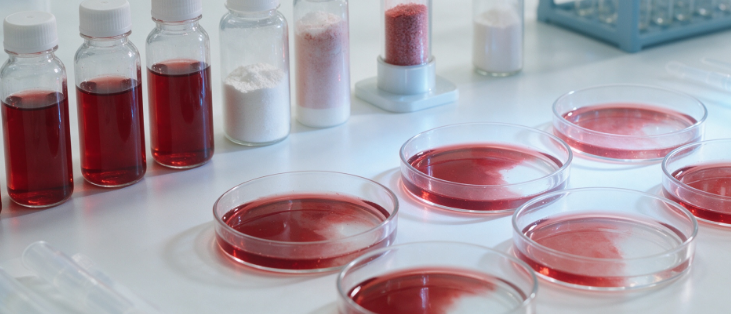
Unravelling the Complexity: Why Single‑Point Batch Tests Are Not Enough for Congo Red Adsorbents
Conventional screening of Congo red decolorisers often relies on a single isotherm measurement at room temperature, using deionised water, and reporting the removal efficiency at a fixed initial dye concentration. This approach overlooks critical factors such as the effect of pH on the surface charge of the adsorbent (and thus the electrostatic attraction to the anionic dye), the competition from natural organic matter or inorganic anions (e.g., chloride, sulphate) present in real effluents, and the thermodynamic feasibility of adsorption across the typical seasonal temperature variations. Moreover, the kinetic behaviour—whether limited by film diffusion, intraparticle diffusion, or surface chemisorption—dictates the required contact time and reactor design, yet this is rarely quantified. Our clients approach us when they observe inconsistent decolourisation in pilot trials, when they need to compare novel materials (such as metal‑organic frameworks or chitosan‑based composites) against benchmark adsorbents, or when they must comply with stringent discharge limits that require reliable performance data under dynamic conditions. We address these complexities by deploying a structured test battery that encompasses equilibrium, kinetic, and thermodynamic studies under a matrix of solution chemistries, coupled with advanced characterisation before and after adsorption, to provide a complete mechanistic understanding.
Core Analytical Parameters: From Isotherm Modelling to Mechanistic Elucidation
Comprehensive Equilibrium Isotherm Studies: We perform batch adsorption experiments over a wide concentration range (1–500 mg/L) at controlled temperatures (15 °C, 25 °C, 35 °C, and 45 °C), using a robotic liquid‑handling system that ensures high reproducibility (n=3 per point). The equilibrium data are fitted to Langmuir, Freundlich, Temkin, Dubinin–Radushkevich, and Sips models using non‑linear regression with rigorous statistical evaluation (AIC, RMSE). From these, we extract the maximum monolayer capacity (qₘ), the heterogeneity factor (n), and the mean adsorption energy (E)—the latter indicating whether the adsorption is predominantly physical or chemical in nature. For materials with complex surfaces, we also employ the ideal adsorbed solution theory (IAST) to predict multicomponent equilibria when competing dyes or surfactants are present.
Kinetic Profiling Under Realistic Hydrodynamic Conditions: Using a stirred‑tank reactor with online UV‑Vis spectrophotometric monitoring (coupled with a fibre‑optic probe), we record the full transient concentration decay of Congo red at its characteristic absorbance peak (λmax ≈ 497 nm) over a period of 0–24 hours. The kinetic data are analysed using pseudo‑first‑order (PFO), pseudo‑second‑order (PSO), Elovich, and intraparticle diffusion (Weber–Morris) models. We also apply the Boyd plot to distinguish between film‑diffusion and particle‑diffusion control. This enables us to provide a rate‑limiting step diagnosis and to estimate the adsorption half‑life (t₁/₂) for your specific mixing and particle‑size conditions.
Thermodynamic Parameter Determination: From the temperature‑dependent isotherms, we calculate the standard Gibbs free energy change (ΔG°), enthalpy change (ΔH°), and entropy change (ΔS°) for the adsorption process. These thermodynamic quantities not only indicate the spontaneity and endothermic/exothermic nature of adsorption but also provide insight into the molecular interactions (hydrogen bonding, hydrophobic forces, π–π stacking) that govern the affinity of Congo red to the adsorbent surface.
Effect of Solution Chemistry and Competing Ions: We systematically vary pH (2–11), ionic strength (0–0.5 M NaCl), and the presence of common co‑pollutants (e.g., humic acid, sodium dodecyl sulphate, and phosphate) to construct performance robustness maps. These maps quantitatively show how the decolourisation efficiency changes across the operational space, enabling you to identify the optimal pH range and to anticipate performance loss in saline or organic‑rich wastewaters.
Advanced Mechanistic Characterisation: Unravelling the Adsorption Sites and Interactions
UV‑Vis and FTIR Spectroscopic Fingerprinting: We record the full UV‑Vis spectra of the supernatant before and after adsorption to detect any shifts in the absorbance maxima, which may indicate dye aggregation or complexation. Additionally, we perform ATR‑FTIR on the spent adsorbent to identify the functional groups involved in binding—for example, the disappearance or shifting of the —NH₂ stretching (around 3,400 cm⁻¹) or the S=O stretching (around 1,350 cm⁻¹) of the sulphonate groups of Congo red. This provides direct evidence of the interaction mechanism (electrostatic, hydrogen bonding, or π–π stacking).
X‑ray Photoelectron Spectroscopy (XPS) for Surface Chemical Changes: Using monochromatic Al Kα XPS, we analyse the pristine and dye‑loaded adsorbent surfaces to monitor the chemical states of key elements (C, O, N, S, and the adsorbent’s own elements, e.g., Al, Si, Fe). The appearance of a new N 1s peak (from the azo groups of Congo red) and the shift in O 1s binding energy indicate the formation of surface complexes. Through high‑resolution scans, we quantify the proportion of surface‑bound dye, providing a correlation between the measured bulk uptake and the actual surface coverage.
Scanning Electron Microscopy (SEM) and Energy‑Dispersive X‑ray Spectroscopy (EDS) Mapping: We examine the adsorbent particles before and after adsorption to visualise the morphological changes and to confirm the homogeneous distribution of the dye on the surface. EDS elemental maps of sulphur and nitrogen serve as a direct indicator of the dye’s spatial distribution, which is especially useful for assessing the uniformity of adsorption across the particle bed.
Surface Area and Porosity Evolution: We perform N₂ physisorption (BET) on the fresh and regenerated adsorbents to evaluate the loss of surface area and micropore volume due to pore‑blocking by the large Congo red molecules (molecular dimensions ~2.4 nm × 0.7 nm). This is crucial for predicting the recyclability of the decolorising agent, as a significant decrease in BET area after the first cycle would limit its economic viability.
Reusability and Regeneration Studies
For practical applications, the ability to regenerate and reuse the decolorising agent is as important as its initial capacity. We conduct multi‑cycle adsorption‑desorption experiments using typical eluents (e.g., 0.1 M NaOH, 50% ethanol, or a combination of both). After each desorption step, we re‑measure the equilibrium uptake in a fresh Congo red solution under identical conditions. We report the percentage of capacity retention after 5, 10, and 20 cycles, and we characterise the material after each cycle using FTIR and BET to identify any irreversible changes. Our accelerated aging protocol, which subjects the adsorbent to aggressive thermal and chemical regeneration conditions, can simulate up to 50 cycles within a week, providing a realistic lifetime prediction.
Our Distinctive Advantages: Precision, Depth, and Customised Interpretations
Integrated Multi‑Technique Workflow with Cross‑Validation: We do not treat isotherm, kinetic, spectroscopic, and regeneration studies as separate silos. Our data integration platform correlates the adsorption capacity with specific surface‑chemical changes, and we deliver a unified mechanistic model that describes the entire adsorption process—from the initial fast surface binding to the eventual pore diffusion limitation. This model is validated by fitting it to all experimental data simultaneously, ensuring that the resulting parameters are physically meaningful and not over‑parameterised.
Tailored Testing to Your Specific Water Matrix: We recognise that textile effluents vary greatly in pH, salt content, and the presence of auxiliary chemicals. Our pre‑test consultation defines the representative matrix—including the typical concentrations of Na₂SO₄, NaCl, and dispersing agents—and we adjust the test solutions accordingly. This ensures that the derived performance indicators are directly relevant to your plant’s incoming wastewater, not to idealised laboratory water.
Accreditation and Data Integrity: Our laboratory operates under ISO/IEC 17025:2017 for all analytical procedures, and we follow OECD GLP guidelines for environmental testing. All raw data, including UV‑Vis traces, isotherm fitting plots, and XPS spectra, are archived in a secure electronic system with full time‑stamping, providing an immutable audit trail for regulatory submissions.
Rapid Turnaround and Interactive Reporting: Thanks to our automated batch‑testing robots and high‑throughput spectrophotometers, we can complete a full isotherm‑kinetic‑thermodynamic suite in 5 working days (excluding optional advanced spectroscopy). Our clients receive a detailed, yet accessible report that includes a performance dashboard with predicted removal efficiencies under different scenarios, enabling quick decision‑making. We also provide a supplemental Excel tool that allows you to input your actual operating parameters (pH, temperature, initial dye concentration) to estimate the required adsorbent dosage and contact time.
Root‑Cause Failure Diagnostics for Underperforming Decolorising Agents
When a decolorising agent fails to meet the expected performance—for example, showing a sudden drop in removal efficiency after a few days of operation—our forensic analysis combines SEM‑EDS, XPS, and FTIR to identify the cause. We have successfully diagnosed cases of surface poisoning by anionic surfactants, pore blockage by colloidal silica, loss of functional groups due to hydrolysis, and bio‑fouling in biological‑hybrid systems. Our reports provide concrete recommendations, such as adjusting the pH pre‑treatment, using a protective pre‑filter, or switching to a different regeneration solvent.
Conclusion: Transforming Congo Red Adsorbent Testing into a Strategic Tool for Sustainable Wastewater Treatment
The effective removal of Congo red from industrial effluents demands a decolorising agent that is not only high in capacity but also robust, fast‑kinetic, and resistant to the chemical insults of real wastewater. Our comprehensive testing service—encompassing detailed equilibrium and kinetic studies, thermodynamic profiling, spectroscopic validation, and accelerated reusability assessments—provides you with the scientific evidence needed to select the optimal adsorbent, to design efficient treatment systems, and to maintain compliance with environmental discharge standards. By partnering with us, you gain more than a test report; you acquire a predictive understanding of how your decolorising agent will perform in the field, enabling you to minimise operational risks and maximise cost‑effectiveness. We invite you to engage our expert team to design a customised evaluation programme that aligns with your specific water‑chemistry challenges and performance targets.
Contact our environmental materials characterisation division today to initiate a comprehensive assessment of your Congo red decolorising agent and to secure the performance intelligence that drives sustainable and compliant dye‑wastewater management.