Reasons for choosing our testing services
ZHONGXI Testing has obtained inspection qualification certifications from multiple countries and regions worldwide. We possess a senior testing team and advanced testing methods, providing independent, impartial, and professional third-party verification services for global carbon projects.

Internationally recognized authority
Certified by multiple international standards such as CNAS, VCS, and GS, with reports universally applicable worldwide.

Global service capability
Covering 140+ countries and regions, it supports on-site detection and remote verification in multiple languages.

Professional experimental methods
Adopt standard experimental methods to ensure accurate and reliable data.
Comprehensive Performance and Safety Testing of Industrial Wastewater Deodorants: A High-Level Analytical Service
Industrial wastewater treatment facilities are frequently challenged by the emission of volatile malodorous compounds – including hydrogen sulfide (H₂S), volatile organic sulfur compounds (mercaptans, thioethers), ammonia (NH₃), amines, and volatile fatty acids – which pose significant nuisance risks, occupational health hazards, and regulatory non-compliance issues. Chemical deodorants, encompassing oxidizing agents (e.g., permanganate, peroxides), adsorption-neutralization blends (activated carbon with impregnated reagents), biological enzyme formulations, and masking agents, are widely applied to suppress or eliminate these odors. However, the real-world efficacy of a deodorant is not simply defined by its active ingredient content; it depends on a complex interplay of reaction kinetics, dosage dynamics, matrix interference (organic load, pH, temperature, salinity), by-product formation, and residual toxicity. Consequently, a rigorous, multi-parametric analytical evaluation is essential to validate product claims, optimize dosing regimes, ensure worker and environmental safety, and satisfy discharge permits. Our ISO/IEC 17025-accredited laboratory offers a fully integrated, mechanistic-driven testing service for industrial wastewater deodorants, providing actionable intelligence that transcends conventional "pass/fail" scent-panel assessments.
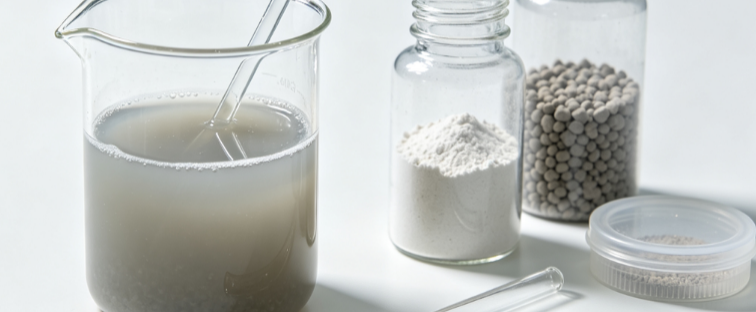
Why In-Depth Deodorant Testing Is Critical for Industrial Compliance and Operational Efficiency
Clients seeking our testing services typically aim to: (i) verify the odor removal efficiency of a new formulation under actual wastewater matrices, (ii) compare competing products under identical dynamic conditions, (iii) diagnose the sudden failure of an established deodorant program, (iv) quantify the formation of potentially hazardous disinfection by-products (e.g., chlorinated organics, bromate), (v) assess the long-term stability of deodorant performance under changing plant operating conditions, or (vi) generate defensible data for environmental impact assessments and product registration. Simple headspace GC-FID screening is insufficient, because odor perception involves synergistic and antagonistic interactions among multiple volatiles, and effective deodorization often combines chemical transformation, physical adsorption, and biological degradation pathways. Our service integrates dynamic olfactometry, high-resolution chemical speciation, real-time reaction kinetics, and toxicity screening to deliver a complete performance and safety profile – enabling clients to confidently select, optimize, and defend their odor control strategies.
Our Advanced Analytical Suite for Industrial Wastewater Deodorants
1. Chemical Composition and Active Ingredient Quantification
We begin with a thorough chemical fingerprinting of the deodorant product itself. Using high-performance liquid chromatography coupled with high-resolution mass spectrometry (HPLC-HRMS) and gas chromatography with flame ionization and sulfur-specific detectors (GC-FID/SCD), we identify and quantify active components – including peroxides, quaternary ammonium compounds, transition metal catalysts, and plant-derived terpenes – with detection limits in the low ppb range. For oxidative deodorants, we determine the oxidation-reduction potential (ORP) and active oxygen content (as % H₂O₂ equivalents) via permanganometric and iodometric titrations, with precision of ±0.02% w/w. We also screen for inert fillers, emulsifiers, and stabilizers using FTIR with attenuated total reflectance (ATR) and Thermogravimetric Analysis (TGA) to provide a complete compositional mass balance – essential for quality control and regulatory disclosure.
2. Dynamic Headspace Odorant Abatement Kinetics
Rather than static jar tests, we simulate actual wastewater agitation and aeration conditions using a custom-designed dynamic headspace system (gas-liquid contact in a 5 L stirred reactor with controlled temperature and bubbling rate). The headspace is continuously purged to a thermal desorption unit coupled with GC×GC-TOFMS, providing comprehensive two-dimensional separation of volatile organic compounds (VOCs) and reduced sulfur species at sub-ppb levels. We spike the wastewater with a standard mixture of 18 representative odorants (including H₂S, methyl mercaptan, dimethyl sulfide, dimethyl disulfide, ammonia, trimethylamine, and butyric acid) and monitor their concentration decay over 0–120 minutes after deodorant addition. From these data, we derive pseudo-first-order degradation rate constants for each target compound, with typical R² > 0.98, and we calculate half-life reduction factors that directly correlate with perceived odor intensity. This dynamic approach captures the influence of volatilization and chemical reaction simultaneously, providing far more realistic performance metrics than equilibrium headspace measurements.
3. Olfactometric Performance and Odor Threshold Reduction
For direct human-relevant assessment, we perform dynamic olfactometry according to EN 13725 and ASTM E679, using a panel of at least 8 trained assessors and a dilution-to-threshold olfactometer. We measure the odor concentration (OUE/m³) of the headspace before and after deodorant application, and we calculate the odor removal efficiency (ORE%) and the specific odor reduction capacity – expressed as OUE removed per gram of product. This allows us to rank products in terms of true sensory performance, and we further provide a hedonic tone assessment (pleasantness scale from -4 to +4) to evaluate whether the deodorant introduces any off-notes. Our olfactometric data are statistically validated with 95% confidence intervals, and we offer inter-laboratory comparison upon request to ensure reproducibility.
4. Realistic Matrix Effects and Interference Studies
Industrial wastewater varies widely in chemical oxygen demand (COD), suspended solids, salinity, pH, and temperature. We systematically evaluate deodorant performance under three standardized synthetic matrices (high-organic, high-saline, and high-sulfide) as well as real field-collected wastewater (upon client provision). Using a fully factorial experimental design (pH 5–9, temperature 15–45 °C, COD 500–5000 mg/L), we identify significant interaction effects via ANOVA and construct response-surface models to predict optimal dosage at any given condition. We also assess the impact of co-existing surfactants, oils, and heavy metals – which can scavenge oxidants or poison catalysts – and we quantify the inhibitory concentration (IC₅₀) for each major interference. This provides clients with a safety margin map that guides robust field application even under upset conditions.
5. By-Product Formation and Toxicity Assessment
Oxidative deodorants can generate potentially hazardous by-products, such as organic chloramines, brominated disinfection by-products (in bromide-rich wastewaters), and residual oxidants. Using high-resolution mass spectrometry (Q-TOF) with suspect-screening and non-targeted analysis workflows, we identify and semi-quantify transformation products at concentrations down to 0.1 μg/L. We also perform a comprehensive toxicity battery: Microtox® acute toxicity (Vibrio fischeri), Daphnia magna immobilization test, and comet assay for genotoxicity on treated water samples. These data are used to calculate a toxicity reduction index (TRI) and to ensure that the deodorant does not simply replace one environmental problem with another. Our post-treatment water is evaluated against US EPA and EU water quality standards for relevant parameters, providing a clear compliance pathway.
6. Long-Term Stability and Aging Performance
Deodorants can degrade during storage or lose activity due to thermal exposure, metal-catalyzed decomposition, or biological fouling. We conduct accelerated aging studies at 40 °C, 50 °C, and 60 °C (following ICH Q1A guidelines) with periodic sampling over 6 months, monitoring active ingredient concentration, pH, and viscosity. We also simulate field storage in open tanks with exposure to ambient air and light, and we re-evaluate the odor abatement kinetics at each time point to generate a shelf-life prediction and a performance decay profile. Additionally, we assess the compatibility of the deodorant with common wastewater polymers and coagulants, ensuring that no precipitation or antagonistic effects occur in combined treatment trains.
7. Real-Time Residual Monitoring and Dosage Optimization
We offer on-site or laboratory-based residual monitoring using portable electrochemical sensors for H₂S, NH₃, and residual oxidants, calibrated against standard methods. We conduct titration-based dose-response curves to determine the minimum effective dose (MED) and the economic optimum dose – the point where incremental removal per incremental product addition becomes uneconomical. Our proprietary dose-optimization algorithm integrates kinetic rate constants, interference factors, and cost parameters to recommend a site-specific dosing strategy that minimizes product consumption while guaranteeing regulatory compliance. This service has been proven to reduce deodorant usage by 15–40% in full-scale trials without compromising odor control.
Our Distinctive Advantages in Industrial Deodorant Testing
1. Integrated Chemical, Sensory, and Toxicological Platform: We uniquely combine dynamic headspace GC×GC-HRMS, olfactometry, and ecotoxicity screening in a single coordinated workflow. This enables us to correlate, for example, the disappearance of specific sulfur compounds (chemically) with odor unit reduction (sensorially) and with changes in Microtox® inhibition (toxicologically) – yielding a holistic efficacy-safety portfolio rather than isolated metrics. Such integrated data are invaluable for product developers and regulatory affairs teams.
2. Expertise in Challenging Wastewater Matrices: Industrial effluents contain high concentrations of interfering substances that can foul instruments or bias results. We have developed specialized sample preparation techniques – including solid-phase microextraction (SPME) with carbon-wide fibers for sulfur compounds, and derivatization methods for volatile amines – that ensure quantitative recovery even in the presence of high TSS and oil/grease. Our method validation includes matrix-spike recoveries of 80–110% for all target odorants, and we routinely handle samples with COD > 10,000 mg/L.
3. Advanced Modeling and Predictive Tools: Beyond reporting experimental data, we provide mechanistic kinetic models that account for volatilization, chemical reaction, and mass transfer. Using numerical simulation (COMSOL-based), we can predict deodorant performance in full-scale holding basins or oxidation ditches, accounting for mixing patterns and residence time distribution. We also offer a machine-learning-based similarity analysis that benchmarks your product against over 150 commercial deodorants in our proprietary database, highlighting both strengths and weaknesses.
4. Regulatory Readiness and Full Traceability: Our facility is accredited under ISO/IEC 17025:2017 for key parameters including odor concentration (by olfactometry), H₂S (by GC-SCD), and acute toxicity (Microtox®). We follow EPA Method 8260 and 8270 for VOC analysis, and our reference standards are traceable to NIST. All uncertainty budgets are calculated according to GUM, with expanded uncertainties (k=2) typically below 5% for removal efficiencies, making our data directly acceptable to environmental regulators and permitting authorities.
5. Collaborative and Transparent Partnership: Each project is managed by a senior environmental chemist with specialized experience in odor control technologies. We provide interim progress reports at key milestones and offer a final interpretative report that includes graphical summaries, statistical analyses, and practical recommendations for storage, handling, and application. We also offer on-site training for plant operators on proper dosing and monitoring techniques, ensuring that laboratory findings translate into sustained field performance.
Report Deliverables and Client Outcomes
Our final comprehensive report includes: (a) full chemical composition of the deodorant product; (b) dynamic decay curves and rate constants for all target odorants under various matrix conditions; (c) olfactometric removal efficiencies and hedonic scores; (d) response-surface models for pH, temperature, and interference effects; (e) by-product identification and semi-quantitative risk assessment; (f) acute and genotoxicity results before and after deodorant application; (g) shelf-life prediction and aging profiles; (h) recommended minimum and optimum doses with cost-benefit calculations; (i) a benchmarking section comparing your deodorant against up to five competitor products (blind testing available); and (j) a site-specific operation manual incorporating our predictive modeling results. All raw data (chromatograms, sensor logs, olfactometry sheets) are supplied in digital formats for independent verification and archival.
For clients with ongoing monitoring needs, we offer subscription-based performance validation – including quarterly spot checks of product batches and annual comprehensive re-evaluations – to ensure continued compliance and to detect any drift in wastewater characteristics or deodorant quality. Our secure client portal enables real-time access to results and direct communication with our scientific team.
Conclusion: Elevating Odor Control from Art to Science
Industrial wastewater deodorants are essential tools for maintaining safe and pleasant work environments, but their effective application demands far more than anecdotal evidence or simple sensory tests. Our testing service provides a rigorous, multi-dimensional analytical framework that quantifies not only the immediate odor reduction but also the underlying chemistry, matrix resilience, by-product safety, and economic efficiency. By combining state-of-the-art instrumentation, advanced modeling, and deep domain expertise, we empower clients to select, optimize, and validate deodorant solutions with scientific confidence. Contact our technical team today to design a customized testing protocol – we transform odor challenges into measurable, manageable, and compliant outcomes, ensuring your facility meets both environmental standards and community expectations.