Reasons for choosing our testing services
ZHONGXI Testing has obtained inspection qualification certifications from multiple countries and regions worldwide. We possess a senior testing team and advanced testing methods, providing independent, impartial, and professional third-party verification services for global carbon projects.

Internationally recognized authority
Certified by multiple international standards such as CNAS, VCS, and GS, with reports universally applicable worldwide.

Global service capability
Covering 140+ countries and regions, it supports on-site detection and remote verification in multiple languages.

Professional experimental methods
Adopt standard experimental methods to ensure accurate and reliable data.
Advanced Analytical Characterization of Bone Char-Modified Activated Carbon: Comprehensive Testing for Enhanced Adsorption Performance
Bone char-modified activated carbon (BC-AC) represents a synergistic composite material that combines the high surface area and porosity of activated carbon with the mineral-rich, hydroxyapatite-based inorganic phase derived from bone char. This unique hybrid offers exceptional adsorption capabilities for a wide range of contaminants – including heavy metals (Pb²⁺, Cd²⁺, Ni²⁺), anionic species (fluoride, phosphate, arsenate), and organic micropollutants – owing to the combined mechanisms of physical adsorption, ion exchange, surface complexation, and precipitation. However, the actual performance of BC-AC is critically dependent on the interplay between its carbonaceous and mineral domains, including the dispersion of hydroxyapatite nanoparticles, the distribution of surface functional groups (phosphate, carbonate, hydroxyl), the meso/micropore network, and the stability of the composite under varying pH and ionic strength. Reliable, multi-scale characterization is therefore indispensable for material optimization, batch-to-batch quality control, and prediction of field-scale removal efficiency. Our ISO/IEC 17025-accredited laboratory offers a dedicated, mechanistic-driven testing service specifically tailored for bone char-modified activated carbons, delivering actionable insights that go far beyond routine BET and iodine number determinations.
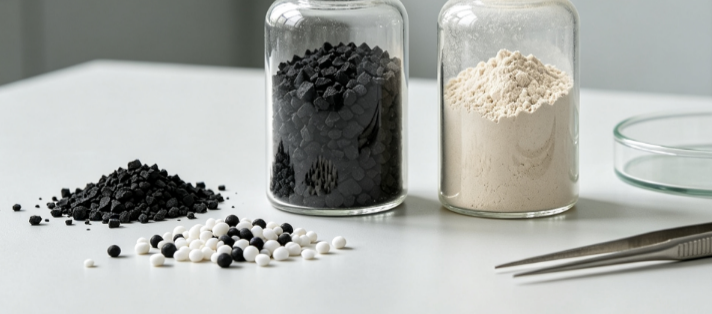
Why Comprehensive Testing Is Essential for Bone Char-Modified Activated Carbon
Clients seeking our analytical services typically aim to: (i) validate the successful incorporation of bone char into the activated carbon matrix, (ii) quantify the relative contributions of carbon vs. mineral phases to overall adsorption, (iii) optimize the pyrolysis or activation conditions to maximize synergistic effects, (iv) diagnose performance decline in aged or regenerated samples, (v) assess the leaching of calcium and phosphate ions under realistic water treatment conditions, or (vi) generate robust data for product registration and environmental risk assessment. Standard single-parameter assays are insufficient because the adsorption mechanisms on BC-AC are often cooperative and pH-dependent, requiring a combination of bulk compositional analysis, surface chemical speciation, textural characterization, and dynamic sorption studies. Our integrated testing platform provides a complete performance portrait – from the atomic-level coordination of calcium and phosphorus to macroscopic column breakthrough under competitive ion conditions.
Our Comprehensive Analytical Framework for BC-AC Materials
1. Bulk Composition, Mineralogy, and Carbon Structure
We begin with a thorough elemental and phase analysis. X-ray fluorescence (XRF) and inductively coupled plasma optical emission spectroscopy (ICP-OES) after microwave digestion quantify major (Ca, P, C, O) and trace (Fe, Mg, Na, K, Si) elements, achieving detection limits of 0.01 wt% for Ca and P. The mineralogical composition – particularly the crystallinity of hydroxyapatite (HAP) and any residual calcite or whitlockite – is determined by high-resolution powder X-ray diffraction (HR-XRD) with Rietveld refinement, capable of quantifying phase fractions down to 0.5 wt% and detecting lattice parameter changes as small as 0.003 Å. The carbonaceous structure is probed by Raman spectroscopy (D/G band ratio) and solid-state ¹³C CP/MAS NMR, providing the degree of graphitization and the relative abundance of aromatic vs. aliphatic carbons. We also perform Thermogravimetric Analysis (TGA) in air and nitrogen to differentiate the organic/moisture loss, carbon burn-off, and carbonate decomposition, yielding a precise mass balance of the composite.
2. Surface Chemistry and Functional Group Profiling
The surface of BC-AC is decorated with phosphate (PO₄³⁻), carbonate (CO₃²⁻), hydroxyl (OH), and carboxyl groups, all of which participate in contaminant binding. We employ a combination of Boehm titration (for acidic/basic sites) and potentiometric mass titration to determine the point of zero charge (pHPZC) with an accuracy of ±0.05 pH units. For direct speciation, we use X-ray photoelectron spectroscopy (XPS) with monochromatic Al Kα radiation, acquiring high-resolution spectra of C 1s, O 1s, Ca 2p, P 2p, and (where applicable) adsorbed contaminant core levels. Peak deconvolution distinguishes C–C, C–O, C=O, O–C=O, phosphate (P 2p at ~133.5 eV), and calcium phosphate species (Ca 2p at ~347 eV) with a precision of ±0.1 eV. Complementary diffuse reflectance infrared Fourier transform spectroscopy (DRIFTS) with in situ cell allows us to monitor the evolution of surface species during thermal or chemical treatments, identifying characteristic bands for HAP (PO₄³⁻ at 1040, 605 cm⁻¹) and carbonate substitution (CO₃²⁻ at 1450, 875 cm⁻¹).
3. Textural Properties and Pore Architecture
We measure N₂ physisorption at 77 K over a wide relative pressure range (10⁻⁷ to 0.995) to determine BET surface area (typical range: 200–1200 m²/g), total pore volume, and pore size distribution via NLDFT and QSDFT models, accounting for both carbon and mineral contributions. For macroporosity and interparticle voids, we perform mercury intrusion porosimetry up to 600 MPa, delivering pore throat distributions with a resolution of 0.003 μm. We also employ helium pycnometry to obtain true (skeletal) density and particle size analysis by laser diffraction, ensuring complete characterization from micropores to macropores. Our reproducibility for BET surface area is within ±1.5%, and pore volume within ±2%, ensuring reliable batch comparison.
4. Sorption Kinetics, Isotherms, and Thermodynamics
We conduct batch sorption experiments under strict temperature control (5–50 °C) using a range of target contaminants – including heavy metals (Pb, Cd, Cu), fluoride, and organic dyes (methylene blue, methyl orange). Residual concentrations are measured by graphite furnace AAS (detection limit: 0.1 μg/L for metals) or UV–Vis spectrophotometry (for dyes and fluoride by SPADNS method). We apply nonlinear regression to fit Langmuir, Freundlich, Sips, and Redlich–Peterson models, with model selection based on AICc and residual analysis. Kinetic data are fitted to pseudo-first-order, pseudo-second-order, and intraparticle diffusion models, with sampling intervals as short as 30 seconds for rapid initial uptake studies. Thermodynamic parameters (ΔG°, ΔH°, ΔS°) are derived from van't Hoff plots, providing insights into the spontaneity and heat of adsorption. Our fitting software delivers R² > 0.995 for most isotherms, and we report full confidence intervals for all parameters.
5. Dynamic Column and Competitive Adsorption Studies
For practical water treatment applications, we perform fixed-bed column experiments using glass columns (1–5 cm ID) packed with BC-AC and fed with synthetic or real groundwater at controlled flow rates (0.5–15 mL/min). Effluent is continuously monitored by online ICP-MS or ion chromatography, generating high-resolution breakthrough curves. We fit the data to Thomas, Yoon–Nelson, and modified dose-response models to estimate bed capacities and mass transfer coefficients. Importantly, we evaluate the competitive effects of co-existing ions (Ca²⁺, Mg²⁺, Cl⁻, SO₄²⁻, HCO₃⁻, and phosphate) at environmentally relevant concentrations, and we determine the selectivity sequence and column efficiency factors. This allows us to predict the performance of BC-AC in real water matrices, a critical step for scale-up and design.
6. Leaching Stability and Long-Term Durability
A key concern with mineral-containing composites is the potential release of calcium and phosphate, which can foul downstream processes or alter water chemistry. We conduct leaching tests under both static (batch) and dynamic (column) conditions at pH 4–10, monitoring Ca, P, and other trace elements by ICP-OES at regular intervals (1–30 days). We also perform accelerated aging at elevated temperatures (40–70 °C) and in the presence of common oxidants (chlorine, ozone) to assess the chemical stability of the HAP phase and the carbon matrix. Post-aging characterization via XRD and FTIR quantifies any phase transformation or loss of surface functionality, providing a durability index that predicts the service life of the material under aggressive conditions.
7. Post-Adsorption Speciation and Contaminant Immobilization
To confirm the sequestration mechanism, we perform X-ray absorption spectroscopy (XAS) at synchrotron facilities – both XANES and EXAFS – for adsorbed heavy metals (e.g., Pb LIII-edge, Cd K-edge). This provides bond distances (accuracy ±0.02 Å), coordination numbers, and evidence of inner-sphere complexation or precipitation as metal-phosphates. We complement this with sequential extraction schemes (modified Tessier or BCR) to fractionate the immobilized contaminant into exchangeable, reducible, oxidizable, and residual pools, directly informing the long-term stability and bioavailability of the adsorbed species. These advanced speciation data are rarely offered by commercial testing labs, and they provide mechanistic clarity essential for environmental risk assessment and regulatory submissions.
Our Distinctive Advantages in Bone Char-Modified Activated Carbon Testing
1. Integrated Multi-Technique Platform with Synchrotron Access: We uniquely combine routine physicochemical characterization (XRD, XPS, BET, TGA) with advanced synchrotron-based XAS and high-resolution solid-state NMR in a coordinated workflow. This enables us to correlate, for example, the phase composition (XRD) with the surface phosphate speciation (XPS) and the metal coordination environment (EXAFS), producing a coherent mechanistic model of contaminant binding. Our access to multiple synchrotron beamlines (ESRF, APS, and Soleil) ensures rapid data collection and reduced lead times for clients.
2. Handling of Heterogeneous and Mineral-Rich Composites: Bone char-modified carbons are notoriously challenging due to their high ash content, variable magnetic susceptibility, and propensity for ion exchange during sample preparation. We have developed proprietary demineralization protocols (low-temperature ashing, selective dissolution) and cryo-milling techniques to produce homogeneous, representative sub-samples without altering the surface chemistry. Our methods yield repeatability better than 2% RSD for elemental and surface area measurements, even for samples with >50 wt% mineral content.
3. Predictive Modeling and Process Optimization: Beyond experimental data, we employ surface complexation modeling (SCM) using the CD-MUSIC approach to predict adsorption as a function of pH, ionic strength, and competing ions, calibrated with our own spectroscopic and titration data. We also develop machine-learning models (random forest, XGBoost) that correlate synthesis parameters (pyrolysis temperature, bone char-to-carbon ratio, activation time) with key performance indicators (uptake capacity, leaching propensity), enabling clients to virtually screen formulations before committing to costly trials. This predictive capability has been validated with internal databases of over 200 BC-AC variants.
4. Regulatory-Ready Quality and Full Traceability: Our laboratory is accredited under ISO/IEC 17025:2017 for key parameters including metal analysis (AAS, ICP-OES), pH, BET surface area, and XRD phase identification. We use NIST-traceable reference materials (e.g., NIST SRM 1400 for bone ash, 3128 for Pb) and participate in international proficiency testing (e.g., WEPAL). All uncertainties are reported with expanded uncertainties (k=2) typically <5% for sorption capacities, making our data defensible in patent filings, product registrations, and peer-reviewed publications.
5. Consultative Expertise and Collaborative Support: Each project is led by a senior materials chemist with at least 12 years of experience in carbon-mineral composites. We provide comprehensive interpretative reports that include mechanistic diagrams, comparative benchmarking against commercial reference materials (e.g., pure HAP, commercial activated carbon, and bone char alone), and actionable recommendations for synthesis optimization (e.g., adjustment of Ca/P ratio, post-treatment acid washing to enhance surface area). We also offer co-authorship support and draft the materials and methods sections in compliance with leading journals (e.g., Carbon, Journal of Hazardous Materials, Water Research), accelerating your publication timeline.
Deliverables That Empower R&D and Quality Control
Our final comprehensive report includes: (a) complete elemental and phase composition tables; (b) annotated XRD, Raman, and XPS spectra with deconvoluted peaks; (c) N₂ adsorption-desorption isotherms and pore size distribution curves; (d) kinetic and isotherm plots with fitted parameters and confidence intervals; (e) column breakthrough curves and model-derived constants; (f) leaching profiles and durability indices; (g) XAS-derived structural parameters for adsorbed contaminants; (h) a performance benchmark against at least three reference materials from our in-house database; (i) a process optimization report with recommended synthesis parameters and operating conditions; and (j) a risk assessment summary regarding mineral leaching and contaminant remobilization. All raw data (spectral files, chromatograms, titration logs) are provided in open, machine-readable formats (CIF, JCAMP-DX, .csv, .mzML) for independent verification and future meta-analysis.
We also offer periodic re-evaluation services for long-term quality assurance, tracking batch-to-batch variability and performance drift over time. For research-intensive projects, we provide dedicated scientific consultations and on-demand data re-analysis, ensuring that our insights remain relevant throughout your product development cycle.
Conclusion: Precision Analytics for Next-Generation Hybrid Adsorbents
Bone char-modified activated carbon represents a promising class of multifunctional adsorbents, but its full potential can only be realized through a comprehensive understanding of its intricate structure–performance relationships. Our testing service delivers exactly that – a multi-scale, mechanistic, and predictive characterization that bridges the gap between material synthesis and real-world water treatment. By integrating advanced spectroscopy, high-resolution imaging, dynamic column testing, and state-of-the-art modeling, we empower clients to develop, optimize, and validate their BC-AC products with scientific rigor. Contact our expert team today to design a customized testing protocol – we transform complex analytical challenges into actionable knowledge, ensuring your bone char-modified carbon meets the highest standards of efficacy, stability, and safety.