Reasons for choosing our testing services
ZHONGXI Testing has obtained inspection qualification certifications from multiple countries and regions worldwide. We possess a senior testing team and advanced testing methods, providing independent, impartial, and professional third-party verification services for global carbon projects.

Internationally recognized authority
Certified by multiple international standards such as CNAS, VCS, and GS, with reports universally applicable worldwide.

Global service capability
Covering 140+ countries and regions, it supports on-site detection and remote verification in multiple languages.

Professional experimental methods
Adopt standard experimental methods to ensure accurate and reliable data.
Comprehensive Coating Testing Services – Advanced Analytical Solutions for Performance, Compliance, and Durability
Coatings are far more than decorative layers; they serve as critical functional barriers that protect substrates from corrosion, abrasion, chemicals, and environmental degradation. Whether applied to automotive bodies, aerospace components, architectural steel, marine structures, or consumer electronics, the performance of a coating determines the lifespan, safety, and aesthetic quality of the underlying product. Clients seeking coating testing services typically aim to: (i) verify that formulations meet performance specifications and international standards such as ISO, ASTM, DIN, and GB/T, (ii) ensure compliance with environmental and safety regulations including VOC limits, heavy metal restrictions, and REACH, (iii) troubleshoot failures such as premature cracking, delamination, color fading, or corrosion, (iv) qualify new suppliers and monitor batch-to-batch consistency, and (v) generate comprehensive test reports for product certification, customer audits, and regulatory submissions. Our laboratory offers a fully integrated, ISO/IEC 17025‑accredited coating testing service that combines physical, mechanical, chemical, optical, and durability testing with advanced instrumental analysis into a unified assessment platform. We do not merely report pass/fail results; we deliver a holistic coating quality fingerprint that correlates formulation chemistry, application parameters, and curing conditions with real‑world performance, empowering our clients to accelerate development, reduce failures, and achieve regulatory compliance with confidence.
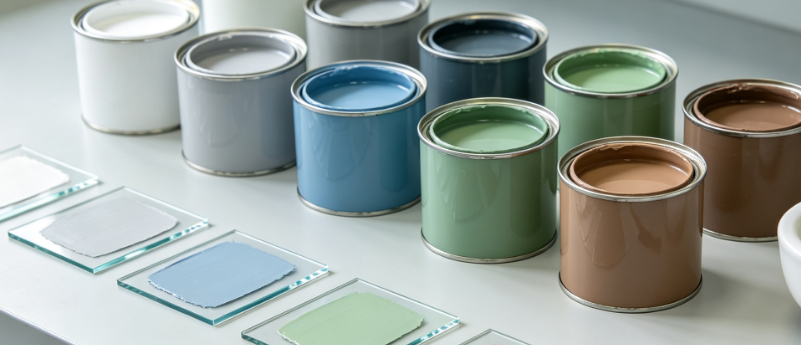
Physical and Mechanical Properties – Adhesion, Hardness, Flexibility, and impact resistance
The mechanical integrity of a coating is fundamental to its protective function. Our laboratory performs a comprehensive suite of mechanical tests, including adhesion by cross‑cut tape (ASTM D3359), pull‑off (ASTM D4541, ISO 4624), and scrape adhesion (ASTM D2197). We measure hardness using pencil hardness (ASTM D3363), Persoz and König pendulum hardness (ISO 1522), and Buchholz indentation (ISO 2815). Flexibility and elongation are assessed via mandrel bend (ASTM D522, ISO 1519), conical mandrel (ASTM D522), and tensile testing of free films (ASTM D2370). impact resistance is evaluated using falling weight (ASTM D2794, ISO 6272) and Gardner impact testers. We also determine abrasion resistance with Taber (ASTM D4060) and falling sand (ASTM D968) methods, and scratch resistance using the crockmeter and nano‑scratch techniques. All tests are conducted under controlled temperature and humidity (23 ± 2 °C, 50 ± 5% RH) to ensure reproducibility, and results are reported with statistical confidence intervals.
Chemical Resistance and Corrosion Protection – Salt Spray, Immersion, and Electrochemical Impedance
For coatings exposed to aggressive environments, chemical resistance and corrosion protection are paramount. We perform salt spray testing (ASTM B117, ISO 9227) for up to 2,000 hours, with periodic evaluation of blistering, rusting, and adhesion loss according to ASTM D1654 and D714. Immersion testing in acids, alkalis, solvents, and fuels (ASTM D1308, ISO 2812) assesses resistance to specific chemical agents. We also conduct humidity resistance (ASTM D2247, ISO 6270) and water immersion (ASTM D870) tests. For a more mechanistic understanding, we employ electrochemical impedance spectroscopy (EIS) (ASTM G106, ISO 16773) to quantify coating capacitance, pore resistance, and barrier properties, providing early detection of degradation before visible failure. Cathodic disbondment (ASTM G8, G42, G95) is evaluated for pipeline and marine coatings. Our corrosion testing capabilities are complemented by cyclic corrosion testing (ASTM G85, SAE J2334) that simulates real‑world alternating wet‑dry conditions.
Optical Properties and Appearance – Color, Gloss, Hiding Power, and Weathering
The aesthetic and optical performance of coatings is critical for consumer acceptance and brand identity. We measure color using spectrophotometers (CIE L*a*b*, ΔE*) under multiple illuminants (D65, A, F11) and geometries (45/0, d/8, multi‑angle for metallic finishes). Gloss is determined at 20°, 60°, and 85° geometries (ASTM D523, ISO 2813), and hiding power (contrast ratio) is measured according to ASTM D2805 and ISO 6504‑1. We also assess distinctness of image (DOI) and orange peel using wave‑scan instruments (ASTM D5767). For exterior coatings, color stability and gloss retention after accelerated weathering are evaluated to predict long‑term appearance. Our laboratory also offers fluorescence and phosphorescence measurements for specialty coatings, as well as spectral reflectance for solar‑reflective and cool‑roof coatings (ASTM C1549, E903).
Environmental and Regulatory Compliance – VOC, Heavy Metals, and Hazardous Substances
Coatings are subject to increasingly stringent environmental regulations worldwide. Our chemical compliance testing covers volatile organic compounds (VOC) by EPA Method 24, ISO 11890‑1/2, and ASTM D2369, with detection limits down to 1 g/L. We quantify heavy metals (Pb, Cd, Cr VI, Hg, As, Ba, Se, Sb) using ICP‑MS and ICP‑OES (ASTM D3335, EPA 6010/6020, CPSC‑CH‑E1001‑09.3). Formaldehyde is measured by ASTM D1979 and ISO 11402, and phthalates by GC‑MS (ASTM D7083, CPSC‑CH‑C1001‑09.3). We also test for polycyclic aromatic hydrocarbons (PAHs) (ISO 18287), organotin compounds (ISO 17353), alkylphenol ethoxylates (APEOs) (ISO 18254), and perfluorinated compounds (PFCs) (ISO 25101). Additionally, we offer RoHS and REACH SVHC screening, and halogen‑free verification. All analyses are performed on state‑of‑the‑art instrumentation (GC‑MS, LC‑MS/MS, ICP‑MS, UV‑Vis) with full method validation and NIST‑traceable calibration.
Accelerated Weathering and Durability Testing – QUV, Xenon‑Arc, and Natural Exposure
Long‑term durability is a key performance indicator for exterior coatings. We operate a suite of accelerated weathering chambers, including QUV (ASTM G154, ISO 4892‑3) with UVA‑340 and UVB‑313 lamps, xenon‑arc (ASTM G155, ISO 4892‑2) with controlled irradiance, temperature, and humidity, and carbon‑arc (ASTM G153). We monitor color change (ΔE), gloss loss, chalking, cracking, and blistering at regular intervals, and we provide correlation studies with natural exposure sites in Florida and Arizona (ASTM G7, G24). For automotive coatings, we perform weathering per SAE J2527 and J2412, and for architectural coatings per ASTM D6695. Our data analysis includes degradation kinetics modeling to predict service life under specific environmental conditions, enabling clients to make informed warranty decisions.
Advanced Instrumental Analysis – FTIR, GC‑MS, HPLC, ICP‑MS, and SEM
To diagnose failures and reverse‑engineer competitor formulations, we offer a comprehensive suite of instrumental analysis techniques. Fourier‑transform infrared spectroscopy (FTIR) identifies functional groups and polymer backbones. Pyrolysis GC‑MS provides detailed compositional information on resins, plasticizers, and additives. High‑performance liquid chromatography (HPLC) quantifies UV absorbers, antioxidants, and biocides. ICP‑MS measures trace metals and pigments. Scanning electron microscopy (SEM) with EDS examines surface morphology, cross‑sectional structure, and elemental distribution at the microscale. Thermal analysis (DSC, TGA) characterizes curing behavior, glass transition temperature, and thermal stability. Dynamic mechanical analysis (DMA) evaluates viscoelastic properties. These techniques allow us to identify the root cause of failures such as poor adhesion, phase separation, or inadequate cure, and to recommend corrective actions at the formulation or process level.
Our Distinctive Competencies – Accreditation, Expertise, and Client Partnership
What sets our coating testing service apart is the seamless integration of physical, chemical, and durability testing within a single laboratory, enabling correlative interpretation that is impossible when samples are shipped between multiple vendors. Our team comprises PhD‑level polymer scientists, chemists, and materials engineers with extensive experience in coating formulation, application, and failure analysis. We do not simply report numbers; we interpret them in terms of formulation chemistry, substrate preparation, application parameters, and curing conditions – for example, distinguishing between adhesion failure due to surface contamination versus insufficient cure, or identifying the root cause of color fade as pigment degradation versus binder chalking.
Our laboratory is ISO/IEC 17025 accredited for a wide range of coating test methods, and we are recognized by major certification bodies and industry associations. We maintain NIST‑traceable calibrations for all equipment and participate in international proficiency testing programs (e.g., ASTM, ISO, SSPC) to ensure global comparability. We offer rapid turnaround – typically 3–7 business days for standard testing packages, with expedited options available – and we accept samples in various forms: liquid coatings, drawn‑down films, free films, and coated panels. Our data analytics platform employs statistical process control and machine learning to identify trends and anomalies across batches, helping clients monitor supplier quality and optimize their own production.
We also provide custom test plans for novel coating technologies (e.g., waterborne, powder, UV‑curable, high‑solid, nano‑coatings) and for specific end‑use requirements (e.g., automotive, aerospace, marine, architectural, electronic). Our consulting services include material selection, certification strategy, and failure analysis with root‑cause determination. We offer pre‑submission reviews of technical dossiers to ensure that all required data are complete and compliant with the target market regulations.
Comprehensive Service Modules – Tailored to Your Application
We organize our testing into modular packages to meet diverse client objectives:
Module 1 – Basic Physical and Mechanical Properties: Adhesion, hardness, flexibility, impact, abrasion, and scratch resistance – essential for incoming material inspection and quality control.
Module 2 – Chemical and Corrosion Resistance: Salt spray, immersion, humidity, EIS, and cathodic disbondment – for protective and marine coatings.
Module 3 – Optical and Appearance Properties: Color, gloss, hiding power, DOI, and orange peel – for aesthetic and decorative coatings.
Module 4 – Environmental and Regulatory Compliance: VOC, heavy metals, phthalates, PAHs, APEOs, and PFCs – for REACH, RoHS, and CPSIA compliance.
Module 5 – Accelerated Weathering and Durability: QUV, xenon‑arc, carbon‑arc, and cyclic corrosion – for exterior and automotive coatings.
Module 6 – Advanced Instrumental Analysis: FTIR, GC‑MS, HPLC, ICP‑MS, SEM‑EDS, DSC, TGA, and DMA – for failure analysis and formulation reverse‑engineering.
Module 7 – Comprehensive Coating Qualification Package: All modules combined into a single project, with integrated analysis, statistical summary, and a detailed interpretive report – suitable for product release, supplier audits, or regulatory submissions.
We also offer on‑site sampling and custom test design for unique coatings or applications, including high‑temperature, cryogenic, or nuclear environments.
Data Integrity, Security, and Reporting
All measurements are performed under strict SOPs, with fully traceable calibration records and environmental logging. Our Laboratory Information Management System (LIMS) records every operation, operator, and timestamp, ensuring full auditability. We use encrypted data transfer and role‑based access to protect client proprietary information. Our reports include comprehensive tables, graphs, uncertainty statements, and an executive summary that translates technical findings into actionable insights. Raw data files are available upon request. A post‑delivery review meeting is included to discuss results and recommend next steps.
Client Engagement and Workflow
Our engagement begins with a complimentary consultation to understand your coating type, substrate, application method, intended service environment, and specific concerns (e.g., premature failure, color drift, or regulatory compliance). We then propose a tailored test plan with a fixed price and timeline. Upon sample receipt, we log and inspect the samples, then commence testing. Clients receive progressive updates through a secure portal, with preliminary data shared on request. The final report is delivered in PDF format, and we offer a follow‑up call to discuss the findings and their implications for your product development or quality assurance.
Conclusion – Ensuring Coating Performance from Formulation to Field
Coatings are critical to the durability, safety, and aesthetics of countless products, and their reliable performance depends on rigorous, multidimensional testing that goes beyond simple visual inspection. Our comprehensive, ISO‑accredited testing service provides exactly that – a one‑stop solution that combines physical, chemical, optical, and durability analyses into a unified, interpretable picture. With our advanced instrumentation, deep materials expertise, and client‑centric approach, we empower our clients to verify compliance, prevent costly failures, and confidently bring high‑performance coatings to market. Whether you are developing a new formulation, qualifying a supplier, or investigating a field failure, our service delivers the clarity and confidence you need to succeed.
We invite you to contact our coating testing specialists to discuss your specific requirements. Let us partner with you to ensure that your coatings meet the highest standards of quality, durability, and environmental compliance – from the laboratory to the final application. Your journey to coating excellence begins with our rigorous, integrative, and actionable testing.