Reasons for choosing our testing services
ZHONGXI Testing has obtained inspection qualification certifications from multiple countries and regions worldwide. We possess a senior testing team and advanced testing methods, providing independent, impartial, and professional third-party verification services for global carbon projects.

Internationally recognized authority
Certified by multiple international standards such as CNAS, VCS, and GS, with reports universally applicable worldwide.

Global service capability
Covering 140+ countries and regions, it supports on-site detection and remote verification in multiple languages.

Professional experimental methods
Adopt standard experimental methods to ensure accurate and reliable data.
Advanced Antinuclear Antibody (ANA) Testing Services: Precision Diagnostics for Autoimmune Disease Evaluation
Antinuclear antibodies (ANA) constitute a heterogeneous group of autoantibodies directed against nuclear and, in some cases, cytoplasmic antigens. Their presence represents a hallmark serological feature of systemic autoimmune rheumatic diseases (SARD), including systemic lupus erythematosus (SLE), Sjögren's syndrome, systemic sclerosis (SSc), mixed connective tissue disease (MCTD), and autoimmune hepatitis, among others. Because ANA can precede clinical manifestation by years and may be detected in a substantial proportion of apparently healthy individuals, particularly at low titers, accurate detection and interpretation require rigorous methodology and contextual clinical correlation. ANA testing therefore occupies a central position in the diagnostic algorithm for autoimmune disease, serving as a screening gateway that informs subsequent antigen-specific confirmation and specialist referral.
Why Clients Commission Antinuclear Antibody Testing
Clients seek ANA testing for several clinically and scientifically grounded reasons. Diagnostic evaluation of patients presenting with suggestive symptoms — including arthralgia, myalgia, photosensitive rash, oral ulcers, Raynaud's phenomenon, serositis, cytopenias, or unexplained fever — relies on ANA as a first-line serological screen. Differential diagnosis benefits from ANA testing to distinguish systemic autoimmune conditions from organ-specific autoimmunity, infectious mimics, drug-induced syndromes, and malignancy-associated phenomena. Classification criteria for diseases such as SLE (EULAR/ACR 2019) and SSc (ACR/EULAR 2013) incorporate ANA positivity as an entry criterion or domain element, making reliable detection essential for formal diagnosis. Disease monitoring and prognostication utilize ANA and its antigen-specific subcomponents to track disease activity, predict organ involvement, and guide therapeutic escalation. Finally, research and clinical trials depend on standardized ANA determination for cohort stratification, endpoint definition, and biomarker discovery.
Our Antinuclear Antibody Testing Capabilities: From Screening to Antigen-Specific Resolution
We provide comprehensive ANA testing services spanning screening assays, titer determination, pattern recognition, and antigen-specific confirmation. Our analytical portfolio includes, but is not limited to:
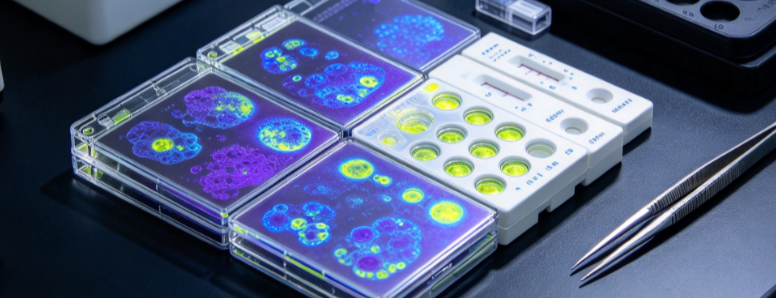
Indirect immunofluorescence (IIF) on HEp-2 cells — the reference standard for ANA screening, performed on HEp-2000 substrate with enhanced sensitivity for anti-SSA/Ro and other clinically significant reactivities. We report endpoint titers (e.g., 1:80, 1:160, 1:320, 1:640, 1:1280, and beyond) and international consensus patterns as defined by the International Consensus on ANA Patterns (ICAP), including nuclear homogeneous, speckled, centromere, nucleolar, nuclear dots, nuclear envelope, and cytoplasmic patterns.
Antigen-specific immunoassays — including ELISA, chemiluminescent immunoassay (CLIA), multiplex bead-based assays, and line immunoassays (LIA) for antibodies to dsDNA, ssDNA, Sm, RNP/Sm, Ro/SSA (60 kDa and 52 kDa), La/SSB, Scl-70, Jo-1, ribosomal P, PCNA, centromere protein B (CENP-B), RNA polymerase III, fibrillarin, PM/Scl, Mi-2, TIF1-gamma, and other myositis-specific and myositis-associated antibodies.
Complementary autoantibody panels — including anti-dsDNA (by Crithidia luciliae IIF and Farr assay where applicable), anti-phospholipid antibodies, anti-neutrophil cytoplasmic antibodies (ANCA), and rheumatoid factor, supporting comprehensive autoimmune serological profiling.
Our laboratories employ automated IIF platforms with digital image acquisition and computer-aided pattern recognition, complemented by multiplex immunoassays capable of simultaneous quantification of more than 20 autoantibody specificities in a single specimen. This integrated approach enables semi-quantitative to quantitative resolution across the full dynamic range of clinical relevance, with analytical sensitivity extending to sub-Unit/mL concentrations for high-affinity autoantibodies.
Methodological Depth and Analytical Rigor
Our testing protocols are anchored in ISO 15189-accredited medical laboratory quality management systems, ensuring metrological traceability, reproducibility, and international acceptance. We participate in external quality assessment (EQA) schemes, including those administered by the College of American Pathologists (CAP) and UK NEQAS, consistently achieving satisfactory performance across IIF, ELISA, and multiplex platforms.
Our IIF workflows adhere to ICAP guidelines for pattern nomenclature and reporting, with titer-to-cutoff ratios calibrated against WHO international reference preparations where available. For antigen-specific assays, we employ calibrators traceable to international standards, and we validate each lot for precision (intra- and inter-assay CV typically below 10%), linearity, limit of quantification, and interference resistance against rheumatoid factor, heterophile antibodies, and high-dose hook effects. Where discordance arises between screening and confirmatory methods, we apply orthogonal testing strategies and provide interpretive commentary grounded in current EULAR, ACR, and ICAP recommendations.
For research applications, we offer custom multiplex panel design, autoantibody isotype and subclass profiling, avidity assessment, and longitudinal serological monitoring with centralized data management. Our mass spectrometry-based approaches, including immunoprecipitation coupled to LC-MS/MS, enable discovery-phase antigen identification for novel or uncharacterized autoantibody specificities.
Our Competitive Advantages in Antinuclear Antibody Testing
1. Reference-Standard IIF with Digital Pattern Recognition: Our HEp-2 IIF platform, combined with computer-aided pattern classification, delivers objective, reproducible, and ICAP-compliant pattern reporting that reduces inter-reader variability and enhances diagnostic consistency.
2. Comprehensive Antigen-Specific Resolution: With multiplex panels covering more than 20 autoantibody specificities, we provide a single-source solution for screening, confirmation, and disease-specific profiling, eliminating the need for sequential send-outs.
3. Quantitative and Semi-Quantitative Reporting: We deliver endpoint titers for IIF and quantitative values for antigen-specific assays, enabling clinicians to track disease activity and treatment response over time.
4. Expert Interpretive Support: Our reports include pattern descriptions, titer significance, antigen-specific correlations, and clinical context notes, developed by board-certified immunologists and rheumatology-oriented laboratory specialists.
5. Rapid Turnaround and Scalability: Standard turnaround is 2–4 business days for screening and 3–5 business days for comprehensive panels, with expedited options available. Automated platforms ensure consistent high-volume capacity without compromising analytical quality.
6. Research-Grade Customization: For clinical trials, biomarker discovery, and translational research, we offer bespoke assay development, validation, and longitudinal specimen banking with standardized pre-analytical handling.
7. Integrated Autoimmune Serology: Beyond ANA, we provide complementary testing for ANCA, anti-phospholipid antibodies, celiac-related autoantibodies, and organ-specific autoantibodies, supporting comprehensive autoimmune diagnostic workups from a single laboratory partner.
Applications Across Clinical and Research Settings
Our ANA testing services support a diverse range of clients, including rheumatologists, immunologists, nephrologists, dermatologists, hepatologists, primary care physicians, clinical research organizations, pharmaceutical sponsors, and academic investigators. Whether for initial diagnostic evaluation, classification criteria fulfillment, disease activity monitoring, or biomarker-driven research, we deliver data that is analytically robust, clinically contextualized, and directly actionable for patient management and scientific inquiry.
Conclusion
Antinuclear antibody testing remains a cornerstone of autoimmune disease diagnosis and management. Its clinical utility depends not only on analytical sensitivity but also on methodological standardization, pattern accuracy, and interpretive expertise. With our reference-standard IIF platform, comprehensive antigen-specific panels, and rigorous quality framework, we empower clinicians and researchers to reach timely, accurate, and defensible conclusions. For ANA testing that meets the highest standards of diagnostic precision and clinical relevance, our laboratory is your trusted partner.