Reasons for choosing our testing services
ZHONGXI Testing has obtained inspection qualification certifications from multiple countries and regions worldwide. We possess a senior testing team and advanced testing methods, providing independent, impartial, and professional third-party verification services for global carbon projects.

Internationally recognized authority
Certified by multiple international standards such as CNAS, VCS, and GS, with reports universally applicable worldwide.

Global service capability
Covering 140+ countries and regions, it supports on-site detection and remote verification in multiple languages.

Professional experimental methods
Adopt standard experimental methods to ensure accurate and reliable data.
Advanced Biofilm Formation Testing Services: Quantitative Assessment of Microbial Adherence, Architecture, and Antimicrobial Tolerance
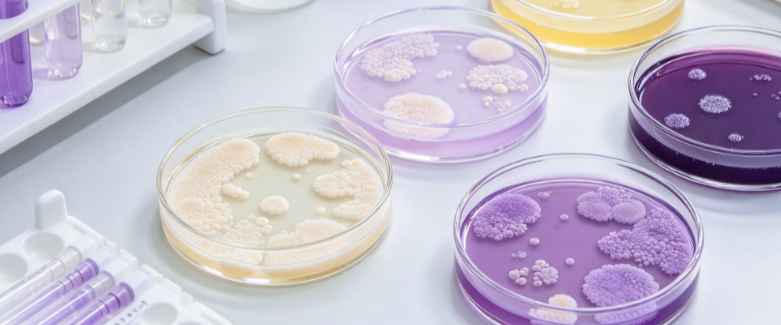
Biofilms are structured microbial communities encased in a self-produced extracellular polymeric substance (EPS) matrix composed of polysaccharides, proteins, extracellular DNA, and lipids. Unlike planktonic cells, biofilm-resident microorganisms exhibit profoundly altered physiology, including reduced metabolic activity, enhanced expression of efflux pumps, and upregulated stress responses, which collectively confer tolerance to antimicrobial agents at concentrations 10 to 1000 times higher than those effective against planktonic counterparts. Biofilm formation is now recognized as a central virulence determinant in chronic and device-associated infections, including catheter-associated urinary tract infections, ventilator-associated pneumonia, prosthetic joint infections, endocarditis, chronic wounds, and dental caries. Beyond clinical microbiology, biofilm formation carries substantial economic and regulatory significance in food processing, water distribution systems, marine biofouling, and industrial biofouling. Reliable biofilm testing therefore serves as an essential analytical function for antimicrobial development, infection control, material qualification, and hygiene validation.
Why Clients Commission Biofilm Formation Testing
Clients seek biofilm formation testing for several distinct yet interconnected purposes. Antimicrobial and anti-biofilm drug development requires quantitative efficacy data against biofilm-embedded microorganisms, since conventional minimum inhibitory concentration (MIC) testing against planktonic cells systematically overestimates clinical efficacy. Minimum biofilm eradication concentration (MBEC) determination establishes the drug concentration required to eradicate established biofilms, informing dosing strategies for chronic infections. Medical device and biomaterial qualification demands assessment of biofilm formation on surfaces such as catheters, implants, wound dressings, and prosthetics, supporting regulatory submissions under ISO 10993 and FDA guidance. Infection control and hygiene validation in healthcare, food processing, and pharmaceutical manufacturing relies on biofilm testing to verify disinfectant efficacy, cleaning protocols, and sanitization procedures. Environmental and industrial monitoring assesses biofilm formation in cooling towers, pipelines, membrane systems, and water distribution networks, where biofouling compromises efficiency and creates reservoirs for pathogens such as Legionella and Pseudomonas aeruginosa. Research applications spanning microbiology, genetics, quorum sensing, and host-pathogen interaction utilize biofilm assays for mechanistic investigation and virulence factor characterization.
Our Biofilm Formation Testing Capabilities: From Static Quantification to Dynamic Flow Modeling
We provide comprehensive biofilm testing services spanning static and dynamic biofilm formation assays, architectural characterization, antimicrobial susceptibility testing, and mechanistic interrogation. Our analytical portfolio includes, but is not limited to:
Static biofilm formation assays — including crystal violet staining for total biomass quantification, MTT and XTT metabolic activity assays, resazurin reduction assays, and Calgary biofilm device (CBD) assays for reproducible, high-throughput screening across multiple strains and conditions.
Minimum biofilm eradication concentration (MBEC) determination — including the MBEC assay (Calgary biofilm device-based) and minimum biofilm inhibitory concentration (MBIC) testing against bacterial and fungal biofilms, with comparison to planktonic MIC values to quantify biofilm-specific tolerance.
Dynamic flow biofilm models — including flow cell systems with confocal microscopy, robin device, drip flow reactors, and CDC biofilm reactor, enabling biofilm growth under continuous flow conditions that more accurately simulate physiological shear stress and nutrient gradients.
Biofilm architectural and compositional characterization — including confocal laser scanning microscopy (CLSM) with live/dead staining, COMSTAT and IMARIS image analysis for biomass, thickness, surface coverage, and roughness, EPS component staining (polysaccharides by ConA/FITC, proteins by SYPRO Ruby, eDNA by TOTO-1), and 3D structural reconstruction.
Species identification and biofilm-forming capacity profiling — including 16S rRNA sequencing, MALDI-TOF MS identification, and clonal typing of clinical and environmental isolates, combined with quantitative biofilm formation phenotyping.
Antimicrobial and anti-biofilm susceptibility testing — including antibiotic, antiseptic, and disinfectant efficacy testing against established biofilms, combination therapy synergy assessment, time-kill kinetics, and regrowth monitoring.
Quorum sensing and virulence factor modulation assays — including autoinducer quantification (AI-1, AI-2, AHLs), quorum sensing reporter strain assays, motility assays (swimming, swarming, twitching), and virulence factor expression analysis.
Material and surface biofilm formation assays — including medical device, catheter, implant, and wound dressing surfaces, with evaluation of surface chemistry, topography, and coating effects on biofilm formation.
In situ and ex vivo biofilm models — including ex vivo tissue explant models, 3D tissue-engineered infection models, and host cell-biofilm co-culture systems for translational relevance.
Antifungal biofilm testing — including Candida albicans, Candida auris, Aspergillus fumigatus, and Cryptococcus neoformans biofilm formation and Antifungal susceptibility testing.
Our laboratories employ confocal laser scanning microscopy, high-content imaging systems, automated plate readers, flow cytometry, LC-MS/MS for quorum sensing molecule quantification, MALDI-TOF MS, and next-generation sequencing. These platforms enable quantitative biomass and metabolic activity determination, 3D architectural reconstruction, single-cell resolution within biofilms, and MBEC determination across broad concentration ranges.
Methodological Depth and Analytical Rigor
Our testing protocols are anchored in ISO/IEC 17025-accredited quality management systems and align with Clinical and Laboratory Standards Institute (CLSI) and European Committee on Antimicrobial Susceptibility Testing (EUCAST) guidance where applicable. We perform rigorous assay validation evaluating sensitivity, specificity, linearity, precision, accuracy, and robustness for each biofilm model. For bacterial and fungal strains, we enforce strict culture condition standardization, passage number control, and species confirmation by MALDI-TOF MS or sequencing to ensure data integrity.
Our static biofilm assays utilize certified reference strains (e.g., Pseudomonas aeruginosa ATCC 27853, Staphylococcus epidermidis ATCC 35984, Candida albicans ATCC 90028) as positive controls and biofilm-deficient mutants as negative controls in every run. For dynamic flow models, we monitor flow rate, shear stress, nutrient composition, and temperature to ensure reproducibility. For CLSM imaging, we employ multi-channel acquisition with Z-stack reconstruction and AI-driven image analysis to extract quantitative architectural parameters. For MBEC testing, we include planktonic MIC comparison and regrowth verification to confirm eradication rather than mere inhibition.
For research applications, we offer custom biofilm model development, mechanism-of-action studies, anti-biofilm compound screening, synergy assessment (Bliss independence, Loewe additivity), resistance development monitoring, and longitudinal biofilm stability assessment. Our mass spectrometry-based approaches enable quorum sensing molecule profiling, EPS compositional analysis, and metabolite identification following antimicrobial exposure.
Our Competitive Advantages in Biofilm Formation Testing
1. Integrated Static and Dynamic Biofilm Models: We combine high-throughput static assays with physiologically relevant dynamic flow systems, enabling direct correlation of screening results with more predictive flow-based outcomes.
2. Comprehensive Architectural Characterization: Beyond biomass quantification, we provide 3D structural reconstruction, EPS compositional analysis, and live/dead spatial mapping, enabling mechanistic understanding of biofilm organization and antimicrobial penetration.
3. MBEC and Biofilm-Specific Susceptibility Testing: Our MBEC assays establish the concentration required to eradicate established biofilms, providing clinically actionable data that conventional MIC testing cannot deliver.
4. Broad Spectrum of Microbial Coverage: Our portfolio spans gram-positive and gram-negative bacteria, mycobacteria, and fungi, including multidrug-resistant clinical isolates and biofilm-deficient mutant controls.
5. Medical Device and Material Expertise: We have validated methods for challenging surfaces including catheters, implants, wound dressings, and industrial pipeline materials, supporting regulatory submissions and product qualification.
6. Quorum Sensing and Virulence Interrogation: Beyond biofilm quantification, we provide quorum sensing molecule profiling, motility assessment, and virulence factor expression analysis, enabling identification of anti-virulence mechanisms.
7. Expert Interpretive Support: Our team includes microbiologists, infectious disease specialists, and bioengineers who provide not only analytical data but also contextual interpretation, MBEC-to-dose translation, and guidance on regulatory submissions.
8. Rapid Turnaround and Scalability: Standard turnaround is 5–10 business days for routine biofilm assays and 10–15 business days for comprehensive characterization packages, with expedited options available. Automated platforms ensure consistent high-volume capacity without compromising analytical quality.
9. Custom Research and Method Development: For clients with novel strains, specialized surfaces, or unique research objectives, we offer bespoke biofilm model development, validation, and technology transfer services, including high-throughput anti-biofilm screening campaigns and preclinical efficacy evaluation.
Applications Across Clinical, Industrial, and Research Settings
Our biofilm formation testing services support a diverse range of clients, including pharmaceutical and biotechnology companies, medical device manufacturers, contract research organizations, hospital infection control departments, food and beverage producers, water utilities, industrial hygiene consultancies, academic investigators, and regulatory agencies. Whether for antimicrobial development, device qualification, disinfectant validation, industrial biofouling assessment, or mechanistic research, we deliver data that is analytically rigorous, biologically contextualized, and directly actionable for product development, infection control, and scientific inquiry.
Conclusion
Biofilm formation represents one of the most consequential adaptations of microorganisms, with profound implications for clinical infection, antimicrobial resistance, and industrial biofouling. Its accurate assessment depends not only on analytical sensitivity but also on model selection, architectural characterization, and mechanistic depth. With our integrated static and dynamic biofilm platforms, comprehensive characterization capabilities, and deep microbiological domain knowledge, we empower clients to develop effective anti-biofilm strategies, qualify medical devices, validate disinfection protocols, and advance mechanistic understanding of microbial communities. For biofilm formation testing that meets the highest standards of precision and translational relevance, our laboratory is your trusted partner.