Reasons for choosing our testing services
ZHONGXI Testing has obtained inspection qualification certifications from multiple countries and regions worldwide. We possess a senior testing team and advanced testing methods, providing independent, impartial, and professional third-party verification services for global carbon projects.

Internationally recognized authority
Certified by multiple international standards such as CNAS, VCS, and GS, with reports universally applicable worldwide.

Global service capability
Covering 140+ countries and regions, it supports on-site detection and remote verification in multiple languages.

Professional experimental methods
Adopt standard experimental methods to ensure accurate and reliable data.
Advanced Hydroxypropyl Cellulose Ether Derivative Testing Services: Comprehensive Characterization for Pharmaceutical, Food, and Industrial Applications
Hydroxypropyl cellulose (HPC) and its ether derivatives, including hydroxypropyl methylcellulose (HPMC), hydroxyethyl cellulose (HEC), hydroxypropyl methylcellulose phthalate (HPMCP), hydroxypropyl methylcellulose acetate succinate (HPMCAS), and methylcellulose (MC), constitute a versatile class of water-soluble and organosoluble cellulose ethers widely employed as thickeners, binders, film formers, controlled-release matrices, stabilizers, emulsifiers, and encapsulation agents. Their functional performance is governed by a complex interplay of degree of substitution (DS), molar substitution (MS), molecular weight distribution, viscosity profile, particle size and morphology, residual substituent content, and purity profile. Because these parameters directly influence drug release kinetics, film mechanical properties, thermal gelation behavior, and sensory characteristics, comprehensive analytical characterization is indispensable for quality control, regulatory compliance, formulation development, and product performance optimization.
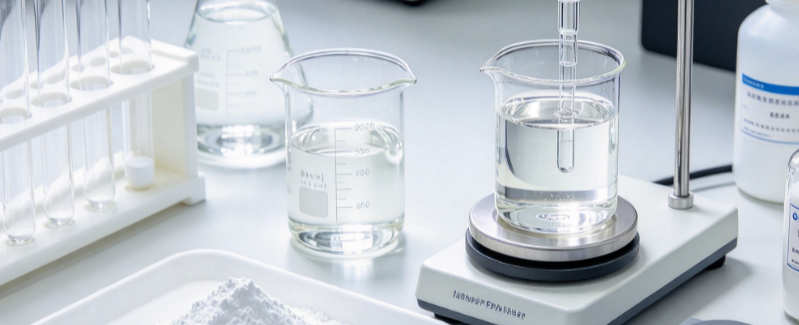
Why Clients Commission Hydroxypropyl Cellulose Ether Derivative Testing
Clients seek testing of HPC and related cellulose ether derivatives for several distinct yet interconnected purposes. Pharmacopeial compliance and regulatory submission require verification that materials meet United States Pharmacopeia (USP), European Pharmacopoeia (Ph. Eur.), Japanese Pharmacopoeia (JP), and Chinese Pharmacopoeia (ChP) monographs, including tests for degree of substitution, viscosity, pH, loss on drying, residue on ignition, heavy metals, and limit of hydroxypropoxy or methoxy content. Batch-to-batch consistency and incoming raw material qualification demand precise determination of substitution degree and molecular weight distribution, since these parameters govern drug release profiles, film formation, and thermal gelation temperature. Formulation development and optimization for controlled-release matrices, hot-melt extrusion, spray drying, and film coating relies on comprehensive characterization to predict performance and guide grade selection. Generic drug development and bioequivalence assessment requires detailed comparison of critical material attributes between test and reference products. Food and nutraceutical applications require verification of purity, residual solvents, and microbial limits consistent with Food Chemicals Codex (FCC) and JECFA specifications. Industrial applications including construction, ceramics, paints, and personal care demand characterization of viscosity, water retention, and thermal behavior. Problem-solving and failure investigation in cases of batch rejection, processing variability, or performance failure relies on detailed structural and physicochemical analysis.
Our Hydroxypropyl Cellulose Ether Derivative Testing Capabilities: From Structural Elucidation to Performance Prediction
We provide comprehensive testing services for HPC, HPMC, HEC, MC, HPMCP, HPMCAS, and related cellulose ether derivatives, spanning chemical identification, structural characterization, physicochemical property determination, and functional performance assessment. Our analytical portfolio includes, but is not limited to:
Degree of substitution and molar substitution determination — including Zeisel gas chromatography (GC) for methoxy and hydroxypropoxy content, nuclear magnetic resonance (NMR) spectroscopy for substituent distribution and regioselectivity, hyphenated GC-MS confirmation, and titrimetric and spectrophotometric methods per pharmacopeial monographs, with method precision below 1% relative standard deviation.
Molecular weight and molecular weight distribution — including high-performance size-exclusion chromatography coupled with multi-angle light scattering (HPSEC-MALS) for absolute molecular weight determination (Mw, Mn, Mz, and polydispersity index), viscometry-based molecular weight estimation, and asymmetric flow field-flow fractionation (AF4) for high-molecular-weight and aggregated species characterization.
Viscosity characterization — including Brookfield rotational viscometry, Ubbelohde and capillary viscometry, rheological profiling (shear thinning, thixotropy, yield stress), intrinsic viscosity determination, and temperature-dependent viscosity and thermal gelation profiling.
Particle size and morphology — including laser diffraction particle size analysis, dynamic image analysis, scanning electron microscopy (SEM), and atomic force microscopy (AFM) for surface topography and particle shape characterization.
Thermal analysis — including differential scanning calorimetry (DSC) for glass transition temperature (Tg), melting behavior, and thermal gelation, Thermogravimetric Analysis (TGA) for moisture and decomposition profiling, and dynamic mechanical analysis (DMA) for film mechanical properties.
Spectroscopic and crystallographic characterization — including Fourier-transform infrared spectroscopy (FT-IR), Raman spectroscopy, solid-state NMR (ssNMR), and X-ray diffraction (XRD) for crystallinity, polymorphism, and amorphous content assessment.
Purity and impurity profiling — including residual solvents by headspace GC-MS, heavy metals by ICP-MS, residual monomers and substituent reagents, chloride and sulfate content by ion chromatography, glycolate and succinate content for HPMCAS and HPMCP, and phthalyl content for HPMCP.
Moisture and water activity — including Karl Fischer titration, loss on drying, and dynamic vapor sorption (DVS) for hygroscopicity and moisture sorption isotherm determination.
Functional performance testing — including film formation and mechanical properties (tensile strength, elongation, elastic modulus), controlled-release matrix dissolution profiling, hot-melt extrusion processability, spray drying and spray granulation performance, water retention capacity, and gelation temperature determination.
Microbiological quality — including total aerobic microbial count (TAMC), total yeast and mold count (TYMC), and specified organism testing per pharmacopeial requirements.
Our laboratories employ HPSEC-MALS, NMR spectroscopy (1H, 13C, 2D), GC-MS and headspace GC-MS, ICP-MS, ion chromatography, rheometers, DSC/TGA/DMA, FT-IR and Raman, XRD, laser diffraction and dynamic image analysis, SEM and AFM, DVS, and dissolution testing platforms. These platforms enable absolute molecular weight determination, substituent distribution analysis at the monomer level, rheological profiling across wide shear and temperature ranges, and correlation of structural attributes with functional performance.
Methodological Depth and Analytical Rigor
Our testing protocols are anchored in ISO/IEC 17025-accredited quality management systems and align with ICH Q6A, ICH Q3C, ICH Q3D, and pharmacopeial general chapters. We perform rigorous method validation evaluating specificity, linearity, accuracy, precision, range, detection limit, quantitation limit, and robustness for each analytical procedure. For pharmacopeial compliance testing, we adhere strictly to USP, Ph. Eur., JP, and ChP monograph procedures, including system suitability requirements.
Our structural characterization workflows utilize certified reference standards and orthogonal analytical techniques to confirm substituent identity and degree. For molecular weight determination, we calibrate with narrow-dispersity pullulan or polyethylene oxide standards and validate with MALS absolute molecular weight determination, achieving molecular weight accuracy within 5% of true value. For NMR analysis, we employ quantitative 1H NMR with internal standards and 2D correlation spectroscopy (COSY, HSQC, HMBC) for complete structural assignment. For rheological characterization, we employ controlled-stress and controlled-rate rheometers with temperature control and solvent trap to ensure reproducibility.
For research and formulation development applications, we offer custom method development, structure-property relationship (SPR) investigations, excipient-excipient compatibility studies, forced degradation and stability studies, and correlation of material attributes with drug product performance. Our mass spectrometry-based approaches enable oligosaccharide sequencing, substituent distribution profiling along the polymer backbone, and impurity identification.
Our Competitive Advantages in Hydroxypropyl Cellulose Ether Derivative Testing
1. Comprehensive Pharmacopeial Compliance: We perform the full range of compendial tests for HPC, HPMC, HEC, MC, HPMCP, and HPMCAS, supporting regulatory submissions and batch release across all major markets.
2. Absolute Molecular Weight Determination: Our HPSEC-MALS platform provides absolute molecular weight and molecular weight distribution without reliance on column calibration, delivering accuracy that relative methods cannot achieve.
3. Substituent Distribution and Regioselectivity Analysis: Beyond bulk degree of substitution, we provide NMR-based determination of substituent distribution along the polymer backbone, enabling differentiation of materials with identical DS but different functional performance.
4. Structure-Property Correlation: We integrate structural characterization with functional performance testing, enabling direct correlation of molecular attributes with dissolution behavior, film properties, and thermal gelation characteristics.
5. Complex Formulation Expertise: We have validated methods for challenging matrices including controlled-release matrix tablets, hot-melt extruded systems, spray-dried dispersions, film-coated dosage forms, and nanoparticle formulations, supporting formulation development and troubleshooting.
6. Impurity and Residual Solvent Profiling: Our headspace GC-MS, ICP-MS, and ion chromatography platforms enable quantification of residual solvents, elemental impurities, and process-related impurities at parts-per-billion levels, supporting ICH Q3C and Q3D compliance.
7. Expert Interpretive Support: Our team includes polymer chemists, pharmaceutical scientists, and regulatory specialists who provide not only analytical data but also contextual interpretation, structure-property insights, and guidance on regulatory submissions and formulation optimization.
8. Rapid Turnaround and Scalability: Standard turnaround is 5–10 business days for routine characterization and 10–15 business days for comprehensive structural and functional packages, with expedited options available. Automated platforms ensure consistent high-volume capacity without compromising analytical quality.
9. Custom Research and Method Development: For clients with novel derivatives, specialized applications, or unique research objectives, we offer bespoke method development, validation, and technology transfer services, including structure-property relationship investigations and formulation performance prediction.
Applications Across Pharmaceutical, Food, and Industrial Settings
Our hydroxypropyl cellulose ether derivative testing services support a diverse range of clients, including pharmaceutical manufacturers, generic drug developers, excipient suppliers, contract manufacturing organizations, food and nutraceutical producers, personal care formulators, industrial manufacturers, academic investigators, and regulatory agencies. Whether for pharmacopeial compliance, batch release, raw material qualification, formulation development, generic drug comparison, failure investigation, or structure-property research, we deliver data that is analytically rigorous, structurally contextualized, and directly actionable for quality assurance, formulation optimization, and regulatory submissions.
Conclusion
Hydroxypropyl cellulose ether derivatives are indispensable functional excipients whose performance is governed by subtle structural and physicochemical attributes. Reliable characterization depends not only on analytical sensitivity but also on orthogonal methodology, absolute quantification, and structure-property correlation. With our comprehensive pharmacopeial testing capabilities, absolute molecular weight determination, substituent distribution analysis, and deep polymer science domain knowledge, we empower clients to ensure batch consistency, optimize formulations, substantiate regulatory submissions, and troubleshoot performance issues with confidence. For hydroxypropyl cellulose ether derivative testing that meets the highest standards of precision and regulatory acceptance, our laboratory is your trusted partner.