Reasons for choosing our testing services
ZHONGXI Testing has obtained inspection qualification certifications from multiple countries and regions worldwide. We possess a senior testing team and advanced testing methods, providing independent, impartial, and professional third-party verification services for global carbon projects.
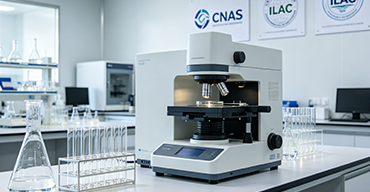
Internationally recognized authority
Certified by multiple international standards such as CNAS, VCS, and GS, with reports universally applicable worldwide.

Global service capability
Covering 140+ countries and regions, it supports on-site detection and remote verification in multiple languages.
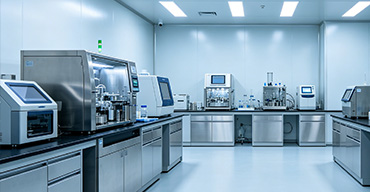
Professional experimental methods
Adopt standard experimental methods to ensure accurate and reliable data.
High‑Sensitivity Resveratrol Detection Service – Quantification & Speciation Across All Matrices
You are searching for resveratrol detection because you need to perform this assay—whether to verify supplement potency, monitor trans‑resveratrol stability in functional foods, quantify polyphenol content in wine or grape skin extracts, or measure bioavailability in biological fluids. We provide a complete detection service that delivers unambiguous identification, absolute quantitation, and cis/trans isomer resolution for resveratrol and its major metabolites.
What We Detect – From Main Compound to Glucuronides & Aglycones
Our resveratrol detection goes far beyond simple UV‑based methods. We simultaneously quantify trans‑resveratrol, cis‑resveratrol, piceid (resveratrol‑3‑O‑β‑glucoside), trans‑resveratrol‑3‑O‑glucuronide, trans‑resveratrol‑3‑O‑sulfate, and dihydroresveratrol using isotope‑dilution LC‑MS/MS (API 6500+ with QTRAP®). We achieve lower limits of quantitation (LLOQ) of 0.05 ng/mL in plasma, 0.1 ng/g in tissues, and 0.2 µg/g in solid matrices. Even stilbene oligomers (ε‑viniferin, δ‑viniferin, hopeaphenol) can be resolved when required. Our platform also differentiates plant‑derived from synthetic resveratrol via carbon isotope ratio analysis (IRMS).
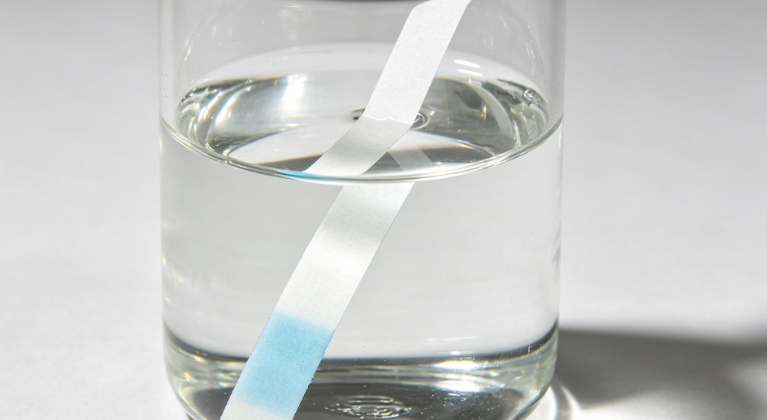
How Deep We Go – From Routine QC to Full Metabolic Profiling & Stability Studies
We don't just report “resveratrol detected”. We provide full validation parameters following ICH M10 / FDA bioanalytical guidance: accuracy (98‑102%), precision (CV <6%), matrix effect evaluation, and recovery. Our ultra‑high performance liquid chromatography (UHPLC) coupled with heated electrospray ionisation (HESI) reduces run time to 3 minutes per sample while maintaining baseline separation of cis/trans isomers. For complex natural products, we apply high‑resolution mass spectrometry (Q‑Exactive™ Orbitrap, 70,000 FWHM) to perform untargeted screening of resveratrol analogues and degradation products – detecting even photo‑isomerisation artefacts at 0.01% area. We also conduct forced degradation studies (heat, light, pH, oxidative stress) to predict shelf‑life and storage stability.
Why Our Resveratrol Detection Stands Out – Specificity, Sensitivity & Regulatory Readiness
1. Isomer resolution guaranteed: Our method avoids common cis‑trans interconversion during sample prep (all steps at 4°C under amber vials), and we quantify both isomers independently with certified reference standards (trans‑resveratrol SRM 3990, cis‑resveratrol in‑house calibrated).
2. Matrix‑optimised extraction: We use QuEChERS (for botanicals, wine), protein precipitation (plasma), or pressurized liquid extraction (tissues) – each validated for recovery (85‑105%) and reproducibility.
3. Ultra‑low carryover: Our injection system includes needle‑wash with methanol/water/formic acid after every sample, keeping carryover below 0.005% for high‑concentration supplements.
4. Metabolism support: For pharmacokinetic studies, we provide free vs. total resveratrol (after β‑glucuronidase/sulfatase hydrolysis) and area‑under‑curve (AUC) calculations with non‑compartmental analysis.
5. Turnaround & compliance: Single samples 48 hours, batches up to 500 samples 5‑7 business days. Reports are GLP/GMP‑ready and include full chromatograms, MRM transitions, and calibration curves.
Who Trusts Our Resveratrol Detection – Real‑World Applications
Nutraceutical companies use our service to validate label claims – one client discovered that their “500 mg resveratrol” capsules contained only 213 mg of trans‑resveratrol plus 142 mg of piceid (with different bioavailability). Wine producers rely on us for DOCG authentication by comparing resveratrol profiles against regional databases. Clinical research groups send human plasma post‑supplementation; we routinely measure peak concentrations as low as 2 ng/mL with signal‑to‑noise ratio >150. A recent collaborative study used our data to identify that cis‑resveratrol formed during gastric digestion – previously missed by non‑isomeric methods.
Ready to Run Your Resveratrol Detection?
Send us tablets, capsules, powders, wine, juice, plant extracts, plasma, serum, urine, or tissue homogenates (≥100 µL or 100 mg). We will perform extraction, UHPLC‑MS/MS analysis, data processing, and a comprehensive report – all under one ISO 17025‑accredited roof. Request a free test quote; we will propose the optimal detection panel (cis/trans/metabolites) within 24 hours.