Reasons for choosing our testing services
ZHONGXI Testing has obtained inspection qualification certifications from multiple countries and regions worldwide. We possess a senior testing team and advanced testing methods, providing independent, impartial, and professional third-party verification services for global carbon projects.

Internationally recognized authority
Certified by multiple international standards such as CNAS, VCS, and GS, with reports universally applicable worldwide.

Global service capability
Covering 140+ countries and regions, it supports on-site detection and remote verification in multiple languages.

Professional experimental methods
Adopt standard experimental methods to ensure accurate and reliable data.
Near‑Infrared (NIR) Spectroscopy Protein Quantification – Non‑Destructive, High‑Throughput & Multi‑Matrix Analysis
You are searching for NIR spectroscopy protein content detection because you need to perform this assay—whether to rapidly screen protein levels in agricultural commodities (grains, oilseeds, forages), monitor protein uniformity in food or feed production lines, or replace time‑consuming wet chemistry methods with instant, non‑destructive measurement. We provide a complete NIR‑based protein detection service that delivers accurate, repeatable, and calibration‑traceable quantitation across solid, liquid, and semi‑solid matrices, with results in seconds and absolute errors below 0.2% protein (w/w).
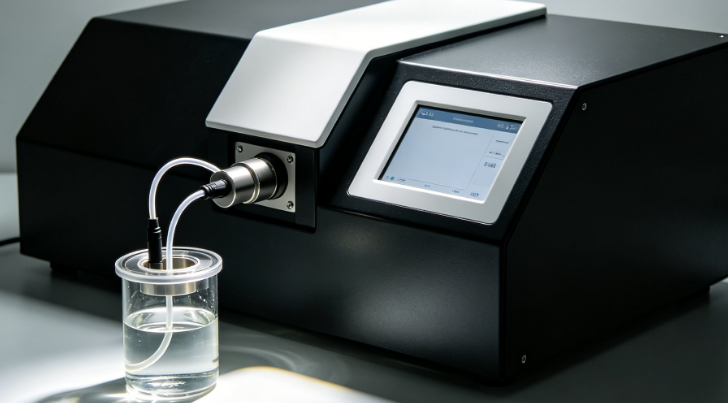
What We Detect – From Total Crude Protein to Amino Acid Profile & Protein Solubility Indices
Our NIR protein detection goes far from simple single‑wavelength correlation. Using high‑resolution Fourier‑transform NIR (FT‑NIR) spectrometers (12,000‑4,000 cm⁻¹, 0.5 cm⁻¹ resolution) and benchtop or handheld diode array instruments, we measure total crude protein (Kjeldahl‑equivalent via NIR calibration) with SEP (standard error of prediction) as low as 0.1‑0.3% depending on matrix. We also quantify protein‑related functional groups (amide I, amide II, amide III bands) and, with advanced chemometrics, predict individual amino acid profiles (lysine, methionine, threonine, tryptophan) to within 10‑15% of reference HPLC values. For process monitoring, we measure protein solubility index (PSI), degree of denaturation, and protein‑water binding shifts (O‑H stretching region) – enabling detection of heat damage or over‑processing. Our NIR systems can simultaneously report moisture, fat, ash, fibre, and carbohydrate content alongside protein, providing a complete compositional snapshot from a single 1‑minute scan.
How Deep We Go – Full Spectral Chemometrics, On‑Line & At‑Line Integration, and Calibration Transfer
We don't just report “protein %”. Our service includes full spectral preprocessing (SNV, MSC, first/second derivative, Savitzky‑Golay smoothing) and multivariate calibration (PLS, PCA, or ANN) with cross‑validation (Venetian blinds, leave‑one‑out) and external validation using ISO 12099 or AOAC compliant reference methods. We generate calibration models that span protein ranges from 1% to 55% (w/w) with R² >0.96 and RPD >3.0 for most agricultural and food matrices. For industrial clients, we implement on‑line NIR probes (transmission or reflectance) integrated with your process line, providing real‑time protein monitoring (update every 2‑10 seconds) with automatic outlier detection and model drift correction. We also perform calibration transfer between instruments (benchtop to handheld, or across multiple identical units) using piecewise direct standardisation (PDS) or slope/bias adjustment, ensuring predictions within 0.2% protein of the master model. For complex liquid samples (protein drinks, plant‑based milks, fermentation broths), we use transflectance probes and temperature‑controlled cuvettes to eliminate water temperature interference, achieving repeatability of 0.05% protein.
Why Our NIR protein detection Stands Out – Speed, Non‑Destructiveness & Regulatory Acceptance
1. Instant results, zero sample preparation: A single measurement takes 10‑60 seconds with no reagents, no digestion, no dilution. Your sample remains intact (grains, pellets, powders, liquids, even intact seeds) – perfect for non‑destructive quality sorting or in‑line process control.
2. Wide matrix coverage & validated databases: We maintain calibration libraries for >150 commodity types: wheat, corn, soy, rice, barley, oats, pulses, oilseed meals, fishmeal, meat & bone meal, dairy powders, plant‑based protein isolates, animal feed, pet food, and protein beverages. For novel matrices, we build custom calibrations from your samples (minimum 50 reference points by Kjeldahl or Dumas) within 2‑3 weeks.
3. High accuracy & traceability: Our primary reference for protein is Kjeldahl (AOAC 976.05) or Dumas (AOAC 992.15), both ISO 17025 accredited. NIR predictions are reported with uncertainty intervals (standard error of prediction) and confidence limits. We also provide Sherlock™ or SIMCA model diagnostics to flag samples outside the calibration domain.
4. Process integration & automation: We supply turnkey on‑line NIR systems with sample flow cells, bypass samplers, or conveyor‑mounted heads – fully integrated with your PLC or SCADA. Real‑time protein data can trigger automatic diverter valves or blending adjustments.
5. Regulatory & industry alignment: Our NIR methods follow AOAC 2012.04 (protein in animal feed), AACC 39‑00.01 (grain protein), and ISO 21543 (dairy products). Reports are accepted for GMP+ Feed Certification, FAMI‑QS, and FDA Process Analytical Technology (PAT) submissions.
Who Relies on Our NIR protein detection – Real‑World Applications
A global grain trader uses our handheld NIR units (validated models) to assess protein content in wheat at 20+ receiving points, rejecting low‑protein loads within 2 minutes – saving millions per year in misgrading. A pet food manufacturer installed our on‑line NIR system on their extruder line; real‑time protein feedback reduced over‑formulation by 2.5% and ensured label claim compliance with 0.1% protein tolerance. A plant‑based milk producer sends us routine production samples (500/month) for NIR protein scanning – we report protein, fat, moisture, and total solids simultaneously, eliminating multiple wet chemistry analyses. Another client, a protein isolate manufacturer, used our full spectral chemometrics to detect subtle protein denaturation (amide II shift) caused by a drying temperature increase of 5°C – a change that went unnoticed by Kjeldahl.
Ready to Run Your NIR protein detection?
Send us solid samples (≥50 g for ground material, or 20 intact grains for single‑seed NIR), liquid samples (≥50 mL), or slurries (≥100 g). We will scan your samples on calibrated FT‑NIR or diode array instruments, predict protein content with full uncertainty, and optionally compare to reference Kjeldahl/Dumas analysis. For routine QC, we can transfer our calibration to your own NIR instrument or analyse your samples on‑site via our mobile NIR service. Request a free feasibility consultation; we will propose the optimal NIR mode (reflectance, transmission, or transflectance) and calibration strategy for your matrix and accuracy requirement.