Reasons for choosing our testing services
ZHONGXI Testing has obtained inspection qualification certifications from multiple countries and regions worldwide. We possess a senior testing team and advanced testing methods, providing independent, impartial, and professional third-party verification services for global carbon projects.

Internationally recognized authority
Certified by multiple international standards such as CNAS, VCS, and GS, with reports universally applicable worldwide.

Global service capability
Covering 140+ countries and regions, it supports on-site detection and remote verification in multiple languages.

Professional experimental methods
Adopt standard experimental methods to ensure accurate and reliable data.
High‑Fidelity Viability & Activity Assay for Kocuria Species – Tailored for Probiotic, Bioremediation & Quality Control Applications
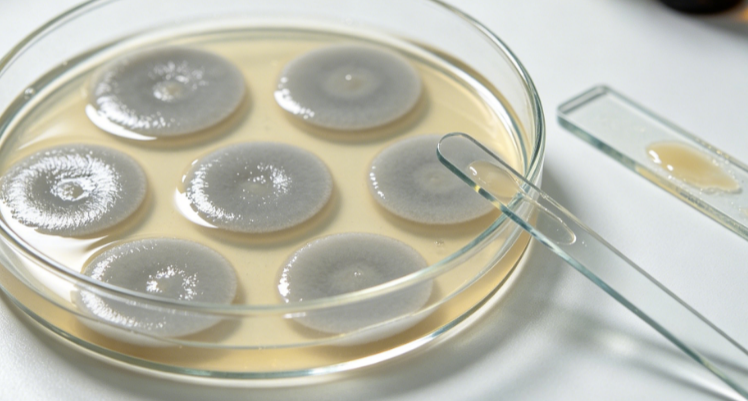
If you are searching for a reliable Kocuria activity test, you likely need to quantify viable cell counts, metabolic function, and stress resilience of this Gram‑positive actinobacterium – whether for probiotic formulations (e.g., Kocuria indica or Kocuria rhizophila as gut or skin health modifiers), bioremediation (Kocuria strains degrade dyes, hydrocarbons, or heavy metals), pharmaceutical Sterility testing (Kocuria rosea as environmental indicator), or industrial enzyme production. Standard plating methods alone miss sublethal injury and real‑time metabolic status. We provide a full‑spectrum Kocuria activity service combining classical microbiology, flow cytometry, respiration kinetics, and species‑specific molecular enumeration.
What We Measure – Multi‑Parameter Activity Panel for Kocuria
We deliver a suite of orthogonal activity endpoints tailored to your specific Kocuria species (K. rhizophila, K. rosea, K. palustris, K. indica or proprietary isolates). Core assays include: viable count on selective media (tryptic soy agar, R2A agar, or chromogenic Kocuria‑specific medium) with automated colony counting (CV < 3%); flow cytometric live/dead discrimination (SYTO9/PI or carboxyfluorescein diacetate) returning results in 45 minutes – also detecting viable but non‑culturable (VBNC) cells; and metabolic activity by resazurin reduction (AlamarBlue) or 2,3,5‑triphenyltetrazolium chloride (TTC) reduction, measured in a microplate reader (485/590 nm). For bioremediation strains, we quantify substrate‑specific oxygen consumption rate (OCR) using high‑resolution respirometry (Micro-Oxymax) in liquid or soil microcosms, down to 0.1 µmol O₂/h/108 CFU.
Deep Technical Capabilities – Real‑Time Metabolic Heat Flow & Stress resilience Profiling
Routine activity assays at fixed time points fail to capture dynamic responses. Using isothermal calorimetry (TAM IV), we measure real‑time metabolic heat flow (µW per 106 CFU) continuously for 24–72 hours, directly reflecting growth and substrate consumption without sampling – detection limit 104 CFU/mL. For industrial or probiotic Kocuria, we determine thermal inactivation kinetics (55 °C, 60 °C, 65 °C) and pH tolerance profiles (pH 4.0–9.5), calculating D‑values and z‑values with confidence intervals. To assess oxidative stress survival (common in dried formulations), we expose cells to hydrogen peroxide (0.1–1.0% H₂O₂) and measure residual activity via CFU and flow cytometry. Additionally, we perform biofilm metabolic activity assay (crystal violet elution + TTC reduction) for Kocuria strains used in surface bioaugmentation or bioremediation filters – including quantification of extracellular polymeric substance (EPS) by phenol‑sulfuric acid method.
Why Choose Our Kocuria Activity Service
Species‑specific validation and strain library. We maintain >30 Kocuria reference strains (including ATCC 9341, DSM 11926, and environmental isolates). Using qPCR targeting the 16S‑23S rRNA intergenic spacer or rpoB gene, we can discriminate Kocuria from closely related genera (Micrococcus, Arthrobacter) in mixed cultures – essential for contaminated production batches or environmental samples. Turnaround options: rapid viability screen (next day) or full kinetic profile (3‑5 days). Dynamic range: 102 to 1011 CFU/g or CFU/mL (freeze‑dried powder, liquid cultures, soil extracts, swabs). Matrix expertise: validated for pharmaceutical cleanroom isolates, bioremediation slurry, probiotic capsules, and plant rhizosphere samples. QC rigor: each run includes a positive control (Kocuria rhizophila log‑phase culture), negative control (heat‑killed cells, 80 °C, 20 min), and spike recovery (70–130%). We follow ISO 11737‑1 (Sterility testing) and adapted ISO 19344 for probiotic activity where applicable.
Detailed Deliverables – From CFU to Industrial Performance Indices
Your final report includes: viable count (CFU with 95% confidence interval), live/dead ratio by flow cytometry (histograms and statistics), metabolic reduction kinetics (Vmax, half‑time for resazurin/TTC), and if requested thermal/pH/oxidative stress survival curves with D‑values. For bioremediation strains, we provide substrate degradation rate (µg/h/108 CFU) and oxygen consumption profile. All data are delivered in searchable PDF with raw instrument logs (calorimetry thermograms, flow cytometry FCS files, qPCR amplification plots), QC batch records, and optional GMP/GLP‑compliant signatures. Our laboratory holds ISO 17025:2017 accreditation for microbial activity testing of industrial and probiotic bacteria.
Need to verify Kocuria viability under challenging conditions – low pH, high temperature, oxidative stress, or in complex matrices like soil or cosmetics? Contact our actinobacteria activity core for a free pre‑test consultation. We will tailor the assay panel to your specific Kocuria species and application, including rush service for time‑sensitive projects.