Reasons for choosing our testing services
ZHONGXI Testing has obtained inspection qualification certifications from multiple countries and regions worldwide. We possess a senior testing team and advanced testing methods, providing independent, impartial, and professional third-party verification services for global carbon projects.

Internationally recognized authority
Certified by multiple international standards such as CNAS, VCS, and GS, with reports universally applicable worldwide.

Global service capability
Covering 140+ countries and regions, it supports on-site detection and remote verification in multiple languages.

Professional experimental methods
Adopt standard experimental methods to ensure accurate and reliable data.
Professional Viable Cell Count Testing for Bio‑organic Fertilizers – Accurate Enumeration of Functional Microbes
If you are searching for a reliable bio‑organic fertilizer viable count test, you likely need to verify whether your product meets regulatory standards (e.g., China’s NY/T 798, EU or USDA organic certification) for the concentration of living functional microorganisms – such as nitrogen‑fixing bacteria (Azotobacter, Rhizobium), phosphate‑solubilizing bacteria (Bacillus, Pseudomonas), potassium‑releasing bacteria (Bacillus mucilaginosus), or antagonistic biocontrol agents (Trichoderma, Streptomyces). Simple total plate counts on nutrient‑rich media overgrow target species and fail to distinguish viable from dead cells. We provide a comprehensive, high‑precision effective viable count testing service that delivers species‑specific enumeration, viability differentiation, and stress resilience assessment – fully compliant with agricultural product quality standards.
What We Measure – Species‑Specific Viable Counts & Functional Group Analysis
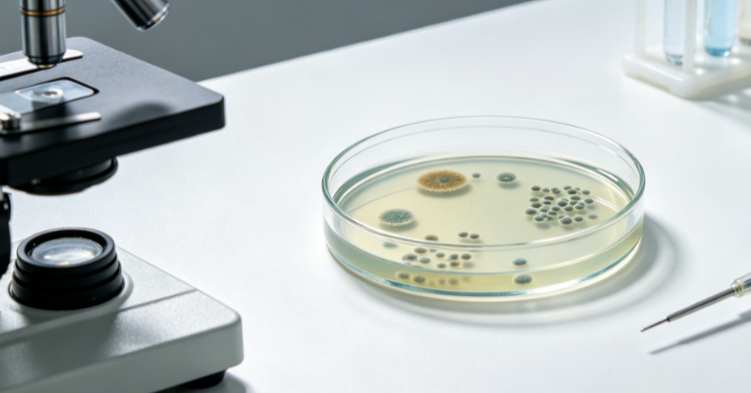
We quantify effective viable microorganisms (CFU/g or CFU/mL) using a combination of selective/differential media tailored to your specific bio‑organic fertilizer formulation. For products containing Bacillus subtilis, Bacillus licheniformis, or Bacillus amyloliquefaciens, we use mannitol‑egg yolk‑polymyxin (MYP) agar or tryptose sulfite cycloserine (TSC) agar after a heat‑shock step (80 °C, 10 min) to selectively germinate spores and suppress vegetative background. For nitrogen‑fixing bacteria, we employ Ashby’s nitrogen‑free mannitol agar or Winogradsky’s medium. For phosphate solubilizers, we use PVK (Pikovskaya) agar with tricalcium phosphate – clear zones around colonies confirm activity. For Trichoderma or other fungal agents, we use Rose Bengal chloramphenicol agar with low pH (5.6) to inhibit bacteria. All plating is performed in duplicate or triplicate with appropriate dilutions (10‑2 to 10‑8), and colonies are enumerated using an automated colony counter (CV < 3%). Our detection limit is 103 CFU/g for solid fertilizers and 102 CFU/mL for liquid formulations.
Deep Technical Capabilities – Viability Differentiation & Stress resilience Profiling
Standard plate counts measure colony‑forming units only from viable cells that grow under the given conditions – they miss viable but non‑culturable (VBNC) cells and cannot differentiate live from dead in non‑spore formers. To address this, we deploy flow cytometric viability assessment (SYTO9/propidium iodide dual staining) for liquid or rehydrated fertilizer samples – results in 1 hour, quantifying total cells, live (green), injured (low fluorescence), and dead (red) fractions. This provides a true “effective viable count” independent of culturalbility. Additionally, we offer real‑time PCR (qPCR) with propidium monoazide (PMA) pre‑treatment that crosslinks DNA from membrane‑compromised (dead) cells, enabling selective quantification of intact viable cells – detection limit 103 target gene copies/g. For fertilizers exposed to adverse storage conditions (heat, desiccation, UV), we perform accelerated stability testing: measure viable counts after defined stress (e.g., 40 °C for 7 days, or freeze‑thaw cycles) to predict product shelf‑life. Using a resazurin reduction microplate assay, we can also measure the metabolic activity index of the viable population – reporting as fluorescence units per 106 CFU, a direct measure of physiological fitness.
Advanced Contaminant & Functional Gene Detection
In addition to counting target microorganisms, we identify and enumerate unwanted contaminants – faecal coliforms, Salmonella, enterococci, and pathogenic fungi – according to organic fertilizer safety limits. Using species‑specific qPCR (e.g., nifH for nitrogen fixation, pqqC or gcd for phosphate solubilization, phlD for 2,4‑diacetylphloroglucinol biosynthesis), we directly quantify the abundance of functional gene copies, validating that your product’s claimed beneficial traits are genetically present. For complex consortia formulations, we provide 16S rRNA amplicon sequencing to profile the entire bacterial community and confirm the dominance of the intended strains (>107 CFU/g).
Why Choose Our Bio‑organic Fertilizer Viable Count Service
Matrix‑optimised protocols. We have validated extraction and plating methods for over 500 bio‑organic fertilizer matrices – powder, granules, pellets, liquid slurries, and compost‑based products – removing humic acids, clay, and fibrous materials that interfere with colony counting. Turnaround: standard viable count report (3‑5 days), full panel including flow cytometry and qPCR (7‑10 days), and stability studies (14‑30 days). Dynamic range: 102 to 1012 CFU/g with serial dilution. Compliance: We follow NY/T 2321‑2013 (China), ISO 4833‑1:2013, and AOAC 2008.05 for microbial enumeration in fertilizers. QC rigor: each batch includes positive control (reference strain, e.g., Bacillus subtilis ATCC 6633), negative control (sterile carrier), and spike recovery (70‑130%). Accreditation: ISO 17025:2017 accredited for microbiological testing of agricultural inputs.
Detailed Deliverables – From CFU Counts to Product Quality Certificates
Your final report includes: viable count (CFU/g or CFU/mL) for each declared microbial species, total live cell percentage by flow cytometry, functional gene copy number (if requested), contaminant enumeration (E. coli, Salmonella, etc.) with pass/fail statement, and an accelerated shelf‑life prediction (e.g., 12‑month viability loss %). For research customers, we provide raw data (colony counts per plate, flow cytometry FCS files, qPCR amplification plots). All data are delivered in a signed PDF with method references and QC summary. Our laboratory offers rush service (24‑hour viability screen) for urgent batch release.
Need to verify the effective viable count of your bio‑organic fertilizer before commercial release or regulatory inspection? Contact our agricultural microbiology core for a free sampling and method consultation. We will design a custom testing plan matching your declared strains and target standards.