Reasons for choosing our testing services
ZHONGXI Testing has obtained inspection qualification certifications from multiple countries and regions worldwide. We possess a senior testing team and advanced testing methods, providing independent, impartial, and professional third-party verification services for global carbon projects.

Internationally recognized authority
Certified by multiple international standards such as CNAS, VCS, and GS, with reports universally applicable worldwide.

Global service capability
Covering 140+ countries and regions, it supports on-site detection and remote verification in multiple languages.

Professional experimental methods
Adopt standard experimental methods to ensure accurate and reliable data.
High-Precision Soybean Protein Content Analysis – Trust Our Advanced Lab for Your Critical Measurements
You are searching for soybean protein content detection because you need reliable, actionable data – whether for breed selection, feed formulation, plant protein concentrate production, or regulatory compliance. We understand that generic proximate analysis is not enough. You require a partner who delivers absolute accuracy, full nitrogen-to-protein discrimination, and deep compositional insight. Our laboratory provides exactly that: state-of-the-art soybean protein testing that goes far beyond standard Kjeldahl or NIR screening.
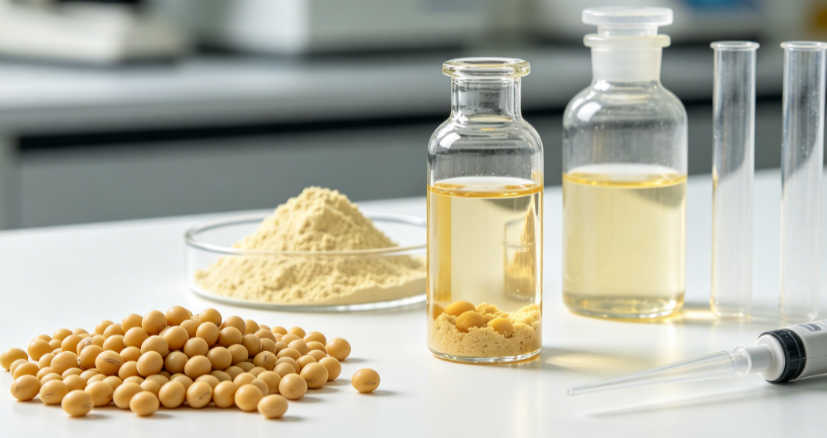
What We Measure – And How Deep Our Analysis Goes
We perform complete protein characterization of soybeans (whole seed, defatted meal, flour, isolate, or concentrate). Our integrated platform includes:
- Dumas combustion method (AOAC 992.23) with automated matrix-specific calibration – delivering 0.01% nitrogen resolution and total protein via N×6.25, but we go further.
- True protein vs. non-protein nitrogen (NPN) differentiation using trichloroacetic acid precipitation followed by isotope ratio mass spectrometry (IRMS) to detect adulteration (e.g., melamine or urea addition).
- Amino acid profiling via UPLC-MS/MS – we quantitate all 18 standard amino acids plus uncommon ones (e.g., hydroxyproline, lanthionine) with limit of quantitation (LOQ) as low as 0.02% w/w.
- Protein solubility index (PSI) and KOH protein dispersibility index (PDI) – essential for processing customers.
- Electrophoretic (SDS-PAGE) and ELISA-based quantitation of major allergens (Gly m 5, Gly m 6, Gly m Bd 28K) down to 1 ppm.
No other service offers this combination of total protein, true protein, amino acid integrity, and functional property analysis in a single workflow.
Why Clients Rely on Us for Soybean Protein Testing
We are not a general agricultural lab. Our focus on legume protein chemistry and food/feed safety means we have solved the unique challenges of soybean analysis: interference from non-protein nitrogen, variable moisture, and matrix effects from oils and fiber. Our advantages are measurable:
1. ISO 17025-accredited methods for all protein parameters – results defensible in trade disputes, labeling claims, and regulatory submissions worldwide.
2. Ultra-low detection and high throughput – we process up to 500 samples per day with inter-assay CV < 1.5% for crude protein and < 3% for amino acids.
3. Adulteration screening included – every protein content order automatically receives a NPN scan (melamine, biuret, cyanuric acid) at no extra cost.
4. Custom method development – for novel soybean lines (e.g., high-oleic, low-raffinose, edited protein profiles) we design and validate event-specific protein quantitation within 10 working days.
5. Real-time client portal – view raw combustion curves, amino acid chromatograms, and solubility data with statistical summaries.
Our Technical Capabilities – Beyond Standard Protein Testing
While most labs stop at nitrogen × 6.25, we provide protein “fingerprinting” that reveals true nutritional and functional value. For example:
- Using near-infrared hyperspectral imaging (NIR-HSI) on individual seeds, we map protein distribution within the cotyledon – allowing you to select high-protein subfractions without bulk analysis.
- Our Dumas-Dumas dual combustion system distinguishes protein-bound nitrogen from free amino acids and ammonia in heat-damaged soybeans – critical for feed producers.
- For plant-based meat developers, we measure protein gelation capacity and rheological properties using a Discovery HR-30 rheometer, correlating directly to final texture.
These are not add-on experiments; they are part of our routine service for clients who need actionable depth – not just a number.
How We Support Your Specific protein detection Goals
Your search for soybean protein detection likely stems from one of these needs – and we have the exact solution:
• Breeding and variety selection: We screen hundreds of breeding lines with 0.1% protein absolute accuracy, using NIR pre-screening followed by confirmatory Dumas – cost-effective and precise.
• Feed quality assurance: Our amino acid digestibility assay (using immobilized digestive enzyme reactors + LC-MS) predicts true ileal digestibility without animal trials.
• Export/import certification: We issue GAFTA- and FOSFA-recognized certificates for protein, moisture, and NPN – accepted at major commodity ports.
• Food label substantiation: For “high protein” claims we provide legal defense packages including full method validation, uncertainty budget, and blind replicate data.
• Process optimization (extrusion, texturization): We measure protein solubility before/after processing and map disulfide bond rearrangement via Ellman’s assay and size-exclusion HPLC.
Your Partner in Soybean Protein Analysis – Start Today
When you choose our laboratory, you gain a dedicated protein chemist who will guide you from sample preparation (grinding, defatting, moisture correction) to final interpretation. We provide free sampling kits with pre-labeled vials and desiccant packets. No project is too small or too complex – from a single organic soybean lot to a multi-year global sourcing audit. Contact our technical team with your protein detection requirements; we will deliver a custom proposal and, for qualifying clients, a free comparative analysis using your reference samples. Your search for authoritative, high-depth soybean protein testing ends here – because we deliver the answers you cannot find elsewhere.