Reasons for choosing our testing services
ZHONGXI Testing has obtained inspection qualification certifications from multiple countries and regions worldwide. We possess a senior testing team and advanced testing methods, providing independent, impartial, and professional third-party verification services for global carbon projects.

Internationally recognized authority
Certified by multiple international standards such as CNAS, VCS, and GS, with reports universally applicable worldwide.

Global service capability
Covering 140+ countries and regions, it supports on-site detection and remote verification in multiple languages.

Professional experimental methods
Adopt standard experimental methods to ensure accurate and reliable data.
Smart Wearable Device Testing Services: Ensuring Safety, Reliability & Performance for Next‑Gen Wearables
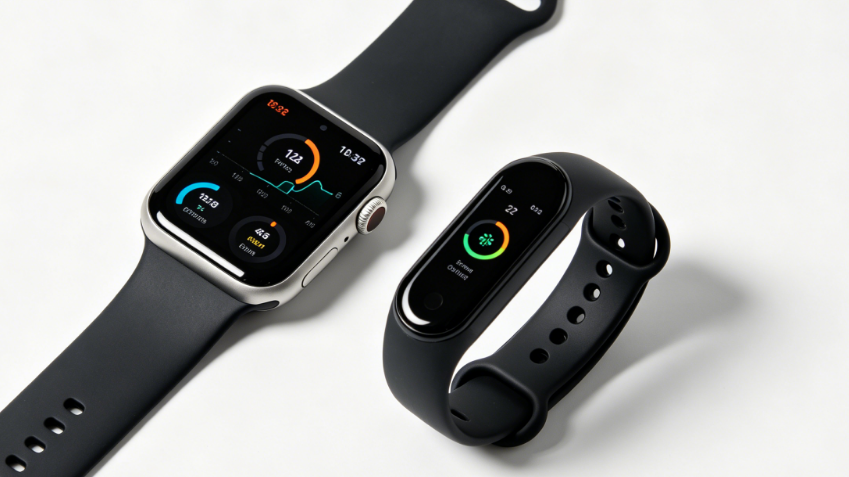
As an independent third-party testing service provider, we offer comprehensive testing solutions for smart wearable devices – including smart watches, fitness bands, smart glasses, hearables, smart clothing, medical wearables, and industrial body‑worn sensors. Wearables combine electronics, batteries, wireless communication, sensors, and skin‑contact materials, requiring rigorous evaluation across electrical safety, mechanical durability, environmental resilience, wireless coexistence, sensor accuracy, biocompatibility, and regulatory compliance. Our accredited laboratory follows international standards (IEC, ISO, FDA, CE, FCC, RED, GB/T, MIL‑STD) to validate wearables for consumer, medical, and industrial use. This article outlines our smart wearable testing capabilities – including scope, key test items, and standard test methods – to help manufacturers, startups, and regulatory teams deliver safe, reliable, and high‑performing wearable products.
1. Our Testing Scope for Smart Wearable Devices
We cover all common wearable types and their critical subsystems:
By device type: Smart watches & fitness trackers; Hearables (wireless earbuds, hearing aids); Smart glasses (AR/VR headsets, smart spectacles); Smart clothing & textiles (heated jackets, biometric shirts); Medical wearables (continuous glucose monitors, ECG patches, insulin pumps); Industrial wearables (exoskeletons, safety monitors, gas detectors).
By test category: Electrical safety & battery performance; Mechanical reliability (drop, shock, vibration, flex, twist, button life); Environmental adaptability (water/dust ingress – IP rating, temperature, humidity, salt fog); Wireless & connectivity (Bluetooth, Wi-Fi, NFC, cellular, GNSS); Sensor accuracy (heart rate, SpO₂, step count, pressure, temperature); Biocompatibility & skin contact (cytotoxicity, irritation, sensitisation, material safety); EMC / EMI (radiated emissions, immunity, SAR, HAC); Compliance & certification (CE, FCC, IC, RED, UKCA, FDA, RoHS, REACH, California Prop 65).
By use environment: Consumer lifestyle (sweat, rain, accidental drops); Sports & fitness (high impact, extreme temperatures); Medical (continuous wear, skin contact, clinical accuracy); Industrial (dust, chemicals, vibration, safety requirements).
2. Key Test Items & Measurements We Perform
Our smart wearable testing services are grouped by performance domain.
2.1 Electrical Safety & Battery Performance
Battery safety – overcharge, over‑discharge, short circuit, temperature cycling, crush, nail penetration (cell level) per IEC 62133, UN 38.3.
Charging circuit safety – input/output overvoltage, reverse polarity, temperature monitoring.
Insulation resistance & dielectric strength (hipot) – for medical wearables (IEC 60601‑1).
Leakage current (touch current, patient leakage).
Battery cycle life & capacity retention.
Wireless charging performance (efficiency, foreign object detection).
2.2 Mechanical Reliability & Durability
Drop test (free fall) – onto concrete or steel from 1 m, 1.5 m, or custom height (IEC 60068‑2‑31, MIL‑STD‑810).
Tumble test (rotary drum) – for portable wearables.
Vibration (random & sinusoidal) – for transport and use (IEC 60068‑2‑6, -2‑64).
Mechanical shock (half‑sine) – IEC 60068‑2‑27.
Button / crown cycle life – 50,000 to 200,000 actuations.
Strap / band pull & flex test – tensile strength, repeated flexing.
Twist & bend test (for smart watches, flexible devices).
Scratch & abrasion resistance (display, housing).
Connector mating durability (charging contacts).
2.3 Environmental Adaptability (IP & Climatic)
Water ingress protection (IPX4, IPX5, IPX6, IPX7, IPX8) – per IEC 60529 (sweat, rain, immersion).
Dust ingress (IP5X, IP6X) – for rugged wearables.
High / low temperature operation (e.g., -10°C to +50°C) – per IEC 60068‑2‑1/-2.
Thermal cycling (temperature shock) – rapid transitions between hot and cold.
Humidity (damp heat) – 40°C / 93% RH for days (IEC 60068‑2‑78).
Salt spray (corrosion) – for coastal or sweat exposure (ASTM B117).
UV / solar radiation (for outdoor wearables) – material degradation, display readability.
2.4 Wireless & Connectivity Performance
Bluetooth RF (classic & BLE) – output power, modulation characteristics, carrier frequency offset, sensitivity (Bluetooth SIG RF‑PHY.TS).
Wi‑Fi (2.4 GHz, 5 GHz, 6 GHz) – per IEEE 802.11 standards.
NFC (RF interface) – field strength, modulation depth, load modulation (ISO 14443, ISO 18092).
GNSS (GPS, GLONASS, BeiDou, Galileo) – Time‑To‑First‑Fix (TTFF), positional accuracy, sensitivity.
Cellular (2G/3G/4G/5G) – for standalone smartwatches (3GPP tests).
Over‑the‑air (OTA) performance – TRP (Total Radiated Power), TIS (Total Isotropic Sensitivity).
Coexistence testing – Bluetooth and Wi‑Fi mutual interference.
Specific Absorption Rate (SAR) – for head and body (FCC, IEC 62209).
2.5 Sensor Accuracy & Functional Testing
Heart rate monitor (optical PPG) – compared to reference ECG, accuracy under motion (treadmill, walking).
Blood oxygen saturation (SpO₂) – accuracy across 70‑100% range.
Step / distance counting – on treadmill and walking track (error percentage).
Sleep tracking (duration, stages) – vs. polysomnography (by arrangement).
Barometric pressure / altimeter – accuracy.
Skin temperature sensor – accuracy (±0.1°C or ±0.5°C).
ECG / single‑lead electrocardiogram – waveform fidelity, rhythm detection (for medical wearables).
Inertial measurement unit (IMU) – accelerometer, gyroscope accuracy, drift.
Display performance – brightness, contrast, touch sensitivity, wet finger tracking.
2.6 Biocompatibility & Skin Contact Safety (ISO 10993 Series)
Cytotoxicity (ISO 10993‑5) – extract method on skin‑contacting parts (straps, back case, electrodes).
Skin sensitisation (ISO 10993‑10) – LLNA or guinea pig maximisation.
Irritation (ISO 10993‑10, ISO 10993‑23) – intracutaneous reactivity and primary skin irritation.
Material chemistry (ISO 10993‑18) – extractable & leachable analysis for potential allergens (nickel, chromium, latex, plasticisers).
Nickel release (EN 1811, EN 12472) – for metal parts in prolonged skin contact.
Phthalates, PAHs, heavy metals in plastics & rubber – per REACH, RoHS, Prop 65.
2.7 EMC / EMI & Radio Compliance
Radiated emissions (30 MHz – 6 GHz) – per FCC Part 15, CISPR 32, EN 301 489.
Conducted emissions (AC mains for chargers).
Radiated immunity (80 MHz – 6 GHz) – IEC 61000‑4‑3, ISO 11452.
Electrostatic discharge (ESD) – air discharge ±8 kV / ±15 kV, contact discharge ±4 kV / ±8 kV (IEC 61000‑4‑2).
RF field immunity (for wireless coexistence).
Hearing Aid Compatibility (HAC) – for hearables and smartwatches with telecoil.
2.8 Software & Firmware Security (For Medical Wearables)
Cybersecurity (FDA pre‑market guidance) – vulnerability scanning, data encryption, authentication, software update verification.
Firmware robustness – power cycle, exception handling, watchdog timer validation.
3. Standard Test Methods We Apply
All tests are performed according to internationally recognised standards. Our laboratory is ISO/IEC 17025 accredited and equipped with anechoic chambers, climatic chambers, drop towers, shakers, sensor reference instruments, and radio testers.
3.1 Electrical & Battery Standards
IEC 62133 (secondary cells and batteries – safety).
UN 38.3 (transport of lithium batteries).
IEC 60950‑1 / IEC 62368‑1 (audio/video, IT equipment).
IEC 60601‑1 (medical electrical equipment – for medical wearables).
3.2 Mechanical & Environmental Standards
IEC 60068‑2‑6 (vibration), -2‑27 (shock), -2‑31 (free fall), -2‑64 (random vibration).
IEC 60529 (IP code – water & dust).
MIL‑STD‑810 (drop, shock, vibration – for rugged wearables).
ASTM D4169 (shipping simulation).
3.3 Wireless Standards
Bluetooth RF test (Bluetooth SIG RF‑PHY.TS).
FCC Part 15.247, 15.407 (USA).
ETSI EN 300 328 (2.4 GHz), EN 301 893 (5 GHz).
RED (Radio Equipment Directive – EU).
SAR: IEC 62209‑2 (body‑worn), FCC OET Bulletin 65.
3.4 Sensor & Functional Performance
ISO 80601‑2‑61 (pulse oximeter accuracy – for SpO₂).
ECG performance: IEC 60601‑2‑47.
Heart rate monitor: ASTM E3103 (ambulatory).
Step counting: ISO 18717 (pedometer).
3.5 Biocompatibility & Material Safety
ISO 10993‑5 (cytotoxicity), -10 (sensitisation/irritation), -18 (chemical characterisation).
EN 1811 (nickel release).
RoHS (2011/65/EU).
REACH SVHC.
California Proposition 65.
3.6 EMC Standards
EN 301 489‑1/-17 (radio equipment EMC).
FCC Part 15B (unintentional radiators).
IEC 61000‑4‑2 (ESD), -4‑3 (radiated immunity).
4. Why Choose Our Third‑Party Smart Wearable Testing Services?
As an independent laboratory, we provide unbiased, accurate, and globally accepted test data. Our advantages include:
ISO/IEC 17025 accreditation – CNAS/CMA certified, with test reports accepted by CE, FCC, RED, UKCA, FDA (in partnership).
One‑stop service – electrical safety, EMC, RF, environmental, mechanical, sensor accuracy, biocompatibility, and material compliance all under one roof.
Wearable‑specific fixtures – wrist simulators, ear simulators, flexible PCB bending rigs, sweat‑simulating solutions.
Fast turnaround – typical test campaigns (full set) in 2‑4 weeks; individual test items in 2‑7 business days.
Comprehensive reporting – includes test setup photos, data tables, waveforms, photos of damage, and clear pass/fail conclusions.
Confidentiality – full protection of your product design, firmware, and proprietary algorithms.
Consultative support – our engineers help select the right test levels, standards, and acceptance criteria based on target market (consumer, medical, industrial).
Whether you are launching a new fitness watch, a medical ECG patch, an industrial smart helmet, or a pair of smart glasses, our smart wearable testing experts are ready to help you achieve safety, performance, and regulatory compliance.
Get Started with Your Smart Wearable Testing Project
Contact our team with your device type, target markets (US, EU, China, etc.), and specific test requirements (e.g., IP68, FDA medical, Bluetooth qualification). We will provide a detailed quotation, sample submission guidelines, and a testing schedule. Let us help you validate that your wearable can survive sweat, drops, water, and continuous skin contact – while delivering accurate data and safe operation.
This article provides an overview of our smart wearable device testing capabilities. For specific test methods, sample quantity, and pricing, please request a tailored service proposal.