Reasons for choosing our testing services
ZHONGXI Testing has obtained inspection qualification certifications from multiple countries and regions worldwide. We possess a senior testing team and advanced testing methods, providing independent, impartial, and professional third-party verification services for global carbon projects.
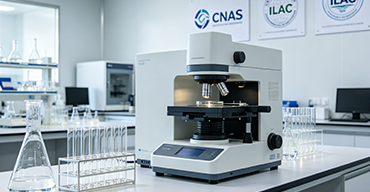
Internationally recognized authority
Certified by multiple international standards such as CNAS, VCS, and GS, with reports universally applicable worldwide.

Global service capability
Covering 140+ countries and regions, it supports on-site detection and remote verification in multiple languages.
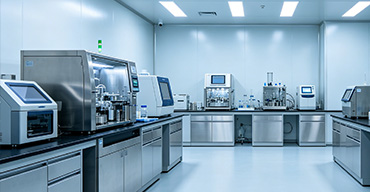
Professional experimental methods
Adopt standard experimental methods to ensure accurate and reliable data.
Comprehensive Multi-Parameter Characterisation of Microalgae Biofilms – A Specialised Analytical Service for Bioprocess Optimisation, Monitoring, and Quality Assurance
Microalgae biofilms are immobilised cell aggregates attached to solid surfaces, surrounded by a self‑produced matrix of extracellular polymeric substances (EPS). They are increasingly exploited in innovative biotechnological applications, including wastewater treatment, biofuel production, high‑value metabolite extraction (such as carotenoids and phycobiliproteins), and CO₂ bio‑fixation. In contrast to planktonic cultures, biofilm mode of growth confers distinct physiological advantages, such as enhanced nutrient uptake, increased light utilisation efficiency, and improved resilience to environmental stresses. However, these benefits are contingent upon a set of dynamic and interdependent parameters, making systematic characterisation imperative. Clients seeking analysis of microalgae biofilms are typically engaged in process research, scale‑up engineering, or routine quality control, and they require a detailed, multi‑dimensional understanding of biofilm structure, composition, activity, and stability to drive performance and troubleshoot process deviations. Our laboratory provides a fully integrated, multi‑scale analytical platform that delivers a comprehensive, application‑oriented characterisation of microalgae biofilms, enabling you to monitor development, optimise cultivation conditions, assess harvest readiness, and ensure reproducibility with the highest scientific credibility.
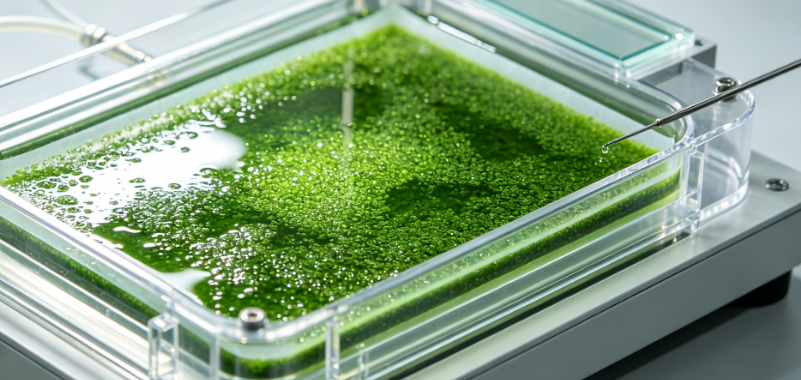
Why Comprehensive Microalgae Biofilm Characterisation Is Essential
The performance of a biofilm‑based photobioreactor is governed by a complex interplay of biological, chemical, and physical factors. These include the biofilm’s structural architecture (thickness, porosity, surface roughness), biomass density, community composition (species identity and relative abundance), EPS composition and concentration, metabolic activity (photosynthetic efficiency, nutrient removal rates, oxygen evolution), and mechanical stability under shear stress. An uncharacterised biofilm is a “black box”, and any inconsistency in these parameters can lead to unpredictable yields, fouling, reactor instability, or failure to meet regulatory discharge limits. Our comprehensive testing suite is designed to open this black box, providing the quantitative, process‑relevant data needed to understand, control, and scale biofilm systems.
Our Advanced Analytical Suite for Microalgae Biofilm Characterisation
We employ a multi‑technique, fully validated approach to profile every critical aspect of your microalgae biofilm:
Structural and Morphological Analysis – We use confocal laser scanning microscopy (CLSM) with fluorescent stains (e.g., SYTO 9, propidium iodide for live/dead cells, Concanavalin A for EPS polysaccharides, SYPRO Ruby for proteins) to create three‑dimensional reconstructions of the biofilm architecture. This allows the quantification of biovolume, biofilm thickness, surface coverage, and porosity. For ultra‑structural details, we employ scanning electron microscopy (SEM) and transmission electron microscopy (TEM) to examine cell morphology, EPS network, and cell‑surface adhesion mechanisms. We also provide optical coherence tomography (OCT) for non‑destructive, in situ monitoring of biofilm development, enabling real‑time tracking of growth kinetics and shedding events.
Biomass and Community Composition – We determine total biomass by gravimetric analysis (dry weight) and chlorophyll a extraction (spectrophotometric method). Biomass productivity is calculated by tracking dry weight over time. To identify the microalgae species and quantify their relative abundance, we perform DNA barcoding (targeting 18S rDNA or rbcL) and quantitative PCR (qPCR) using species‑specific primers. For mixed‑species biofilms, we use next‑generation sequencing (amplicon sequencing) to determine the community diversity and to monitor shifts in composition.
Extracellular Polymeric Substances (EPS) Profiling – EPS composition and concentration directly influence biofilm structure, adhesion, and protection. We extract EPS using cation‑exchange resin or mild heating, then analyse total carbohydrates (phenol‑sulfuric acid method), total proteins (BCA or Bradford assay), and humic substances. For detailed characterisation, we use high‑performance liquid chromatography (HPLC) to profile the monosaccharide composition (e.g., glucose, galactose, rhamnose, mannose) and Fourier‑transform infrared (FTIR) spectroscopy to determine the functional groups present in the EPS matrix. We also measure EPS hydrophobicity and surface charge (zeta potential) to predict adhesion and aggregation behaviour.
Metabolic Activity and Photosynthetic Performance – To assess the physiological state of the biofilm, we measure photosynthetic activity using a pulse‑amplitude modulation (PAM) fluorometer, which provides the maximum quantum yield of PSII (Fv/Fm) and the effective quantum yield (Y(II)) under light. We also determine specific growth rates (µ), oxygen evolution rates (using a Clark‑type electrode), and nutrient removal kinetics (for N and P via photometric or ion‑chromatographic methods). For detailed metabolic profiling, we use metabolic flux analysis (MFA) or 13C‑labelling on a collaborative basis.
Mechanical and Rheological Properties – Biofilm stability under shear is a critical parameter for reactor design and operation. We measure biofilm cohesive strength using a microfluidic shear cell or a rotating disc reactor, quantifying the critical shear stress required for detachment. We also assess viscoelastic properties using a rheometer to determine the elastic modulus (G′) and viscous modulus (G″) of the biofilm. These data are essential for predicting biofilm stability under hydraulic loading and for designing effective cleaning protocols.
Stability and Long‑Term Performance Assessment – Long‑term biofilm stability is assessed through continuous operation trials in a controlled photobioreactor, with periodic measurements of biomass, EPS, and activity. We also conduct accelerated stress tests under variable light, temperature, and nutrient conditions to evaluate resilience and recovery capacity. These studies provide the data necessary to design robust, industry‑ready processes.
Contaminant and Safety Screening – To ensure the quality of harvested biomass for nutraceutical or feed applications, we screen for heavy metals (ICP‑MS), pesticides (GC‑MS/MS), and toxic cyanobacteria (via qPCR for microcystin genes). We also perform microbiological assays (TVC, yeast and mould, Coliforms) to meet safety standards. This comprehensive safety assessment is essential for product quality control and regulatory compliance.
Method Validation and Regulatory Compliance – All our analytical methods are fully validated under ISO/IEC 17025 accreditation. We provide a certificate of analysis (CoA) for each biofilm sample, including all measured parameters, measurement uncertainty, and a clear summary of the biofilm’s health and performance status. Our data are fully traceable and globally accepted for research, pilot‑scale, and commercial applications.
Our Distinctive Competencies and Unmatched Analytical Depth
Our service is uniquely distinguished by the integration of structural, chemical, physiological, and mechanical characterisation—all performed on the same representative sample—to provide a complete, cross‑validated profile. We maintain in‑house reference microalgae cultures and participate in international proficiency testing schemes to ensure global comparability. Our proprietary “Biofilm Performance Index” (BPI™) combines biomass density, EPS concentration, photosynthetic activity, and mechanical stability into a single numeric score that predicts reactor performance. This index has been validated across more than 15 different biofilm systems and scales.
We achieve exceptional measurement precision: < 1% RSD for biomass dry weight, < 2% RSD for EPS quantification, and < 0.5% for PAM fluorometry parameters. Our turnaround time for the complete characterisation suite is 10–14 working days, with expedited 7‑day service available for urgent troubleshooting. Crucially, our team of PhD‑level microbiologists, bioprocess engineers, and biochemical analysts provides a comprehensive interpretative report that goes beyond numerical data—we help you understand the interplay between biofilm structure and function, suggest interventions to improve performance, and advise on scale‑up strategies. With over 30 successful projects on microalgae and microbial biofilms, we empower our clients to unlock the full potential of their biological systems, ensuring efficient and reliable bioprocesses with the highest level of scientific rigour and practical insight.
To discuss your microalgae biofilm testing requirements or to request a customised analytical plan, please contact our technical team for a confidential consultation and a detailed quotation.