Reasons for choosing our testing services
ZHONGXI Testing has obtained inspection qualification certifications from multiple countries and regions worldwide. We possess a senior testing team and advanced testing methods, providing independent, impartial, and professional third-party verification services for global carbon projects.

Internationally recognized authority
Certified by multiple international standards such as CNAS, VCS, and GS, with reports universally applicable worldwide.

Global service capability
Covering 140+ countries and regions, it supports on-site detection and remote verification in multiple languages.

Professional experimental methods
Adopt standard experimental methods to ensure accurate and reliable data.
Comprehensive Analytical and Physiological Profiling of Phaeodactylum tricornutum for Biotechnological and Fundamental Research
Phaeodactylum tricornutum is a marine diatom of outstanding scientific and industrial relevance, serving as a model organism for studies of silica biomineralization, photosynthetic efficiency, lipid metabolism, and stress acclimation, while also being a promising feedstock for omega-3 polyunsaturated fatty acids (particularly eicosapentaenoic acid, EPA), fucoxanthin, and biofuel precursors. The increasing demand for high-quality, reproducible characterization of this diatom—across genetic, biochemical, physiological, and biophysical dimensions—reflects the need for a dedicated, multi-parametric analytical platform that can accommodate the unique structural and metabolic features of this species, including its fusiform, triradiate, and oval morphotypes, the presence of a silica-free frustule, and its exceptional capacity for lipid accumulation under nitrogen deprivation and fucoxanthin overproduction under high light. Our specialized detection service provides a complete, fully customizable suite of assays for P. tricornutum, ranging from routine growth monitoring and biochemical composition analysis to advanced transcriptomics, lipidomics, and metabolomics, all delivered with the precision, depth, and interpretative insight required to drive both fundamental discoveries and commercial process optimization.
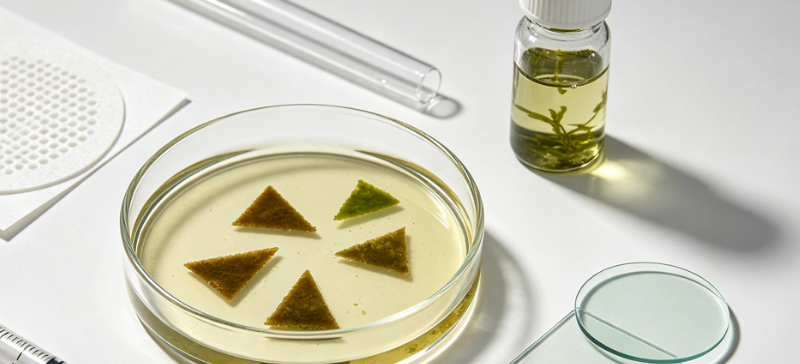
Scientific Drivers for Phaeodactylum tricornutum Characterization
Clients seeking analytical services for P. tricornutum are motivated by a diverse set of objectives that span academia and industry. In fundamental phycology, researchers require high-resolution phenotyping to elucidate the regulatory networks governing morphotype switching, photoprotection, and carbon partitioning. In biotechnology, the focus is on optimizing cultivation parameters (light, temperature, nutrients, CO2) to maximize yields of target products such as EPA-rich oils, fucoxanthin, or chrysolaminarin, and on screening genetically modified strains for enhanced productivity. For aquaculture feed manufacturers, precise quantification of amino acid profiles, lipid classes, and pigment content is essential for formulating nutritionally balanced diets. In environmental monitoring, P. tricornutum serves as a sentinel organism for marine pollution and ocean acidification studies, requiring sensitive measurements of stress biomarkers and photosynthetic performance. Our service is designed to address all these requirements, providing a flexible analytical framework that adapts to the client's specific biological question, developmental stage, and available biomass, while ensuring full traceability and compliance with international standards for data quality.
Integrated Analytical Pipeline for Holistic Diatom Profiling
Our analytical platform for P. tricornutum is structured as a modular pipeline, allowing clients to select from a comprehensive menu of assays or opt for a fully integrated multi-omics package. The core physiological module includes growth kinetics monitoring via automated cell counting (Coulter counter and flow cytometry) with fluorescence viability stains (propidium iodide and SYTO 9), photosynthetic performance evaluation by pulse-amplitude-modulated (PAM) fluorometry (measuring Fv/Fm, ΦPSII, NPQ, and rapid light curves), and nutrient consumption profiling (nitrate, phosphate, silicate) using ion chromatography. The biochemical composition module provides quantitative data on total protein (Bradford assay with BSA calibration and SDS-PAGE for subunit pattern), total carbohydrate (phenol-sulfuric acid method and monosaccharide analysis via HPAEC-PAD after acid hydrolysis), total lipid and lipid class distribution (gravimetry and TLC-FID), and pigment profiling (chlorophylls a, c, and fucoxanthin, diadinoxanthin, diatoxanthin) via HPLC-PDA with certified reference standards. The advanced lipidomics module employs UHPLC-Q-Exactive Orbitrap MS to identify and quantify >400 molecular lipid species across 12 classes, including galactolipids, phospholipids, and triacylglycerols, with positional information on acyl chains. For metabolomics, we apply GC-MS and LC-MS/MS untargeted and targeted approaches covering central carbon metabolism, amino acids, organic acids, and secondary metabolites. Finally, the transcriptomic module offers RNA-seq with strand-specific library preparation, providing differential expression analysis and pathway enrichment (KEGG, GO) to correlate gene expression changes with biochemical phenotypes.
Unmatched Analytical Sensitivity and Structural Elucidation Capability
Our platform achieves exceptional performance metrics across all analytical tiers. In pigment analysis, we routinely quantify fucoxanthin with a limit of detection (LOD) of 0.1 ng/mL and a linear dynamic range up to 100 µg/mL, enabling the detection of subtle changes due to light acclimation. For lipidomics, our HRMS setup delivers mass accuracy below 1 ppm and isotopic pattern fidelity that allows unambiguous molecular formula assignment for unknown metabolites. We perform tandem MS (MS/MS) with stepped collision energies to acquire diagnostic fragments for each lipid class, and we use retention time alignment against a library of over 300 pure lipid standards to ensure high-confidence identifications. For fatty acid analysis, our GC-FID method resolves all cis/trans isomers and positional double bond variants (e.g., 18:1n-9 vs. 18:1n-7) using a 120-m highly polar column, with a quantitation precision of ≤ 2% RSD for major fatty acids. In metabolomics, our silylation and methoximation derivatization protocols enable the detection of over 150 primary metabolites, including sugar phosphates and TCA cycle intermediates, from as little as 5 mg of freeze-dried biomass. Moreover, we offer stable isotope tracing using 13C-bicarbonate or 15N-nitrate to track carbon and nitrogen flux into specific lipid and amino acid pools, providing kinetic insights that are unavailable from static measurements alone. This combination of ultra-high sensitivity, structural resolution, and dynamic flux analysis positions our service at the cutting edge of diatom phenotyping.
Distinctive Advantages of Our Phaeodactylum tricornutum Assay Service
Our service is distinguished by several unique features that directly benefit our clients. First, we have developed species-specific optimized extraction and analysis protocols that account for the unique cell wall characteristics of P. tricornutum, including a modified Folch extraction with increased solvent polarity to ensure quantitative recovery of polar galactolipids, and an enzymatic cell wall digestion step (using lysozyme and cellulase) to improve protein and nucleic acid yields without degrading labile metabolites. Second, we maintain a reference strain collection (including the commonly used Pt1 8.6 and Pt4 ecotypes) and a comprehensive internal database of baseline physiological and biochemical values under standard conditions, enabling rapid benchmarking of client samples against established norms. Third, we provide cryopreservation and revival services for valuable strains, coupled with genetic identity verification via microsatellite or whole-genome SNP analysis, ensuring that all assays are performed on authenticated cultures. Fourth, our multi-omics integration capability allows us to perform correlation network analysis that links transcriptomic changes to metabolomic and lipidomic alterations, offering a systems-level view of the cellular response to any treatment—a service rarely offered by standard commercial laboratories. Fifth, we offer real-time qPCR panels for key genes involved in lipid biosynthesis (e.g., DGAT, PEPC, ACCase), fucoxanthin synthesis (e.g., psy, pds), and stress response (e.g., hsp70, sod), providing targeted expression data within 48 hours of sample receipt. Sixth, our quality assurance system includes regular cross-verification with certified reference materials (e.g., NIST SRM 2036 for fatty acids) and participation in international round-robin tests for diatom chemical composition, ensuring our data are globally comparable and defensible.
Interpretive Analytics and Decision-Ready Reporting
We recognize that data-rich profiles are only valuable if they yield clear, actionable conclusions. Our final reports are therefore organized to provide three levels of output: (i) a quick-reference dashboard with key performance indicators (specific growth rate, total lipid %, EPA content, fucoxanthin concentration, and stress indices) presented as traffic-light icons relative to expected ranges; (ii) a comprehensive data package containing all raw values, statistical summaries (mean, SD, CV, and confidence intervals), and chromatograms/spectra for each assay; and (iii) a scientific interpretation section that discusses the biological relevance of observed changes, suggests potential causal mechanisms, and, where applicable, recommends specific interventions to improve yields (e.g., optimal harvest time, nutrient feeding strategy, light shift). For clients conducting dose-response or time-course studies, we perform ANOVA with post-hoc testing and principal component analysis (PCA) or partial least squares discriminant analysis (PLS-DA) to highlight discriminative features and to cluster samples according to treatment groups. We also supply pathway maps manually curated for P. tricornutum, overlaying quantitative metabolomic and lipidomic data onto known biosynthetic routes to visualize flux bottlenecks. This integrative approach transforms raw analytical data into a strategic asset for research planning and process scale-up.
Applications in Strain Development, Bioprocess Optimization, and Regulatory Science
The versatility of our P. tricornutum detection service is reflected in its broad adoption across various domains. In strain engineering programs, our assays are used to characterize the phenotypes of CRISPR/Cas9-edited lines, identifying off-target effects and confirming the expected metabolic rerouting. In photobioreactor design, we provide frequent monitoring of photosynthetic efficiency and pigment composition to fine-tune light delivery and mixing regimes, maximizing volumetric productivity. In downstream processing, our lipid class analysis helps clients select the most effective extraction and fractionation methods (e.g., supercritical CO2 vs. solvent extraction) by comparing the recoverability of targeted components. For feed and food ingredient producers, we deliver the nutritional labeling data required for regulatory submissions, including full fatty acid profile, sterol content, and heavy metal screening (ICP-MS) to ensure safety and compliance. In ocean acidification and climate change research, our sensitive biomarker assays (e.g., lipid peroxidation markers, antioxidant enzyme activities) provide early-warning indicators of cellular stress before macroscopic growth effects become apparent. Our ability to adapt our analytical portfolio to these diverse applications, while maintaining consistency and high throughput, has made us the preferred partner for numerous academic consortia, industrial R&D groups, and regulatory authorities worldwide.
Commitment to Technological Excellence and Client Collaboration
We are committed to maintaining our position at the forefront of diatom analytics through ongoing investments in instrumentation, methodology development, and personnel training. Our recent upgrades include the addition of a CyTOF mass cytometer for high-dimensional single-cell profiling of protein phosphorylation and metabolic states, and a nano-LC-Orbitrap Fusion Lumos for deep proteomic coverage (detecting >3,000 proteins from a single P. tricornutum sample). We are also developing machine learning classifiers that predict growth and lipid productivity from early-stage FTIR spectra, enabling rapid, non-destructive screening of large culture collections. Our team of Ph.D. scientists includes specialists in diatom physiology, lipid biochemistry, and bioinformatics, ensuring that every project benefits from domain-specific expertise. We offer collaborative research agreements for long-term projects, including co-authorship opportunities on publications where our analytical contributions are substantial. Our flexible pricing and sample logistics—including refrigerated or frozen transport, with optional dry-shipping for RNA and protein samples—ensure that clients from any continent can access our services with minimal logistical burden. Turnaround times range from 3 days for basic growth and pigment assays to 15 days for full multi-omics integration, with express options available for time-sensitive experiments. Ultimately, our goal is to serve as an extension of your research or development team, providing not just data, but the deep insights and strategic guidance that accelerate your success with Phaeodactylum tricornutum.
In summary, our Phaeodactylum tricornutum detection service delivers a comprehensive, rigorously validated, and interpretatively rich analytical solution that empowers clients to fully exploit the biotechnological and scientific potential of this remarkable diatom. From strain characterization and process optimization to environmental monitoring and regulatory compliance, we provide the high-quality data and expert support needed to advance your research and commercial objectives. We invite you to partner with us to explore the metabolic and physiological intricacies of P. tricornutum and to turn analytical insights into tangible innovations.