Reasons for choosing our testing services
ZHONGXI Testing has obtained inspection qualification certifications from multiple countries and regions worldwide. We possess a senior testing team and advanced testing methods, providing independent, impartial, and professional third-party verification services for global carbon projects.

Internationally recognized authority
Certified by multiple international standards such as CNAS, VCS, and GS, with reports universally applicable worldwide.

Global service capability
Covering 140+ countries and regions, it supports on-site detection and remote verification in multiple languages.

Professional experimental methods
Adopt standard experimental methods to ensure accurate and reliable data.
Comprehensive Flue Gas-Driven Microalgae Flocculation and Performance Assessment Services for Carbon Capture and Biorefinery
The integration of microalgae cultivation with industrial flue gas mitigation represents a transformative strategy for carbon capture, utilization, and storage (CCUS), while simultaneously producing valuable biomass for biofuels, feed, and biochemicals. However, the successful implementation of this approach hinges on a delicate interplay between flue gas composition (CO2, SOx, NOx, particulate matter, and heavy metals), microalgal physiological responses (growth rate, photosynthetic efficiency, and stress acclimation), and flocculation efficiency for biomass harvesting—a critical downstream step that can account for up to 30% of total production costs. Our specialized detection platform provides a fully integrated analytical service that simultaneously characterizes flue gas quality, monitors algal culture health, and quantifies flocculation performance, delivering real-time, multi-parametric insights that enable clients to optimize their carbon capture systems, reduce energy consumption, and ensure consistent biomass quality. Whether the client is a power plant operator, an algal bioprocess engineer, or an environmental researcher, our service delivers the rigorous, actionable data required to validate system performance, troubleshoot operational issues, and scale up from pilot to commercial deployment.
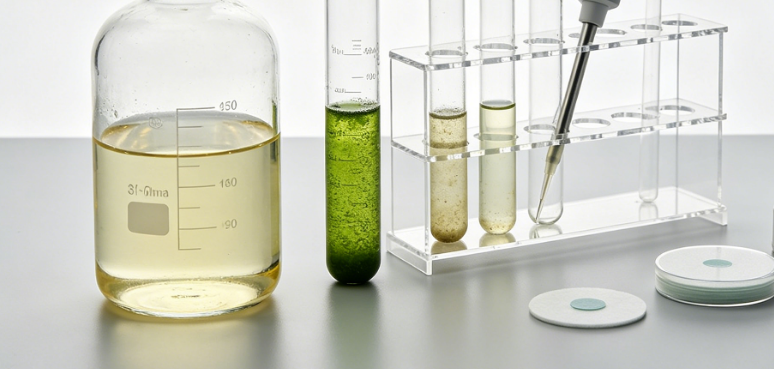
Scientific and Operational Rationale for Flue-Gas Microalgae Flocculation Assessment
Clients seeking this specialized detection service are typically confronted with complex, multi-faceted challenges. In carbon capture and biofixation, the primary driver is to quantify the actual CO2 removal efficiency of the algal system, accounting for both dissolved inorganic carbon uptake and biomass carbon content, while also assessing the impact of trace gas contaminants (SO2, NO2) on algal physiology. In biomass production, the goal is to maximize volumetric productivity and lipid or protein content, which requires precise monitoring of nutrient consumption, light penetration, and the onset of stress-induced metabolite accumulation. In harvesting operations, flocculation efficiency—measured as turbidity reduction, floc size distribution, and settling velocity—must be correlated with flocculant type and dosage, mixing conditions, and culture pH, all of which can be altered by the acidic gases in flue gas. Moreover, regulatory compliance demands accurate reporting of gas emissions (both inlet and outlet) and the heavy metal content of the harvested biomass to ensure environmental safety. Our service is architected to address these interlinked parameters through a unified analytical framework, providing clients with a holistic understanding of their system's performance and enabling evidence-based decisions for process improvement.
Multi-Modular Analytical Pipeline for Flue Gas, Algal Culture, and Flocculation
Our methodology is organized into three integrated modules that capture the entire value chain from gas input to harvested biomass. The Gas Analysis Module employs a continuous emissions monitoring system (CEMS) with nondispersive infrared (NDIR) for CO2, chemiluminescence for NOx, fluorescence for SO2, and flame ionization detection (FID) for volatile organics, achieving detection limits of 1 ppm for CO2, 0.5 ppm for NOx, and 0.2 ppm for SO2. For particulate matter, we employ gravimetric and optical particle counter with size fractionation down to PM0.5, and for metals, we use inductively coupled plasma mass spectrometry (ICP-MS) with a detection limit of 0.1 ppb. The Culture Monitoring Module integrates on-line fluorescence probes (Fv/Fm, chlorophyll a, and phycocyanin) for real-time photosynthetic health, coupled with flow cytometry for cell counts, viability (SYTOX/PI), and lipid body staining (Nile Red). We also perform off-line biochemical assays including total protein (BCA method), carbohydrate (phenol-sulfuric), and total lipid (gravimetric) on freeze-dried samples. The Flocculation Assessment Module employs bench-scale jar testing with turbidity monitoring (at 680 nm), focused beam reflectance measurement (FBRM) for chord length distribution, and image analysis for floc morphology. Additionally, we quantify zeta potential and surface charge density of both algal cells and flocculant polymers, using a combination of electrophoretic light scattering and colloidal titration, to elucidate charge neutralization and bridging mechanisms. All three modules are synchronized in time to correlate flue gas changes with algal response and subsequent flocculation behavior, providing a dynamic, causal picture of system performance.
Unparalleled Depth, Sensitivity, and Temporal Resolution
Our platform delivers exceptional analytical performance across all measured parameters. For gas-phase measurements, our CEMS system provides continuous data at 1-second intervals, enabling the capture of transient spikes or diurnal variations in flue gas composition. For the algal culture, our flow cytometer can acquire up to 10,000 events per second, resolving subpopulations of healthy, stressed, and lysed cells with a coefficient of variation below 2% for fluorescence intensity. In lipid analysis, our UHPLC-Q-Orbitrap MS identifies over 200 individual molecular lipid species, including TAGs, phospholipids, and glycolipids, with mass accuracy < 1 ppm and limit of quantification down to 0.5 ng/mL. For flocculation, our FBRM probes provide real-time, in-situ chord length distributions with a measurement frequency of 2 Hz, capturing the formation and breakup of flocs under shear stress, allowing the calculation of flocculation rate constants and floc strength factors. Moreover, we integrate all data streams into a proprietary time-series database that allows for cross-correlation analysis—for example, linking a rise in SO2 concentration to a subsequent drop in photosynthetic yield and a change in flocculant demand. This integrated, high-resolution approach provides insights that are impossible to obtain from isolated measurements, enabling our clients to fine-tune their operations with precision and confidence.
Distinctive Advantages of Our Integrated Flue-Gas Microalgae Flocculation Service
Our service offers several unique benefits that directly address the complexities of this multi-disciplinary field. First, we provide a turnkey, plug-and-play analytical system that can be deployed at the client's site for on-line monitoring, or we can perform off-line analysis on sentinel samples in our ISO 17025-accredited laboratory, with 24-hour sample-to-result turnaround for critical parameters. Second, we have developed species-specific calibration models for the most commonly used industrial strains (Chlorella, Scenedesmus, Nannochloropsis, and Phaeodactylum), which correct for matrix effects from flue-gas-derived contaminants, ensuring that fluorescence-based proxies are accurate even under challenging conditions. Third, our advanced data fusion algorithms combine gas, culture, and flocculation data to compute key performance indicators such as carbon capture efficiency (kg CO2 per kg biomass), energy consumption per ton of harvested biomass, and flocculant cost per unit dry weight—metrics that are critical for techno-economic assessment. Fourth, we offer custom-tailored stress indices that integrate photosynthetic decline, ROS accumulation, and membrane integrity loss into a single, interpretable score, allowing operators to set alarm thresholds for process upset. Fifth, we provide expert consultation on flocculant selection, including polymer charge density, molecular weight, and branching, based on our extensive library of flocculant characterization data and our understanding of the specific gas-induced surface modifications of the algal cells. Sixth, our service includes long-term stability studies on harvested biomass, monitoring for lipid oxidation, pigment degradation, and heavy metal leaching under various storage conditions, ensuring that the final product meets quality specifications.
Interpretive Reporting and Predictive Modeling
Our final deliverables go beyond raw data to provide actionable intelligence. We generate comprehensive dashboards that display real-time or time-aggregated values of all parameters, with trend lines and control limits derived from historical data. For clients with multiple operating conditions, we perform multivariate analysis (PCA, PLS) to identify the key drivers of flocculation efficiency and algal productivity, often revealing that gas composition changes have a larger effect than nutrient additions. We also offer predictive modeling using machine learning (random forest, gradient boosting) that forecasts flocculation performance based on incoming gas quality and culture state, enabling feed-forward control of flocculant dosing. All reports include fully annotated chromatograms, mass spectra, and statistical summaries, with clear descriptions of the methods, uncertainties, and compliance with standards (e.g., EPA Method 18 for gas, AOAC for lipids). For collaborative projects, we provide monthly review meetings to discuss evolving system dynamics and to adjust monitoring strategies as the process scales. This consultative approach ensures that our clients not only receive data but also gain a deep understanding of their system, empowering them to make informed decisions with confidence.
Broad Applicability Across Power Generation, Waste Treatment, and Algal Biorefinery
The versatility of our detection service makes it applicable across a wide range of industrial and research settings. In coal- and gas-fired power plants, our monitoring verifies the CO2 mitigation efficiency and ensures that the algal culture does not become inhibited by SO2 or heavy metals. In cement and steel manufacturing, where flue gas contains higher particulate loads, our particulate analysis and its impact on flocculation are critical. In wastewater treatment facilities, where biogas or digester gas is used, our service monitors H2S and volatile organic compounds alongside the algal response. In dedicated algal biorefineries, our integrated approach helps optimize the entire production chain, from flue gas sparging to final dewatering. We also cater to research institutions exploring novel flue gas compositions (e.g., from oxy-fuel combustion or chemical looping) or genetically modified strains with enhanced tolerance to contaminants. In each case, we adapt our analytical protocols to the specific gas matrix, algal strain, and flocculation chemistry, ensuring that the data are fit for purpose and directly comparable across studies.
Commitment to Innovation, Quality, and Client Partnership
We are dedicated to advancing the science and practice of flue-gas-driven algal cultivation through continuous technological improvement. Our R&D efforts are currently focused on developing wireless, miniaturized gas sensor nodes that can be distributed within photobioreactors to map gas distribution gradients, and on hyperspectral imaging for non-invasive, high-throughput assessment of algal health and lipid content. We also actively participate in international research networks on carbon capture and microalgae, ensuring our methods remain aligned with emerging best practices and regulatory frameworks. Our quality management system is certified under ISO 9001 and ISO/IEC 17025, and we engage in regular proficiency testing with accredited providers for gas analysis and algal composition. We offer flexible engagement models—from one-off feasibility studies to long-term operational monitoring contracts with on-site technician support. With a global logistics network that ensures sample integrity during transport, and a dedicated client support team available 24/7, we are committed to being a reliable, long-term partner for your flue-gas microalgae flocculation needs. We invite you to collaborate with us to optimize your carbon capture system, reduce harvesting costs, and produce high-quality algal biomass sustainably.
In conclusion, our flue-gas microalgae flocculation detection service delivers a holistic, data-driven, and operationally focused solution that connects the physicochemical characteristics of flue gas with the biological responses of microalgae and the engineering performance of flocculation. By providing high-resolution, multi-parametric data, expert interpretation, and predictive capabilities, we empower our clients to achieve superior carbon capture efficiency, consistent biomass quality, and economically viable harvesting operations. We look forward to partnering with you to unlock the full potential of this transformative technology.