Reasons for choosing our testing services
ZHONGXI Testing has obtained inspection qualification certifications from multiple countries and regions worldwide. We possess a senior testing team and advanced testing methods, providing independent, impartial, and professional third-party verification services for global carbon projects.

Internationally recognized authority
Certified by multiple international standards such as CNAS, VCS, and GS, with reports universally applicable worldwide.

Global service capability
Covering 140+ countries and regions, it supports on-site detection and remote verification in multiple languages.

Professional experimental methods
Adopt standard experimental methods to ensure accurate and reliable data.
Comprehensive Quality and Safety Assessment of Diatom Nutritional Supplements for Aquaculture, Phytoplankton Cultivation, and Biorefinery Applications
Diatom nutritional supplements—formulated as concentrated algal pastes, liquid inocula, or powdered enrichment media—are increasingly employed in aquaculture hatcheries, live-feed production, and large-scale microalgal bioreactors to enhance the growth, lipid accumulation, and stress resilience of diatom cultures (e.g., Chaetoceros, Thalassiosira, Phaeodactylum). These supplements typically contain a complex blend of macro- and micronutrients (nitrate, phosphate, silicate, trace metals), vitamins (B1, B12, biotin), organic chelators (EDTA, citrate), and sometimes growth-promoting phytohormones or extracts. However, the efficacy and safety of these products are critically dependent on their precise elemental composition, the bioavailability of nutrients, the absence of toxic contaminants (heavy metals, mycotoxins, bacterial pathogens), and the stability of labile components. Our specialized detection platform provides a fully integrated, validated suite of assays for the comprehensive characterization of diatom nutritional supplements, covering nutrient composition, trace element speciation, organic integrity, microbial contamination, and ecotoxicological safety. Whether the client is an aquaculture feed manufacturer, a fertilizer producer, a research institution, or a regulatory compliance body, our service delivers the high-resolution, actionable data required to validate product claims, optimize formulations, and ensure environmental and consumer safety.
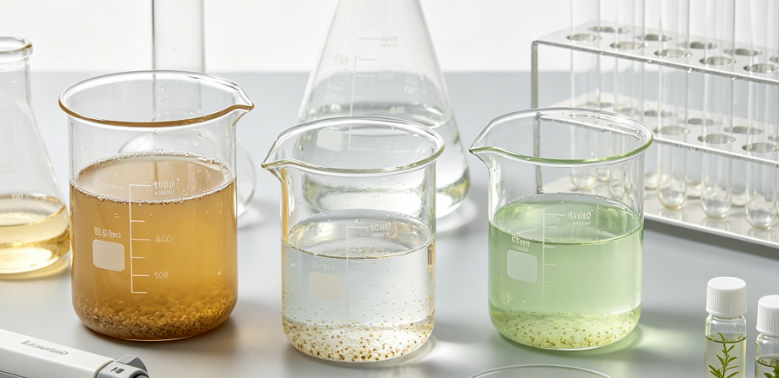
Scientific and Operational Rationale for Diatom Supplement Analysis
Clients seeking analytical services for diatom nutritional supplements are motivated by diverse objectives. In manufacturing quality control, the primary need is to verify that each batch meets the declared nutrient concentrations (e.g., N, P, Si, Fe, Mn, Zn, Cu, Mo) and that the ratios among these elements are within specified tolerances to avoid nutrient limitation or toxicity during diatom cultivation. In product development and improvement, formulators require detailed speciation of trace metals (e.g., distinguishing EDTA-chelated copper from free ionic copper) to optimise bioavailability and minimise precipitation. In safety and regulatory compliance, supplements intended for use in food-chain organisms (e.g., bivalve or shrimp larvae) must meet stringent limits for heavy metals (Pb, Cd, As, Hg), pathogens (e.g., Vibrio spp., Salmonella), and organic contaminants (e.g., pesticides, PAHs), as defined by regional feed and food safety regulations. In research and process optimisation, scientists need detailed organic profiling (amino acids, vitamins, organic acids) to understand their role in diatom metabolism and to design customised feeding strategies. Our service addresses all these needs through a modular analytical framework that combines classical wet chemistry, advanced instrumental methods, and microbiological assays, all performed under strict quality assurance protocols.
Integrated Analytical Pipeline for Holistic Diatom Supplement Profiling
Our analytical platform is organised into five interconnected modules that collectively provide a comprehensive characterisation. The Macronutrient and Ion Module quantifies total nitrogen (Kjeldahl or Dumas combustion), ammoniacal nitrogen, nitrate and nitrite by ion chromatography (IC) with LOQs of 0.05 mg/L, and total phosphorus by molybdate colorimetry after acidic digestion, achieving precision within ±2% RSD. Silicate (reactive and total) is determined by the silicomolybdate spectrophotometric method with LOQ of 0.1 mg/L. For major cations (K, Ca, Mg, Na) and trace elements (Fe, Mn, Zn, Cu, Co, Mo, Se, B), we employ inductively coupled plasma optical emission spectrometry (ICP-OES) and ICP-MS after microwave digestion, providing LOQs in the low µg/L range for trace metals and sub-ppb sensitivity for toxic elements (Pb, Cd, As, Hg, Cr). The Speciation Module uses size-exclusion chromatography coupled to ICP-MS (SEC-ICP-MS) to differentiate between labile ionic metals, organic-bound metals, and colloidal species, providing detailed information on metal bioavailability and potential toxicity. For organic nutrient profiling, the Vitamin and Amino Acid Module applies UHPLC-MS/MS for water-soluble vitamins (B1, B2, B3, B5, B6, B7, B9, B12, vitamin C) with LOQs in the ng/mL range, and UHPLC-FLD for amino acids (after derivatisation with AQC or OPA) with LOQs of 0.05 µM. Organic acids (citrate, lactate, acetate) are quantified by ion-exclusion HPLC with LOQs of 1 mg/L. The Contaminant and Residue Module screens for pesticides and polychlorinated biphenyls (PCBs) using GC-MS/MS after QuEChERS extraction, with LODs in the low ppb range, and for polycyclic aromatic hydrocarbons (PAHs) by HPLC-FLD. Mycotoxins (aflatoxins, ochratoxin A) are detected by LC-MS/MS with immunoaffinity cleanup, achieving LOQs of 0.1–0.5 µg/kg. The Microbiological Module performs total plate count, Coliforms, E. coli, Salmonella, and Vibrio spp. according to ISO or FDA/BAM methods, and includes 16S rRNA sequencing for deeper characterisation of bacterial communities. Additionally, we conduct Endotoxin testing (LAL assay) for supplements used in injectable or highly sensitive applications. The Bioassay Module evaluates the supplement's actual efficacy by performing growth promotion tests with reference diatom strains (e.g., Phaeodactylum tricornutum) under controlled conditions, measuring specific growth rates, maximum cell densities, and chlorophyll a content, and reporting a relative growth index (RGI) compared to a standard reference medium. We also perform acute toxicity tests with Artemia salina nauplii and Vibrio fischeri (Microtox®) to provide ecotoxicological endpoints (EC50, LC50). All modules are integrated through our LIMS, ensuring complete traceability and full compliance with GLP guidelines.
Unmatched Analytical Sensitivity, Speciation Capability, and Biological Relevance
Our platform consistently delivers performance metrics that exceed typical commercial standards. In trace metal analysis, our ICP-MS with collision/reaction cell technology eliminates polyatomic interferences, providing LOQs as low as 0.01 µg/L for Cd, 0.05 µg/L for Pb, and 0.02 µg/L for As in the digestate. For vitamin B12, our LC-MS/MS method achieves LOD of 0.01 µg/L and distinguishes between active cyanocobalamin and its inactive analogues. In speciation analysis, SEC-ICP-MS provides molecular weight distribution profiles that clearly differentiate organic-metal complexes from free metal ions, with quantitative precision within ±5%. Our amino acid method resolves all 20 common amino acids as well as taurine and hydroxyproline with baseline resolution (Rs > 1.8) and inter-day reproducibility < 3% RSD. For microbiological testing, our automated VITEK 2 system provides species-level identification of isolated colonies within 18 hours, and our qPCR assays for Vibrio parahaemolyticus and V. cholerae achieve LOD of 1 CFU/g after enrichment. The bioassay module uses automated cell counting (multisizer or flow cytometry) and statistical design (ANOVA with Tukey's test) to detect growth differences as small as 5% with high statistical power. Moreover, we offer nutrient bioavailability indices that combine chemical speciation with actual growth responses, providing clients with a practical metric of product performance that goes far beyond mere chemical concentration.
Distinctive Advantages of Our Diatom Supplement Detection Service
Our service offers several unique benefits that deliver exceptional value. First, we have developed matrix-specific extraction and digestion protocols for the wide variety of supplement forms—including liquid concentrates, dry powders, gels, and encapsulated formulations—with validated recoveries for each nutrient class and contaminant group. Second, we maintain a comprehensive in-house reference material library for diatom growth media (e.g., f/2, Guillard's, Walne's) and we provide comparative analysis to standard medium formulations, allowing clients to benchmark their products. Third, we offer a rapid screening service using portable X-ray fluorescence (pXRF) for elemental composition (with calibration against ICP-OES) and NIR spectroscopy for moisture and organic matter, providing preliminary results within 1 hour, ideal for incoming inspection and batch conformity checks. Fourth, our customised stability studies simulate real storage and shipping conditions (temperature cycling, light exposure, humidity), with periodic nutrient re-analysis to provide shelf-life predictions and identify degradation pathways (e.g., silicate polymerisation, vitamin photodegradation). Fifth, we provide integrated data interpretation that links analytical results to practical outcomes: for example, we calculate the estimated maximum sustainable cell density and nutrient uptake rates based on the supplement's composition, aiding end-users in dosing decisions. Sixth, all our methods are accredited under ISO/IEC 17025 and follow AOAC, EPA, and ISO standard procedures, with full validation dossiers that are readily accepted by regulatory bodies. Our team includes marine biologists and analytical chemists who provide consultative interpretation, helping clients to understand, for instance, the impact of trace metal ratios on diatom silicification, or the potential for iron precipitation at certain pH ranges.
Advanced Data Integration, Predictive Modeling, and Interpretive Reporting
Our reporting philosophy ensures that analytical data are transformed into actionable intelligence. We provide a comprehensive final report that includes: (i) an executive summary dashboard with key quality indices (nutrient composition summary, contaminant status, bioactivity score) expressed as a star rating or pass/fail against client-defined specifications; (ii) a detailed analytical section containing all raw data, chromatograms, spectra, calibration curves, and QC results, accompanied by detailed method descriptions; and (iii) a scientific interpretation section that discusses the implications of the results for the intended application—for example, whether the N/P/Si ratio is optimal for target diatom species, or whether a moderate metal chelator excess might improve long-term stability. We include comparative analyses with reference media or previous batches, using principal component analysis (PCA) to visualize multi-dimensional differences. For clients with multiple batches, we perform statistical process control (SPC) charts to detect trends and warn of deviations. We also provide customised dosing calculators that translate analytical concentrations into recommended application rates (mL of supplement per litre of culture) based on desired final nutrient levels. Our commitment to transparency includes offering all raw data files for client review and export.
Broad Applications Across Aquaculture Feed, Phytoplankton Production, and Research Institutions
The versatility of our diatom supplement detection service makes it essential across the entire supply chain. In aquaculture hatcheries, our testing ensures that live feed (rotifers, copepods) enriched with diatom supplements carry adequate nutrients and are free from pathogens. In commercial diatom production facilities, our analysis optimises media formulation and monitors nutrient depletion. In fertiliser and plant biostimulant sectors, our characterization verifies nutrient content for product labelling. In environmental agencies, our ecotoxicology screening provides data for product registration. In research laboratories, our detailed profiling supports studies on silicon metabolism, trace metal uptake, and diatom-bacteria interactions. Our ability to adapt methods to each application—from high-volume routine testing to specialised research-grade analysis—ensures that we serve clients at every stage of product development and commercialisation.
Commitment to Innovation, Quality, and Client Collaboration
We are continuously advancing our analytical capabilities through R&D investments. Our current projects include microfluidic electrochemical sensors for real-time nutrient monitoring in culturing systems, and the development of high-throughput bioassays using automated phototaxis tracking to screen multiple supplement formulations simultaneously. We actively contribute to international standardisation efforts for algal feed additives and participate in proficiency testing programs to maintain our competitive edge. Our quality system is certified to ISO 9001 and ISO 17025, and we follow GLP for all regulated studies. We offer flexible service agreements—from single-sample analysis to multi-year partnerships with dedicated account management, volume pricing, and guaranteed turnaround. Our global logistics network provides specialised packaging (amber vials, desiccated containers, temperature-controlled shipping) to preserve sample integrity. Turnaround times are typically 3–6 business days for standard panels and 10 business days for comprehensive packages. We maintain open communication, providing updates at every stage and offering expert advice on result interpretation. Ultimately, our success is driven by our clients' ability to produce safe, effective, and reliable diatom supplements. We invite you to partner with us for rigorous, actionable, and innovative analytical support.
In summary, our diatom nutritional supplement detection service delivers a comprehensive, precise, and application-focused analytical solution that integrates elemental speciation, organic profiling, microbiological safety, and bioactivity testing. By combining advanced instrumentation with deep marine biology expertise, we empower our clients to optimise formulations, demonstrate regulatory compliance, and enhance the performance of their products in the critical field of diatom cultivation and aquaculture. We look forward to supporting your quality assurance and development goals with our dedicated analytical capabilities.