Reasons for choosing our testing services
ZHONGXI Testing has obtained inspection qualification certifications from multiple countries and regions worldwide. We possess a senior testing team and advanced testing methods, providing independent, impartial, and professional third-party verification services for global carbon projects.

Internationally recognized authority
Certified by multiple international standards such as CNAS, VCS, and GS, with reports universally applicable worldwide.

Global service capability
Covering 140+ countries and regions, it supports on-site detection and remote verification in multiple languages.

Professional experimental methods
Adopt standard experimental methods to ensure accurate and reliable data.
Comprehensive Pectin Esterase Detection and Activity Profiling for Food Quality, Plant Physiology, and Bioprocess Control
Pectin esterase (PE; EC 3.1.1.11) is a ubiquitous enzyme that catalyzes the de‑esterification of pectin, releasing methanol and yielding low‑methoxyl pectin. This enzyme plays a pivotal role in plant development, fruit ripening, and tissue softening, and is of paramount importance in the food, beverage, and textile industries. In juice and wine production, uncontrolled PE activity leads to undesirable cloud loss, reduced viscosity, and methanol formation, compromising product quality and safety. In plant physiology, PE is a marker of fruit maturity and stress response. Consequently, the accurate, sensitive, and specific detection of PE—including its activity, protein abundance, and isoform distribution—is essential for quality assurance, process optimization, and fundamental research. Our specialized detection platform offers a fully validated suite of analytical assays tailored to PE, delivering high‑precision data that empower clients to control product quality, troubleshoot production issues, and advance scientific understanding.
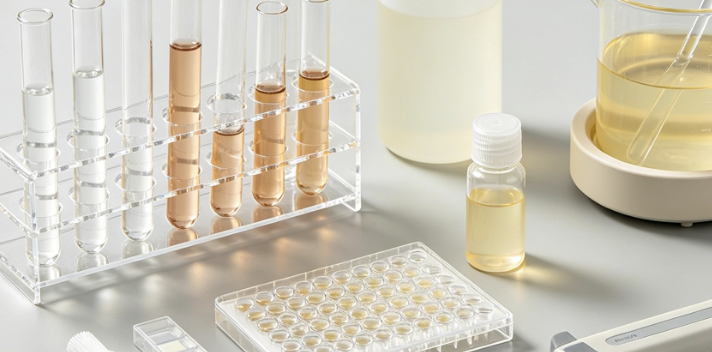
Understanding the Client's Need for Pectin Esterase Detection
Clients seeking PE detection services are typically driven by one or more of the following critical objectives: (i) monitoring PE activity in fruit juices, wine, and other beverages to ensure stability and clarity, and to prevent excessive methanol generation; (ii) assessing the efficacy of thermal or enzymatic inactivation treatments during food processing; (iii) characterizing PE isoforms in plant tissues to study ripening, pathogen attack, or stress responses; (iv) screening for PE-producing microorganisms in fermentation processes or contaminated products; and (v) evaluating the performance of commercial PE preparations used as processing aids in the food industry. Our service is specifically designed to answer these questions with scientific rigor, providing clients with a complete functional and molecular profile of their PE system.
Integrated Analytical Pipeline for Comprehensive Pectin Esterase Characterization
Our analytical platform comprises four interconnected modules that collectively deliver a comprehensive evaluation of PE status in any sample matrix. The Activity Quantification Module uses a well‑validated continuous spectrophotometric assay employing pectin and bromothymol blue, or a pH‑stat method with pectin as substrate, to measure the rate of methoxyl group release. We determine Michaelis‑Menten parameters (Km, Vmax) with precision within ±3% RSD and an LOD of 0.01 U/mL. For higher sensitivity and for turbid or coloured samples, we offer a fluorometric assay using methanol oxidase coupled with Amplex Red, achieving LOQs as low as 0.001 U/mL and linearity over three orders of magnitude. The Protein Quantitation and Isoform Module employs ELISA using isoform‑specific polyclonal antibodies raised against conserved or variable epitopes of plant, fungal, and bacterial PE, providing LOQs of 0.05 ng/mL and inter‑assay precision < 5%. For absolute quantitation and isoform discrimination, we use LC‑MS/MS with parallel reaction monitoring (PRM) targeting unique tryptic peptides, achieving LOQs in the low fmol range and enabling the simultaneous quantitation of up to five PE isoforms in a single run. The Inhibitor and Stability Module assesses the effect of potential inhibitors (e.g., polyphenols, proteinaceous PE inhibitors) and processing conditions (temperature, pH, high pressure) on PE activity, providing IC50 values and thermal inactivation kinetics (D‑ and z‑values) with uncertainty < 5%. The Microbial and Contamination Module uses 16S or ITS amplicon sequencing to identify PE‑producing microorganisms in complex samples, and qPCR to quantify their abundance, with LOQs of 10 CFU/mL for specific targets. All modules are validated with reference PE enzymes (e.g., from Aspergillus niger, orange peel, tomato) and include stringent quality controls (system suitability, blank subtraction, internal standards, and replicate analyses).
Unmatched Analytical Sensitivity, Specificity, and Mechanistic Depth
Our platform routinely delivers performance that exceeds typical industry and academic standards. In activity assays, we achieve signal‑to‑noise ratios > 100:1 at LOD, and our kinetic analysis software uses global fitting of initial rates to provide precise parameter estimates with 95% confidence intervals typically within ±5%. For protein quantitation by PRM, our chromatographic gradient resolves isoform‑specific peptides with retention time reproducibility < 0.5% RSD and peak area precision < 4%, even in matrices rich in interfering polysaccharides and phenolics. In stability studies, we use controlled temperature and pH environments to generate degradation curves, and we derive activation energy (Ea) using Arrhenius plots, enabling accurate shelf‑life predictions. We also offer native PAGE with activity staining to visualise active PE isoforms, and size‑exclusion chromatography with multi‑angle light scattering (SEC‑MALS) to detect aggregation or complex formation with other macromolecules. This multi‑dimensional data ensures that our clients receive not just an activity value, but a comprehensive understanding of the enzyme's functional state, stability, and interaction behaviour.
Distinctive Advantages of Our Pectin Esterase Detection Service
Our service provides several unique benefits that directly address client challenges. First, we have developed matrix‑specific sample preparation protocols for a wide variety of sources—including fruit juices, wine, plant extracts, microbial cultures, and processed food products—that effectively remove interfering pigments, phenolics, and pectin aggregates while preserving enzyme activity, achieving recoveries of 92–105% for spiked standards. Second, we maintain a comprehensive reference database of PE sequences and kinetic properties from over 50 species, allowing rapid identification of unknown isoforms and benchmarking against known literature. Third, we offer a rapid screening service using a microplate‑based colorimetric assay that provides semi‑quantitative activity estimates within 2 hours of sample receipt, ideal for high‑throughput screening of process samples or mutant libraries. Fourth, our customised stability and inactivation studies can simulate actual processing conditions (e.g., pasteurisation, high‑pressure homogenisation) and provide data that are directly applicable to plant scale‑up and quality assurance. Fifth, we provide integrated interpretation that links PE activity, protein level, and isoform distribution to product quality metrics—for example, correlating residual PE activity with the likelihood of cloud loss in juice or with methanol content. Sixth, all our methods comply with ICH Q2(R1), AOAC, and ISO 17025 guidelines, and we supply full validation dossiers (specificity, linearity, accuracy, precision, LOD, LOQ, robustness) along with detailed SOPs, ensuring that our data are readily accepted by regulators and peer‑reviewed journals. Our team of enzymologists, food chemists, and molecular biologists provides consultative interpretation, helping clients to understand the biological and process significance of changes in PE parameters, and to design effective control strategies.
Advanced Data Integration, Predictive Modeling, and Reporting
Our reporting transforms analytical data into actionable operational and scientific knowledge. We deliver a comprehensive final report that includes: (i) an executive dashboard with key metrics (specific activity, Km, IC50, thermal death time) displayed as concise scorecards; (ii) a detailed analytical section containing raw data, calibration curves, chromatograms, and kinetic fits; (iii) a statistical comparison of samples against reference controls or historical data, with p‑values and confidence intervals; and (iv) an interpretive narrative that contextualises the results—for example, explaining how a high Km may indicate a substrate‑binding mutation, or how a shift in isoform profile could result from microbial contamination. For clients with multiple samples, we provide multivariate analysis (PCA, hierarchical clustering) to reveal patterns and outliers. We also offer predictive models that estimate the required processing time or inhibitor concentration needed to reduce PE activity to a desired level, using our internally developed kinetic simulations. All raw data files (e.g., .xlsx, .raw, .cdf, .gel images) are supplied to ensure full transparency and re‑analysis capability.
Broad Applications Across Food Processing, Plant Science, and Biotechnology
The versatility of our PE detection service spans a wide range of sectors. In fruit juice, wine, and cider production, our activity and stability tests support the design of effective pasteurisation schedules and the selection of appropriate PE inhibitors. In plant physiology and post‑harvest research, our isoform‑specific quantitation elucidates the role of PE in fruit softening, disease resistance, and stress tolerance. In industrial enzyme manufacturing, our characterisation ensures batch‑to‑batch consistency and helps define product specifications. In biotechnology and biocatalysis, our kinetic and inhibition data guide enzyme engineering for improved performance. In food safety and quality control, our microbial detection module identifies spoilage organisms that may contribute to PE activity. In academic research, our comprehensive biochemical and molecular profiling supports publication‑quality studies on PE regulation and evolution. Our ability to tailor the analytical package to the specific sample type, objective, and regulatory context ensures that we serve both small laboratories and large industrial enterprises.
Commitment to Innovation, Quality, and Client Partnership
We are dedicated to advancing PE analytics through continuous technological improvement. Our current R&D includes the development of lab‑on‑a‑chip systems for real‑time PE activity monitoring in flowing streams, and the application of machine learning to predict PE stability from primary sequence data. We actively participate in inter‑laboratory proficiency testing for enzyme activity measurement and contribute to the development of reference materials. Our quality system is ISO 9001 and ISO 17025 certified, and we follow GLP for all regulatory studies. We offer flexible engagement models—from single‑sample analysis to long‑term monitoring contracts—with dedicated project managers, volume discounts, and priority handling for time‑sensitive samples. Our global logistics provide specialised shipping kits (with stabilising buffers and temperature control) to preserve PE activity during transit. Turnaround times range from 2 business days for rapid activity screening to 10 business days for comprehensive kinetic and isoform profiling. We maintain open communication, providing preliminary results upon request and final reports with expert commentary. Our success is measured by the confidence our clients have in their process control and product quality. We invite you to partner with us to unlock the full potential of your pectin esterase analysis.
In summary, our pectin esterase detection service delivers a comprehensive, precise, and application‑oriented analytical solution that integrates enzyme activity, protein quantitation, isoform discrimination, stability testing, and microbial detection. By combining advanced instrumentation with deep expertise in enzymology and food science, we empower our clients to ensure product quality, optimise processes, and advance scientific knowledge. We look forward to supporting your PE analysis needs with our state‑of‑the‑art analytical platform.