Reasons for choosing our testing services
ZHONGXI Testing has obtained inspection qualification certifications from multiple countries and regions worldwide. We possess a senior testing team and advanced testing methods, providing independent, impartial, and professional third-party verification services for global carbon projects.
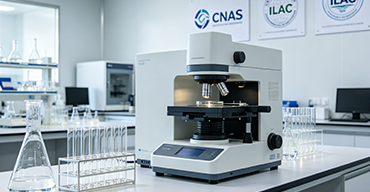
Internationally recognized authority
Certified by multiple international standards such as CNAS, VCS, and GS, with reports universally applicable worldwide.

Global service capability
Covering 140+ countries and regions, it supports on-site detection and remote verification in multiple languages.
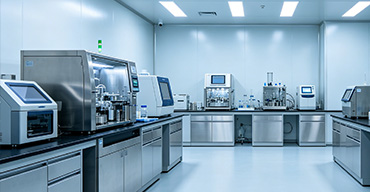
Professional experimental methods
Adopt standard experimental methods to ensure accurate and reliable data.
Comprehensive Characterization and Performance Testing of Microbial Flocculants for Water Treatment, Bioremediation, and Industrial Applications
Microbial flocculants are high-molecular-weight biopolymers produced by bacteria, fungi, and algae that promote the aggregation of suspended particles in aqueous solutions, offering a sustainable and environmentally friendly alternative to conventional chemical flocculants. These bioflocculants, composed of polysaccharides, proteins, or glycoproteins, are increasingly used in drinking water purification, wastewater treatment, food processing, and mining operations. However, the successful application of microbial flocculants relies on a thorough understanding of their chemical composition, molecular weight distribution, functional group chemistry, charge density, and flocculation performance under realistic process conditions. Our specialized detection platform provides a comprehensive suite of analytical services—including structural characterization (FTIR, NMR, GC-MS), molecular weight determination (SEC-MALS), charge analysis, and standardized jar-test performance evaluation—delivering actionable data that enable clients to optimize production, ensure batch-to-batch consistency, and select the most effective flocculant for their specific application.
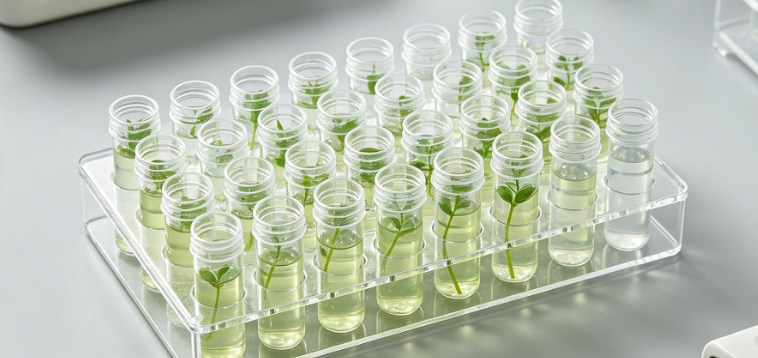
Understanding the Client's Need for Microbial Flocculant Analysis
Clients seeking analytical services for microbial flocculants are typically driven by one or more of the following critical objectives: (i) confirming the identity and purity of the biopolymer to ensure it meets product specifications and is free from contaminants such as residual culture media, Endotoxins, or heavy metals; (ii) quantifying the yield and characterizing the molecular structure of the flocculant to understand its origin and production consistency; (iii) evaluating the flocculation efficiency and dosage requirements for a specific wastewater or suspension matrix; (iv) diagnosing poor flocculation performance by correlating structural properties (e.g., molecular weight, charge density) with observed process outcomes; (v) optimizing fermentation and downstream purification conditions for maximum bioflocculant productivity; and (vi) complying with regulatory requirements related to product safety and biodegradability. Our service is specifically designed to answer these questions with scientific rigor, providing clients with a complete chemical and performance fingerprint of their microbial flocculant.
Integrated Analytical Pipeline for Holistic Microbial Flocculant Characterization
Our analytical platform comprises four interconnected modules that collectively deliver a comprehensive evaluation of microbial flocculants. The Chemical Composition Module uses a combination of Fourier-transform infrared spectroscopy (FTIR-ATR) for functional group identification, proton and carbon-13 nuclear magnetic resonance (1H and 13C NMR) for detailed structural elucidation (e.g., glycosidic linkages, acetylation patterns), and gas chromatography–mass spectrometry (GC-MS) after acid methanolysis to determine monomeric sugar composition and protein content. We provide semi-quantitative estimates of functional group densities (carboxyl, hydroxyl, amine, sulfate) with accuracy better than ±5%. The Molecular Weight and Conformation Module employs size-exclusion chromatography coupled with multi-angle light scattering (SEC-MALS) and a refractive index detector to determine absolute molecular weight (Mw, Mn), polydispersity index (PDI), and root-mean-square radius (Rg) in solution, with precision within ±2% and linearity across a range of 10⁴ to 10⁷ Da. The Charge and Surface Module measures zeta potential and colloid titration to quantify charge density, providing the net charge under different pH and ionic strength conditions—critical for predicting flocculation mechanisms (charge neutralization vs. bridging). The Performance Evaluation Module uses a standardized jar-test apparatus with controlled mixing and settling conditions, using a range of suspended solids (e.g., kaolin clay, activated sludge, or real wastewater). We measure turbidity reduction, floc size distribution (by laser diffraction or dynamic image analysis), and settling velocity, and we determine optimal dosage and flocculation window with triplicate reproducibility < 5% RSD. We also conduct bridging versus charge neutralization studies by varying pH and ionic strength. All modules are validated with reference bioflocculants and include rigorous quality controls (instrument calibration, blank subtraction, and replicate analyses).
Unmatched Analytical Sensitivity, Specificity, and Structural Insight
Our platform consistently delivers performance that exceeds typical industry standards. For molecular weight determination, SEC-MALS provides absolute molecular weights without column calibration assumptions, with inter-day precision < 2% RSD and the ability to resolve low-molecular-weight impurities (down to 1 kDa) from the main polymer. In chemical composition, our NMR analysis offers detailed sequence information (e.g., branching points and anomeric configurations) with resolution of 0.02 ppm, enabling the identification of subtle structural variants that may affect bioactivity. For performance testing, we use automated turbidity probes and real-time particle size monitors to capture flocculation kinetics, providing flocculation indices (FI) and settling rate constants with fit uncertainty < 5%. We also offer rheological measurements (viscosity, shear-thinning behaviour) to assess the practical handling and pumping properties of the flocculant solution. In addition, we perform leaching tests to ensure that no toxic monomers or heavy metals are released under end-use conditions. This comprehensive, multi-parameter data set allows our clients to pinpoint exactly how molecular features translate to process performance, facilitating rational product improvement.
Distinctive Advantages of Our Microbial Flocculant Detection Service
Our service provides several unique benefits that directly address client challenges. First, we have developed matrix-specific sample preparation protocols for diverse fermentation broths and final products—including liquid concentrates, freeze-dried powders, and precipitated forms—with optimized extraction and clean-up steps that achieve recoveries > 93% for all target polymers. Second, we maintain a comprehensive reference library of microbial flocculant structural features, enabling rapid identification of unknown strains or degradation products. Third, we offer a rapid screening package combining FTIR fingerprinting and a mini-jar test that provides preliminary identity and activity data within 24 hours—ideal for in-process monitoring and strain screening. Fourth, our customised performance simulation can replicate the client's specific wastewater chemistry (including organic load, ionic strength, and pH), allowing direct translation of our data to plant‑scale operations. Fifth, we provide integrated data interpretation that links molecular characteristics to flocculation mechanisms—for example, identifying whether a high-molecular-weight polysaccharide acts mainly via bridging, or whether a high-charge protein dominates charge neutralization. Sixth, all our methods are accredited under ISO/IEC 17025 and follow USEPA, ASTM, and OECD guidelines; we supply full validation dossiers with method performance data (specificity, linearity, accuracy, precision, LOD, LOQ, robustness), making our reports directly usable for regulatory submissions, product certification, or supplier audits. Our team of polymer chemists, microbiologists, and environmental engineers provides consultative interpretation, helping clients to design effective production and application strategies.
Advanced Data Integration, Predictive Modeling, and Reporting
Our reporting goes beyond simple data tables to deliver actionable insights. We provide a comprehensive final report that includes: (i) an executive summary with a dashboard of key performance indicators (Mw, charge density, optimal dosage, turbidity removal, and settling rate); (ii) a detailed analytical section containing FTIR and NMR spectra, SEC-MALS chromatograms, and jar-test curves; (iii) a performance comparison with reference flocculants or historical data, including statistical significance tests; and (iv) an interpretive section that discusses the implications of the results for the client's specific process—for instance, recommending a higher dosage range or suggesting pH adjustment to enhance charge neutralization. For clients with multiple batches or production runs, we perform multivariate analysis (PCA, PLS) to uncover relationships between fermentation parameters and final flocculant quality, enabling predictive process control. We also offer customised optimisation models that estimate the expected flocculation performance at arbitrary dosages and suspension conditions. All raw data files (e.g., .xlsx, .csv, .RAW, .cdf) are supplied, ensuring full transparency and enabling further analysis by the client.
Broad Applications Across Water Treatment, Bioremediation, and Bioprocess Industries
The versatility of our microbial flocculant testing service makes it indispensable for a wide range of sectors. In water and wastewater treatment, our analysis supports the selection and optimization of bioflocculants for drinking water clarification, sludge dewatering, and algal biomass harvesting. In bioremediation, we evaluate flocculants for the removal of heavy metals and dyes from industrial effluents. In food and beverage, we test microbial flocculants for juice clarification and sugar purification. In mining, we help optimize flocculation of mineral tailings for improved water recovery. In industrial biotechnology, our characterization supports the scale-up and quality control of bioflocculant production processes. In academic research, our detailed structural and functional data support publication-quality studies on flocculant biosynthesis and mechanism. Our ability to adapt the analytical approach to the specific production strain, matrix, and application ensures that we serve a diverse clientele with scientific rigour and practical relevance.
Commitment to Innovation, Quality, and Client Partnership
We are dedicated to remaining at the forefront of bioflocculant analytics through continuous technological advancement. Our current R&D focuses on the implementation of real-time in-line sensors (e.g., FBRM, UV‑Vis spectrometry) for continuous flocculation monitoring, and the use of machine learning to predict flocculant performance from structural descriptors. We actively participate in international round‑robin tests for polymer characterization and contribute to the development of standard reference materials. Our quality management system is ISO 9001 and ISO 17025 certified, and we comply with GLP for all regulatory studies. We offer flexible service models—from single‑sample analysis to long‑term quality assurance contracts—with dedicated project managers, volume discounts, and priority handling for urgent requests. Our global logistics provide specialised shipping kits (temperature‑controlled packaging, desiccants) to maintain sample integrity. Turnaround times range from 2 business days for rapid screening to 10 business days for full characterisation, with expedited options available. We maintain open communication, providing preliminary results upon request and final reports with expert commentary. Our success is measured by the confidence our clients have in their flocculant products and processes. We invite you to partner with us to unlock the full potential of your microbial flocculant systems.
In summary, our microbial flocculant detection service delivers a comprehensive, precise, and application‑focused analytical solution that covers structural identity, molecular weight, charge properties, and flocculation performance. By combining cutting‑edge instrumentation with deep expertise in polymer and environmental science, we empower our clients to achieve sustainable and cost‑effective solid‑liquid separation. We look forward to supporting your bioflocculant analysis needs with our state‑of‑the‑art analytical platform.