Reasons for choosing our testing services
ZHONGXI Testing has obtained inspection qualification certifications from multiple countries and regions worldwide. We possess a senior testing team and advanced testing methods, providing independent, impartial, and professional third-party verification services for global carbon projects.
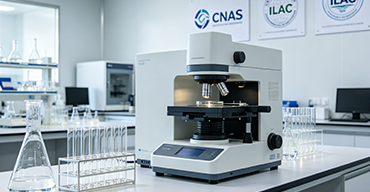
Internationally recognized authority
Certified by multiple international standards such as CNAS, VCS, and GS, with reports universally applicable worldwide.

Global service capability
Covering 140+ countries and regions, it supports on-site detection and remote verification in multiple languages.
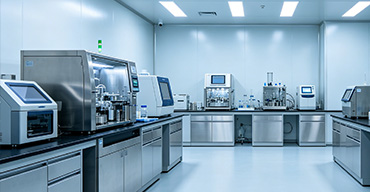
Professional experimental methods
Adopt standard experimental methods to ensure accurate and reliable data.
Comprehensive Cellulase Detection and Activity Profiling Services for Industrial Biocatalysis, Biofuel Production, and Food Processing
Cellulases are a multi‑enzyme complex that hydrolyses cellulose into fermentable sugars, playing a pivotal role in numerous industrial applications, including biofuel production, textile processing, pulp and paper manufacturing, and food and beverage processing. The accurate and comprehensive characterisation of cellulase activity—encompassing endoglucanase (EG), exoglucanase (cellobiohydrolase, CBH), and β‑glucosidase (BGL) activities—is essential for enzyme quality control, process optimisation, and regulatory compliance. Our specialised detection platform provides a fully validated suite of analytical and biochemical assays tailored to all major cellulase components, delivering the high‑precision, actionable data that clients require to optimise bioprocesses, ensure product consistency, and accelerate innovation.

Scientific and Industrial Rationale for Cellulase Analysis
Clients seeking cellulase detection services are motivated by a range of strategic objectives. In biofuel and biorefinery production, the primary need is to quantify the specific activities of the individual cellulase components (EG, CBH, BGL) to optimise enzyme cocktails for maximum glucose release from lignocellulosic feedstocks. In textile and laundry industries, cellulases are used for biopolishing and colour brightening; precise activity profiling ensures consistent fabric quality and minimal fibre damage. In food and beverage processing, cellulases are employed in juice clarification and extraction of bioactive compounds; accurate activity measurement ensures product quality and process efficiency. In enzyme manufacturing, verifying the potency and stability of cellulase batches is critical for product release and for meeting customer specifications. In regulatory submissions, comprehensive data on enzyme activity, substrate specificity, and stability are required for food additive approvals and for the registration of novel enzyme products. Our service is architected to address these diverse needs with a flexible, ISO 17025‑accredited analytical framework that adapts to the specific enzyme source (fungal, bacterial, recombinant), the sample matrix (fermentation broths, purified enzyme solutions, formulated products), and the client's regulatory context.
Integrated Analytical Platform for Holistic Cellulase Characterisation
Our analytical platform is built upon a validated, multi‑parameter approach to cellulase characterisation, integrating four interconnected modules: the Individual Activity Profiling Module, the Substrate Specificity and Kinetics Module, the Product Profile and Synergy Module, and the Stability and Formulation Module. The Individual Activity Profiling Module quantifies the three key cellulase activities using specific, well‑validated substrates. Endoglucanase activity is measured using carboxymethylcellulose (CMC) as a substrate, with the release of reducing sugars quantified by the dinitrosalicylic acid (DNS) method. Exoglucanase (cellobiohydrolase) activity is assessed using p‑nitrophenyl‑β‑D‑cellobioside (pNPC) or by the release of reducing sugars from microcrystalline cellulose (Avicel). β‑Glucosidase activity is determined using p‑nitrophenyl‑β‑D‑glucopyranoside (pNPG) as a substrate. We determine the specific activity (U/mg protein) for each component with precision within ±2% RSD and a limit of detection (LOD) as low as 0.001 U/mL. The Substrate Specificity and Kinetics Module evaluates the enzyme's activity against a panel of natural and synthetic substrates (e.g., CMC, Avicel, phosphoric acid‑swollen cellulose, cellobiose, cello‑oligosaccharides) and calculates Michaelis‑Menten parameters (Km, Vmax, kcat) for each component, with 95% confidence intervals typically within ±5%. The Product Profile and Synergy Module uses high‑performance liquid chromatography with refractive index detection (HPLC‑RID) or high‑performance anion‑exchange chromatography with pulsed amperometric detection (HPAEC‑PAD) to analyse the hydrolysis products (glucose, cellobiose, cellotriose, etc.) from a standardised cellulose substrate (e.g., Avicel) over time. This provides a detailed profile of the enzyme's mode of action and allows the calculation of synergy factors between the individual components. The Stability and Formulation Module assesses the enzyme's stability under various storage conditions (temperature, pH, ionic strength) and its resistance to thermal denaturation and proteolytic degradation. We use accelerated stability studies with time‑course activity monitoring and Arrhenius modelling to predict shelf‑life and identify critical degradation pathways. We also perform differential scanning calorimetry (DSC) to determine the melting temperature (Tm) of the enzyme, providing a direct measure of its conformational stability. All modules are validated with reference cellulase standards (e.g., from commercial enzyme preparations or the National Institute of Standards and Technology) and include rigorous quality controls (system suitability, blank subtraction, and replicate analyses).
Unmatched Analytical Depth, Sensitivity, and Process Relevance
Our platform consistently delivers performance that surpasses typical industry and academic standards. In activity assays, we achieve signal‑to‑noise ratios > 300:1 at the LOD, with linearity over four orders of magnitude and Z’‑factors consistently > 0.8, making our assays highly robust for high‑throughput screening of mutant libraries or fermentation conditions. For kinetic characterisation, our fitting software uses global non‑linear regression to provide precise estimates of Km and Vmax, with residual errors < 2%. In product profiling, our HPAEC‑PAD method resolves oligosaccharides up to a degree of polymerisation (DP) of 12 with baseline separation and retention time reproducibility < 0.2% RSD. In stability studies, we apply accelerated degradation models that account for both first‑order and autocatalytic pathways, providing robust predictions of half‑life (t1/2) and activation energy (Ea). Additionally, we offer isothermal titration calorimetry (ITC) to measure the binding thermodynamics of inhibitors and substrates, providing ΔH, ΔS, and binding stoichiometry with precision within ±2%. This multi‑layered approach ensures that our clients receive not only a simple activity value but a comprehensive understanding of the enzyme's molecular integrity, stability, and functional performance under process‑relevant conditions.
Distinctive Advantages of Our Cellulase Detection Service
Our service offers several unique benefits that directly address client challenges. First, we have developed matrix‑specific sample preparation protocols for a wide variety of cellulase products—including crude fermentation broths, purified enzyme solutions, immobilised preparations, and formulated powders—that effectively remove interfering substances (e.g., salts, pigments, and reducing sugars) while preserving enzymatic activity, achieving recoveries > 95% for all tested matrices. Second, we maintain a comprehensive reference library of cellulase isoforms from major fungal (e.g., Trichoderma, Aspergillus) and bacterial sources, enabling rapid identification and benchmarking against industrial standards. Third, we offer a rapid screening service using a microplate‑based multiplex assay that provides semi‑quantitative activity data for all three cellulase components within 3 hours of sample receipt—ideal for high‑throughput screening of mutant libraries or fermentation conditions. Fourth, our customised process simulation studies can replicate the client's specific reaction conditions (substrate loading, temperature, pH, agitation) and monitor activity and product formation over time, providing statistically robust predictions of enzyme performance and operational stability. Fifth, we provide integrated data interpretation that links enzyme activity, substrate specificity, and stability to industrial performance metrics (e.g., glucose yield, cellulose conversion, viscosity reduction), enabling clients to predict full‑scale performance without extensive pilot trials. Sixth, all our methods comply with ICH Q2(R1), AOAC, and ISO 17025 guidelines, and we supply full validation dossiers (specificity, linearity, accuracy, precision, LOD, LOQ, robustness) along with detailed SOPs, ensuring that our data are readily accepted by regulatory authorities and customers. Our team of enzymologists, carbohydrate chemists, and bioprocess engineers provides consultative interpretation, helping clients to translate analytical findings into actionable improvements—for example, recommending optimal enzyme dosages, identifying synergistic enzyme combinations, or designing stabilisation strategies for enhanced shelf‑life.
Advanced Data Integration, Predictive Modeling, and Reporting
Our reporting transforms analytical data into strategic operational and scientific knowledge. We deliver a comprehensive final report that includes: (i) an executive dashboard with key metrics (specific activity of EG, CBH, and BGL; Km for each; glucose yield; and predicted shelf‑life) presented as concise scorecards; (ii) a detailed analytical section containing raw data, calibration curves, chromatograms, and kinetic fits; (iii) a statistical comparison of samples against reference standards or historical batches, with p‑values and confidence intervals; and (iv) an interpretive narrative that contextualises the results—for example, explaining how a high Km for CMC indicates low substrate affinity, or how a shift in the product profile indicates a change in enzyme mode of action. For clients with multiple batches or formulation variants, we provide multivariate analysis (PCA, PLS‑DA) to identify critical quality attributes and to guide process optimisation. We also offer predictive models that estimate substrate conversion rates or product yields based on the measured enzyme characteristics and process parameters, using our internally developed machine learning algorithms. All raw data files (e.g., .xlsx, .raw, .cdf) are supplied to ensure full transparency and re‑analysis capability.
Broad Applications Across Biofuel, textile, Food, and Feed Industries
The versatility of our cellulase detection service spans a wide range of industries. In biofuel production, our assays support the selection and quality control of enzyme cocktails for lignocellulosic biomass hydrolysis, optimising sugar release and reducing enzyme costs. In textile processing, we characterise cellulases for biopolishing and denim finishing, ensuring consistent fabric quality. In food processing, we quantify cellulase activity for juice clarification, flavour enhancement, and extraction of bioactive compounds. In animal feed, we verify the activity of cellulase supplements to improve fibre digestibility and feed efficiency. In enzyme manufacturing, our purity and stability testing ensure product reliability and regulatory compliance. In academic research, our detailed kinetic and mechanistic data support studies on enzyme evolution, structure‑function relationships, and plant‑microbe interactions. In regulatory submissions, our validated data packages facilitate the approval of new food processing aids, feed additives, and biocatalysts. Our ability to tailor the analytical package to the specific enzyme family, application, and regulatory framework ensures that we serve both small research groups and large industrial enterprises with equal rigor and responsiveness.
Commitment to Innovation, Quality, and Client Partnership
We are dedicated to advancing cellulase analytics through continuous technological improvement. Our current R&D includes the development of lab‑on‑a‑chip microfluidic systems for real‑time activity monitoring under high‑substrate conditions, and the application of machine learning algorithms to predict enzyme performance from primary sequence and structural features. We actively participate in inter‑laboratory proficiency testing for enzyme activity and carbohydrate analysis, and we contribute to the development of standard reference materials for glycoside hydrolases. Our quality management system is ISO 9001 and ISO 17025 certified, and we follow GLP for all regulatory studies. We offer flexible engagement models—from single‑sample analysis to multi‑year collaborative projects—with dedicated project managers, volume discounts, and priority handling for time‑sensitive samples. Our global logistics provide specialised shipping kits (with stabilising buffers and temperature control) to preserve enzyme activity during transit. Turnaround times range from 2 business days for rapid screening to 14 business days for comprehensive kinetic, specificity, and stability profiling. We maintain open communication, providing preliminary results upon request and final reports with expert commentary. Our success is measured by the confidence our clients have in their products and processes. We invite you to partner with us to unlock the full potential of your cellulase‑based technologies.
In summary, our cellulase detection service delivers a comprehensive, precise, and application‑oriented analytical solution that integrates activity quantification for all three major cellulase components, substrate specificity profiling, product characterisation, synergy assessment, purity evaluation, and stability monitoring. By combining advanced instrumentation with deep expertise in glycoside hydrolase enzymology, we empower our clients to optimise bioprocesses, ensure product quality, and accelerate innovation across the biofuel, textile, food, and feed sectors. We look forward to supporting your cellulase analysis needs with our state‑of‑the‑art analytical platform.