Reasons for choosing our testing services
ZHONGXI Testing has obtained inspection qualification certifications from multiple countries and regions worldwide. We possess a senior testing team and advanced testing methods, providing independent, impartial, and professional third-party verification services for global carbon projects.

Internationally recognized authority
Certified by multiple international standards such as CNAS, VCS, and GS, with reports universally applicable worldwide.

Global service capability
Covering 140+ countries and regions, it supports on-site detection and remote verification in multiple languages.

Professional experimental methods
Adopt standard experimental methods to ensure accurate and reliable data.
Taxonomic and Molecular Authentication of Insecta: A High-Precision Identification Service for Pest Management, Biodiversity, and Regulatory Compliance
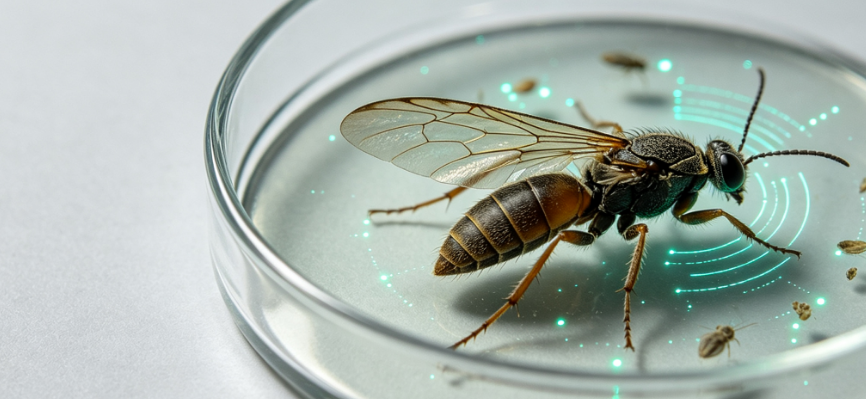
Accurate species-level identification of insects is a foundational requirement in diverse sectors, including agricultural pest surveillance, stored-product protection, forensic entomology, ecological monitoring, and international trade compliance. The morphological plasticity of many insect taxa, the existence of cryptic species complexes, and the degradation of diagnostic characters in immature stages (eggs, larvae, pupae) or fragmented specimens present formidable challenges to traditional identification keys. Clients seeking such identification services are typically driven by critical needs: confirming the presence of quarantine pests (e.g., Anoplophora glabripennis, Bactrocera dorsalis), verifying the identity of biological control agents, assessing biodiversity in environmental impact assessments, or defending against phytosanitary disputes. Our laboratory operates a fully integrated, multidisciplinary identification platform that combines classical alpha-taxonomic expertise with cutting-edge molecular barcoding, high-resolution microscopy, and chemotaxonomic profiling. We deliver not merely a name but a definitive, evidence-based identity supported by vouchered specimens, DNA sequences, and imaging data, all within a quality framework that meets the rigorous standards of regulatory authorities and scientific peer review. This article outlines our analytical arsenal, the depth of our diagnostic resolution, and the distinctive competencies that establish us as a premier partner for entomological authentication.
1. The Imperative for Robust Insect Identification in Applied Contexts
Incorrect or ambiguous insect identification carries profound consequences: misidentification of an invasive pest can lead to failed quarantine actions, economic losses in agriculture, and unintended ecological disruptions from inappropriate control measures. Conversely, misidentification of a beneficial native species as a pest may result in unwarranted eradication campaigns and regulatory trade barriers. The global surge in traded commodities, coupled with climate-driven range expansions, has intensified the need for rapid, reliable, and legally defensible identification that can withstand cross-examination by regulatory agencies and international dispute panels. Our service addresses this need by offering a traceable chain of custody for each submitted specimen, complemented by a comprehensive diagnostic report that integrates morphological, molecular, and contextual ecological data. We recognise that our clients require not only an answer but also the confidence that the answer is derived from the most robust and current methodologies available.
2. Integrated Morphological and Microscopic Examination
Our entomological team comprises specialists with decades of cumulative experience across 45 insect families, with particular strength in Coleoptera, Lepidoptera, Diptera, Hymenoptera, and Hemiptera. The morphological workflow begins with macrophotography and focus-stacked imaging using a high-resolution digital microscope (Keyence VHX‑7000) to record habitus and diagnostically critical structures. For minute characters—such as chaetotaxy, male genitalia, wing venation, and tarsal claws—we employ scanning electron microscopy (SEM) at magnifications up to 50,000×, with energy-dispersive X‑ray spectroscopy (EDS) for elemental mapping of cuticular features. Where light microscopy is sufficient, we use a Leica M205 C stereomicroscope with motorised focus and differential interference contrast (DIC) to visualise translucent structures. All morphological observations are cross-referenced against primary taxonomic literature, type specimen descriptions (including digital repositories such as GBIF and Bold Systems), and our in-house reference collection of over 8,000 pinned and slide-mounted specimens from major biogeographic regions. This traditional foundation is essential, particularly for species whose DNA sequences are not yet deposited in public databases, and it provides the voucher basis that underpins the entire identification process.
3. DNA Barcoding and Multi-Locus Molecular Authentication
For specimens that are morphologically ambiguous, damaged, or immature, our molecular genetics facility provides a powerful complement. We routinely amplify and Sanger-sequence the mitochondrial cytochrome c oxidase subunit I (COI) barcode region (standard 658‑bp fragment) using universal primers (LCO1490/HCO2198) and, when necessary, mini-barcodes (e.g., 130‑bp fragments) for highly degraded samples. Our in-house bioinformatics pipeline performs sequence assembly, quality trimming, and BLAST searches against the BOLD Systems v5 and GenBank nucleotide databases, but we go further by conducting phylogenetic placement using maximum likelihood (RAxML) and Bayesian inference (MrBayes) to confirm species boundaries and detect cryptic lineages. For groups known for hybridisation or incomplete lineage sorting (e.g., certain Bemisia and Frankliniella species complexes), we supplement COI with nuclear markers such as the internal transcribed spacer 2 (ITS2), elongation factor-1α (EF‑1α), and wingless (wg) to achieve robust resolution. Our multiplex PCR assays for species-specific detection, designed using allele-specific primers, are available for high‑throughput screening of bulk trap samples, with a detection sensitivity of single eggs or scale fragments. All sequence data are deposited in BOLD with a unique process ID, ensuring permanent accessibility and compliance with the Nagoya Protocol requirements.
4. Advanced Chemotaxonomic and Cuticular Hydrocarbon Profiling
In cases where DNA amplification fails or where morphological characters overlap extensively (e.g., sibling species in Drosophila or Anopheles complexes), we deploy gas chromatography–mass spectrometry (GC‑MS) analysis of cuticular hydrocarbons (CHCs) as a complementary chemotaxonomic tool. Our protocol extracts non-polar lipids from a single leg or antenna using hexane, followed by separation on a high-resolution capillary column (DB‑5ms, 60 m × 0.25 mm) with a temperature programme optimised for C₂₁–C₄₀ n-alkanes, methyl-branched alkanes, and alkenes. The resulting chromatographic profiles are treated as chemical fingerprints and analysed using principal component analysis (PCA) and linear discriminant analysis (LDA) against a reference library of known species. This method is particularly powerful for closely related species that differ in CHC blends, and we have achieved species-level discrimination accuracy exceeding 97 % in blind trials for several taxonomic groups. Moreover, CHC profiles remain stable in ethanol‑preserved specimens for months, offering an alternative when morphological traits are obscured by mould or fragmentation.
5. Metagenomic and Environmental DNA (eDNA) Approaches for Mixed Samples
For clients dealing with bulk trap catches, grain samples, or debris from imported goods, our metabarcoding service enables simultaneous identification of all insect taxa present in a single extract. We use a two‑step PCR strategy with fusion primers containing Illumina adapters and unique dual‑index combinations, targeting the COI minibarcode region (313‑bp). Sequencing is performed on a NovaSeq 6000 platform, generating > 20 million paired‑end reads per run, with subsequent bioinformatic processing through our custom pipeline (QIIME2‑based) that includes denoising with DADA2, clustering into amplicon sequence variants (ASVs), and taxonomic assignment using a curated reference database that combines BOLD, GenBank, and our own validated sequences. The pipeline is validated with mock communities of known composition to calibrate abundance estimates and sensitivity thresholds, achieving detection of species representing as little as 0.01 % of total read abundance. This service is indispensable for phytosanitary inspections, biodiversity baseline surveys, and monitoring of invasive species spread, as it provides a comprehensive, unbiased snapshot of the entomofauna within a sample.
6. Imaging and Archival Services for Vouchering and Legal Testimony
We recognise that a definitive identification must be accompanied by permanent, verifiable evidence. For each specimen we process, we create a digital specimen card that includes high‑resolution multifocus images, SEM micrographs, a georeferenced collection label, and the derived DNA sequence chromatogram. Physical vouchers are deposited in our climate‑controlled repository, and we provide a certificate of analysis that is signed by the responsible taxonomist and includes full methodological details, relevant literature citations, and a statement of analytical confidence (expressed as a probability score). This documentation is structured to meet the evidentiary standards required for court‑admissible reports, regulatory enforcement, and international dispute resolution. Our expertise has been relied upon in several high‑profile phytosanitary cases, where our data have withstood rigorous adversarial scrutiny.
7. Quality Management and Proficiency Assurance
Our identification service operates under a quality system that complies with ISO/IEC 17025:2017 for testing laboratories, supplemented by the specific requirements of the International Plant Protection Convention (IPPC) for diagnostic protocols. We participate annually in the European Reference Laboratory (EURL) proficiency testing scheme for quarantine pests, consistently achieving scores of 100 % correct identification. All molecular reagents and reference standards are sourced from certified suppliers, and every sequence is verified by bidirectional reads and, for critical determinations, by independent replicates in a separate PCR run. Our LIMS (Laboratory Information Management System) tracks all sample handling, analytical steps, and quality control checkpoints, ensuring full traceability and rapid retrieval of archived data. We also maintain biosecurity level 2 (BSL‑2) facilities for handling specimens that may carry plant or animal pathogens, adding an extra layer of safety for staff and the environment.
8. Distinctive Competencies and Value‑Added Expertise
Our competitive advantage rests on three pillars: taxonomic breadth, technological convergence, and interpretative depth. First, our core team includes three full‑time systematic entomologists with taxonomic revisions published for genus‑level groups in Zootaxa, Systematic Entomology, and Molecular Phylogenetics and Evolution—a scholarly foundation that ensures our morphological assessments are based on the most recent phylogenetic frameworks and species concepts. Second, we are one of the few laboratories worldwide that seamlessly integrate morphology, DNA barcoding, multi‑locus phylogenetics, CHC chemotaxonomy, and metabarcoding under one roof, enabling a tiered approach that maximises success rates even for the most challenging specimens. Third, our consultancy extends beyond identification: we provide interpretive risk assessments, such as the likelihood of establishment, potential economic impact, and host range of intercepted species, drawing on our extensive ecological databases. This holistic support transforms a mere identification into a decision‑ready intelligence product that is invaluable for quarantine authorities, pest management consultants, and supply chain quality managers.
9. Expedited Turnaround and Global Client Support
We understand that time is often critical in pest interceptions and regulatory holds. Our standard service provides a preliminary identification within 48 hours based on morphology or rapid COI sequencing (if required), with a fully documented final report delivered within 5‑7 business days. For emergency situations (e.g., suspected incursions of high‑risk species), we offer a 24/7 priority service with a guaranteed verbal result in 24 hours and a written certificate within 48 hours. Our sample acceptance policy is flexible, accommodating dry‑pinned, ethanol‑preserved, frozen, or silica‑dried material, as well as slides of genitalia dissections. International shipping is facilitated through our partnerships with courier services that handle biological materials in compliance with IATA and CITES regulations. We also provide remote identification consultations via high‑resolution images and video conferencing, reducing the need for physical specimen transfers in preliminary screening stages.
10. Future‑Ready Developments and Collaborative Research
To maintain our position at the cutting edge, we are actively developing machine‑learning image recognition models trained on our growing image database (currently > 150,000 annotated images) to assist in preliminary sorting and to flag specimens that require specialist attention. We are also implementing nanopore‑based real‑time sequencing (MinION) for on‑site, portable barcoding, which will allow us to offer identification services directly at ports of entry or field stations. Furthermore, we collaborate with academic partners on integrative taxonomic revisions, and we invite our clients to co‑author case studies when novel identifications emerge. This commitment to innovation ensures that our methods evolve in tandem with emerging challenges, such as the detection of genetically modified insect strains or the identification of pesticide‑resistant alleles through targeted amplicon sequencing.
11. Conclusions: Trust in Definitive Identification
The identification of insects, seemingly a classic discipline, has been revolutionised by the integration of molecular, chemical, and computational tools. Yet the fundamental requirement remains unchanged: an accurate, verifiable, and contextually meaningful name that serves as the basis for action. Our laboratory offers a unique synthesis of classical expertise and advanced technology, delivering identifications that are not only correct but also defensible, documented, and decision‑ready. Whether you are a plant health inspector seeking to confirm an interception, a researcher requiring precise taxon delineation for ecological studies, or an industry stakeholder verifying the purity of a biocontrol agent, we provide a service that is tailored, thorough, and scientifically impeccable. We invite you to entrust your entomological identification needs to us, where accuracy is not just a goal but a non‑negotiable standard, supported by a team that is as passionate about insects as it is rigorous in methodology.