Reasons for choosing our testing services
ZHONGXI Testing has obtained inspection qualification certifications from multiple countries and regions worldwide. We possess a senior testing team and advanced testing methods, providing independent, impartial, and professional third-party verification services for global carbon projects.
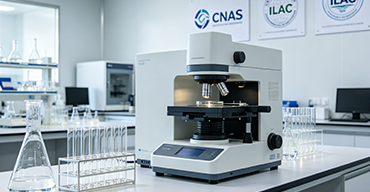
Internationally recognized authority
Certified by multiple international standards such as CNAS, VCS, and GS, with reports universally applicable worldwide.

Global service capability
Covering 140+ countries and regions, it supports on-site detection and remote verification in multiple languages.

Professional experimental methods
Adopt standard experimental methods to ensure accurate and reliable data.
Electron Paramagnetic Resonance (EPR) Spectroscopy: A High-Sensitivity Analytical Service for Radical Detection, Dosimetry, and Paramagnetic Centre Characterisation
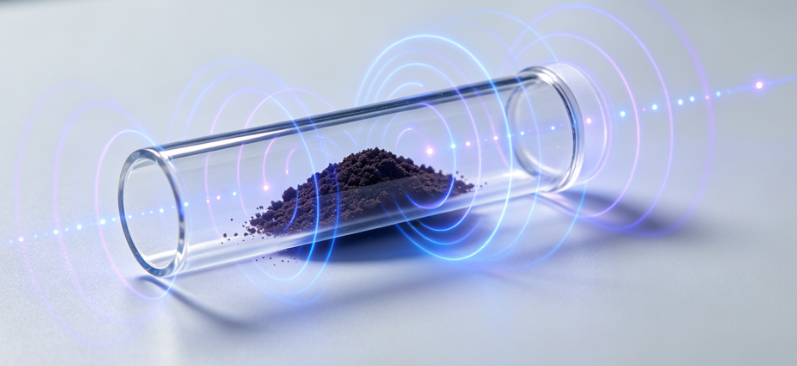
Electron Paramagnetic Resonance (EPR), also known as Electron Spin Resonance (ESR), is the method of choice for the direct, unambiguous detection and quantification of unpaired electrons in chemical and biological systems. This technique is indispensable for studying free radicals, transition metal ions, point defects in crystalline materials, and reactive oxygen species (ROS) in oxidative stress research. Clients seeking EPR analysis typically require it for a range of critical applications: assessing the radical-scavenging activity of antioxidants in food and cosmetic formulations, determining the irradiation history of sterilised medical devices or foodstuffs (e.g., for regulatory compliance with EU and US FDA standards), characterising paramagnetic centres in catalytic materials or battery electrodes, or quantifying oxidative damage in biological tissues. Our laboratory operates a state-of-the-art EPR facility equipped with continuous-wave (CW) and pulsed EPR spectrometers operating at X-band (9.5 GHz), Q-band (34 GHz), and W-band (94 GHz), complemented by advanced temperature control, cryogenic capabilities, and automated spin-trapping protocols. We deliver absolute radical concentration measurements, detailed spin-Hamiltonian parameter extraction, and kinetic modelling of radical decay, all within a quality framework that supports GLP and ISO 17025 accreditation. This article outlines our comprehensive EPR service portfolio, the depth of our analytical capabilities, and the distinctive competencies that make us a preferred partner for demanding paramagnetic analyses.
1. The Scope of EPR Applications and Client Objectives
EPR is unique in its ability to probe unpaired electron environments with exceptional specificity and sensitivity (detection limits in the low nanomolar range for stable radicals, and micromolar for transient radicals with spin trapping). Our clients’ objectives vary widely: pharmaceutical companies require EPR to verify the sterilisation dose of gamma-irradiated products via the detection of free radicals in hydroxyapatite or cellulose; food manufacturers seek to validate “irradiated” or “non-irradiated” label claims using the EN 1786, EN 1787, and EN 13708 standard protocols; materials scientists need to identify oxygen vacancies and paramagnetic impurities in ceramics or semiconductors; and biomedical researchers utilise spin probes to monitor intracellular redox status and nitric oxide production. Our service is designed to address all these needs with a tailored analytical strategy, ensuring that the experimental parameters—modulation amplitude, microwave power, temperature, and time constants—are optimally configured for each unique matrix and question.
2. Core Instrumentation and Measurement Capabilities
Our EPR platform is built around a Bruker Elexsys E580 spectrometer with a fully digital bridge, capable of both CW and pulsed modes (including electron spin echo envelope modulation – ESEEM, and electron–electron double resonance – ELDOR). For routine CW measurements, we employ a high-sensitivity cavity (ER 4119HS) with a quality factor (Q) exceeding 10,000, achieving a peak-to-peak signal-to-noise ratio of better than 3000:1 on a standard DPPH sample (1 µM) with minimal microwave distortion. For samples with low dielectric loss, we offer Q-band and W-band measurements to enhance spectral resolution and to resolve g-anisotropy that is obscured at X-band. Temperature control is achieved using a continuous-flow cryostat (4.2 – 300 K) and a variable-temperature unit (77 – 500 K), permitting the study of temperature-dependent relaxation phenomena and the detection of thermally labile species. We also maintain a high-throughput automated sample changer that accommodates up to 48 samples for kinetic studies or dose–response curves, significantly reducing manual handling and increasing reproducibility.
3. Spin Trapping and Radical Quantification
For short-lived radicals (e.g., hydroxyl, superoxide, carbon-centred radicals) that are not directly observable at ambient conditions, we offer a comprehensive spin-trapping service using commercially available and custom-synthesised nitrone and nitroso traps (DMPO, DEPMPO, PBN, MNP, etc.). Our protocol involves careful optimisation of trap concentration, pH, and incubation time to maximise adduct yield while minimising artefactual radical formation. The resulting spin adducts are identified by their characteristic hyperfine splitting constants (aN and aH), which we simulate using non-linear least-squares fitting with our in-house WinEPR and MATLAB-based routines, achieving simulation residuals below 1 %. For quantitation, we use an external standard (e.g., TEMPOL or a known concentration of DPPH in the same cavity geometry) with correction for differences in cavity filling factor and modulation field, providing absolute radical concentrations with an uncertainty of ±5 %. This capability is critical for comparing the antioxidant capacity of different formulations or for monitoring radical generation kinetics in real-time.
4. Advanced Pulse EPR for Structural Elucidation
Beyond simple radical detection, our facility offers advanced pulsed EPR techniques that reveal three-dimensional structural information around the paramagnetic centre. We routinely perform HYSCORE (hyperfine sublevel correlation) spectroscopy to measure weak hyperfine couplings to surrounding nuclei (¹H, ¹⁴N, ³¹P, ¹³C) at distances up to 0.8 nm, enabling the identification of metal coordination geometries and hydrogen-bonding networks. For distances between two unpaired electrons (e.g., in biradicals or spin-labelled proteins), we apply DEER (double electron–electron resonance) / PELDOR (pulsed electron–electron double resonance) to obtain distance distributions in the 1.5 – 8 nm range with sub-angstrom precision. This information is pivotal for conformational studies of DNA, proteins, and polymer architectures, and our data analysis uses the DEER Analysis 2023 software package with Tikhonov regularisation to extract robust distance distributions. These measurements are performed at cryogenic temperatures with a dedicated Q-band pulse EPR resonator, providing enhanced orientation selection and sensitivity that surpasses typical X-band setups.
5. Dosimetry and Irradiation History Assessment
EPR dosimetry is a cornerstone of our service, particularly for food irradiation testing (using the EN 1787 standard for cellulose-containing foods and EN 1786 for bone-in meat) and for medical device sterilisation verification (ISO 11137). We detect the characteristic signal from crystalline cellulose or hydroxyapatite radicals (e.g., the cellulose triplet signal at g = 2.004 and the CO₃³⁻ radical at g = 2.0035) and quantify the absorbed dose via a calibration curve prepared with identical materials irradiated at known doses (0.5 – 50 kGy). Our measurement protocol includes a dose–response linearity check over three orders of magnitude, and we correct for fading effects (radical decay over time) using a first-order kinetic model that allows retrospective dose estimation even months after irradiation. For alanine dosimeters, we offer a reference-level service with an expanded uncertainty (k=2) of less than 2 %, traceable to the primary standard of the National Physical Laboratory (NPL). This service is trusted by hospitals, sterilisation plants, and food regulatory agencies worldwide.
6. Specialised Sample Handling and Matrix Adaptations
Many samples are challenging for EPR due to high dielectric losses (aqueous solutions), extremely small size (single crystals or thin films), or presence of interfering signals (e.g., from iron in haem proteins). We overcome these using dielectric resonators for aqueous samples (with a reduced Q but enhanced filling factor), custom-built flat cells for continuous-flow measurements, and microcapillary holders for precious powders. For samples that are photosensitive or oxygen-sensitive, we perform measurements under inert atmosphere (glovebox-transfer) and with in-situ illumination using a 150 W xenon lamp coupled to a monochromator, enabling the detection of photo-induced radicals and charge-separated states in photovoltaic materials. Our sample preparation guides, available upon request, ensure that clients ship their materials in appropriate containers and conditions to preserve the radical species of interest.
7. Data Interpretation and Simulation Suite
Raw EPR spectra are rarely interpretable without sophisticated simulation, especially for systems with multiple paramagnetic species, overlapping signals, or anisotropic g- and hyperfine tensors. Our team is proficient in EasySpin (MATLAB-based toolbox) and the Bruker Xepr simulation package, and we offer full spectral fitting using a simulated annealing algorithm to globally optimise spin-Hamiltonian parameters (gxx, gyy, gzz, Aiso, Aaniso, linewidths, and strain). For complex mixtures, we employ simultaneous multi-component fitting with initial guesses derived from literature or from our own library of over 200 benchmarked radicals. We also provide simulation of orientation-selective spectra from frozen solutions to determine molecular orientation relative to the magnetic field, which is essential for understanding the electronic structure of coordination compounds and metalloproteins.
8. Quality Management and Metrological Traceability
All EPR measurements are conducted under a quality system that complies with ISO/IEC 17025:2017 for testing and calibration, with specific reference to the EURAMET guidelines for EPR dosimetry. We maintain a set of primary and secondary reference standards (DPPH, manganese-doped MgO, pitch with known spin density) that are recalibrated annually against NIST standard reference materials. Each measurement batch includes a reference sample at two field positions to correct for any drift in resonator tuning or magnetic field offset, and we document the microwave frequency (using a frequency counter with 0.1 MHz resolution) and the modulation phase to ensure reproducibility across instruments. Our LIMS system records all experimental parameters (temperature, microwave power, gain, modulation frequency) and automatically flags any deviation from the predefined acceptance criteria. For regulated studies (e.g., GLP toxicology), we provide a complete study plan, raw data files, and a final report signed by the study director, meeting the requirements of FDA and OECD inspections.
9. Distinctive Competencies and Technical Edge
Our laboratory differentiates itself through several unique strengths:
Multi-frequency and multi-technique integration: Unlike most contract labs that only offer X-band CW-EPR, we provide a seamless transition from CW to pulsed, and from X-band to Q/W-band, allowing us to resolve spectral overlap that is intractable at a single frequency. This is particularly valuable for discriminating between different metal centres (e.g., Mn²⁺ vs. Cu²⁺) and for measuring g-anisotropy in organic radicals with unresolved hyperfine structure.
In-house software and custom automation: We have developed a proprietary automated processing pipeline that integrates baseline correction, phase adjustment, and spectral normalisation, reducing human bias and enabling rapid batch analysis of large datasets. Our custom-written kinetic analysis module fits exponential decay or growth models with automatic initiation and plateau detection, providing a quantitative measure of radical half-life or production rate.
Expertise in difficult matrices: We have proven success in analysing heterogeneous materials, such as carbon black, tyre rubber, and coal, where sample conductivity and cavity loading are problematic. Our use of TPX sample tubes and dilution with diamagnetic matrix (KBr) has consistently yielded artifact-free spectra even for highly absorbing samples.
Regulatory experience: Our team has participated in the development of the European Standard EN 1786 for bone-containing food irradiation and has provided expert testimony in court cases involving irradiated food labelling disputes. This hands-on regulatory knowledge ensures that our reports are formatted to satisfy the most stringent evidentiary thresholds.
10. Rapid Turnaround and Client Support
We recognise that many EPR enquiries are time-sensitive—for example, when a batch of sterilised medical devices is awaiting release, or when an oxidative stress study is part of a clinical trial. We offer a standard turnaround of 3–5 working days for CW measurements and 5–7 working days for pulsed or multi-frequency analyses, with an expedited 24‑hour service available for emergency cases. Our scientific team provides a free pre-study consultation to discuss the best experimental approach, sample requirements, and potential interferences, ensuring that the client receives a tailored quote and protocol before any sample is shipped. We also offer post-measurement interpretation sessions via web conference, where we explain the spectral features, the simulation outcomes, and the implications for the client’s research or quality control.
11. Emerging Applications and Future Developments
We are actively expanding our EPR capabilities into emerging fields, such as quantum sensing using nitrogen-vacancy (NV) centres in diamond, and in-cell EPR for measuring microviscosity and oxygen concentration in live cells using spin probes. We have also validated a rapid screening method for the detection of gamma-irradiated herbs and spices based on the EPR signal of crystalline sugars, which aligns with the recent Codex Alimentarius revisions. Our ongoing collaboration with academic institutions ensures that we remain at the forefront of methodological developments, and we offer our clients the opportunity to be early adopters of these novel approaches.
12. Conclusions: The Definitive EPR Service for Unambiguous Paramagnetic Analysis
Electron Paramagnetic Resonance is not a routine “black-box” technique; it requires a deep understanding of spin physics, sample chemistry, and data simulation to extract meaningful and reliable information. Our laboratory offers a comprehensive, consultative, and quality-driven EPR service that covers the entire workflow—from experimental design and measurement to advanced simulation and regulatory-compliant reporting. With our multi-frequency instruments, pulsed capabilities, custom automation, and experienced scientific staff, we are uniquely equipped to tackle the most challenging paramagnetic analyses. We invite you to entrust your EPR needs to us, confident that you will receive not only high-quality data but also a clear, scientifically rigorous interpretation that supports your decision-making, whether in product development, quality assurance, or forensic investigation.