Reasons for choosing our testing services
ZHONGXI Testing has obtained inspection qualification certifications from multiple countries and regions worldwide. We possess a senior testing team and advanced testing methods, providing independent, impartial, and professional third-party verification services for global carbon projects.

Internationally recognized authority
Certified by multiple international standards such as CNAS, VCS, and GS, with reports universally applicable worldwide.

Global service capability
Covering 140+ countries and regions, it supports on-site detection and remote verification in multiple languages.

Professional experimental methods
Adopt standard experimental methods to ensure accurate and reliable data.
Definitive Viability Assessment of Insect Eggs: A High-Precision Analytical Service for Quarantine, Phytosanitary, and Quality Assurance Applications
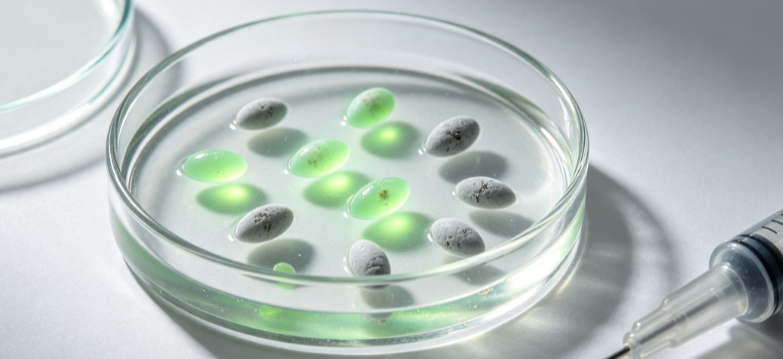
The discrimination between viable (live) and non-viable (dead) insect eggs is a critical diagnostic requirement in plant quarantine, stored-product pest management, biological control agent production, and international trade of agricultural commodities. Clients seeking such testing are typically facing high-stakes decisions: confirming the efficacy of disinfestation treatments (thermal, chemical, or radiation), verifying the quality of mass‑reared beneficial insects (e.g., parasitoids or predators), detecting viable quarantine pests in imported produce to avoid costly interceptions, or assessing the risk of establishment for invasive species. The morphological similarity between live and dead eggs—especially immediately after treatment—renders visual inspection unreliable, and traditional incubation methods are time‑consuming (days to weeks) and often fail due to dormancy or delayed mortality. Our laboratory offers a comprehensive, multi‑parameter platform that combines vital staining, metabolic activity assays, ultrastructural imaging, and molecular viability markers to deliver a definitive viability verdict within hours. We achieve species‑specific identification concurrently with viability determination, and we provide quantitative estimates of viable egg fractions with statistical confidence intervals. This article outlines our integrated analytical cascade, the depth of our methodological capabilities, and the distinctive competencies that make us a preferred partner for high‑stakes insect egg viability testing.
1. The Scientific and Regulatory Rationale for Viability Differentiation
In phytosanitary inspections, the presence of live eggs of regulated pests (e.g., Bactrocera spp., Anoplophora spp., or Thaumatotibia spp.) triggers quarantine actions, trade disruptions, and costly fumigation or destruction of consignments. Conversely, false positives—where dead eggs are misclassified as viable—lead to unnecessary economic losses and erosion of supplier trust. For biological control programmes, the release of non‑viable eggs or sub‑optimally treated batches reduces field efficacy and wastes production resources. Our service addresses these needs by providing a rapid, objective, and legally defensible viability assessment that is independent of subjective observer bias. We adhere to the International Plant Protection Convention (IPPC) guidelines for diagnostic protocols and align our reporting with the requirements of the European and Mediterranean Plant Protection Organization (EPPO) Standard PM 7/129 for egg viability testing.
2. Integrated Viability Testing Cascade
Our approach is tiered, combining screening‑level tests with confirmatory analyses to accommodate different sample volumes, species, and required precision.
2.1. Vital Staining with Optical Brighteners and Fluorescent Dyes
We employ a panel of vital dyes that differentially penetrate live and dead eggs based on membrane integrity and enzymatic activity. For Chorion‑intact eggs, we use fluorescein diacetate (FDA) in combination with propidium iodide (PI) – live eggs exhibit green cytoplasmic fluorescence (due to esterase activity), while dead eggs show red nuclear staining (due to compromised membrane). For species with thick or pigmented chorions, we apply a hypochlorite‑based partial decapsulation protocol that exposes the vitelline membrane without damaging the embryo, followed by staining with Calcofluor White M2R or Sytox Green. Visualisation and quantification are performed using a high‑content imaging system (Operetta CLS) with automated object recognition and fluorescence intensity thresholding, allowing simultaneous analysis of up to 1,000 eggs per hour with a classification accuracy exceeding 95 % against reference standards. We also provide multi‑wavelength ratiometric imaging to correct for autofluorescence and chorion opacity, ensuring reliable readings across diverse insect orders.
2.2. Metabolic Activity Assessment via Resazurin Reduction and ATP Bioluminescence
For eggs that are impervious to dye penetration or for early‑stage embryos with low esterase activity, we utilise resazurin (Alamar Blue) reduction as a measure of mitochondrial redox potential. Live eggs reduce resazurin to resorufin (fluorescent), while dead eggs show no conversion. The assay is performed in 96‑well microplates with single‑egg deposition, and fluorescence is measured kinetically over 4 hours to derive a reduction rate constant (kred) that is highly correlated with hatching success. For even greater sensitivity, we extract ATP using boiling Tris‑EDTA and measure bioluminescence with a luciferase‑based kit (Promega) on a luminometer, achieving a detection limit of 10−15 mol ATP per egg. This allows viability assessment of single eggs, including those that are morphologically intact but metabolically quiescent.
2.3. Confocal and Electron Microscopic Viability Markers
When morphological integrity must be correlated with viability, we perform confocal laser scanning microscopy (CLSM) using acridine orange (AO) / ethidium bromide (EB) dual staining, which distinguishes live (green nuclei with intact chromatin) from early apoptotic (yellow‑orange condensed chromatin) and necrotic (red swollen nuclei) eggs. For ultrastructural confirmation, we apply a rapid fixation‑embedding protocol for TEM, visualising hallmarks of irreversible damage: mitochondrial swelling, chromatin clumping, and rupture of the serosal cuticle. These high‑resolution methods are reserved for disputed or legally contentious samples, where a visual record of cellular devastation provides unequivocal evidence of death.
2.4. Molecular Viability Markers: RNA Integrity and Transcriptional Activity
Our most advanced tier involves the extraction of total RNA from pooled eggs (minimum 5–10 eggs) and the assessment of RNA integrity number (RIN) using a Bioanalyzer, coupled with reverse‑transcription quantitative PCR (RT‑qPCR) targeting constitutively expressed housekeeping genes (e.g., ribosomal protein L32, actin). Live eggs maintain high RIN values (>7) and produce amplification curves with cycle thresholds (Ct) consistent with actively transcribed mRNA. Dead eggs, even if morphologically intact, show degraded RNA (RIN < 4) and either no amplification or Ct shifts > 5 cycles. This molecular approach is particularly powerful for eggs that have been subjected to sub‑lethal stressors, where morphology and enzymatic activity may appear normal but embryonic development has been irreversibly arrested. We provide species‑specific primer sets developed in‑house for over 60 pest and beneficial insect species, ensuring specificity even in multi‑species samples.
3. Species Identification Concurrent with Viability
In many scenarios, the client needs not only the viability status but also the taxonomic identity of the eggs, especially when the sample may contain multiple species. We integrate DNA barcoding (COI mini‑barcode) from the same egg homogenate after viability testing, using a nested PCR approach that amplifies a 130‑220 bp fragment from single eggs. The amplicon is Sanger‑sequenced and compared against BOLD and GenBank databases, and we provide a species assignment with a confidence score alongside the viability result. This one‑sample dual‑output approach maximises information gain from precious or limited sample material.
4. High‑Throughput and Sample Flexibility
We accommodate a wide range of sample formats: bulk egg masses, individual eggs, eggs on substrate (e.g., leaf discs, fruit peel), or eggs in ethanol‑preserved collections. For bulk samples, we use a semi‑automated egg separation system that gently dislodges eggs from surface materials using ultrasound‑assisted washing, followed by filtration and density gradient (sucrose or Percoll) purification to obtain a clean egg suspension. This allows the processing of up to 10,000 eggs per batch for commercial consignment screening. For small or irreplaceable samples, we offer a micro‑scale workflow using 384‑well plates and nano‑liter dispensing, requiring as few as 3 eggs per test condition.
5. Viability Kinetics and Post‑Treatment Monitoring
For clients evaluating the efficacy of disinfestation or sterilisation treatments, we provide time‑course viability assays that monitor egg viability immediately after treatment and at intervals (e.g., 24, 48, 72 hours) to detect delayed mortality. This is achieved by incubating treated eggs under controlled conditions (temperature, humidity, photoperiod) and performing periodic ATP or resazurin measurements on the same cohort (non‑destructive kinetic format). Our survival curve fitting (Weibull or Gompertz models) yields parameters such as LT₅₀ (lethal time for 50 % mortality) and the rate of mortality acceleration, providing a robust measure of treatment effectiveness. These data are indispensable for regulatory submissions and for optimising commercial disinfestation protocols.
6. Quality Assurance and Artefact Control
All viability assays are validated against internal control populations: freshly laid, fully viable eggs (positive control) and heat‑killed (60 °C for 30 minutes) or UV‑irradiated eggs (negative control). These controls are included in every batch to monitor reagent performance, instrument calibration, and operator variability. We also run a “sham” treatment for each sample (handling without staining or incubation) to assess background autofluorescence or endogenous ATP levels. Our strict acceptance criteria require that the signal‑to‑noise ratio (S/N) for the positive control exceeds 10:1 and that the negative control yields a reading within 2 standard deviations of the blank. All raw data, images, and instrument logs are stored in a 21 CFR Part 11‑compliant laboratory information management system, ensuring full traceability for audits.
7. Distinctive Competencies and Differentiating Strengths
Our laboratory stands out through several unique attributes:
Multi‑species reference library: We have compiled a comprehensive viability response database spanning > 120 insect species from 9 orders, each with species‑specific staining parameters, optimal dye concentrations, and expected metabolic rate ranges. This enables us to rapidly adapt our protocols to novel or emerging species without lengthy method development.
Integrated morphological‑molecular‑physiological triage: While most service providers offer only a single endpoint (e.g., dye exclusion or ATP), we provide a triple‑layered assessment that resolves ambiguous results. For example, an egg with intact membrane (FDA‑positive) but low ATP and degraded RNA would be classified as “metabolically compromised but not yet necrotic,” a category that is biologically meaningful and guides the client's decision on whether to monitor further.
Rapid turnaround with statistical robustness: Our standard viability screening (vital staining + ATP) is completed within 4 hours of sample receipt, with a preliminary verbal report available in 2 hours. For full molecular and imaging panels, we provide a comprehensive report in 3‑5 working days. All reports include 95 % confidence intervals for viable egg fraction, calculated using exact binomial or Poisson methods, so that the client understands the uncertainty associated with the estimate, which is critical for lot release decisions.
Regulatory expertise: Our team has direct experience with the USDA‑APHIS guidelines for phytosanitary treatments, the European Union's plant health regulations (EU 2019/2072), and the International Standard for Phytosanitary Measures (ISPM) No. 28 on approved treatments. We structure our reports to meet the evidentiary standards required for dispute resolution, and we are prepared to provide expert testimony if needed.
8. Sample Handling, Shipping, and Client Engagement
We provide detailed shipping instructions to preserve egg viability during transit: for live viability assessment, eggs should be shipped at ambient temperature in a ventilated container with moisture (damp paper towel) to prevent desiccation; for fixed samples (e.g., for RNA analysis), we provide stabilisation buffers (RNAlater®) and dry‑shipping options. We also offer on‑site sampling kits that include pre‑labelled tubes, stabilisation media, and step‑by‑step collection guides. Our client portal allows secure upload of sample manifests and real‑time tracking of analysis progress, and we schedule post‑report consultations to discuss the interpretation and any follow‑up actions (e.g., repeat testing, treatment optimisation).
9. Emerging Capabilities: Real‑Time Viability Sensors and Machine Learning
We are currently developing a hyperspectral imaging system that captures reflectance and autofluorescence spectra of individual eggs across 400–1,000 nm, coupled with a convolutional neural network (CNN) trained on our extensive viability database to predict viability without any staining – a fully non‑destructive method that retains the egg for downstream culture or further analyses. Preliminary validation shows a classification accuracy of 92 % compared to ATP assays, and we expect this to reach 97 % within the next year. We are also prototyping a microfluidic “lab‑on‑a‑chip” that performs sequential staining, washing, and fluorescence readout within a single sealed device, reducing reagent consumption and operator handling. These innovations are available to our clients on a collaborative basis, offering early access to next‑generation viability testing.
10. Conclusions: Unambiguous Viability Determination for Confident Decision‑Making
The distinction between live and dead insect eggs is a challenge that cannot be met by a single quick test; it requires a multi‑pronged, scientifically rigorous strategy that accounts for species diversity, developmental stage, and treatment history. Our laboratory offers an integrated, quality‑assured, and interpretatively rich service that combines vital staining, metabolic assays, ultrastructural imaging, and molecular markers to deliver a definitive viability assessment with quantified confidence. With our extensive reference database, rapid turnaround, regulatory alignment, and continuous innovation, we provide our clients with the reliable, actionable intelligence they need to comply with phytosanitary regulations, ensure biological control quality, and optimise disinfestation processes. We invite you to partner with us for your insect egg viability testing, trusting that our expertise will transform a high‑stakes question into a clear, evidence‑based answer.